Adhyaya 31
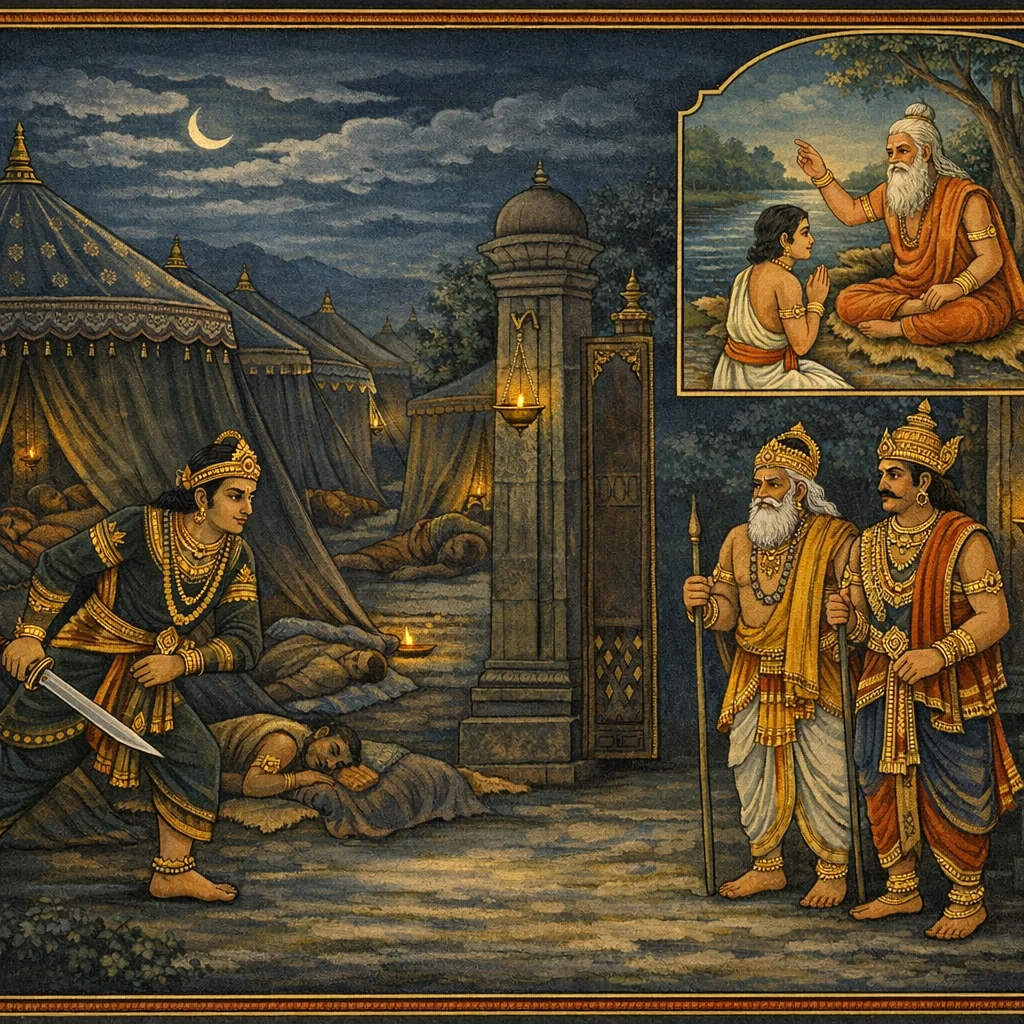
Chapter 31 unfolds as an instructive dialogue: Śrī Rāma asks Vasiṣṭha to name the highest tīrtha for purification, prompted by a dharmic concern to expiate the sin connected with killing brahma-rākṣasas during the Sītā-abduction episode. Vasiṣṭha replies by listing and ranking major sacred rivers—Gaṅgā, Narmadā/Reva, Tāpī, Yamunā, Sarasvatī, Gaṇḍakī, Gomati, and others—assigning distinct merits to seeing them, remembering them, bathing in them, and performing seasonal and lunar observances (such as Karttika and the Māgha bath at Prayāga). The teaching expands into a phalāśruti-style catalogue of tīrtha-phalas: release from sins, avoidance of hells, uplift of ancestors, and attainment of Viṣṇu’s realm. It culminates in a superlative declaration that Dharmāraṇya, founded in ancient times and praised by the devas, is the paramount tīrtha—able to dissolve even grave transgressions and to grant desired aims to varied seekers (kāmin, yati, siddha). In Brahmā’s framing narration, Rāma rejoices and resolves to go; he departs with Sītā, his brothers, Hanumān, the queens, and a great retinue, observing the prescribed approach to the ancient tīrtha on foot. At night he hears a woman’s lament and sends messengers to inquire, setting the stage for the next development.
Shlokas
Verse 1
श्रीराम उवाच । भगवन्यानि तीर्थानि सेवितानि त्वया विभो । एतेषां परमं तीर्थं तन्ममाचक्ष्व मानद
Śrī Rāma said: O Blessed One, O mighty Lord—since you have reverently visited and worshiped many sacred tīrthas, tell me, O giver of honor, which among them is the supreme tīrtha.
Verse 2
मया तु सीताहरणे निहता ब्रह्मराक्षसाः । तत्पापस्य विशुदयर्थं वद तीर्थोत्तमोत्तमम्
But during the abduction of Sītā, I slew Brahma-rākṣasas. For the purification of that sin, tell me the most excellent, the supreme of holy tīrthas.
Verse 3
वसिष्ठ उवाच । गंगा च नर्मदा तापी यमुना च सरस्वती । गंडकी गोमती पूर्णा एता नद्यः सुपावनाः
Vasiṣṭha said: Gaṅgā, Narmadā, Tāpī, Yamunā, and Sarasvatī—also Gaṇḍakī, Gomatī, and Pūrṇā—these rivers are supremely purifying.
Verse 4
एतासां नर्मदा श्रेष्ठा गंगा त्रिपथगामिनी । दहते किल्बिषं सर्वं दर्शनादेव राघव
Among these, Narmadā is the foremost; and Gaṅgā flows through the three worlds. O Rāghava, by mere sight she burns away all sin.
Verse 5
दृष्ट्वा जन्मशतं पापं गत्वा जन्मशतत्रयम् । स्नात्वा जन्मसहस्रं च हंति रेवा कलौ युगे
In the Kali age, Revā (Narmadā) destroys the sins of a hundred births by being seen, of three hundred births by being approached, and of a thousand births by bathing in her waters.
Verse 6
नर्मदातीरमाश्रित्य शाकमूलफलैरपि । एकस्मिन्भोजिते विप्रे कोटि भोजफलं लभेत
Resorting to the sacred bank of the Narmadā, even with mere greens, roots, and fruits—if one feeds a single brāhmaṇa, one gains the merit equal to feeding ten million.
Verse 7
गंगा गंगेति यो ब्रूयाद्योजनानां शतैरपि । मुच्यते सर्वपापेभ्यो विष्णुलोकं स गच्छति
Even from a hundred yojanas away, whoever utters “Gaṅgā, Gaṅgā” is freed from all sins, and he goes to the world of Viṣṇu.
Verse 8
फाल्गुनांते कुहूं प्राप्य तथा प्रौष्ठपदेऽसिते । पक्षे गंगामधि प्राप्य स्नानं च पितृतर्पणम्
At the end of Phālguna, upon the Kuhū (new-moon) day, and likewise in the dark fortnight of Prauṣṭhapada—having reached the Gaṅgā, one should bathe and offer libations (tarpaṇa) to the ancestors.
Verse 9
कुरुते पिंडदानानि सोऽक्षयं फलमश्नुते । शुचौ मासे च संप्राप्ते स्नानं वाप्यां करोति यः
Whoever performs piṇḍa-offerings (piṇḍa-dāna) attains imperishable fruit. And whoever, when the month of Śuci has arrived, bathes in a sacred tank (vāpī)…
Verse 10
चतुरशीतिनरकान्न पश्यति नरो नृप । तपत्याः स्मरणे राम महापातकिनामपि
O king—O Rāma—by remembering Tapatī, a person does not behold the eighty-four hells, even if he is guilty of great sins.
Verse 11
उद्धरेत्सप्तगोत्राणि कुलमेकोत्तरं शतम् । यमुनायां नरः स्नात्वा सर्वपापैः प्रमुच्यते
By bathing in the sacred Yamunā, a man is released from all sins; he uplifts seven gotras and redeems a hundred and one branches of his family.
Verse 12
महापातकयुक्तोऽपि स गच्छेत्परमां गतिम् । कार्त्तिक्यां कृत्तिकायोगे सरस्वत्यां निमज्जयेत्
Even one burdened with great sins may attain the highest state—if, in the month of Kārttika, at the auspicious Kṛttikā conjunction, he immerses himself in the Sarasvatī.
Verse 13
गच्छेत्स गरुडारूढः स्तूयमानः सुरोत्तमैः । स्नात्वा यः कार्तिके मासि यत्र प्राची सरस्वती
He who bathes in the month of Kārttika where the eastward-flowing Prācī Sarasvatī is found departs as though mounted upon Garuḍa, praised by the foremost of the gods.
Verse 14
प्राचीं माधवमास्तूय स गच्छेत्परमां गतिम् । गंडकीपुण्यतीर्थे हि स्नानं यः कुरुते नरः
Having praised Mādhava at Prācī, he attains the supreme goal. Indeed, the man who performs a sacred bath at the holy tīrtha of the Gaṇḍakī gains this merit.
Verse 15
शालग्रामशिलामर्च्य न भूयः स्तनपो भवेत् । गोमतीजलकल्लोलैर्मज्जयेत्कृष्णसन्निधौ
Having worshipped the Śālagrāma stone, one is not born again to drink at the breast. One should immerse amid the wavelets of the Gomatī, in the very presence of Kṛṣṇa.
Verse 16
चतुर्भुजो नरो भूत्वा वैकुण्ठे मोदते चिरम् । चर्मण्वतीं नमस्कृत्य अपः स्पृशति यो नरः
Becoming four-armed, he rejoices for a long time in Vaikuṇṭha. The man who, having bowed to the sacred Carmaṇvatī, touches its waters, gains this fruit.
Verse 17
स तारयति पूर्वजान्दश पूर्वान्दशापरान् । द्वयोश्च संगमं दृष्ट्वा श्रुत्वा वा सागरध्वनिम्
He delivers ten generations of ancestors and ten generations to come. By seeing the confluence of the two waters, or even by hearing the roar of the ocean, such merit arises.
Verse 18
ब्रह्महत्यायुतो वापि पूतो गच्छेत्परां गतिम् । माघमासे प्रयागे तु मज्जनं कुरुते नरः
Even one stained with the sin of brahmahatyā becomes purified and attains the highest state, if in the month of Māgha he performs immersion at Prayāga.
Verse 19
इह लोके सुखं भुक्त्वा अन्ते विष्णुपदं व्रजेत् । प्रभासे ये नरा राम त्रिरात्रं ब्रह्मचारिणः
Having enjoyed happiness in this world, he goes in the end to Viṣṇu’s abode. O Rāma, those men who at Prabhāsa observe brahmacarya for three nights obtain this fruit.
Verse 20
यमलोकं न पश्येयुः कुंभीपाकादिकं तथा । नैमिषारण्यवासी यो नरो देवत्वमाप्नुयात्
They would not behold Yama’s realm, nor the torments such as Kumbhīpāka. The man who dwells in Naimiṣāraṇya attains divine status.
Verse 21
देवानामालयं यस्मात्तदेव भुवि दुर्लभम् । कुरुक्षेत्रे नरो राम ग्रहणे चन्द्रसूर्ययोः
O Rāma, since this region is an abode of the devas, such a holy place is indeed rare upon the earth. At Kurukṣetra a man gains great puṇya, especially at the time of a lunar or solar eclipse.
Verse 22
हेमदानाच्च राजेंद्र न भूयः स्तनपो भवेत् । श्रीस्थले दर्शनं कृत्वा नरः पापात्प्रमुच्यते
O best of kings, by the gift of gold one is not born again as a suckling, dependent infant. And by taking darśana at Śrīsthāla, a man is released from sin.
Verse 23
सर्वदुःखविनाशे च विष्णुलोके महीयते । काश्यपीं स्पर्शयेद्यो गां मानवो भुवि राघव
O Rāghava, he who touches on earth the cow named Kāśyapī destroys all sorrow and is honored in Viṣṇu’s world.
Verse 24
सर्वकामदुघावासमृषिलोकं स गच्छति । उज्जयिन्यां तु वैशाखे शिप्रायां स्नानमाचरेत्
He attains the world of the ṛṣis—an abode that grants all desired aims. One should perform bathing in the Shiprā at Ujjayinī in the month of Vaiśākha.
Verse 25
मोचयेद्रौरवाद्घोरात्पूर्वजांश्च सहस्रशः । सिंधुस्नानं नरो राम प्रकरोति दिनत्रयम्
O Rāma, a man who bathes in the Sindhu for three days liberates even thousands of his ancestors from the dreadful Raurava hell.
Verse 26
सर्वपापविशुद्धात्मा कैलासे मोदते नरः । कोटितीर्थे नरः स्नात्वा दृष्ट्वा कोटीश्वरं शिवम्
Purified of all sins, a man rejoices on Kailāsa. Having bathed at Koṭitīrtha and beheld Śiva as Koṭīśvara, he attains that state.
Verse 27
ब्रह्महत्यादिभिः पापैर्लिप्यते न च स क्वचित् । अज्ञानामपि जंतूनां महाऽमेध्ये तु गच्छताम्
He is never tainted anywhere by sins such as brahmin-slaying. Even ignorant creatures, when they go to this great purifier, the tīrtha, are cleansed.
Verse 28
पादोद्भूतं पयः पीत्वा सर्वपापं प्रणश्यति । वेदवत्यां नरो यस्तु स्नाति सूर्योदये शुभे
By drinking the water that has arisen from the washing of the feet, all sin is destroyed. And the man who bathes in the Vedavatī at auspicious sunrise likewise gains purification.
Verse 29
सर्वरोगात्प्रमुच्येत परं सुखमवाप्नुयात् । तीर्थानि राम सर्वत्र स्नानपानावगाहनैः
O Rāma, one would be freed from all diseases and attain supreme happiness; for tīrthas everywhere bestow such fruits through bathing, drinking their waters, and immersion.
Verse 30
नाशयंति मनुष्याणां सर्वपापानि लीलया । तीर्थानां परमं तीर्थं धर्मारण्यं प्रचक्षते
They destroy all sins of human beings as if in sport. Dharmāraṇya is proclaimed to be the supreme tīrtha among all tīrthas.
Verse 31
ब्रह्मविष्णुशिवाद्यैर्यदादौ संस्थापितं पुरा । अरण्यानां च सर्वेषां तीर्थानां च विशेषतः
Established in ancient times, at the very beginning, by Brahmā, Viṣṇu, Śiva, and the other gods—this Dharmāraṇya is foremost among all forests and, most especially, among all tīrthas, the sacred fords.
Verse 32
धर्मारण्यात्परं नास्ति भुक्तिमुक्तिप्रदायकम् । स्वर्गे देवाः प्रशंसंति धर्मारण्यनिवासिनः
Nothing surpasses Dharmāraṇya as a giver of both worldly enjoyment and liberation (mokṣa). Even in heaven, the gods praise those who dwell in Dharmāraṇya.
Verse 33
ते पुण्यास्ते पुण्यकृतो ये वसंति कलौ नराः । धर्मारण्ये रामदेव सर्वकिल्बिषनाशने
Blessed indeed—true doers of merit—are those people who, in the Kali age, dwell in Dharmāraṇya, O Rāma-deva, destroyer of all sins.
Verse 34
ब्रह्महत्यादिपापानि सर्वस्तेयकृतानि च । परदारप्रसंगादि अभक्ष्यभक्षणादि वै
Sins such as brahmin-slaying and the like, all acts of theft, illicit involvement with another’s spouse, and the eating of what should not be eaten—indeed (all such transgressions)…
Verse 35
अगम्यागमना यानि अस्पर्शस्पर्शनादि च । भस्मीभवंति लोकानां धर्मारण्यावगाहनात्
Sins such as approaching what is forbidden and touching what should not be touched are reduced to ashes for people through immersion—through bathing—in Dharmāraṇya.
Verse 36
ब्रह्मघ्नश्च कृतघ्नश्च बालघ्नोऽनृतभाषणः । स्त्रीगोघ्नश्चैव ग्रामघ्रो धर्मारण्ये विमुच्यते
A slayer of a brāhmaṇa, an ingrate, a killer of a child, a speaker of falsehood; one who kills a woman or a cow, and even a destroyer of a village—such a person is released from sin in Dharmāraṇya.
Verse 37
नातः परं पावनं हि पापिनां प्राणिनां भुवि । स्वर्ग्यं यशस्यमायुष्यं वांछितार्थप्रदं शुभम्
For sinful beings on earth, nothing is more purifying than this. It bestows heaven, fame, long life, the fulfillment of desired aims, and auspiciousness.
Verse 38
कामिनां कामदं क्षेत्रं यतीनां मुक्तिदायकम् । सिद्धानां सिद्धिदं प्रोक्तं धर्मारण्यं युगेयुगे
Dharmāraṇya is declared, age after age, to be a sacred field that grants desires to the desire-driven, liberation to ascetics, and siddhis to the perfected.
Verse 39
ब्रह्मोवाच । वसिष्ठवचनं श्रुत्वा रामो धर्मभृतां वरः । परं हर्षमनुप्राप्य हृदयानंदकारकम्
Brahmā said: Hearing Vasiṣṭha’s words, Rāma—best among the upholders of dharma—was filled with supreme joy that gladdened his heart.
Verse 40
प्रोत्फुल्लहृदयो रामो रोमाचिंततनूरुहः । गमनाय मतिं चक्रे धर्मारण्ये शुभव्रतः
With his heart blossoming and his body’s hairs standing on end in rapture, Rāma—of auspicious vows—resolved to set out for Dharmāraṇya.
Verse 41
यस्मिन्कीटपतंगादिमानुषाः पशवस्तथा । त्रिरात्रसेवनेनैव मुच्यन्ते सर्वपातकैः
In that sacred place, even insects and birds, as well as humans and beasts, are freed from all sins simply by observing the three-night rite.
Verse 42
कुशस्थली यथा काशी शूलपाणिश्च भैरवः । यथा वै मुक्तिदो राम धर्मारण्यं तथोत्तमम्
Just as Kuśasthalī is like Kāśī, and Śūlapāṇi is present there as Bhairava, and just as that holy place truly grants liberation—so too, O Rāma, Dharmāraṇya is supremely excellent.
Verse 43
ततो रामो महेष्वासो मुदा परमया युतः । प्रस्थितस्तीर्थयात्रायां सीतया भ्रातृभिः सह
Then Rāma, the great archer, filled with supreme joy, set forth on pilgrimage to the sacred tīrthas, together with Sītā and his brothers.
Verse 44
अनुजग्मुस्तदा रामं हनुमांश्च कपीश्वरः । कौशल्या च सुमित्रा च कैकेयी च मुदान्विता
At that time they followed Rāma—Hanumān, lord of the monkeys; and also Kauśalyā, Sumitrā, and Kaikeyī, all filled with joy.
Verse 45
लक्ष्मणो लक्षणोपेतो भरतश्च महामतिः । शत्रुघ्नः सैन्यसहितोप्ययोध्यावासिनस्तथा
Lakṣmaṇa, endowed with noble qualities; Bharata, of great wisdom; and Śatrughna along with the army—and likewise the people of Ayodhyā also accompanied him.
Verse 46
प्रकृतयो नरव्याघ्र धर्मारण्ये विनिर्ययुः । अनुजग्मुस्तदा रामं मुदा परमया युताः
The subjects, O tiger among men, went forth to Dharmāraṇya; then they followed Rāma, filled with the highest joy.
Verse 47
तीर्थयात्राविधिं कर्तुं गृहात्प्रचलितो नृपः । वसिष्ठं स्वकुलाचार्यमिदमाह महीपते
Having set out from home to perform the proper rite of pilgrimage to the tīrthas, the king spoke these words to Vasiṣṭha, his family preceptor, O ruler.
Verse 48
श्रीराम उवाच । एतदाश्चर्यमतुलं किमादि द्वारकाभवत् । कियत्कालसमुत्पन्ना वसिष्ठेदं वदस्व मे
Śrī Rāma said: This incomparable wonder—how did Dvārakā begin, and from what origin did it arise? After how much time did it manifest? O Vasiṣṭha, tell me this.
Verse 49
वसिष्ठ उवाच । न जानामि महाराज कियत्कालादभूदिदम् । लोमशो जांबवांश्चैव जानातीति च कारणम्
Vasiṣṭha said: O great king, I do not know after how long this came to be. Yet Lomāśa and Jāmbavān truly know it, along with its cause.
Verse 50
शरीरे यत्कृतं पापं नानाजन्मांतरेष्वपि । प्रायश्चितं हि सर्वेषामेतत्क्षेत्र परं स्मृतम्
Whatever sin has been committed through the body—even across many births—this sacred kṣetra is remembered as the supreme expiation for all.
Verse 51
श्रुत्वेति वचनं तस्य रामं ज्ञानवतां वरः । गन्तुं कृतमतिस्तीर्थं यात्राविधिमथाचरत्
Hearing his words, Rāma—foremost among the wise—resolved to go to that sacred ford, and then duly performed the prescribed rites for setting out on pilgrimage.
Verse 52
वसिष्ठं चाग्रतः कृत्वा महामांडलिकैर्नृपैः । पुनश्चरविधिं कृत्वा प्रस्थितश्चोत्तरां दिशम्
Placing Vasiṣṭha at the fore, accompanied by great provincial kings, and having duly performed the rite of punaścaraṇa, he set out toward the northern quarter.
Verse 53
वसिष्ठं चाग्रतः कृत्वा प्रतस्थे पश्चिमां दिशम् । ग्रामाद्ग्राममतिक्रम्य देशाद्देशं वनाद्वनम्
With Vasiṣṭha placed at the front, he set forth toward the western quarter, passing from village to village, from land to land, and from forest to forest.
Verse 54
विमुच्य निर्ययौ रामः ससैन्यः सपरिच्छदः । गजवाजिसहस्रौघै रथैर्यानैश्च कोटिभिः
Then Rāma departed—released and ready—together with his army and full royal equipment, with streams of thousands of elephants and horses, and with chariots and vehicles numbering in crores.
Verse 55
शिबिकाभिश्चासंख्याभिः प्रययौ राघवस्तदा । गजारूढः प्रपश्यंश्च देशान्विविधसौहृदान्
Then Rāghava proceeded with countless palanquins; mounted on an elephant, he beheld the many realms marked by diverse bonds of friendship.
Verse 56
श्वेतातपत्रं विधृत्य चामरेण शुभेन च । वीजितश्च जनौघेन रामस्तत्र समभ्यगात्
Holding a white royal parasol and a splendid yak-tail fan, and being fanned by the gathered multitude, Rāma arrived there in due course.
Verse 57
वादित्राणां स्वनैघोरैर्नृत्यगीतपुरःसरैः । स्तूयमानोपि सूतैश्च ययौ रामो मुदान्वितः
Amid the thunderous sounds of instruments, with dance and song leading the way and bards singing his praise, Rāma proceeded, filled with joy.
Verse 58
दशमेऽहनि संप्राप्तं धर्मारण्यमनुत्तमम् । अदूरे हि ततो रामो दृष्ट्वा मांडलिकं पुरम्
On the tenth day he reached the unsurpassed Dharmāraṇya; then, seeing a provincial capital nearby, Rāma approached it.
Verse 59
तत्र स्थित्वा ससैन्यस्तु उवास निशि तां पुरीम् । श्रुत्वा तु निर्जनं क्षेत्रमुद्वसं च भयानकम्
Halting there with his army, he spent that night in the city; yet he heard that the holy tract was deserted, uninhabited, and fearsome.
Verse 60
व्याघ्रसिंहाकुलं तत्र यक्षराक्षससेवितम् । श्रुत्वा जनमुखाद्रामो धर्मारण्यमरण्यकम् । तच्छ्रुत्वा रामदेवस्तु न चिंता क्रियतामिति
Hearing from the people that Dharmāraṇya was a true wilderness—swarming with tigers and lions and frequented by yakṣas and rākṣasas—Rāmadeva said upon hearing it: “Let no anxiety be made.”
Verse 61
तत्रस्थान्वणिजः शूरान्दक्षान्स्वव्यवसायके
Then Rāma addressed the merchants present there—valiant and capable, skilled in their own trade.
Verse 62
समर्थान्हि महाकायान्महाबलपराक्रमान् । समाहूय तदा काले वाक्यमेतदथाब्रवीत्
Summoning at that time men who were able, of mighty build, and endowed with great strength and prowess, he then spoke these words.
Verse 63
शिबिकां सुसुवणां मे शीघ्रं वाहयताचिरम् । यथा क्षणेन चैकेन धर्मरण्यं व्रजाम्यहम्
“Carry my palanquin—well-adorned with gold—swiftly, without delay, so that in a single moment, as it were, I may reach Dharmāraṇya.”
Verse 64
तत्र स्नात्वा च पीत्वा च सर्वपापात्प्रमुच्यते । एवं ते वणिजः सर्वै रामेण प्रेरितास्तदा
“By bathing there and drinking that sacred water, one is freed from all sins.” Thus, at that time, all those merchants were urged on by Rāma.
Verse 65
तथेत्युक्त्वा च ते सर्वे ऊहुस्तच्छिबिकां तदा । क्षेत्रमध्ये यदा रामः प्रविष्टः सहसैनिकः
Saying, “So be it,” they all then carried that palanquin. When Rāma, accompanied by his troops, entered the midst of the sacred kṣetra…
Verse 66
तद्यानस्य गतिर्मंदा संजाता किल भारत । मंदशब्दानि वाद्यानि मातंगा मंदगामिनः
O Bhārata, the course of that conveyance indeed grew slow; the instruments gave forth muted sounds, and the elephants too moved with a gentle, slackened gait.
Verse 67
हयाश्च तादृशा जाता रामो विस्मय मागतः । गुरुं पप्रच्छ विनयाद्वशिष्ठं मुनिपुंगवम्
The horses too became the same—slow and subdued. Rāma, filled with wonder, respectfully questioned his guru Vasiṣṭha, foremost among sages.
Verse 68
किमेतन्मंदगतयश्चित्रं हृदि मुनीश्वर । त्रिकालज्ञो मुनिः प्राह धर्मक्षेत्रमुपागतम्
(Rāma said:) “O lord of sages, why does this strange feeling arise in my heart—that all are moving slowly?” The sage, knower of the three times, replied: “You have come to Dharmakṣetra, the sacred field of Dharma.”
Verse 69
तीर्थे पुरातने राम पादचारेण गम्यते । एवं कृते ततः पश्चात्सैन्यसौख्यं भविष्यति
“O Rāma, to this ancient tīrtha one should proceed on foot. When this is done, thereafter the army will find ease and well-being.”
Verse 70
पादचारी ततौ रामः सैन्येन सह संयुतः । मधुवासनके ग्रामे प्राप्तः परमभावनः
So Rāma set out on foot, accompanied by the army; and that supremely noble one arrived at the village called Madhuvāsanaka.
Verse 72
ततो रामो हरिक्षेत्रं सुवर्णादक्षिणे तटे । निरीक्ष्य यज्ञयोग्याश्च भूमीर्वै बहुशस्तथा
Then Rāma, on the southern bank of the Suvarṇā, beheld Harikṣetra; and he carefully surveyed many tracts of land fit for the sacred rites of yajña.
Verse 73
गुरुणा चोक्तमार्गेण मातॄणां पूजनं कृतम् । नानोपहारैर्विविधैः प्रतिष्ठाविधिपूर्वकम्
Following the path taught by the guru, the worship of the Mothers (Mātṛkās) was performed with many kinds of offerings, in accordance with the proper rites of installation and consecration.
Verse 74
सैन्यसंघं समुत्तीर्य्य बभ्राम क्षेत्रमध्यतः । तत्र तीर्थेषु सर्वेषु देवतायतनेषु च
Having brought his host across, he moved about through the heart of the sacred region, visiting all the tīrthas there, and the shrines of the deities as well.
Verse 75
यथोक्तानि च कर्माणि रामश्चक्रे विधानतः । श्राद्धानि विधिवच्चक्रे श्रद्धया परया युतः
Rāma performed the prescribed rites exactly as enjoined; and he carried out the śrāddha-offerings in due form, endowed with the highest faith.
Verse 76
स्थापयामास रामेशं तथा कामेश्वरं पुनः । स्थानाद्वायुप्रदेशे तु सुवर्णो भयतस्तटे
He established (installed) Rāmeśa, and again Kāmeśvara as well—at a place in the Vāyupradeśa, on the bank of the Suvarṇā known as Bhayata.
Verse 77
कृत्वैवं कृतकृत्योऽभूद्रामो दशरथात्मजः । कृत्वा सर्वविधिं चैव सभायां समुपाविशत्
Having done thus, Rāma—the son of Daśaratha—felt his duties fulfilled. Having completed every prescribed rite, he then sat down in the assembly hall.
Verse 78
तां निशां स नदीतीरे सुष्वाप रघुनंदनः । ततोऽर्द्धरात्रे संजाते रामो राजीवलोचनः
That night, the delight of the Raghu line slept on the riverbank. Then, when midnight arrived, lotus-eyed Rāma—
Verse 79
जागृतस्तु तदा काल एकाकी धर्मवत्सलः । अश्रौषीच्च क्षणे तस्मिन्रामो नारीविरोदनम्
Awake at that time, alone and devoted to dharma, Rāma heard—at that very moment—the wailing cry of a woman.
Verse 80
निशायां करुणैर्वाक्यै रुदंतीं कुररीमिव । चारैर्विलोकयामास रामस्तामतिसंभ्रमात्
In the night, hearing her weep with pitiful words like the cry of a kurarī-bird, Rāma, in great alarm, had his scouts look about for her.
Verse 81
दृष्ट्वातिविह्वलां नारीं क्रंदन्तीं करुणैः स्वरैः । पृष्टा सा दुःखिता नारी रामदूतैस्तदानघ
Seeing the woman greatly distraught, crying out in mournful tones, Rāma’s messengers questioned that sorrowing woman—O sinless one—about her plight.
Verse 82
दूता ऊचुः । कासि त्वं सुभगे नारि देवी वा दानवी नु किम् । केन वा त्रासितासि त्वं मुष्टं केन धनं तव
The messengers said: “Who are you, auspicious lady? Are you a goddess, or perhaps an asurī? By whom have you been frightened, and by whom has your wealth been seized by force?”
Verse 83
विकला दारुणाञ्छब्दानुद्गिरंती मुहुर्मुहुः । कथयस्व यथातथ्यं रामो राजाभिपृच्छति
“Though shaken and repeatedly crying out in harsh tones, tell the truth exactly as it is—for King Rāma is questioning you.”
Verse 84
तयोक्तं स्वामिनं दूताः प्रेषयध्वं ममांतिकम् । यथाहं मानसं दुःखं शांत्यै तस्मै निवेदये
She said to the messengers: “Send your lord to me, so that I may lay before him the sorrow of my heart, that it may be calmed.”
Verse 85
तथेत्युक्त्वा ततो दूता राममागत्य चाब्रुवन्
Saying, “So be it,” the messengers then went to Rāma and spoke to him.