Adhyaya 28
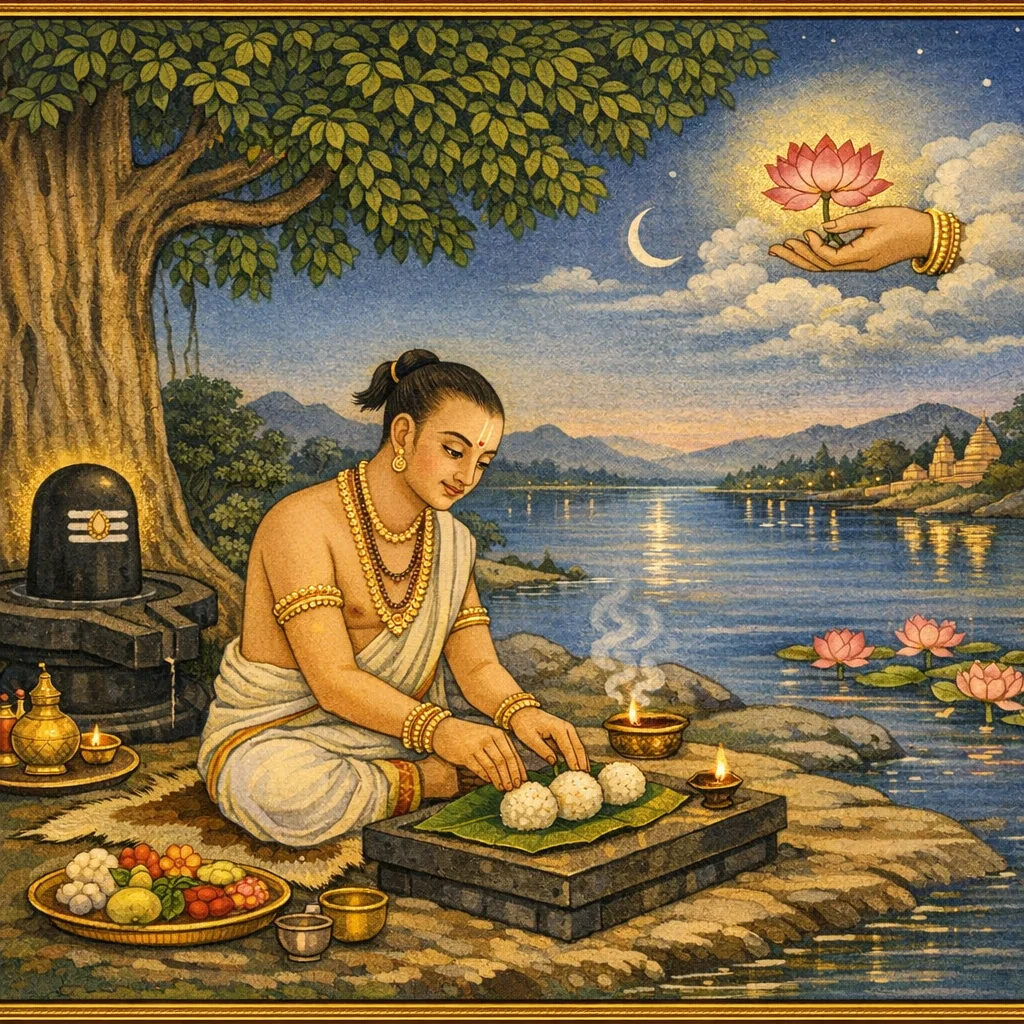
Chapter 28 extols the tīrtha of Lohayaṣṭikā, situated in the south‑western (nairṛta) quarter and sanctified by Rudra’s presence as a svayaṃbhu-liṅga. Framed as a dialogue between Vyāsa and Mārkaṇḍeya, it specifies auspicious ritual times—especially amāvāsyā and the waning moon in the Nabhasya/Bhādrapada setting—and prescribes śrāddha and tarpaṇa rites connected with the waters of Sarasvatī. The chapter declares that repeated piṇḍa offerings here yield fruit equal to the famed Gayā paradigm, so that ancestral satisfaction may be attained locally through disciplined observance. It further recommends ancillary gifts at named tīrthas—cow-gift at Rudra-tīrtha and gold-gift at Viṣṇu-tīrtha—for those intent on mokṣa. A devotional formula is given for placing the piṇḍa into the “hand of Hari (Janārdana),” linking pitṛ-rites to Vaiṣṇava theism and to release from ṛṇa-traya, the three debts. Its phala statements promise liberation of ancestors from preta states, enduring merit, and blessings for descendants such as health and protection, while emphasizing that even modest donations, righteously earned, are magnified in efficacy at this tīrtha.
Shlokas
Verse 1
व्यास उवाच । गोवत्सान्नैरृते भागे दृश्यते लोहयष्टिका । स्वयंभुलिंगरूपेण रुद्रस्तत्र स्थितः स्वयम् । श्रीमार्कण्डेय उवाच । मोक्षतीर्थे सरस्वत्या नभस्ये चंद्रसंक्षये । विप्रान्संपूज्य विधिवत्तेभ्यो दत्त्वा च दक्षिणाम्
Vyāsa said: In the south‑western quarter of Govatsāna is seen Lohayaṣṭikā. There Rudra himself abides, in the form of a self‑manifest Liṅga. Śrī Mārkaṇḍeya said: At Mokṣatīrtha on the Sarasvatī, when the moon wanes in the month of Nabhas (Bhādrapada), one should duly honor the brāhmaṇas and give them the prescribed dakṣiṇā.
Verse 2
एकविंशतिवारांस्तु भक्त्या पिंडस्य यत्फलम् । गयायां प्राप्यते पुंसां ध्रुवं तदिह तर्प्पणात्
The merit that men obtain at Gayā by devoutly offering piṇḍas on twenty‑one occasions—that very merit is surely gained here through tarpaṇa.
Verse 3
लोहयष्ट्यां कृते श्राद्धे नभस्ये चंद्रसंक्षये । प्रेतयोनिविनिर्मुक्ताः क्रीडंति पितरो दिवि
When śrāddha is performed at Lohayaṣṭikā in the month of Nabhas as the moon wanes, the ancestors—freed from the state of preta‑existence—sport in heaven.
Verse 5
लोहयष्ट्याममावस्यां कार्यं भाद्रपदे जनैः । श्राद्धं वै मुनयः प्राहुः पितरो यदि वल्लभाः
On the amāvasyā (new‑moon day) at Lohayaṣṭikā, people should perform śrāddha in Bhādrapada; thus the sages have declared—if one holds the ancestors dear.
Verse 6
क्षीरेण तु तिलैः श्वेतैः स्नात्वा सारस्वते जले । पितॄंस्तर्पयते यस्तु तृप्तास्तत्पितरो ध्रुवम्
Having bathed in the waters of the Sarasvatī with milk and white sesame, whoever offers tarpaṇa to the pitṛs—their forefathers are certainly satisfied.
Verse 7
तत्र श्राद्धानि कुर्वीत सक्तुभिः पयसा सह । अमावास्यादिनं प्राप्य पितॄणां मोक्षमिच्छकैः
There, those who seek the liberation of their ancestors should perform the śrāddha rites, offering saktu (parched-grain flour) together with milk, especially when the sacred new-moon day, amāvāsyā, arrives.
Verse 8
रुद्रतीर्थे ततो धेनुं दद्याद्वस्त्रादिभूषिताम् । विष्णुतीर्थे हिरण्यं च प्रदद्यान्मोक्षमिच्छुकः
Then, at Rudra-tīrtha, one who longs for liberation should donate a cow adorned with garments and the like; and at Viṣṇu-tīrtha, one should likewise give gold in charity.
Verse 9
गयायां पितृरूपेण स्वयमेव जनार्दनः । तं ध्यात्वा पुंडरीकाक्षं मुच्यते च ऋणत्रयात्
At Gayā, Janārdana Himself abides in the very form of the ancestors. Meditating on that Lotus-eyed Lord, one is released from the threefold debt.
Verse 10
प्रार्थयेत्तत्र गत्वा तं देवदेवं जनार्दनम् । आगतोऽस्मि गयां देव पितृभ्यः पिंडदित्सया । एष पिंडो मया दत्तस्तव हस्ते जनार्दन
Having gone there, one should pray to Janārdana, the God of gods: “O Lord, I have come to Gayā, desiring to offer piṇḍas for my ancestors. This piṇḍa has been given by me into Your hand, O Janārdana.”
Verse 11
परलोकगतेभ्यश्च त्वं हि दाता भविष्यसि । अनेनैव च मंत्रेण तत्र दद्याद्धरेः करे
“And for those who have departed to the other world, You indeed will be the giver.” With this very mantra, one should there place the offering into the hand of Hari.
Verse 12
चंद्रे क्षीणे चतुर्दश्यां नभस्ये पिंडमाहरेत् । पितॄणामक्षया तृप्तिर्भविष्यति न संशयः
When the moon is waning—on the fourteenth lunar day in the month of Nabhas—one should bring and offer the piṇḍa; then the ancestors’ satisfaction becomes inexhaustible—of this there is no doubt.
Verse 13
एकविंशतिवारांश्च गयायां पिंडपातनैः । भक्त्या तृप्तिमवाप्नोति लोहयष्ट्यां पितृतर्प्पणे
And by casting piṇḍas at Gayā twenty-one times, one attains the ancestors’ satisfaction through devotion—particularly in the rite of pitṛ-tarpaṇa at Lohayaṣṭī.
Verse 14
वारिदस्तृप्तिमाप्नोति सुखमक्षय्यमत्र हि । फलप्रदः सुतान्भक्तानारोग्यमभयप्रदः
Here indeed, the giver of water attains satisfaction and imperishable happiness. This (tīrtha/act) bestows results—granting devoted sons, health, and freedom from fear.
Verse 15
वित्तं न्यायार्जितं दत्तं स्वल्पं तत्र महाफलम् । स्नानेनापि हि तत्तीर्थे रुद्रस्यानुचरो भवेत्
Wealth earned by righteous means, even if given in a small amount, yields great fruit there. Indeed, by bathing in that very tīrtha, one becomes a follower of Rudra.
Verse 28
इति श्रीस्कांदे महापुराणे एकाकाशीतिसाहस्र्यां संहितायां तृतीये ब्रह्मखण्डे पूर्वभागे धर्मारण्यमाहात्म्ये संक्षेपतस्तीर्थमाहात्म्य वर्णनं नामाष्टविंशोऽध्यायः
Thus ends the twenty-eighth chapter, entitled “The Concise Description of the Greatness of the Tīrthas,” in the Dharmāraṇya Māhātmya, in the earlier part of the third Brahmakhaṇḍa, within the Śrī Skanda Mahāpurāṇa, the Saṃhitā of eighty-one thousand verses.