Adhyaya 27
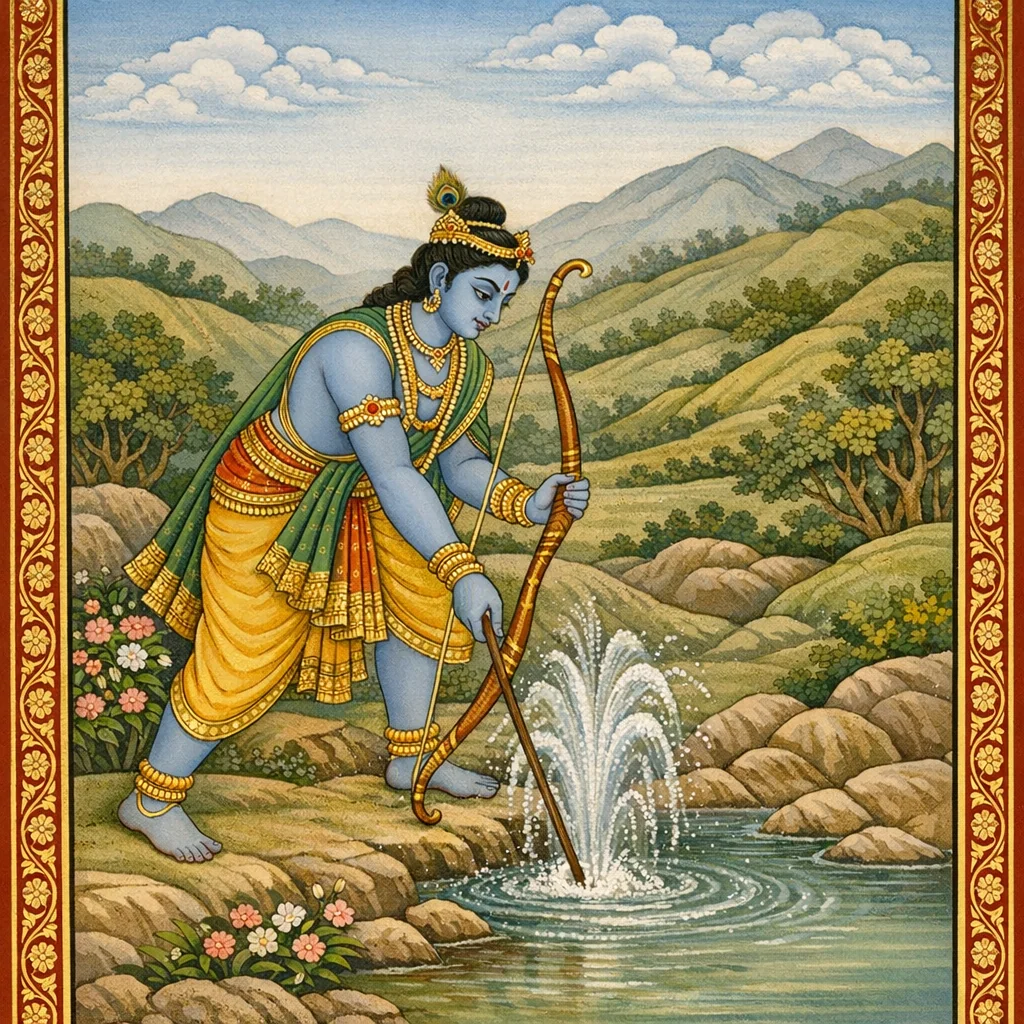
Sūta recounts the glory of a famed tīrtha called Govatsa, near a place associated with Markandeya. There Ambikāpati (Śiva) is said to dwell both in the form of a wondrous calf and as a self-manifest, radiant liṅga. King Balāhaka—a hunter yet a Rudra-devotee—chases the calf into the forest; when he tries to seize it, a blazing liṅga appears. Overwhelmed, the king reflects, relinquishes his body, and celestial cries with a rain of flowers mark his immediate ascent to Śiva’s realm. The gods petition Śiva to remain there as a bright liṅga for the welfare of the worlds; Śiva grants abiding presence and prescribes observances in Bhādrapada, during the dark fortnight on the day of Kuhū, promising fearlessness and merit to worshippers. The chapter then teaches ritual-ethics: piṇḍadāna and tarpaṇa are praised as highly efficacious for ancestors—even those in difficult states—especially at the Gaṅgā-kūpaka near Govatsa. An origin tale explains “Caṇḍāla-sthala” through a moral vignette about one deemed caṇḍāla by conduct; the liṅga’s abnormal growth is ritually addressed and the site’s sanctity stabilized. It concludes with a strong phalaśruti: liṅga-darśana and service to the tīrtha purify even grave transgressions, presenting a theology of sacred place, ritual power, and ethical transformation.
Shlokas
Verse 1
सूत उवाच । तत्र तस्य समीपस्थं मार्कंडेनोपलक्षितम् । तीर्थं गोवत्ससंज्ञं तु सर्वत्र भुवि संश्रुतम्
Sūta said: Near that place there is a sacred tīrtha, recognized by Markaṇḍeya, known as ‘Govatsa-tīrtha’—renowned throughout the whole world.
Verse 2
तत्रावतीर्य गोवत्सस्वरूपेणांबिकापतिः । स्वयंभूलिंगरूपेण संस्थितो जगतां पतिः
There, Ambikā’s Lord descended in the form of a calf, and the Lord of the worlds became established as a self-manifest Liṅga.
Verse 3
आसीद्बलाहकोनाम रुद्रभक्तो महाबलः । आखेटकसमायुक्तो नृपः परपुरंजयः
There was a king named Balāhaka—devoted to Rudra and of great strength—who, engaged in hunting, was a conqueror of enemy cities.
Verse 4
मृगयूथे स्थितं दृष्ट्वा गोवत्सं तत्पदातिना । उक्तो राजा मया दृष्टं कौतुकं नृपसत्तम
Seeing a calf standing amid a herd of deer, that foot-soldier said to the king: “O best of kings, I have beheld a marvel.”
Verse 5
गोवत्सो मृगयूथस्य दृष्टो मध्यस्थितो मया । तेषामेवानुरक्तोऽसौ जनन्या रहितस्तथा
“I saw the calf standing in the very midst of the deer-herd. It clings to them alone, and likewise it is without its mother.”
Verse 6
द्रष्टुं तु कौतुकं राजा तं पदातिं पुरः स्थितम् । उवाच दर्शयस्वेति गोवत्सं च समाविशत्
Wishing to see the marvel, the king said to the foot-soldier standing before him, “Show it to me,” and he set out toward the calf.
Verse 7
गत्वाटवीं तदा राज्ञो दर्शितः स पदातिना । पदातिभिर्मृगानीकं दुद्राव त्रासितं यदा
After they entered the forest, the foot-soldier pointed it out to the king. When the footmen approached, the herd of deer, frightened, fled away.
Verse 8
पीलुगुल्मं प्रति गतं गोवत्सः प्रस्थितस्तदा । राजा तद्धरणाकांक्षो प्राविशद्गुल्ममादरात्
Then the calf set out toward a thicket of pīlu shrubs. The king, desiring to seize it, eagerly entered the thicket.
Verse 9
तत्र स्थितं स गोवत्समपश्यन्नृपतिः स्वयम् । यावद्गृह्णाति तं तावल्लिंगं जातं समुज्वलम्
There the king himself beheld a calf standing. And as he moved to seize it, a radiant Śiva-liṅga suddenly manifested, blazing with splendor.
Verse 10
तं दृष्ट्वा विस्मितो राजा किमेतदित्यचिंतयत् । यावच्चिंतयते ह्येवं देहं त्यक्त्वा दिवं गतः
Seeing it, the king was astonished and pondered, “What is this?” While he was still reflecting thus, he cast off his body and rose to heaven.
Verse 11
अत्रांतरे गगनतले समंततः श्रूयते सुरजयकारगर्जितम् । पपात पुष्पवृष्टिरंबराद्राजा गतः शिवभुवनं च तत्क्षणात्
Meanwhile, across the vault of the sky on every side, the thunderous acclamation of the gods’ victory was heard. A rain of flowers fell from the heavens, and in that very instant the king went to Śiva’s own abode.
Verse 12
तावत्पश्यति तन्नाभ्यं गोवत्सं बालकं स्थितम् । नूनमेष महादेवो वत्सरूपी महेश्वरः
Then he beheld, at that very spot, a calf—like a little child—standing there. Surely this is Mahādeva himself, Maheśvara appearing in the form of a calf.
Verse 13
तमानेतुं समुद्युक्तो राजा तमुज्जहार च । तदा तद्देव लिंगं तु नोत्तिष्ठति कथंचन । तदा देवाः सहानेन प्रार्थयामासुरीश्वरम्
Eager to bring it away, the king tried to lift it up. But that divine liṅga would not rise at all. Thereupon the gods, together with him, began to beseech the Lord.
Verse 14
देवा ऊचुः । भगवन्सर्वदेवेश स्थातव्यं भवता विभो । शुक्लेन लिंगरूपेण सर्वलोकहितैषिणा
The gods said: “O Blessed One, Lord of all gods, O Almighty—remain here in the form of a bright, pure liṅga, seeking the welfare of all worlds.”
Verse 15
श्रीमहादेव उवाच । स्थास्याम्यहं सदैवात्र लिंगरूपेण देवताः । यस्माद्भाद्रपदे मासि कृष्णपक्षे कुहू दिने
Śrī Mahādeva said: “O gods, I shall indeed remain here forever in the form of the liṅga—because, in the month of Bhādrapada, during the dark fortnight, on the day of Kuhū…”
Verse 16
तथा तद्दिवसे तत्र स्नानं कृत्वा विधानतः । लिंगं ये पूजयिष्यंति न तेषां विद्यते भयम्
Likewise, on that day, those who bathe there according to the proper rule and worship the liṅga—fear will not exist for them.
Verse 17
ऋते च पिंडदानेन पूर्वजाः शाश्वतीः समाः । रौरवे नरके घोरे कुंभीपाके च ये गताः
Moreover, without the offering of piṇḍa, the forefathers may remain for endless years—those who have fallen into dreadful hells such as Raurava and Kuṃbhīpāka.
Verse 18
अनेकनरकस्थाश्च तिर्यग्योनिगताश्च ये । सकृत्पिंडप्रदानेन स्यात्ते षामक्षया गतिः
Even those who abide in many hells, and those who have fallen into animal births—by a single offering of piṇḍa, an imperishable deliverance becomes theirs.
Verse 19
ततो बलाहको राजा सर्वदेवसमन्वितः । स्थापयामास तल्लिंगं सर्वदेवसमीपतः
Then King Balāhaka, accompanied by all the gods, established that sacred Liṅga in the very presence and close proximity of the entire host of deities.
Verse 20
चकार बहुदानानि लोकानां हितकाम्यया । यावदर्चयते ह्येवं रुद्रोऽपि स्वयमागतः
Desiring the welfare of the people, he performed many acts of charity. And while he continued worship in this manner, Rudra himself arrived there in person.
Verse 21
रुद्र उवाच । अस्यां रात्रौ तु मनुजाः श्रद्धाभक्तिसमन्विताः । येर्चयिष्यंति देवेशं तेषां पुण्यमनंतकम्
Rudra said: “On this night, those people who are endowed with faith and devotion, and who worship the Lord of the Devas, shall obtain merit that is without end.”
Verse 22
जागरं ये करिष्यंति गीतशास्त्रपुरःसरम् । उद्धरिष्यंति ते मर्त्याः कुलमेकोत्तरं शतम्
Those mortals who keep a night-vigil, led by sacred singing and recitation of scripture, will uplift and deliver a hundred-and-one generations of their lineage.
Verse 23
तावद्गर्ज्जंति तीर्थानि नैमिषं पुष्करं गया । प्रयागं च प्रभासं च द्वारका मथुराऽर्बुदः
At that time the great pilgrimage-places resounded—Naimiṣa, Puṣkara, Gayā, Prayāga, Prabhāsa, as well as Dvārakā, Mathurā, and Arbuda.
Verse 24
यावन्न दृश्यते लिंगं गोवत्सं परमाद्भुतम् । यदा हि कुरुते भावं गोवत्सगमनं प्रति
So long as the supremely wondrous Liṅga, known as Govatsa, was not seen; but when the heart turned with intent toward approaching Govatsa, its manifestation drew near.
Verse 25
स्ववंशजास्तदा सर्वे नृत्यंति हर्षिता ध्रुवम्
Then all those of one’s own lineage surely rejoice and dance, filled with delight.
Verse 26
सूत उवाच । यच्चान्यदद्भुतं तत्र वृत्तांतं शृणु त द्विजा । येन वै श्रुतमात्रेण सर्वपापक्षयो भवेत्
Sūta said: “O twice-born sages, listen to another wondrous account that occurred there—by merely hearing it, the destruction of all sins comes about.”
Verse 27
यदा वै स्थापितं लिंगं सर्वदेवैः पुरातनम् । विष्णोः प्रतिष्ठानगुणात्सर्वेषां च दिवौक साम्
When that ancient Liṅga was installed by all the gods—by virtue of Viṣṇu’s power of consecration (pratiṣṭhā)—it became a source of auspicious benefit for all the dwellers in heaven as well.
Verse 28
अणुमात्रप्रमाणेन प्रत्यहं समवर्द्धत । ततस्ते मनुजा देवा भीतास्तं शरणं ययुः
It grew day by day, increasing by the measure of a single atom. Then humans and gods alike, struck with fear, went to him for refuge.
Verse 29
देवा ऊचुः । वृद्धिं संहर देवेश लोका नां स्वस्ति तद्भवेत् । एवमुक्ते ततो लिंगाद्वागुवाचाशरीरिणी
The gods said: “O Lord of the gods, withdraw this swelling increase, so that welfare may arise for the worlds.” When they had spoken thus, a bodiless voice issued forth from the liṅga.
Verse 30
शिववाण्युवाच । हे लोका मा भयं वोऽस्तु उपायः श्रूयतामयम् । कश्चिच्चंडालमानीय मत्पुरः स्थाप्यतां धुवम्
Śiva’s voice said: “O people, let there be no fear for you. Hear this remedy: bring a certain caṇḍāla and place him firmly before me.”
Verse 31
चंडालांश्च समानीय दधुर्देवस्य ते पुरः । तथापि तस्य वृद्धिस्तु नैव निर्वर्तते पुनः
Bringing caṇḍālas, they placed them before the Lord. Yet even then, that swelling increase did not subside again.
Verse 32
वागुवाच । कर्म्मणा यस्तु चंडालः सोऽग्रे मे स्थाप्यतां जनाः । तच्छ्रुत्वा महदाश्चर्यं मतिं चकुर्विलोचने
The voice said: “O people, the one who is a caṇḍāla by his deeds—place that person in front of me.” Hearing this, they were struck with great wonder and began to search with discerning thought.
Verse 33
मार्गमाणास्तदा ते तु ग्रामाणि च पुराणि च । कञ्चित्कर्मरतं पापं ददृशुर्ब्राह्मणब्रुवम्
Then, searching through villages and towns, they saw a certain sinful man, engrossed in wrongdoing, who merely called himself a brāhmaṇa.
Verse 34
वृषभान्भारसंयुक्तान्मध्याह्नेवाहयत्तु सः । क्षुत्तृट्श्रमपरीतांश्च दुर्बलान्क्रूरमानसः
Cruel-hearted, he drove oxen burdened with loads even at midday—weak creatures overcome by hunger, thirst, and exhaustion.
Verse 35
अस्नात्वापि पर्युषितं भक्षयंतीह वै द्विजाः । तं समादाय देवेशं जग्मुर्यत्र जगद्गुरुः
Though he had not bathed and was eating stale food, the twice-born seized him and brought him to the Lord of gods, to where the Guru of the world was present.
Verse 36
देवालयाग्रभूमौ तं स्थापयासुरादृताः । भस्मी बभूव सहसा गोवत्साग्रे निरूपितः
With reverent care they set him on the ground before the temple. Instantly he was reduced to ashes, as though placed before a calf, in innocence and purity.
Verse 37
चंडालस्थल इत्येष प्रसिद्धोसौऽभवत्क्षितौ । तत्र स्थितैर्न चाद्यापि प्रासादो दश्यते हि सः
This spot became famous on earth as “Caṇḍālasthala.” And for those who remain there, even to this day, a palace-like temple structure is indeed not seen there.
Verse 38
तदाप्रभृति तल्लिंगं साम्यभावमुपागतम् । धौतपाप्मा गतस्तीर्थं द्विजो लिंगनिरीक्षिणात्
From that time onward, that liṅga attained a state of equilibrium and calm. And a twice-born man, his sin washed away, reaches the holy ford merely by beholding the liṅga.
Verse 39
प्रत्यहं पूजयामास गोवत्सं गत किल्बिषः । विशेषात्कृष्णपक्षस्य चतुर्द्दश्यां समागतः
Freed from sin, he worshipped Govatsa day after day; and especially he observed it on the fourteenth lunar day (caturdaśī) of the dark fortnight.
Verse 40
एतत्तदद्भुतं तस्य देवस्य च त्रिशूलिनः । शृणुयाद्यो नरो भक्त्या सर्वपापैः प्रमुच्यते
This indeed is the wondrous greatness of that God, the Trident-bearer (Śiva). Whoever listens to it with devotion is released from all sins.
Verse 41
भूत उवाच । गोवत्समिति विख्यातं नराणां पुण्यदं परम् । अनेकजन्मपापघ्नं मार्कंडेयेन भाषितम्
Bhūta said: “It is renowned as ‘Govatsa,’ the supreme giver of merit for human beings—destroyer of sins accumulated over many births—as declared by Mārkaṇḍeya.”
Verse 42
तत्र तीर्थे सकृत्स्नानं रुद्रलोकप्रदं नृणाम् । पापदेहविशुद्धयर्थं पापेनोपहतात्मनाम्
At that tīrtha, a single bath grants humans the world of Rudra; it is for the purification of those whose bodies and inner selves have been struck down by sin.
Verse 43
कूपे तर्पणतश्चैव श्राद्धतश्चैव तृप्तता । भाद्रपदे विशे षेण पक्षस्यांते भवेत्कलौ
By performing tarpaṇa at the well—and likewise by offering śrāddha—there arises satisfaction for the ancestors, especially in Bhādrapada, at the end of the fortnight, in the age of Kali.
Verse 44
एकविंशतिवारांस्तु गयायां तर्पणे कृते । पितॄणां परमा तृप्तिः सकृद्वै गंगकूपके
Even if tarpaṇa is performed at Gayā twenty-one times, the ancestors’ supreme satisfaction is indeed attained by performing it just once at Gaṅgākūpaka.
Verse 45
तस्मिन्गोवत्ससामीप्ये तिष्ठते गंगकूपकः । तस्मिंस्तिलोदकेनापि सद्गतिं यांति तर्पिताः
Near that Govatsa stands Gaṅgākūpaka; and there, even by offering sesame-water, those satisfied through tarpaṇa attain a blessed destination.
Verse 46
पितरो नरकाद्वापि सुपुण्येन सुमेधसा । गोप्रदानं प्रशंसंति तस्मिंस्तीर्थे मुनीश्वराः
Even from hell, the ancestors—through the great merit gained by the wise and clear-minded—praise the gifting of a cow; and at that tīrtha the lordly sages extol the deed.
Verse 47
विप्राय स्वर्णदानं तु रुद्रलोके नयेन्नरम् । सरस्वतीशिवक्षेत्रे गंगा च गंगकूपके
The gifting of gold to a brāhmaṇa leads a person to Rudraloka. In the sacred region of Sarasvatī and Śiva—and likewise here at Gaṅgākūpaka—the Gaṅgā is present.
Verse 48
एकस्थमेतत्त्रितयं स्वर्गापवर्गकारणम् । सेवितं चर्षिभिः सिद्धैस्तीर्थं सर्वत्र विश्रुतम्
This triad, situated in a single place, becomes a cause of heaven and liberation. Served by ṛṣis and siddhas, this tīrtha is renowned everywhere.
Verse 49
पीलुयुग्मं स्थितं तत्र तत्तीर्थं मुनिसेवितम् । स्नानात्स्वर्गप्रदं चैव पानात्पापविशुद्धिदम्
There stands a pair of pīlu trees; that place is a sacred tīrtha, revered and frequented by sages. Bathing there bestows heaven, and drinking its water purifies one of sins.
Verse 50
कीर्त्तनात्पुण्यजननं सेवनान्मुक्तिदं परम् । तद्वै पश्यंति ये भक्त्या ब्रह्महा यदि मातृहा
By glorifying it through kīrtana, merit is born; by serving it, supreme liberation is granted. Those who behold it with devotion—even if guilty of brahmin-slaying or mother-slaying—are said to be redeemed.
Verse 51
बालघाती च गोघ्नश्च ये च स्त्रीशूद्रघातकाः । गरदाश्चाग्निदाश्चैव गुरुद्रोहरताश्च ये
Even child-killers, cow-slayers, and those who kill women or śūdras; poison-givers, arsonists, and those devoted to betraying their teacher—(even such people are included in the scope of purification described here).
Verse 52
तपस्विनिन्दकाश्चैव कूटसाक्ष्यं करोति यः । वक्ता च परदोषस्य परस्य गुणलोपकः
So too those who revile ascetics, one who gives false testimony, one who proclaims another’s faults, and one who obscures or diminishes another’s virtues—(even such persons are encompassed by the promised release).
Verse 53
सर्वपापमयोऽप्यत्र मुच्यते लिंगदर्शनात्
Even one steeped in every sin is freed here, merely by beholding the Liṅga.