Adhyaya 25
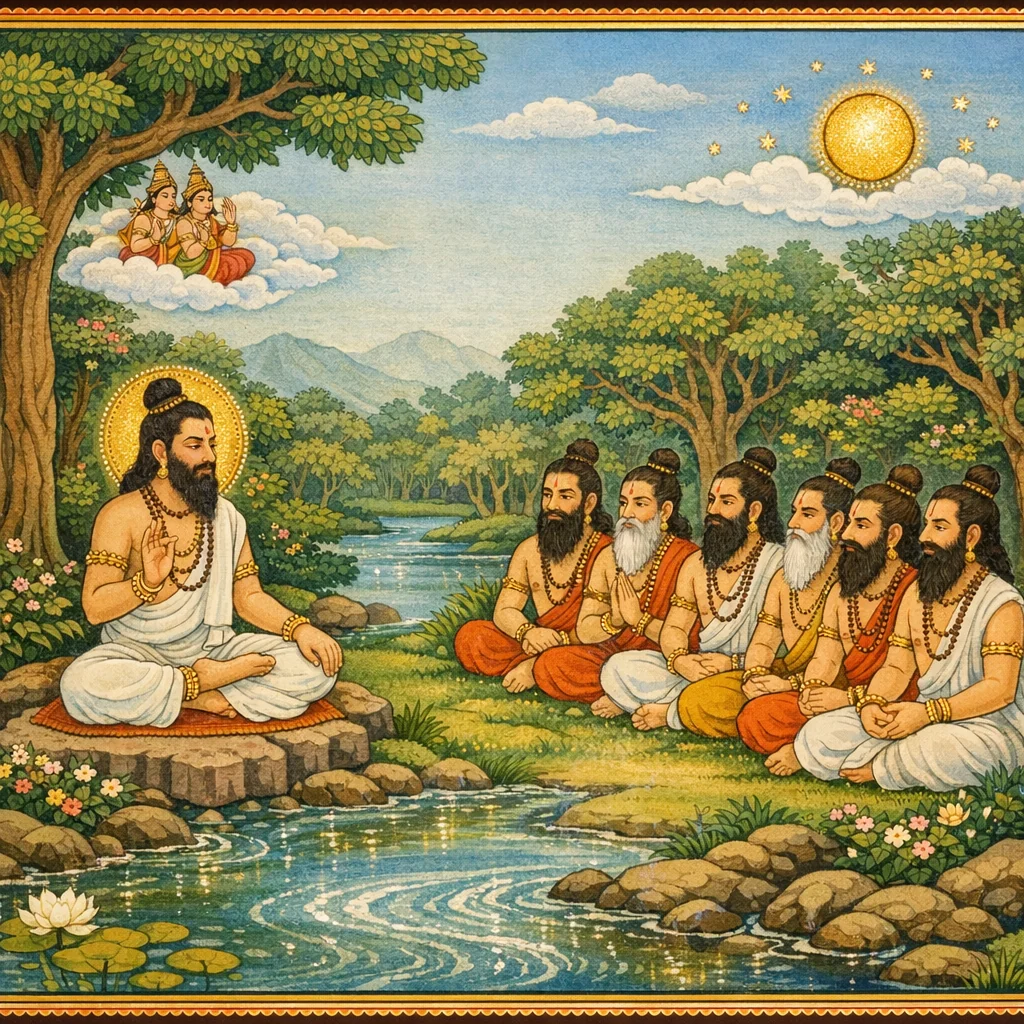
This adhyāya is framed as Sūta’s transmission of an excellent tīrtha-māhātmya, praising Sarasvatī’s sacred role in Dharmāraṇya. It introduces the sage Mārkaṇḍeya—serene, learned, yogically disciplined, bearing a kamaṇḍalu and rosary—whom assembled ṛṣis approach with reverence. Recalling earlier traditions connected with Naimiṣāraṇya and the descents of holy rivers, they ask him to clarify Sarasvatī’s advent and its ritual meaning. Mārkaṇḍeya declares that Sarasvatī was brought from Satyaloka to Dharmāraṇya (near Suredrādri), emphasizing her nature as a giver of refuge and protection. The chapter then prescribes a calendrical rite: in Bhādrapada, during the bright fortnight, on the auspicious Dvādaśī, at Dvāravatī-tīrtha (served by sages and gandharvas), one should perform piṇḍa-dāna and other ancestral offerings. The fruit is described as imperishable benefit for the pitṛs, while Sarasvatī’s water is extolled as supremely auspicious, able to remove even grave demerit in the text’s idiom. The phala teaching culminates by presenting Sarasvatī as a wish-fulfilling cause of both svarga-merit and apavarga-oriented good, aligning ritual action with higher liberative aims.
Shlokas
Verse 1
सूत उवाच । अथान्यत्संप्रवक्ष्यामि तीर्थमाहात्म्यमुत्तमम् । धर्मारण्ये यथाऽनीता सत्यलोकात्सरस्वती
Sūta said: Now I shall proclaim another supreme glorification of a tīrtha—how Sarasvatī was brought from Satyaloka into Dharmāraṇya.
Verse 2
मार्कंडेयं सुखासीनं महामुनिनिषेवितम् । तरुणादित्यसंकाशं सर्वशास्त्रविशारदम्
They beheld Mārkaṇḍeya seated in ease, attended by great sages—radiant like the rising sun, and profoundly learned in all śāstras.
Verse 3
सर्वतीर्थमयं दिव्यमृषीणां प्रवरं द्विजम् । आसनस्थं समायुक्तं धन्यं पूज्यं दृढव्रतम्
Divine, embodying the essence of all tīrthas, the foremost among ṛṣis—Mārkaṇḍeya, the venerable twice-born—sat firmly established upon his seat: blessed, worthy of worship, and steadfast in vow.
Verse 4
योगात्मानं परं शांतं कमडलुधरं विभुम् । अक्षसूत्रधरं शांतं तथा कल्पां तवासिनम्
They saw him as the very soul of yoga—supremely tranquil and mighty—bearing the kamaṇḍalu and holding the akṣasūtra (rosary); serene, abiding in that state through the ages.
Verse 5
अक्षोभ्यं ज्ञानिनं स्वस्थं पितामहसमुद्युतिम् । एवं दृष्ट्वा समाधिस्थं प्रहर्षोत्फुल्ललोचनम्
Unshakable, wise, and inwardly poised—radiant like the Grandsire (Brahmā)—seeing him thus established in samādhi, their eyes blossomed with joy.
Verse 6
प्रणम्य स्तुतिभिर्युक्त्या मार्क्कंडं मुनयोऽब्रुवन् । भगवन्नैमिषारण्ये सत्रे द्वादशवार्षिके
Having bowed with fitting hymns of praise, the sages spoke to Mārkaṇḍeya: “O Blessed One, in Naimiṣāraṇya, at the twelve-year satra (sacrificial session) …”
Verse 7
त्वयावतारिता ब्रह्मन्नदी या ब्रह्मणः सुता । तथा कृतं च तत्रैव गंगा वतरणं क्षितौ
“O Brāhmaṇa, by you that river—the daughter of Brahmā—was brought down; and there itself you also brought about the descent of Gaṅgā upon the earth.”
Verse 8
गीयमाने कुलपतेः शौनकस्य मुनेः पुरः । सूतेन मुनिना ख्यातमन्येषामपि शृण्वताम्
As it was being recited before Śaunaka, the patriarch among sages, the sage Sūta proclaimed it, while others too listened.
Verse 9
तच्छ्रुत्वा महदाख्यानम स्माकं हृदि संस्थितम् । पापघ्नी पुण्यजननी प्राणिनां दर्शनादपि
Having heard that great sacred narrative, it remained fixed within our hearts—she (Sarasvatī) destroys sin and gives birth to merit for living beings, even by mere sight.
Verse 10
मार्कण्डेय उवाच । धर्मारण्ये मया विप्राः सत्यलोकात्सरस्वती । समानीता सुरेखाद्रौ शरण्या शरणार्थिनाम्
Mārkaṇḍeya said: In Dharmāraṇya, O brāhmaṇas, I brought Sarasvatī down from Satyaloka to Mount Surekhā—she who is a refuge for all who seek refuge.
Verse 11
भाद्रपदे सिते पक्षे द्वादशी पुण्यसंयुता । तत्र द्वारावतीतीर्थे मुनिगंधर्वसेविते
In the month of Bhādrapada, on the bright fortnight’s Dvādaśī—endowed with great merit—at that Dvārāvatī Tīrtha, revered by sages and Gandharvas.
Verse 12
तस्मिन्दिने च तत्तीर्थे पिंडदानादि कारयेत् । तत्फलं समवाप्नोति पितॄणां दत्तमक्षयम्
On that day, and at that very tīrtha, one should have piṇḍa-offerings and related rites performed. One obtains that fruit: the gift made to the ancestors becomes imperishable.
Verse 13
महदाख्यानमखिलं पापघ्नं पुण्यदं च यत् । पवित्रं यत्पवित्राणां महापातकनाशनम्
This entire great sacred account is sin-destroying and merit-bestowing; it is a purifier among purifiers, and it annihilates even the gravest sins.
Verse 14
सर्वमंगलमांगल्यं पुण्यं सारस्वतं जलम् । ऊर्ध्वं किं दिवि यत्पुण्यं प्रभासांते व्यवस्थितम्
Sārasvata water is supremely auspicious—an auspiciousness beyond all auspicious things. What higher merit could there be even in heaven than the merit established at Prabhāsa’s end?
Verse 15
सारस्वतजलं नॄणां ब्रह्महत्यां व्यपोहति । सरस्वत्यां नराः स्नात्वा संतर्प्य पितृदेवताः । पश्चात्पिंडप्रदातारो न भवंति स्तनंधयाः
Sārasvata water drives away, for human beings, even the sin of brahma-hatyā. Having bathed in the Sarasvatī and satisfied the Pitṛs and the deities, those who then offer piṇḍas do not become ‘stanaṃdhaya’—dependent and helpless like infants.
Verse 16
यथा कामदुघा गावो भवन्तीष्टफलप्रदाः । तथा स्वर्गापवर्गैकहैतुभूता सरस्वती
Just as wish-fulfilling cows grant the desired fruits, so too Sarasvatī becomes the single cause of heaven and liberation.