Adhyaya 19
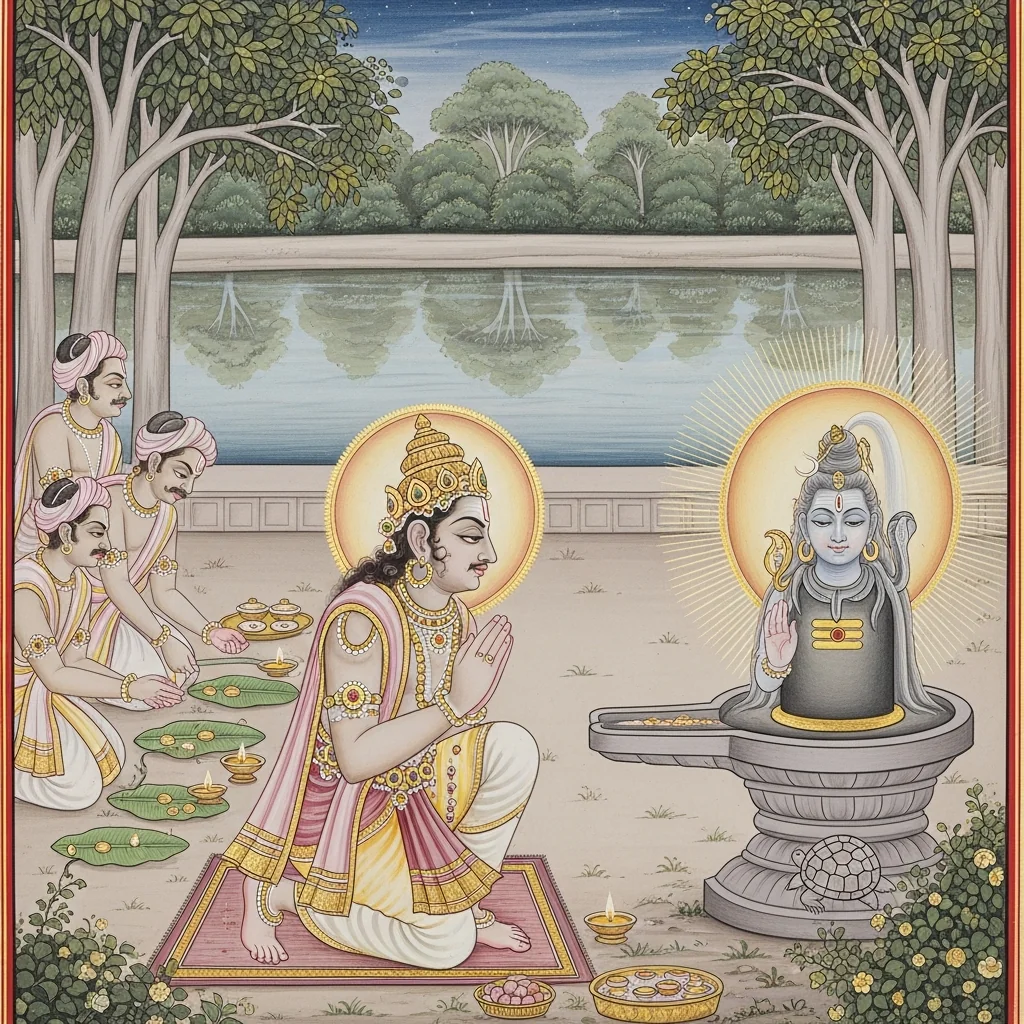
This adhyāya unfolds as a dialogue between Vyāsa and Yudhiṣṭhira. Vyāsa proclaims the saving power of bathing at Indrasara and of beholding and worshipping Śiva as Indreśvara, declaring that sins accumulated over long ages are washed away. When Yudhiṣṭhira asks for the origin, Vyāsa recounts Indra’s severe tapas to the north of a settlement, undertaken to neutralize the grievous taint incurred by slaying Vṛtra, described as a brahmahatyā-like affliction. Śiva appears in a formidable, awe-inspiring form and assures Indra that within Dharmāraṇya such defilements do not endure, instructing him to enter and bathe. Indra then requests that Śiva be established under his name; Śiva reveals a sin-destroying liṅga, said to have manifested through yogic power and linked with a tortoise motif, and abides in Dharmāraṇya as Indreśvara for the welfare of all beings. The chapter enumerates ritual merits: regular worship with offerings; special observances on aṣṭamī and caturdaśī in the month of Māgha; nīlotsarga performed before the deity; rudra-japa on caturdaśī; specific dāna such as gifting a gold-and-gem eye-image to dvijas; pitṛ-tarpaṇa after bathing; and promised relief from diseases and misfortunes. It closes with Jayanta’s related devotion, Indra’s periodic worship, and a phalaśruti promising purification and the attainment of desired aims to attentive listeners.
Shlokas
Verse 1
। । व्यास उवाच । इन्द्रसरे नरः स्नात्वा दृष्ट्वा चेंद्रेश्वरं शिवम् । सप्तजन्मकृतात्पापान्मुच्यते नात्र संशयः
Vyāsa said: Having bathed in Indrasara and beheld Indreśvara Śiva, a person is freed from sins accumulated over seven births—of this there is no doubt.
Verse 2
युधिष्ठिर उवाच । केन चादौ निर्मितं तत्तीर्थं सर्वोत्तमोत्तमम् । यथावद्वर्णय त्वं मे भगवन्द्विजसत्तम
Yudhiṣṭhira said: By whom was that supremely excellent tīrtha first established? O revered best of the twice-born, describe it to me properly and in full.
Verse 3
व्यास उवाच । इन्द्रेणैव महाराज तपस्तप्तं सुदुष्करम् । ग्रामादुत्तरदिग्भागे शतवर्षाणि तत्र वै
Vyāsa said: O great king, Indra himself performed there a most arduous austerity for a hundred years, in the northern quarter beyond the settlement.
Verse 4
शिवोद्देशं महाघोरमेकांगुष्ठेन भारत । उर्द्ध्वबाहुर्महातेजाः सूर्यस्याभिमुखोऽभवत्
O Bhārata, fixing his mind upon a most awe-inspiring aim—Śiva alone—he stood with arms raised, mighty in radiance, facing the Sun, balanced upon a single toe.
Verse 5
वृत्रस्य वधतो ज्ञातं यत्पापं तस्य नुत्तये । एकाग्रः प्रयतो भूत्वा शिवस्याराधने रतः
Recognizing the sin incurred by the slaying of Vṛtra, and seeking to expiate it, he became concentrated and purified in conduct, devoted to the worship of Śiva.
Verse 6
तपसा च तदा शंभुस्तोषितः शशिशे खरः । तत्राजगाम जटिलो भस्मांगो वृषभध्वजः
Then, by that austerity, Śambhu was pleased. Thereupon the fierce Lord—moon-crested—came there: matted-haired, ash-smeared, bearing the bull as His emblem.
Verse 7
खट्वांगी पंचवक्त्रश्च दशबाहुस्त्रिलोचनः । गंगाधरो वृषारूढो भूतप्रेतादिवेष्टितः
He bore a skull-topped staff; He was five-faced, ten-armed, and three-eyed; He carried Gaṅgā, rode upon the bull, and was surrounded by hosts of bhūtas and pretas.
Verse 8
सुप्रसन्नः सुरश्रेष्ठः कृपालुर्वरदायकः । तदा हृष्टमना देवो देवेन्द्रमिदमूचिवान्
Then the God—most gracious, best among the immortals, compassionate and a giver of boons—was exceedingly pleased. Joyful at heart, he spoke these words to Devendra (Indra).
Verse 9
हर उवाच । यत्त्वं याचयसे देव तदहं प्रद दामि ते
Hara (Śiva) said: “O god, whatever you ask, that I grant to you.”
Verse 10
इन्द्र उवाच । यदि तुष्टोसि देवेश कृपासिंधो महेश्वर । ब्रह्महत्या हि मां देव उद्वेजयति नित्यशः
Indra said: “If you are pleased with me, O Lord of the gods, O Maheśvara—ocean of compassion—know, O God, that the sin of Brahmahatyā (brahmin-slaying) continually torments me.”
Verse 11
वृत्रासुरस्य हनने जातं पापं सुरोत्तम । तत्पापं नाशय विभो मम दुःखप्रदं सदा
“O best among the gods! From the slaying of Vṛtrāsura, sin has arisen. O all-powerful Lord, destroy that sin which ever brings me sorrow.”
Verse 12
हर उवाच । धर्मारण्ये सुरपते ब्रह्महत्या न पीडयेत् । हत्या गवां द्विजातीनां बालस्य योषितामपि
Hara said: “O lord of the gods, in Dharmāraṇya the affliction of Brahmahatyā does not oppress. Even the sin incurred by killing cows, the twice-born, a child, or a woman does not remain there.”}]}}```json schema: verse_translations```
Verse 13
वचनान्मम देवेंद्र ब्रह्मणः केशवस्य च । यमस्य वचनाज्जिष्णो हत्या नैवात्र तिष्ठति । प्रविश्य त्वं महाराज अतोत्र स्नानमाचर
“O Devendra, by my command—and by the word of Brahmā, of Keśava, and by Yama’s decree, O Jiṣṇu—no sin of slaying abides here. Therefore, O great king, enter this place and perform the sacred bath here.”
Verse 14
इन्द्र उवाच । यदि त्वं मम तुष्टोऽसि कृपासिंधो महेश्वर । मन्नाम्ना च महादेव स्थापितो भव शंकर
Indra said: “If you are pleased with me, O Maheśvara, ocean of compassion—then, O Mahādeva, O Śaṅkara, be established here bearing my name.”
Verse 15
तथेत्युक्त्वा महादेवः सुप्रसन्नो हरस्तदा । दर्शयामास तत्रैव लिंगं पापप्रणाशनम्
Saying “So be it,” Mahādeva—Hara, greatly pleased—then manifested there itself a liṅga that destroys sin.
Verse 16
कूर्मपृष्ठात्समुत्पाद्य आत्मयोगेन शंभुना । स्थितस्तत्रैव श्रीकण्ठः कालत्रयविदो विदुः
By his own yogic power, Śambhu brought it forth from the back of a tortoise; and there itself Śrīkaṇṭha abided. Those who know the three times (past, present, future) understand this.
Verse 17
वृत्रहत्यासमुत्त्रस्तदेवराजस्य सन्निधौ । इन्द्रेश्वरस्तदा तत्र धर्मा रण्ये स्थितो नृप
O king, there in Dharmāraṇya, in the very presence of the lord of the gods—Indra, terrified by the slaying of Vṛtra—Indreśvara then became established.
Verse 18
सर्वपापविशुद्ध्यर्थं लोकानां हितकाम्यया । इन्द्रेश्वरं तु राजेंद्र पुष्पधूपादिकैः सदा
O king of kings, seeking the welfare of the people and the purification from all sins, one should ever worship Indreśvara with offerings such as flowers, incense, and the like.
Verse 19
पूजयेच्च नरो भक्त्या सर्वपापैः प्रमुच्यते । अष्टम्यां च चतुर्दश्यां माघमासे विशेषतः
If a person worships with devotion, he is freed from all sins—especially when the worship is performed on the eighth and the fourteenth lunar days, most particularly in the month of Māgha.
Verse 20
सर्वपापविशुद्ध्यर्थं शिवलोके महीयते । नीलोत्सर्गं तु यो मर्त्यः करोति च तदग्रतः
For the purification from all sins, he is honored in Śiva’s world. And the mortal who performs the offering called nīlotsarga in that sacred presence attains this merit.
Verse 21
उद्धरेत्सप्त गोत्राणि कुलमेकोत्तरं शतम् । सांगरुद्रजपं यस्तु चतुर्द्दश्यां करोति वै
He uplifts seven lineages and one hundred and one families—whoever truly performs the Sāṅga-Rudra japa on the fourteenth lunar day.
Verse 22
सर्वपाविशुद्धात्मा लभते परमं पदम्
With the soul purified from all sins, one attains the supreme state.
Verse 23
सौवर्णनयनं कृत्वा मध्ये रत्नसमन्वितम् । यो ददाति द्विजातिभ्य इन्द्रतीर्थे तथोत्तमे
Whoever fashions a golden eye, set with a gem at its center, and offers it to the twice-born at the most excellent Indratīrtha, attains the praised fruit described next.
Verse 24
अन्धता न भवे त्तस्य जन्मानि षष्टिसंख्यया । निर्मलत्वं सदा तेषां नयनेषु प्रजायते । महारोगास्तथा चान्ये स्नात्वा यांति तदग्रतः
For him, blindness does not arise for sixty lifetimes, and purity and clarity are ever born in his eyes. Likewise, those afflicted by grievous diseases and other ailments, after bathing, depart from that sacred presence, freed from their afflictions.
Verse 25
पूजिते चैकचित्ते न सर्वरोगात्प्रमुच्यते । स्नात्वा कुण्डे नरो यस्तु संतर्पयति यः पितॄन्
When (the deity) is worshiped with one-pointed mind, one is freed from every disease. And the man who, after bathing in the pond, offers satisfaction to the Pitṛs (ancestors)…
Verse 26
तस्य तृप्ताः सदा भूप पितरश्च पितामहाः । ये वै ग्रस्ता महारोगैः कुष्ठाद्यैश्चैव देहिनः
O king, his fathers and grandfathers are always satisfied; and even embodied beings who are seized by grievous diseases such as leprosy and the like…
Verse 27
स्नानमात्रेण संशुद्धा दिव्यदेहा भवंति ते । ज्वरादिकष्टमापन्ना नराः स्वात्महिताय वै
By bathing alone they are purified, and they attain divine bodies. People afflicted with hardships such as fever and other ailments do so indeed for their own highest good.
Verse 28
स्नान मात्रेण संशुद्धा दिव्यदेहा भवंति ते । स्नात्वा च पूजयेद्देवं मुच्यते ज्वरबन्धनात्
By bathing alone in this sacred place, they are purified and attain a radiant, divine state. And having bathed, if one worships the Lord, one is released from the bondage of fever.
Verse 29
एकाहिकं द्व्याहिकं च चातुर्थं वा तृतीयकम् । विषमज्वरपीडा च मासपक्षादिकं ज्वरम्
Whether it is a one-day fever, a two-day fever, a quartan or a tertian fever; whether the torment is from an irregular fever, or a fever recurring by months, fortnights, and the like—(all such fevers are addressed here).
Verse 30
इन्द्रेश्वरप्रसादाच्च नश्यते नात्र संशयः । विज्वरो जायते नूनं सत्यंसत्यं च भूपते
By the grace of Indreśvara it is destroyed—there is no doubt of this. One surely becomes free from fever; this is true, true indeed, O king.
Verse 31
वन्ध्या च दुर्भगा नारी काकवन्ध्या मृतप्रजा । मृतवत्सा महादुष्टा स्नात्वा कुण्डे शिवाग्रतः । पूजयेदेकचित्तेन स्नानमात्रेण शुद्ध्यति
Even a barren woman, an unfortunate woman, one called ‘kāka-vandhyā’, one whose children have died, one whose infant has died, even one greatly sinful—having bathed in the kuṇḍa before Śiva, should worship with single-pointed mind; by bathing alone she becomes purified.
Verse 32
एवंविधाश्च बहुशो वरान्दत्त्वा पिनाकधृक् । गतोऽसौ स्वपुरं पार्थ सेव्यमानः सुरासुरैः
Having thus granted many such boons again and again, the Bearer of the Pināka (Śiva) departed to his own city, O son of Pṛthā, attended by gods and asuras.
Verse 33
ततः शक्रो महातेजा गतो वै स्वपुरं प्रति । जयंतेनापि तत्रैव स्थापितं लिंगमुत्तमम्
Then Śakra (Indra), of great splendor, indeed went to his own city. And there itself, by Jayaṃta, an excellent liṅga was established.
Verse 34
जयंतस्य हरस्तुष्टस्तस्मिल्लिंगे स्तुतः सदा । त्रिकालं पुत्रसंयुक्तः पूजनार्थं सुरेश्वरः
Hara (Śiva), pleased with Jayaṃta, is ever praised at that liṅga. The Lord of the gods (Indra), together with his son, comes at the three times of day for the sake of worship.
Verse 35
आयाति च महाबाहो त्यक्त्वा स्थानं स्वकं हि वै । एतत्सर्वं समाख्यातं सर्वसौख्यप्रदायकम्
And he comes, O mighty-armed one, indeed leaving his own place. All this has been explained—bestowing every kind of happiness.
Verse 36
इन्द्रेश्वरं तु यत्पुण्यं जयंतेशस्य पूज नात् । तदेवाप्नोति राजेन्द्र सत्यंसत्यं न संशयः
Whatever merit belongs to Indreśvara through the worship of Jayaṃteśa—one obtains that very same merit, O king; true, true—there is no doubt.
Verse 37
स्नात्वा कुण्डे महाराज संपूज्यैकाग्रमानसः । सर्वपापविशुद्धात्मा इन्द्रलोके महीयते
Having bathed in the kuṇḍa, O great king, and having worshiped with a focused mind, one whose self is purified of all sins is honored in Indra’s world.
Verse 38
यः शृणोति नरो भक्त्या सर्वपापैः प्रमुच्यते । सर्वान्कामानवाप्नोति जयंतेशप्रमादतः
Whoever listens with devotion is freed from all sins; and by the gracious power of Jayaṃteśa he attains all desired aims.