Adhyaya 17
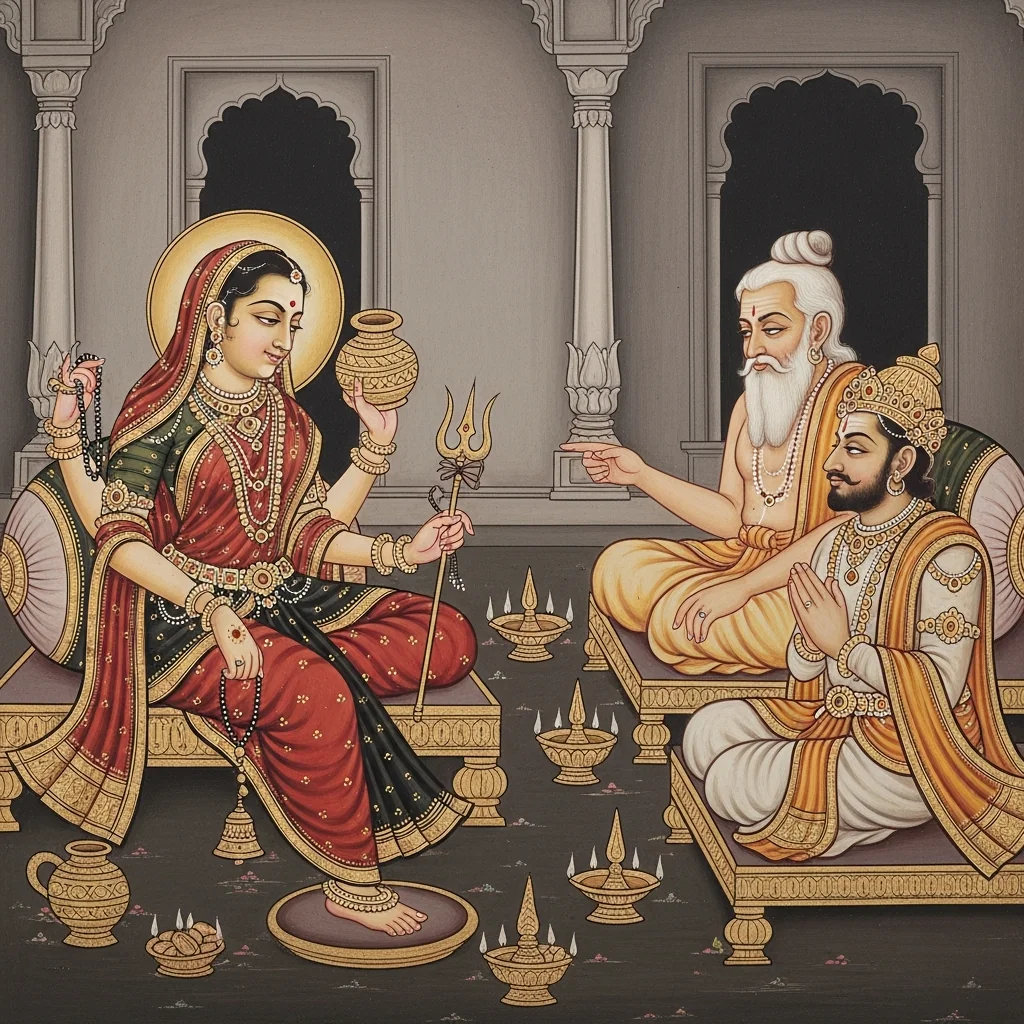
In this chapter, Vyāsa delivers to a king a theological discourse that both describes and prescribes the worship of a powerful Goddess installed in the southern direction, revered as a protective śakti for one’s lineage and settlement. She is praised under many names—Śāntā Devī, Śrīmātā, Kulamātā, and Sthānamātā—and is identified through iconographic signs: multi-armed forms bearing the bell (ghaṇṭā), trident (triśūla), rosary (akṣamālā), and water-pot (kamaṇḍalu), with animal-vāhana imagery and garments of black and red. The text further links her with Viṣṇu’s placement, the destruction of daityas, and explicitly affirms her as Sarasvatī-rūpa. The chapter then sets out a pūjāvidhi: offerings of flowers, fragrances (camphor, agaru, sandal), lamps and incense, and food offerings such as grains, sweets, payasa, and modaka. Feeding brāhmaṇas and kumārīs is enjoined, and proper nivedana is emphasized as a prerequisite before beginning any auspicious undertaking. Its phala teaching promises victory in conflicts and contests, removal of disturbances, success in rites (marriage, upanayana, sīmanta), prosperity, learning, and progeny, and finally an exalted posthumous state through Sarasvatī’s favor. Thus the chapter integrates iconography, ritual technology, and ethical guidance for initiating actions under divine protection.
Shlokas
Verse 1
व्यास उवाच । दक्षिणे स्थापिता राजञ्छांता देवी महाबला । सा विविधाम्बरधरा वनमालाविभूषिता
Vyāsa said: O King, to the south was installed the mighty Goddess Śāntā. She wore garments of many kinds and was adorned with a garland of forest-flowers.
Verse 2
तामसी सा महाराज मधुकैटभनाशिनी । विष्णुना तत्र वै न्यस्ता शिवपत्नी नृपोत्तम
O great king, she is Tāmasī, the slayer of Madhu and Kaiṭabha. In that very place she was set down by Viṣṇu—the consort of Śiva, O best of kings.
Verse 3
सा चैवाष्टभुजा रम्या मेघश्यामा मनोरमा । कृष्णांबरधरा देवी व्याघ्रवाहनसंस्थिता
She is indeed lovely, eight-armed, dark as a rain-cloud and enchanting; the Goddess wears black garments and is seated upon a tiger as her mount.
Verse 4
द्वीपिचर्मपरीधाना दिव्याभरणभूषिता । घंटात्रिशूलाक्षमालाकमंडलुधरा शुभा
She wears a leopard-skin garment and is adorned with divine ornaments. Auspicious, she bears a bell, a trident, a rosary, and a water-pot.
Verse 5
अलंकृतभुजा देवी सर्वदेवनमस्कृता । धनं धान्यं सुतान्भोगान्स्वभक्तेभ्यः प्रयच्छति
The Goddess, whose arms are beautifully adorned and who is bowed to by all the Devas, grants to her devotees wealth, grain, children, and the enjoyments of life.
Verse 6
पूजयेत्कमलै र्दिव्यैः कर्पूरागरुचंदनैः । तदुद्देशेन तत्रैव पूजयेद्द्विजसत्तमान्
One should worship her with divine lotuses, camphor, agaru, and sandalwood; and with that very intention, one should also honor, right there, the best among the twice-born.
Verse 7
कुमारीर्भोजयेदन्नैर्विविधैर्भक्तिभावतः । धूपैर्दीपैः फलैः रम्यैः पूजयेच्च सुरादिभिः
With a devotional spirit, one should feed young maidens with various foods; and worship with incense, lamps, pleasing fruits, and offerings such as surā and the like, as prescribed.
Verse 8
मांसैस्तु विविधैर्दिव्यैरथवा धान्यपिष्टजैः । अन्यैश्च विविधैर्धान्यैः पायसैर्वटकैस्तथा
One may offer various excellent meats, or preparations made from grain-flour; also other kinds of grains, sweet rice (pāyasa), and likewise fritters (vaṭaka).
Verse 9
ओदनैः कृशरापूपैः पूजयेत्सुसमाहितः । स्तुतिपाठेन तत्रैव शक्तिस्तोत्रैर्मनोहरैः
With a well-focused mind, one should worship with odana (boiled rice), kṛśarā, and cakes (pūpa); and right there recite hymns of praise—charming Śakti-stotras.
Verse 10
रिपवस्तस्य नश्यंति सर्वत्र विजयी भवेत् । रणे राजकुले द्यूते लभते जयमंगलम्
His enemies are destroyed, and he becomes victorious everywhere; in battle, in royal courts, and even in contests of chance, he attains auspicious victory.
Verse 11
सौम्या शांता महाराज स्थापिता कुलमातृका । श्रीमाता सा प्रसिद्धा च माहात्म्यं शृणु भूपते
O great king, gentle and tranquil, she has been established as the Mother of the lineage; she is renowned as Śrīmātā—hear, O ruler, her sacred greatness (māhātmya).
Verse 12
कुलमाता महाशक्तिस्तत्रास्ते नृपसत्तम । कुमारी ब्रह्मपुत्री सा रक्षार्थं विधिना कृता
O best of kings, the Kulamātā—the Great Power—abides there. She is a Kumārī, the daughter of Brahmā, established by sacred ordinance for protection.
Verse 13
स्थानमाता च सा देवी श्रीमाता साभिधानतः । त्रिरूपा सा द्विजातीनां निर्मिता रक्षणाय च
That Goddess is also the Mother of the Place (Sthānamātā); by name she is Śrīmātā. She is three-formed, fashioned for the protection of the twice-born as well.
Verse 14
कमण्डलुधरा देवी घण्टाभरणभूषिता । अक्षमालायुता राजञ्छुभा सा शुभरूपिणी
O king, the Goddess bears a water-pot (kamaṇḍalu), is adorned with bell-ornaments, and wears a rosary; she is auspicious, of auspicious form.
Verse 15
कुमारी चादिमाता च स्थानत्राणकरापि च । दैत्यघ्नी कामदा चैव महामोहविनाशिनी
She is Kumārī, the Primordial Mother; the Protectress who safeguards the holy place; the Slayer of demons; the Bestower of rightful desires; and the One who destroys great delusion.
Verse 16
भक्तिगम्या च सा देवी कुमारी ब्रह्मणः सुता । रक्तांबरधरा साधुरक्तचंदनचर्चिता
That Goddess Kumārī is reached through devotion; she is Brahmā’s daughter. Wearing red garments, she is auspicious and is anointed with red sandal paste.
Verse 17
रक्तमाल्या दशभुजा पंचवक्त्रा सुरेश्वरी । चंद्रावतंसिका माता सुरा सुरनमस्कृता
Adorned with a red garland, ten-armed and five-faced, she is the Sovereign Lady of the gods. With the moon as her ornament, she is the Mother—revered by both gods and antigods.
Verse 18
साक्षात्सरस्वतीरूपा रक्षार्थं विधिना कृता । ओंकारा सा महापुण्या काजेशेन विनिर्मिता
She is manifest as Sarasvatī herself, fashioned by Brahmā according to sacred ordinance for the sake of protection. She is Oṃkāra in form, supremely meritorious, and was brought forth by Kājeśa.
Verse 19
ऋषिभिः सिद्धयक्षा दिसुरपन्नगमानवैः । प्रणम्यांघ्रियुगा तेभ्यो ददाति मनसेप्सितम्
Sages, Siddhas, Yakṣas, gods, nāgas, and human beings bow at her pair of feet; to them she grants what the mind longs for.
Verse 20
पालयन्ती च संस्थानं द्विजातीनां हिताय वै । यथौरसान्सुतान्माता पालयन्तीह सद्गुणैः
She safeguards the sacred order for the welfare of the twice-born, even as a mother here, through loving virtue, protects her own true-born sons.
Verse 21
अथ पालयती देवी श्रीमाता कुलदेवता । उपद्रवाणि सर्वाणि नाशयेत्सततं स्तुता
Thus the protecting Goddess—Śrīmātā, the clan-deity—when ever praised, destroys all afflictions and every disturbance.
Verse 22
सर्वविघ्नोपशमनी श्रीमाता स्मरणेन हि । विवाहे चोपवीते च सीमंते शुभकर्मणि
By mere remembrance, Śrīmātā stills every obstacle—especially at marriage, at the upanayana of the sacred thread, and at the sīmantonnayana rite, in all auspicious acts.
Verse 23
सर्वेषु भक्तकार्येषु श्रीमाता पूज्यते सदा । यथा लंबोदरं देवं पूज यित्वा समारभेत्
In every undertaking of devotees, Śrīmātā is ever to be worshipped—just as one begins by worshipping the god Lambodara (Gaṇeśa).
Verse 24
कार्यं शुभं सर्वमपि श्रीमातरं तथा नृप । यत्किंचिद्भोजनं त्वत्र ब्राह्मणेभ्यः प्रयच्छति
O King, in every auspicious undertaking one should likewise honor Śrīmātā; and whatever food is found here, one should offer it as a gift to the Brāhmaṇas.
Verse 25
अथवा विनिवेद्यं च क्रियते यत्परस्परम् । अनिवेद्य च तां राजन्कुर्वाणो विघ्नमेष्यति
O King, whatever is done in mutual dealings should be undertaken only after duly presenting and offering it to Her. If one proceeds without first laying it before Her, he will surely meet with obstacles.
Verse 26
तस्मात्तस्यै निवेद्याथ ततः कर्म समारभेत् । तद्वरेणाखिलं कर्म अविघ्नेन हि सिद्धति । हेमंते शिशिरे प्राप्ते पूजयेद्धर्मपुत्रिकाम्
Therefore, having first offered it to Her, one should then begin the work. By Her boon, every undertaking is indeed accomplished without hindrance. When Hemanta and Śiśira, the winter seasons, arrive, one should worship Dharmaputrikā.
Verse 27
हेमपत्रे समालिख्य राजते वाथ कारयेत् । पादुकां चोत्तमां राजञ्छ्रीमातायै निवेदयेत्
Having inscribed it upon a golden leaf—or else having it made in silver—O King, one should present to Śrīmātā an excellent pair of pādukā, sacred sandals.
Verse 28
स्नात्वा चैव शुचिर्भूत्वा तिलामलकमिश्रितैः । वासोभिः सुमनोभिश्च दुकूलैः सुमनोहरैः
Having bathed and become pure, one should worship with garments and pleasing offerings—preparations mixed with sesame and āmalaka—together with fine, delightful dukūla textiles and flowers.
Verse 29
लेपयेच्चंदनैः शुभ्रैः कुकुमैः सिंदुरासकैः । कर्पूरागुरुकस्तूरीमिश्रितैः कर्द्दमैस्तथा
One should anoint the Goddess with bright white sandal-paste, with kunkuma (saffron) and red sindūra (vermilion); and likewise with fragrant unguents blended with camphor, agaru, and musk.
Verse 30
कर्णिकारैश्च कह्लारैः करवीरैः सितारुणैः । चंपकैः केतकीभिश्च जपा कुसुमकैस्तथा
One should worship in a beautifying manner with karṇikāra blossoms, kahlāra lotuses, white and red karavīra flowers, as well as campaka, ketakī, and hibiscus blooms.
Verse 31
यक्षकर्द्दमकैश्चैव विल्वपत्रैरखंडितैः । पालाशजातिपुष्पैश्च वटकैर्माषसंभवैः । पूपभक्तादिदालीभिस्तोषयेच्छाकसंचयैः
And also with yakṣa-unguents, with unbroken bilva leaves, with pālāśa and jasmine flowers, and with vadas (cakes) made from black gram—along with pūpas, cooked rice, and other dishes—one should satisfy the Goddess with abundant vegetable preparations.
Verse 32
धूपदीपादिपूर्वं तु पूजयेज्जगदंबिकाम् । तद्धियैव कुमारीर्वै विप्रानपि च भोजयेत् । पायसैर्घृतयुक्तैश्च शर्करामिश्रितैर्नृप
But first, with incense, lamps, and the like, one should worship Jagadambikā, the Mother of the world. With that very intent, one should also feed young maidens and even brāhmaṇas, O King, with sweet rice (pāyasa) mixed with ghee and blended with sugar.
Verse 33
पक्वान्नैर्मोदकाद्यैश्च तर्पयेद्भक्तिभावतः । तर्प्यमाणे द्विजैकस्मिन्सहस्रफलमश्नुते
With cooked foods, modakas, and the like, one should satisfy them in a spirit of devotion. When even a single brāhmaṇa is thus satisfied, one obtains a thousandfold result.
Verse 34
दैत्यानां घातकं स्तोत्रं वाचयेच्च पुनः पुनः । एकाग्रमानसो भूत्वा श्रीमातरं स्तुवीय यः
One should recite—again and again—the hymn that slays the Dāityas. Whoever, becoming single-pointed in mind, praises Śrīmātā in this way…
Verse 35
तस्य तुष्टा वरं दद्यात्स्नापिता पूजिता स्तुता । अनिष्टानि च सर्वाणि नाशयेद्धर्मपुत्रिका
When she—pleased by ritual bathing, worship, and praise—becomes satisfied, that Daughter of Dharma bestows boons and destroys all inauspiciousness.
Verse 36
अपुत्रो लभते पुत्रान्नि र्धनो धनवान्भवेत् । राज्यार्थी लभते राज्यं विद्यार्थी लभते च ताम्
The childless gains children; the poor becomes wealthy. One who seeks a kingdom gains sovereignty; and the seeker of learning obtains that knowledge as well.
Verse 37
श्रियोर्थी लभते लक्ष्मीं भार्यार्थी लभते च ताम् । प्रसादाच्च सरस्वत्या लभते नात्र संशयः
The seeker of prosperity attains Lakṣmī; the seeker of a wife obtains her as well. By the grace of Sarasvatī one gains these fruits—of this there is no doubt.
Verse 38
अन्ते च परमं स्थानं यत्सुरैरपि दुर्लभम् । प्राप्नोति पुरुषो नित्यं सरस्वत्याः प्रसादतः
And in the end, by Sarasvatī’s grace, a person surely attains the supreme state—one difficult to obtain even for the gods.