Adhyaya 16
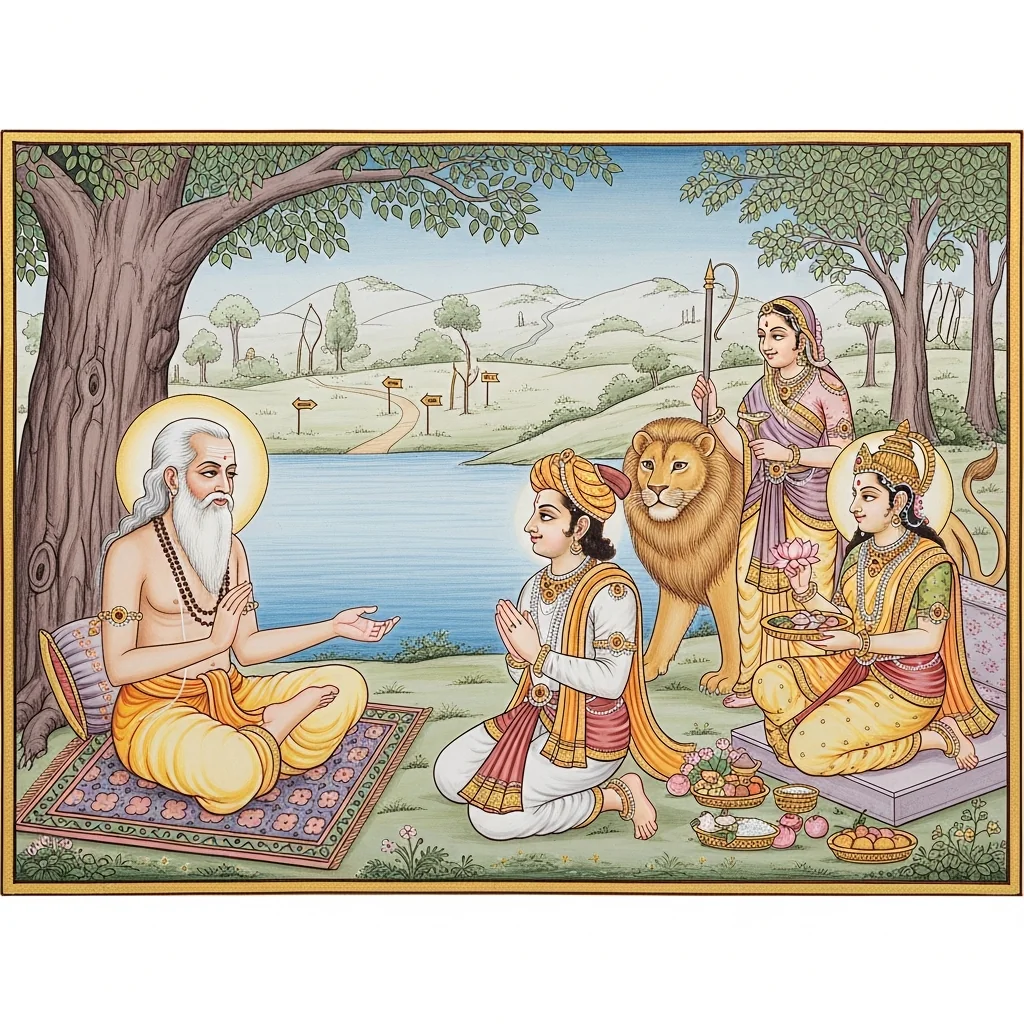
Chapter 16 unfolds as a theological question-and-answer between Yudhiṣṭhira and Vyāsa. Yudhiṣṭhira asks for an indexed account of the protective śaktis installed in Dharmāraṇya to dispel fear caused by rākṣasas, daityas, yakṣas, and other disruptive beings, requesting their names and precise locations. Vyāsa explains that these powers were established by divine authorities and stationed in the four directions to safeguard the dvijas and the wider community. The chapter lists several goddess-forms and epithets—Śrīmātā, Śāntā, Sāvitrī, Gātrāyī, Chatrājā, and Ānandā—describing their martial iconography, including weapons and mounts such as Garuḍa and the lion, and presenting them as guardians of sacred space and ritual order. A key ritual geography is introduced: a sacred lake before Chatrājā’s locale, where snāna, tarpaṇa, and piṇḍadāna are said to yield akṣaya (imperishable) merit. The discourse then expands into a theology of merit with practical assurances—relief from disease and enemies, prosperity, and victory—culminating in praise of Ānandā as a sāttvikī śakti whose worship, with specified offerings, grants enduring results and supports learning and well-being.
Shlokas
Verse 1
युधिष्ठिर उवाच । रक्षसां चैव दैत्यानां यक्षणामथ पक्षिणाम् । भयनाशाय काजेशैर्धर्मारण्यनिवासिनाम्
Yudhiṣṭhira said: For the destruction of fear—arising from rākṣasas, daityas, yakṣas, and even birds—tell me the measures established by the lords of Kājeśa for those dwelling in Dharmāraṇya.
Verse 2
शक्तीः संस्थापिता नृनं नानारूपा ह्यनेकशः । तासां स्थानानि नामा नि यथारूपाणि मे वद
Many Śaktis of diverse forms have been installed for the protection of people. Tell me their abodes and their names, in accordance with their respective forms.
Verse 3
व्यास उवाच । शृणु पार्थ महाबाहो धर्ममूर्ते नृपोत्तम । स्थाने वै स्थापिता शक्तिः काजेशैश्चैव गोत्रपा
Vyāsa said: Listen, O Pārtha, mighty-armed—O embodiment of dharma, best of kings. In their proper places the Śakti was established by the lords of Kājeśa, and she protects the lineages (gotras).
Verse 4
श्रीमाता मदारिकायां शांता नंदापुरे वरे । रक्षार्थं द्विजमुख्यानां चतुर्दिक्षु स्थिताश्च ताः
Śrīmātā abides at Madārikā, and Śāntā in the excellent city of Nandāpura. For the protection of foremost brāhmaṇas, those Śaktis stand stationed in all four directions.
Verse 5
युक्ताश्चैव सुरैः सर्वैः स्वस्वस्थाने नृपोत्तम । वनमध्ये स्थिताः सर्वा द्विजानां रक्षणाय वै
O best of kings, all of them—duly appointed by all the gods—were stationed, each in his proper place within the forest, indeed for the protection of the brāhmaṇas.
Verse 6
सा बभूव महाराज सावित्रीति प्रथा शिवा । असुराणां वधार्थाय ज्ञानजा स्थापिता सुरैः
O great king, that auspicious goddess became renowned as “Sāvitrī.” Born of sacred knowledge, she was established by the gods for the purpose of slaying the asuras.
Verse 7
गात्रायी पक्षिणी देवी छत्रजा द्वारवासिनी । शीहोरी चूटसंज्ञा या पिप्पलाशापुरी तथा । अन्याश्च बहवश्चैव स्थापिता भयरक्षणे
Gātrāyī, Pakṣiṇī Devī, Chatrajā, Dvāravāsinī, Śīhorī, she who is known as Cūṭā, and likewise Pippalāśāpurī—many others too—were installed for protection against fear.
Verse 8
प्रतीच्योदीच्यां याम्यां वै विबुधैः स्थापिता हि सा । नानायुधधरा सा च नानाभरणभूषिता
In the western, northern, and southern quarters, indeed, she was installed by the gods; and she bore many kinds of weapons and was adorned with many ornaments.
Verse 9
नानावाहनमारूढा नानारूपधरा च सा । नानाकोपसमायुक्ता नानाभयविना शिनी
She rode upon many different mounts and assumed many forms as well. Endowed with many modes of sacred wrath, she was the destroyer of many kinds of fear.
Verse 10
स्थाप्या मातर्यथास्थाने यथायोग्या दिशोदिश । गरुडेन समारूढा त्रिशूलवरधारिणी
The Mother was to be installed in her rightful place, duly arranged in every direction—mounted upon Garuḍa, bearing the trident and bestowing boons.
Verse 11
सिंहारूढा शुद्धरूपा वारुणी पानदर्पिता । खड्गखेटकबाणाढ्यैः करैर्भाति शुभानना
Mounted on a lion, of pure form—Vāruṇī, flushed with the pride of drink—shines with an auspicious face, her hands well-equipped with sword, shield, and arrows.
Verse 12
रक्तवस्त्रावृता चैव पीनोन्नतपयोधरा । उद्यदादित्यबिंबाभा मदाघूर्णितलोचना
Clad in red garments, with full and uplifted breasts, radiant like the disk of the rising sun, her eyes unsteady from intoxication.
Verse 13
एवमेषा महादिव्या काजेशैः स्थापिता तदा । रक्षार्थं सर्वजंतूनां सत्यमंदिरवासिनाम्
Thus this supremely divine goddess was then established by the Kājeśas for the protection of all creatures—especially those dwelling in Satyamandira, the Temple of Truth.
Verse 14
सा देवी नृपशार्दूल स्तुता संपूजिता सह । ददाति सकलान्कामान्वांछितान्नृपमत्तम
O tiger among kings, when that goddess is praised and duly worshipped, she grants all desired wishes—every cherished fulfillment, O best of rulers.
Verse 15
धर्मारण्यात्पश्चिमतः स्थापिता छत्रजा शुभा । तत्रस्था रक्षते विप्रान्कियच्छक्तिसम न्विता
To the west of Dharmāraṇya, the auspicious Goddess named Chatrajā was स्थापित. Abiding there, endowed with a measure of divine power, she protects the brāhmaṇas.
Verse 16
भैरवं रूपमास्थाय राक्षसानां वधाय च । धारयंत्यायुधानीत्थं विप्राणामभयाय च
Assuming a Bhairava-like form to slay the rākṣasas, she bears weapons in this manner, so that the brāhmaṇas may dwell without fear.
Verse 17
सरश्चकार तस्याग्रे उत्तमं जल पूरितम् । सरस्यस्मिन्महाभाग कृत्वा स्नानादितर्पणम्
In front of her, he created an excellent lake filled with pure water. O noble one, in this lake, having performed bathing and the rites beginning with tarpaṇa,
Verse 18
पिंडदानादिकं सर्वमक्षयं चैव जायते । भूमौ क्षिप्तांजलीन्दिव्यान्धूपदीपादिकं सदा
All acts such as piṇḍa-offerings and the like become inexhaustible in merit. Even offerings cast upon the ground—heavenly handfuls of oblations, incense, lamps, and so forth—become ever fruitful.
Verse 19
तस्य नो बाधते व्याधिः शत्रूणां नाश एव च । बलिदानादिकं तत्र कुर्याद्भूयः स्वशक्तितः
For him, disease does not afflict, and enemies are indeed destroyed. Therefore one should, again and again, perform offerings such as bali there, according to one’s capacity.
Verse 20
शत्रवो नाशमायांति धनं धान्यं विवर्धते । आनंदा स्थापिता राजञ्छक्त्यंशा च मनोरमा
Enemies go to ruin, and wealth and grain increase. O King, Ānandā—charming and a portion of Śakti—has been established there.
Verse 21
रक्षणार्थं द्विजातीनां माहात्म्यं शृणु भूपते । शुक्लांबरधरा दिव्या हेमभूषणभूषिता
O lord of the earth, hear the greatness (of this deity/site) for the protection of the twice-born. She is divine, clad in white garments, adorned with golden ornaments.
Verse 22
सिंहारूढा चतुर्हस्ता शशांककृतशेखरा । मुक्ताहारलतोपेता पीतोन्नतपयोधरा
Mounted upon a lion, four-armed, crowned with the moon as her crest; adorned with a garland of pearls, with full and uplifted, golden-hued breasts.
Verse 23
अक्षमालासिहस्ता च गुण तोमरधारिणी । दिव्यगंधवराधारा दिव्यमालाविभूषिता
Holding a rosary and a sword in her hands, bearing a bowstring and a spear; the abode of exquisite divine fragrance, adorned with heavenly garlands.
Verse 24
सात्त्विकी शक्तिरानंदा स्थिता तस्मिन्पुरे पुरा । पूजयेत्तां च वै राजन्कर्पूरारक्त चंदनैः
That sāttvic power, Ānandā, has long been established in that city. O King, one should worship her with camphor and with red sandalwood.
Verse 25
भोजयेत्पायसैः शुभ्रैर्मध्वाज्यसितया सह । भवान्याः प्रीतये राजन्कुमार्याः पूजनं तथा
O King, one should feed the guests with pure white payasa, together with honey, ghee, and sugar; and likewise perform worship of the Virgin Goddess Kumārī, for the delight of Bhavānī.
Verse 26
तत्र जप्तं हुतं दत्तं ध्यातं च नृपसत्तम । तत्सर्वं चाक्षयं तत्र जायते नात्र संशयः
O best of kings, whatever is recited there as japa, offered into the fire as homa, given as dāna, or held in meditation—everything becomes imperishable there; of this there is no doubt.
Verse 27
त्रिगुणे त्रिगुणा वृद्धिस्तस्मिन्स्थाने नृपोत्तम । साधकस्य भवेन्नूनं धनदारादिसं पदः
O excellent king, in that place where merit is threefold, the increase is truly threefold; for the sādhaka there surely arises prosperity—wealth, a spouse, and other attainments.
Verse 28
न हानिर्न च रोगश्च न शत्रुर्न च दुष्कृतम् । गावस्तस्य विवर्द्धंते धनधान्यादिसंकुलम्
For him there is no loss, no disease, no enemy, and no evil deed that can overpower him; his cattle increase, and his estate becomes filled with wealth, grain, and the like.
Verse 29
न शाकिन्या भयं तस्य न च राज्ञश्च वैरिणः । न च व्याधिभयं चैव सर्वत्र विजयी भवेत्
He has no fear of Śākinī, nor of a hostile king; nor indeed any fear of illness—everywhere he becomes victorious.
Verse 30
विद्याश्चतुर्द्दशास्यैव भासंते पठिता इव । सूर्यवद्द्योतते भूमावानंदमा श्रितो नरः
For him the fourteen branches of knowledge shine forth as though already studied; and that man, established in bliss, radiates upon the earth like the sun.