Adhyaya 14
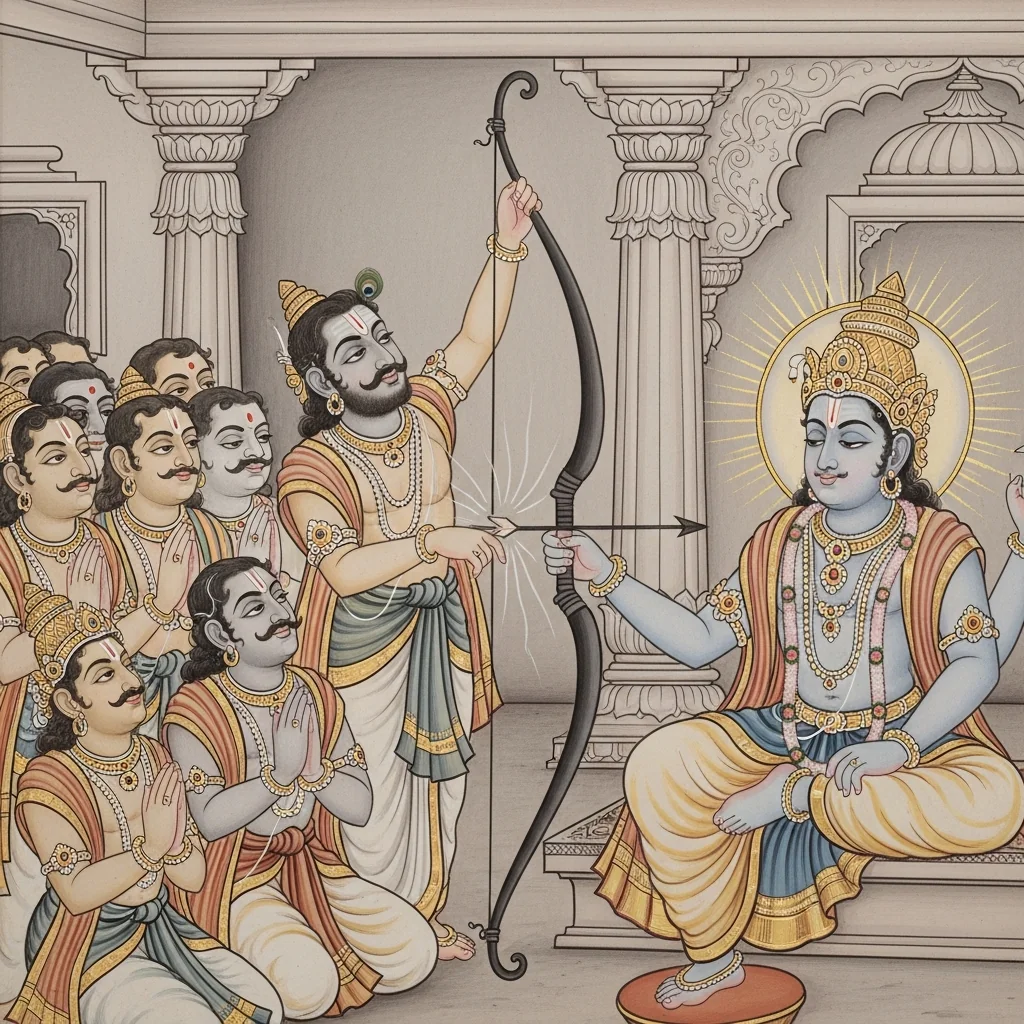
This chapter unfolds as a multi-voiced theological inquiry. Yudhiṣṭhira asks for a sequential account of when and how Viṣṇu performed tapas in Dharmāraṇya. The narrative then turns to Skanda questioning Īśvara (Rudra/Śiva): why the all-pervading Lord—beyond the three guṇas and yet creator, preserver, and destroyer—assumed an aśva-mukha (horse-headed) form, explicitly identified as Hayagrīva/Kṛṣṇa. A long catalogue of divine deeds follows, rehearsing the familiar avatāra works for restoring dharma: Varāha lifting the earth, Narasiṃha protecting Prahlāda, Vāmana’s cosmic strides, Paraśurāma’s destruction of the kṣatriyas, Rāma’s battles, Kṛṣṇa’s slaying of many adversaries, and the eschatological horizon of Kalki. The list argues coherence: one supreme agency manifests diverse forms for dharma’s renewal. Rudra then gives the causal narrative. As the gods prepare a yajña, they cannot find Viṣṇu, for he is yogārūḍha and dhyānastha—absorbed in yoga and meditation. They consult Bṛhaspati and employ the vāmryaḥ (ants/valmīka-associated beings) to gnaw through the bowstring (guṇa) to awaken him; an ethical hesitation is voiced—do not break samādhi—so a negotiated ritual share is granted to the vāmryaḥ. When the string is cut, a dramatic consequence ensues: the bow’s snap severs a head that ascends to the heavens, leaving the gods distressed and searching, setting the stage for the doctrinal explanation of Hayagrīva’s identity and the mechanics of divine manifestation through yogic absorption and cosmic causality.
Shlokas
Verse 1
युधिष्ठिर उवाच । कृपासिंधो महाभाग सर्वव्यापिन्सुरेश्वर । कदा ह्यत्र तपस्तप्तं विष्णुनामिततेजसा
Yudhiṣṭhira said: O ocean of compassion, O blessed one, O all-pervading Lord of the gods—when, indeed, was austerity (tapas) performed here by Viṣṇu of immeasurable splendor?
Verse 2
स्कंदाय कथितं चैव शर्वेण च महात्मना । आनुपूर्व्येण सर्वं हि कथयस्व त्वमेव हि
This was told to Skanda by the great-souled Śarva (Śiva). Therefore, you yourself should relate everything in proper sequence.
Verse 3
व्यास उवाच । शृणु वत्स प्रवक्ष्यामि धर्म्मारण्ये नृपोत्तम । एकदात्र तपस्तप्तं विष्णुनाऽमिततेजसा
Vyāsa said: Listen, dear child; I shall explain, O best of kings. Once, here in Dharmāraṇya, austerity was undertaken by Viṣṇu of boundless splendor.
Verse 4
स्कंद उवाच । कथं देवसरोनाम पंपा चंपा गया तथा । वाराणस्यधिका चैव कथमश्वमुखो हरिः
Skanda said: How did it come to be called Devasara? And how did Pampā, Campā, and Gayā arise? And why is it said to excel even Vārāṇasī? Also, how did Hari become ‘Aśvamukha’ (Horse-faced) there?
Verse 5
ईश्वर उवाच । अत्र नारायणो देवस्तपस्तेपे सुदुष्करम् । दिव्यवर्षशतं त्रीणि जातः सुष्ठ्वाननश्च सः
Īśvara said: Here Nārāyaṇa performed extremely difficult austerity. For three hundred divine years he remained in that discipline, and he manifested with a most excellent face.
Verse 6
तपस्तेपे महाविष्णुः सुरूपार्थं च पुत्रक । वाजिमुखो हरिस्तत्र सिद्धस्थाने महाद्युते
Mahāviṣṇu performed austerity there to attain a beautiful form, O dear child. In that radiant siddha-sthāna, Hari manifested as Vājimukha, the Horse-faced one.
Verse 7
स्कंद उवाच । कारणं ब्रूहि नोद्य त्वमश्वाननः कथं हरिः । महारिपोश्च हंता च देवदेवो जगत्पतिः
Skanda said: Tell us today the reason—how did Hari, the Lord of lords and Master of the universe, the slayer of the mighty enemy, become horse-faced?
Verse 8
यस्य नाम्ना महाभाग पातकानि बहून्यपि । विलीयंते तु वेगेन तमः सूर्योदये यथा
O fortunate one, by whose very Name—even many sins—melt away swiftly, just as darkness vanishes at sunrise.
Verse 9
श्रूयंते यस्य कर्माणि अद्भुतान्यद्भुतानि वै । सर्वेषामेव जीवानां कारणं परमेश्वरः
His deeds are heard of as wondrous—truly wondrous; that Supreme Lord is the ultimate cause of all beings.
Verse 10
प्राणरूपेण यो देवो हयरूपः कधं भवेत् । सर्वेषामपि तंत्राणामेकरूपः प्रकीर्तितः
How can that God who is of the very form of prāṇa (life-breath) become horse-formed? He is proclaimed as the one essential form within all teachings (tantras).
Verse 11
भक्तिगम्यो धर्मभाजां सुखरूपः सदा शुचिः । गुणातीतोऽपि नित्योऽसौ सर्वगो निर्गुणस्तथा
He is reached through devotion by the righteous; He is bliss-formed and ever pure. Though beyond the guṇas, He is eternal—all-pervading, and likewise without attributes.
Verse 12
स्रष्टासौ पालको हंता अव्यक्तः सर्वदेहिनाम् । अनुकूलो महातेजाः कस्मादश्वमुखोऽभवत्
He is the Creator, the Protector, and the Destroyer—unmanifest to all embodied beings; benevolent and of mighty splendor. Why, then, did He become horse-faced?
Verse 13
यस्य रोमोद्भवा देवा वृक्षाद्याः पन्नगा नगाः । कल्पेकल्पे जगत्सर्वं जायते यस्य देहतः
From Him the gods arise, as though from the hairs of His body—along with trees and all such beings, serpents and mountains; in every aeon, the entire universe is born from His very form.
Verse 14
स एव विश्वप्रभवः स एवात्यंतकारणम् । येनानीताः पुनर्विद्या यज्ञाश्च प्रलयं गताः
He alone is the source of the universe; He alone is the ultimate cause—by Him were knowledge and the sacrificial rites, once lost in dissolution, brought back again.
Verse 15
घातितो दुष्टदैत्योऽसौ वेदार्थं कृत उद्यमः । एवमासीन्महाविष्णुः कथमश्वमुखोऽभवत्
He slew the wicked demon and strove for the sake of the Veda’s meaning. Such was Mahāviṣṇu—how did He become horse-faced?
Verse 16
रत्नगर्भा धृता येन पृष्ठदेशे च लीलया । कृत्या व्यवस्थितं सर्वं जगत्स्थावरजंगमम्
By Him, in divine play, the jewel-bearing Earth was borne upon His back; and by His ordained power, the entire world—moving and unmoving—stands arranged in its proper order.
Verse 17
स देवो विश्वरूपो वै कथं वाजिमुखोऽभवत् । हिरण्याक्षस्य हंता यो रूपं कृत्वा वराहजम्
How did that God—verily of universal form—come to manifest as the Horse-faced One? He who slew Hiraṇyākṣa, assuming the boar-form, Varāha, for that sacred deed.
Verse 18
सुपवित्रं महातेजाः प्रविश्य जलसा गरे । उद्धृता च मही सर्वा ससागरमहीधरा
The supremely pure, greatly radiant One entered the watery depths; and the whole Earth was lifted up—together with her oceans and mountains.
Verse 19
उद्धृता च मही नूनं दंष्ट्राग्रे येन लीलया । कृत्वा रूपं वराहं च कपिलं शोकनाशनम्
Surely He lifted up the Earth, as if in play, upon the tip of His tusk—after assuming the form of Varāha; and (He also became) Kapila, the destroyer of sorrow.
Verse 20
स देवः कथमीशानो हयग्रीवत्वमागतः । प्रह्लादार्थे स चेशानो रूपं कृत्वा भयावहम्
How did that Lord, the Supreme Ruler, attain the state of Hayagrīva? And for the sake of Prahlāda, that very Lord assumed a fearsome form.
Verse 21
नारसिंहं महादेवं सर्वदुष्टनिवारणम् । पर्वताग्निसमुद्रस्थं ररक्ष भक्तसत्तमम्
As Nārasiṃha—the great Lord who wards off all wickedness—He protected the best of devotees, even when the devotee was amid mountain, fire, and ocean.
Verse 22
हिरण्यकशिपुं दुष्टं जघान रजनीमुखे । इंद्रासने च संस्थाप्य प्रह्लादस्य सुखप्रदम्
At nightfall He slew the wicked Hiraṇyakaśipu; and, enthroning Prahlāda upon Indra’s seat, He bestowed joy upon him.
Verse 23
प्रह्लादार्थे च वै नूनं नृसिंहत्वमुपागतः । विरोचनसुतस्याग्रे याचकोऽसौ भवेत्तदा
Surely, for Prahlāda’s sake, He assumed the form of Nṛsiṃha; and then, before Virocana’s son Bali, He became a humble supplicant as Vāmana.
Verse 24
यज्ञे चैवाश्वमेधे वै बलिना यः समर्चितः । हृता वसुमती तस्य त्रिपदीकृतरोदसी
He whom Bali duly worshiped in the Aśvamedha sacrifice—He took away Bali’s earthly dominion and measured out heaven and earth in three strides.
Verse 25
विश्वरूपेण वै येन पाताले क्षपितो बलिः । त्रिःसप्तवारं येनैव क्षत्रियानवनीतले
By whose universal form Bali was cast down to Pātāla; and by whom, upon the face of the earth, the kṣatriyas were destroyed seven-and-twenty times.
Verse 26
हत्वाऽददाच्च विप्रेभ्यो महीमतिमहौजसा । घातितो हैहयो राजा येनैव जननी हता
Having slain them, the exceedingly mighty One bestowed the earth upon the brāhmaṇas; and by that very One the Haihaya king was killed—he who had slain the hero’s mother.
Verse 27
येन वै शिशुनोर्व्यां हि घातिता दुष्टचारिणी । राक्षसी ताडका नाम्नी कौशिकस्य प्रसादतः
By his agency indeed, the wickedly acting rākṣasī named Tāḍakā was slain—accomplished through the grace and command of Kauśika (Viśvāmitra).
Verse 28
विश्वामित्रस्य यज्ञे तु येन लीलानृदेहिना । चतुर्दशसहस्राणि घातिता राक्षसा वलात्
And at Viśvāmitra’s sacrifice, by him who bore a human body as a mere divine līlā, fourteen thousand rākṣasas were forcefully slain.
Verse 29
हता शूर्पणखा येन त्रिशिराश्च निपातितः । सुग्रीवं वालिनं हत्वा सुग्रीवेण सहायवान्
By him Śūrpaṇakhā was struck down and Triśiras too was felled; and, having slain Vālin, he became an ally to Sugrīva.
Verse 30
कृत्वा सेतुं समुद्रस्य रणे हत्वा दशाननम् । धर्म्मारण्यं समासाद्य ब्राह्मणानन्वपूजयत्
Having built a bridge across the ocean and slain Daśānana (Rāvaṇa) in battle, he reached Dharmāraṇya and duly honored the brāhmaṇas there.
Verse 31
शासनं द्विजवर्येभ्यो दत्त्वा ग्रामान्बहूंस्तथा । स्नात्वा चैव धर्म्मवाप्यां सुदानान्यददाद्गवाम्
He granted charters of endowment to the foremost brāhmaṇas and likewise bestowed many villages; and, having bathed in the sacred Dharmavāpī, he gave excellent gifts of cows.
Verse 32
साधूनां पालनं कृत्वा निग्रहाय दुरात्मनाम् । एवमन्यानि कर्म्माणि श्रुतानि च धरातले
Having protected the righteous and restrained the wicked, many other such deeds too are heard of upon the earth concerning Him.
Verse 33
स देवो लीलया कृत्वा कथं चाश्वमुखोऽभवत् । यो जातो यादवे वंशे पूतनाशकटादिकम्
That very God, who accomplishes all as mere divine play—how then did He become horse-faced (Hayānana)? He who was born in the Yādava line and destroyed Pūtanā, Śakaṭa, and the rest.
Verse 34
अरिष्टदैत्यः केशी च वृकासुरबकासुरौ । शकटासुरो महासुर स्तृणावर्तश्च धेनुकः
Ariṣṭa the daitya, Keśī, Vṛkāsura and Bakāsura; Śakaṭāsura, the great asura, and also Tṛṇāvarta and Dhenuka—
Verse 35
मल्लश्चैव तथा कंसो जरासंधस्तथैव च । कालयवनस्य हंता च कथं वै स हयाननः । तारकासुरं रणे जित्वा अयुतषट्पुरं तथा
And the wrestlers as well, and Kaṃsa, and also Jarāsandha; and the slayer of Kālayavana—how indeed is He (then) Hayānana? Having conquered Tārakāsura in battle, and likewise (having obtained) Ayutaṣaṭpura—
Verse 36
कन्याश्चोद्वाहिता येन सहस्राणि च षड् दश । अमानुषाणि कृत्वेत्थं कथं सोऽश्वमुखोऽभवत्
By whom maidens—sixteen thousand in number—were wedded; thus, after accomplishing superhuman deeds, how did He become horse-faced (Aśvamukha)?
Verse 37
त्राता यः सर्वभक्तानां हंता सर्वदुरात्मनाम् । धर्मस्थापनकृत्सोऽपि कल्किर्विष्णुपदे स्थितः
He is the protector of all devotees and the destroyer of all wicked-souled beings; he who re-establishes Dharma—indeed, that Kalki abides in the supreme station of Viṣṇu.
Verse 38
एतद्वै महदाश्चर्य्यं भवता यत्प्रकाशितम् । एतदाचक्ष्व मे सर्वं कारणं त्रिपुरांतक
This indeed is a great wonder, what has been revealed by you. Tell me all of it—the reason for this, O Tripurāntaka, destroyer of Tripura.
Verse 39
श्रीरुद्र उवाच । साधुपृष्टं महाबाहो कारणं तस्य वच्म्यहम् । हयग्रीवस्य कृष्णस्य शृणुष्वे काग्रमानसः
Śrī Rudra said: Well have you asked, O mighty-armed one. I shall tell you the cause of that. Listen with one-pointed mind about Kṛṣṇa in the Hayagrīva form.
Verse 40
व्यास उवाच । पुरा देवैः समारब्धो यज्ञो नूनं धरातले । वेदमंत्रैराह्वयितुं सर्वे रुद्रपुरोगमाः
Vyāsa said: Formerly, the gods commenced a sacrifice (yajña) upon the earth. To invoke (the deity) with Vedic mantras, they all proceeded with Rudra at their head.
Verse 41
वैकुण्ठे च गताः सर्वे क्षीराब्धौ च निजालये । पातालेऽपि पुनर्गत्वा न विदुः कृष्णदर्शनम्
They all went to Vaikuṇṭha and to the Ocean of Milk—His own abode. Having gone again even to Pātāla, they still did not obtain the vision (darśana) of Kṛṣṇa.
Verse 42
मोहाविष्टास्ततः सर्वे इतश्चेतश्च धाविताः । नैव दृष्टस्तदा तैस्तु ब्रह्मरूपो जनार्दनः
Overcome by delusion, they all ran here and there; yet then Janārdana, in His Brahman-form, was not seen by them at all.
Verse 43
विचारयंति ते सर्वे देवा इन्द्रपुरोगमाः । क्व गतोऽसौ महाविष्णुः केनोपायेन दृश्यते
All those gods, with Indra at their head, reflected: “Where has that Mahāviṣṇu gone, and by what means can He be beheld?”
Verse 44
प्रणम्य शिरसा देवं वागीशं प्रोचुरादरात् । देवदेव महाविष्णुं कथयस्व प्रसादतः
Bowing their heads in reverence, they addressed the divine Vāgīśa: “O God of gods, by your grace, tell us of Mahāviṣṇu.”
Verse 45
बृहस्पतिरुवाच । न जाने केन कार्येण योगारूढो महात्मवान् । योगरूपोऽभवद्विष्णुर्योगीशो हरिरच्युतः
Bṛhaspati said: “I do not know for what purpose that great-souled one has entered into Yoga. Viṣṇu has become the very form of Yoga—Hari, the unfailing Lord of yogins.”
Verse 46
क्षणं ध्यात्वा स्वमात्मानं धिषणेन ख्यापितो हरिः । तत्र सर्वे गता देवा यत्र देवो जगत्पतिः
Meditating for a moment upon His own inner Self, Hari was made known through insight (dhiṣaṇā). Then all the gods went to that place where the Lord, the master of the worlds, was.
Verse 47
तदा दृष्टो महाविष्णुर्ध्यानस्थोऽसौ जनार्दनः । ध्यात्वा कृत्यसमाकारं सशरं दैत्यसूदनम्
Then they beheld Mahāviṣṇu—Janārdana—seated in deep meditation, having inwardly contemplated the form suited to the task: the slayer of demons, armed with arrows.
Verse 48
समास्थानं ततो दृष्ट्वा बोधोपायं प्रचक्रमे । आह तांश्च तदा वम्र्यो धनुर्गुणं प्रयत्नतः । छेत्स्यंति चेत्तच्छब्देन प्रबुध्येत हरिः स्वयम्
Seeing him thus firmly settled in meditation, the Vamryas began devising a means to awaken him. Then they said to the others: “With effort, cut the bowstring—if that sound is made, Hari himself may awaken.”
Verse 49
देवा ऊचुः । गुणभक्षं कुरुध्वं वै येनासौ बुध्यते हरिः । क्रत्वर्थिनो वयं वम्र्यः प्रभुं विज्ञापयामहे
The Devas said: “Do indeed gnaw through the bowstring, by which Hari may awaken. We seek the accomplishment of the sacrifice; O Vamryas, we shall inform the Lord.”
Verse 50
वम्र्यः ऊचुः । निद्राभंगं कथाच्छेदं दम्पत्योर्मैत्रभेदनम् । शिशुमातृविभेदं वा कुर्वाणो नरकं व्रजेत्
The Vamryas said: “One who breaks another’s sleep, cuts off a sacred conversation, sows discord between husband and wife, or separates a child from its mother—such a doer goes to hell.”
Verse 51
योगारूढो जगन्नाथः समाधिस्थो महाबलः । तस्य श्रीजगदीशस्य विघ्नं नैव तु कुर्महे
Jagannātha, mighty and established in yoga, abides in samādhi. We shall not at all create an obstruction to that glorious Lord of the worlds.
Verse 52
ब्रह्मोवाच । भवतां सर्वभक्षत्वं देवकार्यं क्रियेत चेत् । कर्त्तव्यं च ततो वम्र्यो यज्ञसिद्धिर्यथा भवेत् । वम्रीशा सा तदा वत्स पुनरेवमुवाच ह
Brahmā said: “If your power of consuming is to be employed in the work of the Devas, then, O Vamryas, do it in such a way that the sacrifice may be brought to completion.” Then the queen of the Vamryas, dear child, spoke again as follows.
Verse 53
वम्र्युवाच । दुःखसाध्यो जगन्नाथो मलयानिलसंनिभः । कथं वा बोध्यतां बह्मन्नस्माभिः सुरपूजितः
The Vamrya said: “Jagannātha is hard to rouse—gentle as the Malaya breeze. How, O Brahman, are we to awaken Him who is worshipped by the Devas?”
Verse 54
नैव यज्ञेन मे कार्यं सुरैश्चैव तथैव च । सर्वेषु यज्ञकार्येषु भागं ददतु मे सुराः
“I have no personal need of the sacrifice, nor of the Devas as such. Let the Devas grant me a share in all sacrificial rites henceforth.”
Verse 55
देवा ऊचुः । प्रदास्यामो वयं वम्र्यै भागं यज्ञेषु सर्वदा । यज्ञाय दत्तमस्माभिः कुरुष्वैवं वचो हि नः
The Devas said: “We shall always grant the Vamrya a share in the sacrifices. Now do as we ask; what we have bestowed is for the sake of the sacrifice.”
Verse 56
तथेति विधिनाप्युक्तं वम्री चोद्यममाश्रिता । गुणभक्षादिकं कर्म तया सर्वं कृतं नृप
Thus, instructed according to proper procedure, the Vamrī undertook the task; and all the acts—beginning with gnawing through the bowstring—were performed by her, O King.
Verse 57
युधिष्ठिर उवाच । अस्य वा बोधने देवा गुणभंगे समाधिषु । एतदाश्चर्यं विप्रर्षे सत्यं सत्यवतीसुत
Yudhiṣṭhira said: “O best of sages, Satyavatī’s son, is it truly so—this wondrous event—that the gods were involved in awakening him and in the breaking of the bowstring during the trance-like state?”
Verse 58
व्यास उवाच । व्यग्रचित्ताः सुराः सर्वे आकृष्टं हरिकार्मु कम् । न जाने केन कार्येण विष्णुमायाविमोहिताः
Vyāsa said: “All the gods, their minds agitated, had drawn back Hari’s bow. I do not know for what purpose they were deluded by Viṣṇu’s māyā.”
Verse 59
मुदितास्ताः प्रमुञ्चंति वल्मीकं चाग्रतो हरेः । कोटिपार्श्वे ततो नीतं वल्मीकं पर्वतोपमम्
Rejoicing, they released the ant-hill before Hari; then, at the side of the bow’s tip, the ant-hill—mountain-like in size—was carried away.
Verse 60
गुणे च भक्षिते तस्मिंस्तक्षणादेव दूषिते । ज्याघातकोटिभिः सार्द्धं शीर्षं छित्त्वा दिवं गतम्
And when that bowstring was eaten and instantly ruined, the head—together with countless violent snaps of the bowstring—was cut off and went up to heaven.
Verse 61
गते शीर्षे च ते देवा भृशमु द्विग्नमानसाः । धावंति सर्वतः सर्वे शिरआलोकनाय ते
When the head had gone, those gods—greatly anxious at heart—ran in every direction, all of them, to look for the head.