Adhyaya 10
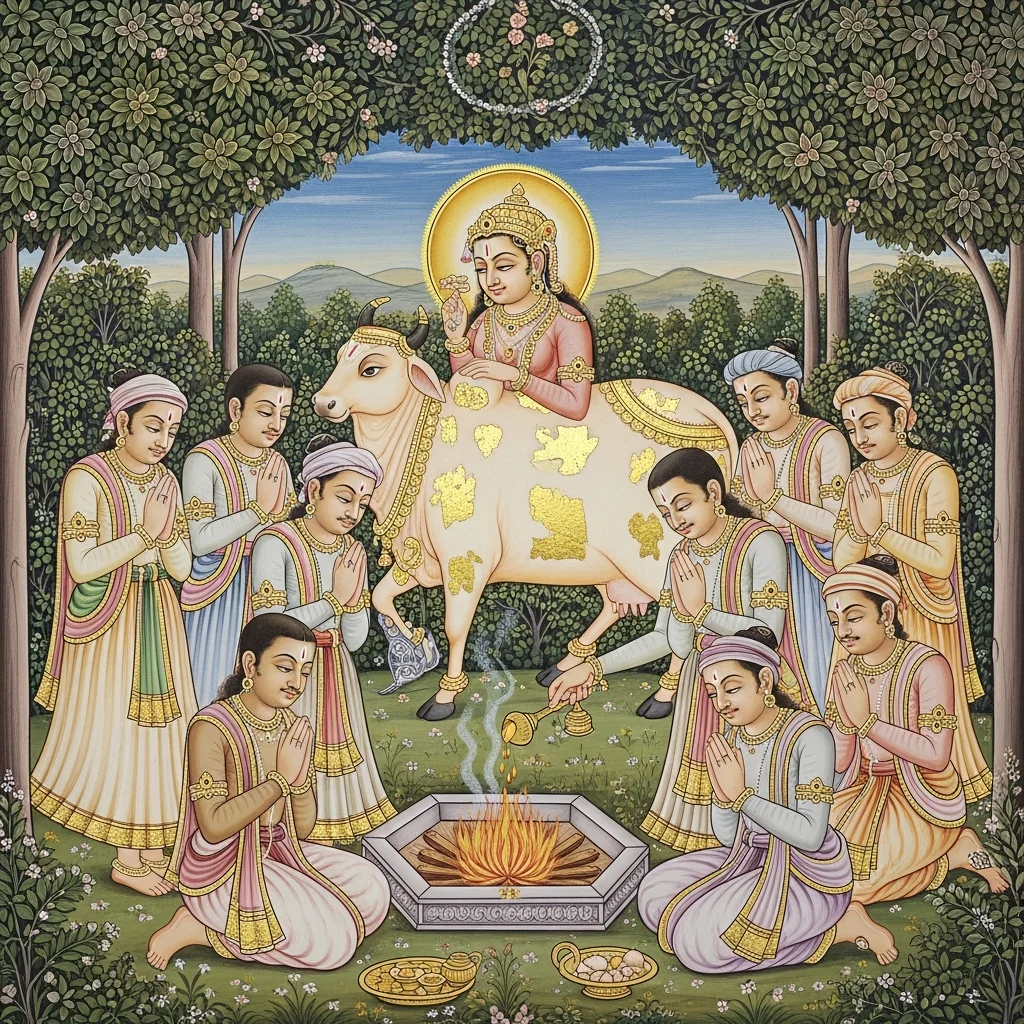
Vyāsa recounts to Yudhiṣṭhira an episode in Dharmāraṇya that establishes a service-based order for ritual life. At Brahmā’s prompting, Kāmadhenū is invoked and asked to provide attendants, allotted in pairs to each ritual specialist; thus arises a large, disciplined community bearing sacred marks such as śikhā and yajñopavīta, learned in śāstra and steadfast in right conduct. The deities then lay down a rule of governance: daily ritual materials (samidh, flowers, kuśa, and the like) must be supplied, and major saṃskāras—nāmakaraṇa, annaprāśana, cūḍākaraṇa/tonsure, upanayana, and related observances—are to be performed only with the attendants’ permission. Disregarding this authorization is said to bring recurring afflictions and loss of social standing. The chapter praises Kāmadhenū as a composite sacred locus containing many divine presences and tīrthas. When Yudhiṣṭhira asks about marriage and progeny among the attendants, Vyāsa tells of obtaining Gandharva brides: Śiva’s envoy requests daughters from Viśvāvasu; refusal leads to Śiva’s mobilization, and the Gandharva king yields the maidens. The attendants offer ājya-bhāga in Vedic fashion, and a customary precedent is noted for Gandharva-style marriages. The close depicts a stable Dharmāraṇya settlement where japa and yajña continue, materially supported by the attendants and their women through domestic and ritual service—an enduring model of place-rooted dharma.
Shlokas
Verse 1
व्यास उवाच । शृणु राजन्यथावृत्तं धर्म्मारण्ये शुभं मतम् । यदिदं कथयिष्यामि अशेषाघौघनाशनम्
Vyāsa said: “Listen, O King, to what occurred in Dharmāraṇya—an auspicious account. What I shall narrate destroys the entire flood of sins.”
Verse 2
अजेशेन तदा राजन्प्रेरितेन स्वयंभुवा । कामधेनुः समाहूता कथयामास तां प्रति
Then, O King, urged by the Self-born (Brahmā), Ajeśa summoned Kāmadhenu; and she spoke in response to him.
Verse 3
विप्रेभ्योऽनुचरान्देहि एकैकस्मै द्विजातये । द्वौ द्वौ शुद्धात्मकौ चैवं देहि मातः प्रसीद मे
“Give attendants to the brāhmaṇas—two each—to every single twice-born, both of pure disposition. Grant them thus, O Mother; be gracious to me.”
Verse 4
तथेत्युक्त्वा महाधेनुः क्षीरेणोल्लेखयद्धराम् । हुंकारात्तस्य निष्क्रांताः शिखासूत्रधरा नराः
Saying, “So be it,” the great cow traced marks upon the earth with milk. From her bellowing emerged men bearing the topknot (śikhā) and the sacred thread (yajñopavīta).
Verse 5
षट्त्रिंशच्च सहस्राणि वणिजश्च महाबलाः । सोपवीता महादक्षाः सर्वशास्त्रविशारदाः
They numbered thirty-six thousand—traders of great strength—wearing the sacred thread, highly capable, and well-versed in all the śāstras.
Verse 6
द्विजभक्तिसमायुक्ता ब्रह्मण्यास्ते तपोन्विताः । पुराणज्ञाः सदाचारा धार्मिका बह्मभोजकाः
They were endowed with devotion to the twice-born (dvija), devoted to Brahmanical dharma, and possessed of tapas; knowers of the Purāṇas, of good conduct, righteous, and providers of meals for brāhmaṇas.
Verse 7
स्वर्गे देवाः प्रशंसंति धर्मारण्यनिवासिनः । तपोऽध्ययनदानेषु सर्वकालेप्यतींद्रियाः
In heaven the gods praise the dwellers of Dharmāraṇya, for in tapas, sacred study, and charity they are ever exceptional, surpassing the common measure at all times.
Verse 8
एकैकस्मै द्विजायैव दत्तं जातु चरद्वयम् । वाडवस्य च यद्गोत्रं पुरा प्रोक्तं महीपते
To each and every twice-born (dvija), a pair of attendants was indeed given. And as for the gotra of that Vāḍava, it was formerly declared, O lord of the earth.
Verse 9
परस्परं च तद्गोत्रं तस्य चानुचरस्य च । इति कृत्वा व्यवस्थां च न्यवसंस्तत्र भूमिषु
Thus, having mutually ascertained the gotra (lineage) of that man and of his attendant as well, they set the proper order in place and then settled there upon the lands.
Verse 10
ततश्च शिष्यता देवैर्दत्ता चानुचरान्भुवि । ब्रह्मणा कथितं सर्वं तेषामनुहिताय वै
Then the gods bestowed discipleship and appointed attendants upon the earth. All this Brahmā declared indeed for their welfare and proper guidance.
Verse 11
कुरुध्वं वचनं चैषां ददध्वं च यदिच्छितम् । समित्पुष्पकुशादीनि आनयध्वं दिनेदिने
Carry out their instructions and grant them whatever they desire. Bring, day after day, ritual firewood, flowers, kuśa grass, and the like.
Verse 12
अनुज्ञयैषां वर्तध्वं मावज्ञां कुरुत क्वचित् । जातकं नामकरणं तथान्नप्राशनं शुभम्
Live and act only with their permission; never show them disrespect at any time. Likewise, the birth-rites, the naming ceremony, and the auspicious first-feeding of food should be performed under their sanction.
Verse 13
क्षौरं चैवोपनयनं महानाम्न्यादिकं तथा । क्रियाकर्मादिकं यच्च व्रतं दानोपवासकम्
So too the tonsure, the upanayana (initiation), the mahānāma and other observances; and whatever rites and ceremonies there are—vows, charities, and fasts.
Verse 14
अनुज्ञयैषां कर्तव्यं काजेशा इदमबुवन् । अनुज्ञया विनैषां यः कार्यमारभते यदि
“It must be done only with their permission”—thus declared the lords of the gods. If anyone undertakes an action without their consent,
Verse 15
दर्शं वा श्राद्धकार्यं वा शुभं वा यदि वाऽशुभम् । दारिद्र्यं पुत्रशोकं च कीर्तिनाशं तथैव च
Whether it be the new-moon rite or a śrāddha ceremony, whether auspicious or inauspicious—one who violates the rule meets poverty, grief over children, and even the loss of reputation.
Verse 16
रोगैर्निपीड्यते नित्यं न क्वचित्सुखमाप्नुयुः । तथेति च ततो देवाः शक्राद्याः सुरसत्तमाः
He is continually afflicted by diseases and finds happiness nowhere. “So be it,” said the gods then—Indra and the other best of the celestials.
Verse 17
स्तुतिं कुर्वंति ते सर्वे काम धेनोः पुरः स्थिताः । कृतकृत्यास्तदा देवा ब्रह्मविष्णुमहेश्वराः
Standing before Kāma-dhenū, all of them offered hymns of praise. Then the gods—Brahmā, Viṣṇu, and Maheśvara—felt their purpose fulfilled.
Verse 18
त्वं माता सर्वदेवानां त्वं च यज्ञस्य कारणम् । त्वं तीर्थं सर्वतीर्थानां नम स्तेऽस्तु सदानघे
You are the Mother of all the gods; you are the very cause of yajña. You are the holy ford among all tīrthas—obeisance to you, O ever-blameless one.
Verse 19
शशिसूर्यारुणा यस्या ललाटे वृषभध्वजः । सरस्वती च हुंकारे सर्वे नागाश्च कंबले
She whose brow bears the radiance of moon and sun, and upon whom is marked the Bull-bannered Lord (Śiva); in whose very bellowing abides Sarasvatī, and in whose covering all the Nāgas are gathered—such is the wondrous Cow, Surabhī.
Verse 20
क्षुरपृष्ठे च गन्धर्वा वेदाश्चत्वार एव च । मुखाग्रे सर्वतीर्थानि स्थावराणि चराणि च
Upon her razor-like back are the Gandharvas and the four Vedas; at the forefront of her mouth abide all tīrthas, of both the unmoving and the moving worlds.
Verse 21
एवंविधैश्च बहुशो वचनैस्तोषिता च सा । सुप्रसन्ना तदा धेनुः किं करोमीति चाब्रवीत्
Thus, repeatedly delighted by such words, the Cow became exceedingly gracious; then the Dhenu said, “What shall I do?”
Verse 22
देवा ऊचुः । सृष्टाः सर्वे त्वया मातर्देव्यैतेऽनुचराः शुभाः । त्वत्प्रसादान्महाभागे ब्राह्मणाः सुखिनोऽ भवन्
The Devas said: “O Mother, O Goddess—these auspicious attendants have all been brought forth by you. By your grace, O greatly fortunate one, the Brāhmaṇas have become happy and at ease.”
Verse 23
ततोऽसौ सुरभी राजन्गता नाकं यशस्विनी । ब्रह्मविष्णुमहेशाद्यास्तत्रैवांतरधुस्ततः
Then that glorious Surabhī, O King, departed to heaven. Thereupon Brahmā, Viṣṇu, Maheśa and the others vanished from that very spot.
Verse 24
युधिष्ठिर उवाच । अभार्यास्ते महातेजा गोजा अनुचरास्तथा । उद्वाहिता कथं ब्रह्मन्त्सुतास्तेषां कदाऽभवन्
Yudhiṣṭhira said: “O one of great splendor—those attendants born of the Cow were without wives. O Brahman, how were they wedded, and when were children born to them?”
Verse 25
व्यास उवाच । परिग्रहार्थं वे तेषां रुद्रेण च यमेन च । गन्धर्वकन्या आहृत्य दारास्तत्रोपकल्पिताः
Vyāsa said: “For the sake of their taking wives, Rudra and Yama brought Gandharva maidens, and there wives were duly provided for them.”
Verse 26
युधिष्ठिर उवाच । को वा गन्धर्वराजासौ किंनामा कुत्र वा स्थितः । कियन्मात्रास्तस्य कन्याः किमाचारा ब्रवीहि मे
Yudhiṣṭhira said: “Who is that king of the Gandharvas—what is his name, and where does he dwell? How many are his daughters, and what are their customs? Tell me.”
Verse 27
व्यास उवाच । विश्वावसुरिति ख्यातो गन्धर्वाधिपतिर्नृप । षष्टिकन्यासहस्राणि आसते तस्य वेश्मनि
Vyāsa said: “O King, the lord of the Gandharvas is famed as Viśvāvasu. In his palace dwell sixty thousand maidens.”
Verse 28
अंतरिक्षे गृहं तस्य गधर्वनगरं शुभम् । यौवनस्थाः सुरूपाश्च कन्या गन्धर्वजाः शुभाः
His dwelling is in the mid-air—a splendid, auspicious city of the Gandharvas. There are blessed maidens born of the Gandharvas, abiding in youth and endowed with beautiful forms.
Verse 29
रुद्रस्यानुचरौ राजन्नंदी भृंगी शुभाननौ । पूर्वदृष्टाश्च ताः कन्याः कथयामासतुः शिवम्
O King, Nandī and Bhṛṅgī—Rudra’s attendants, both of auspicious countenance—reported to Śiva about those maidens whom they had seen before.
Verse 30
दृष्टाः पुरा महादेव गन्धर्वनगरे विभो । विश्वावसुगृहे कन्या असंख्याताः सहस्रशः
Formerly, O Mahādeva, O all-pervading Lord, in the city of the Gandharvas—within Viśvāvasu’s house—maidens were seen in countless thousands.
Verse 31
ता आनीय वलादेव गोभुजेभ्यः प्रयच्छ भो । एवं श्रुत्वा ततो देवस्त्रिपुरघ्नः सदाशिवः
“Bring them, O mighty Deva, and give them to the cow-herds (gobhujas).” Thus hearing, that God—Sadāśiva, the slayer of Tripura—responded.
Verse 32
प्रेषयामास दूतं तु विजयं नाम भारत । स तत्र गत्वा यत्रास्ते विश्वावसुररिंदमः
O Bhārata, he sent a messenger named Vijaya. He went there, to the place where Viśvāvasu, the subduer of foes, was staying.
Verse 33
उवाच वचनं चैव पथ्यं चैव शिवेरितम् । धर्मारण्ये महाभाग काजेशेन विनिर्मिताः
He delivered the message and the proper injunction as instructed by Śiva: “O fortunate one, in Dharmāraṇya, they have been established/created by Kājeśa.”
Verse 34
स्थापिता वाडवास्तत्र वेदवेदांगपारगाः । तेषां वै परिचर्यार्थं कामधेनुश्च प्रार्थिता
There the Vāḍavās, well-versed in the Vedas and the Vedāṅgas, were duly established. And for their service and sustenance, the sacred Kāmadhenu too was entreated.
Verse 35
तया कृताः शुभाचारा वणिजस्ते त्वयोनिजा । षट्त्रिंशच्च सहस्राणि कुमारास्ते महाबलाः
By her, those merchants were made steadfast in auspicious conduct, and they were born without a human womb. And you have thirty-six thousand sons, mighty in strength.
Verse 36
शिवेन प्रेषितोऽहं वै त्वत्समीपमुपागतः । कन्यार्थं हि महाभाग देहिदेहीत्युवाच ह
Truly, I have been sent by Śiva and have come near to you. O fortunate one, it is for maidens—“Give, give!” he said.
Verse 37
गन्धर्व उवाच । देवानां चैव सर्वेषां गन्धर्वाणां महामते । परित्यज्य कथं लोके मानुषाणां ददामि वै
The Gandharva said: “O great-minded one, how could I, forsaking all the Devas and the Gandharvas, give (these maidens) to humans in the world?”
Verse 38
श्रुत्वा तु वचनं तस्य निवृत्तो विजयस्तदा । कथयामास तत्सर्वं गन्धर्व चरितं महत्
Having heard his words, Vijaya then returned and reported everything—this great account of the Gandharva’s conduct.
Verse 39
व्यास उवाच । ततः कोपसमाविष्टो भगवांल्लोकशंकरः । वृषभे च समारूढः शूलहस्तः सदाशिवः
Vyāsa said: Then the Blessed Lord Śaṅkara, benefactor of the worlds, was seized by wrath. Mounting the bull and holding the trident in His hand, Sadāśiva set forth.
Verse 40
भूतप्रेतपिशाचाद्यैः सहस्रैरावृतः प्रभुः । ततो देवास्तथा नागा भूतवेतालखेचराः
The Lord was surrounded by thousands of bhūtas, pretas, piśācas, and the like. Then the gods, the nāgas, and hosts of spirits—vetālas and other sky-going beings—also gathered.
Verse 41
क्रोधेन महताविष्टाः समाजग्मुः सहस्रशः । हाहाकारो महानासीत्तस्मिन्सैन्ये विसर्पति
Seized by great anger, they assembled in their thousands. As that army spread forth, a tremendous cry of alarm arose.
Verse 42
प्रकंपिता धरादेवी दिशापाला भयातुराः । घोरा वातास्तदाऽशांताः शब्दं कुर्वंति दिग्गजाः
The Earth-goddess trembled; the guardians of the directions were stricken with fear. Fierce winds blew, unquiet and raging, and the elephants of the quarters trumpeted loudly.
Verse 43
व्यास उवाच । तदागतं महासैन्यं दृष्ट्वा भयविलोलितम् । गन्धर्वनगरात्सर्वे विनेशुस्ते दिशो दश
Vyāsa said: Seeing that great army arrive—tossed about with fear—all those beings fled from the city of the Gandharvas in the ten directions.
Verse 44
गन्धर्वराजो नगरं त्यक्त्वा मेरुं गतो नृप । ताः कन्या यौवनोपेता रूपौदार्यसमन्विताः
O king, the lord of the Gandharvas abandoned the city and went to Meru. Those maidens, endowed with youth and graced with beauty and noble excellence, remained there.
Verse 45
गृहीत्वा प्रददौ सर्वा वणिग्भ्यश्च तदा नृप । वेदोक्तेन विधानेन तथा वै देवसन्निधौ
O king, taking them, he then gave all of them to the merchants—according to the procedure taught in the Vedas, and indeed in the presence of the gods.
Verse 46
आज्यभागं तदा दत्त्वा गन्धर्वाय गवात्मजाः । देवानां पूर्वजानां च सूर्याचंद्रमसोस्तथा
Then the sons of the cowherds offered the ghee-portion, the ājyabhāga, to the Gandharva; and likewise they offered portions to the elder gods, and to the Sun and the Moon as well.
Verse 47
यमाय मृत्यवे चैव आज्यभागं तदा ददुः । दत्त्वाज्यभागान्विधिवद्वव्रिरे ते शुभव्रताः
They then gave the ghee-portion, the ājyabhāga, to Yama and to Mṛtyu as well. Having duly offered the ājyabhāgas according to rule, those of auspicious observance made their choice properly.
Verse 48
ततः प्रभृति गान्धर्वविवाहे समुपस्थिते । आज्यभागं प्रगृह्णन्ति अद्यापि सर्वतो भृशम्
From that time onward, whenever a Gandharva marriage occurs, the ājyabhāga is taken up and offered—even to this day, everywhere, in full measure.
Verse 50
क्षत्रियाश्च महावीरा किंकरत्वे हि निर्मिताः
And the mighty, heroic Kṣatriyas were fashioned indeed for service—standing ready as devoted attendants in the ordained order of dharma.
Verse 51
ततो देवाऽस्तदा राजञ्जग्मुः सर्वे यथातथा । गते देवे द्विजाः सर्वे स्थानेऽस्मिन्निवसंति ते
Then, O King, all the gods departed—each to his own abode. When the deities had gone, all the twice-born remained and dwelt in this very place.
Verse 52
पुत्रपौत्रयुता राजन्निवसंत्यकुतोभयाः । पठंति वेदान्वेदज्ञाः क्वचिच्छास्त्रार्थमुद्गिरन्
Accompanied by sons and grandsons, O King, they live there without fear. Knowing the Vedas, they recite the Vedas, and at times expound the meanings of the śāstras.
Verse 54
केचिद्विष्णुं जपंतीह शिवं केचिज्जपंति हि । ब्रह्माणं च जपंत्येके यमसूक्तं हि केचन । यजंति याजकाश्चैव अग्निहोत्रमुपासते । स्वाहाकारस्वधाकारवषट्कारैश्च सुव्रत
Here some repeat the name of Viṣṇu; others indeed repeat Śiva. Some chant Brahmā, and some recite the hymns to Yama. Others perform sacrifices and maintain the Agnihotra—uttering ‘svāhā’, ‘svadhā’, and ‘vaṣaṭ’, O you of excellent vows.
Verse 55
शब्दैरापूयते सर्वं त्रैलोक्यं सचराचरम् । वणिजश्च महादक्षा द्विजशुश्रूणोत्सुकाः
With sacred sounds, all the three worlds—moving and unmoving—are filled. And the merchants, highly capable, are eager to serve and attend upon the twice-born.
Verse 56
धर्मारण्ये शुभे दिव्ये ते वसंति सुनिष्ठिताः । अन्नपानादिकं सर्वं समित्कुशफलादिकम्
In that auspicious, divine Dharmāraṇya they dwell, firmly established in discipline. All necessities—food and drink, as well as firewood, kuśa-grass, fruits, and the like—are found there.
Verse 57
आपूरयन्द्विजातीनां वणिजस्ते गवात्मजाः
Those merchants, sons of the cow-lineage, kept the twice-born fully supplied, providing for their needs without deficiency.
Verse 58
पुष्पोपहारनिचयं स्नानवस्त्रादिधावनम् । उपलादिकनिर्माणं मार्जनादिशुभक्रियाः
They arranged collections of flowers and offerings; they washed bathing-cloths and other items; they built works of stone and the like; and they performed auspicious acts such as sweeping and cleansing.
Verse 59
वणिक्स्त्रियः प्रकुर्वंति कंडनं पेषणादिकम् । शुश्रूषंति च तान्विप्रान्काजेशवचनेन हि
The wives of the merchants performed tasks such as pounding and grinding. And, by the command of Kājeśa, they diligently served those Brāhmaṇas.
Verse 60
स्वस्था जातास्तदा सर्वे द्विजा हर्षपरायणाः । काजेशादीनुपासंते दिवारात्रौ हि संध्ययोः
Then all the twice-born became well and content, devoted to joy. At the morning and evening twilight—indeed by day and by night—they worshipped Kājeśa and the other deities.