Adhyaya 99
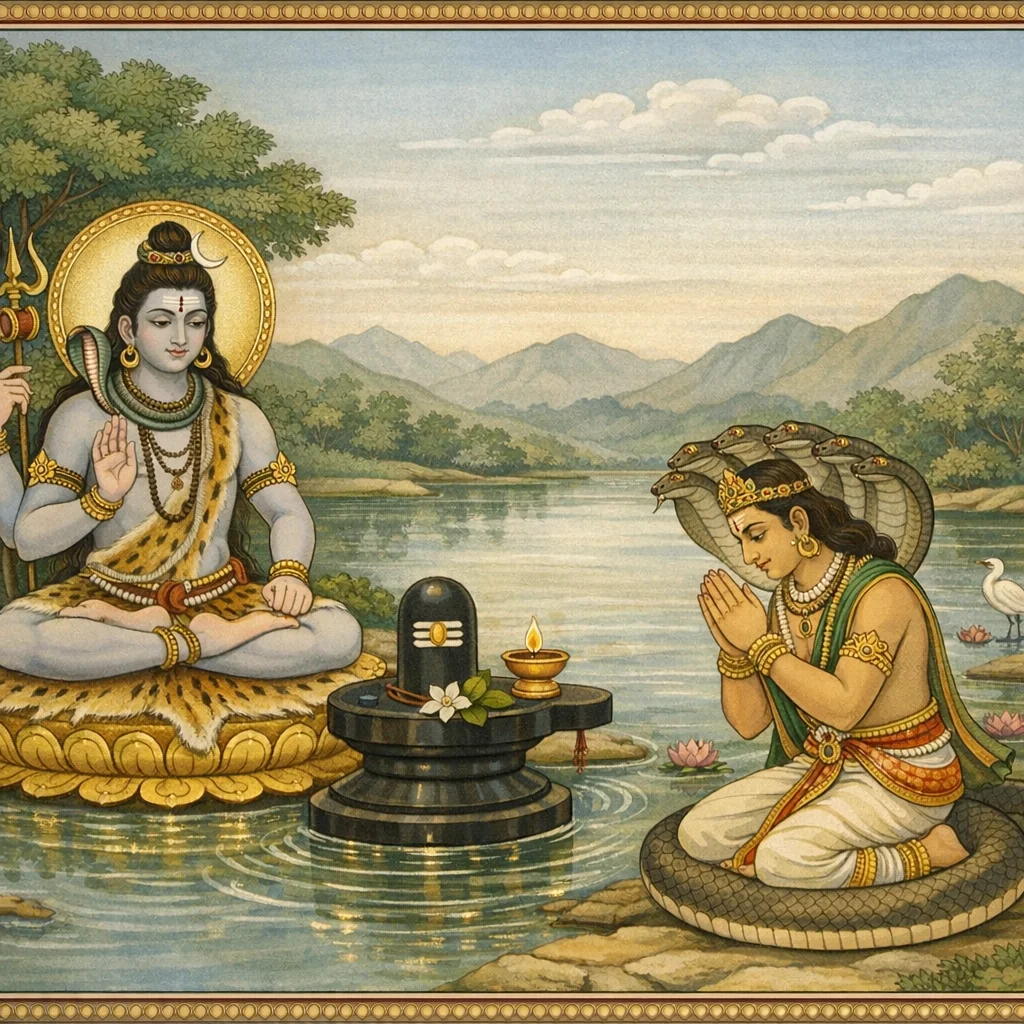
This adhyāya unfolds through questions and answers: Yudhiṣṭhira asks why Vāsuki is established on the southern bank of the Revā (Narmadā). Mārkaṇḍeya relates the mythic cause: during Śambhu’s (Śiva’s) dance, sweat mixed with Gaṅgā-water issues from Śiva’s crown; a serpent drinks it, incurring Maṇḍākinī’s wrath and a curse-like fall into a low, encumbered condition (ajagara-bhāva). Vāsuki repents, praises the river’s power to purify, and begs for compassion. Gaṅgā instructs him to perform tapas to Śaṅkara at Vindhya; after long austerities, Śiva grants a boon and directs Vāsuki to the Revā’s southern bank for proper bathing. Entering the Narmadā, Vāsuki is purified, and a Śaiva स्थापना is described: the Nāgeśvara-liṅga, famed for removing wrongdoing. The chapter then sets ritual guidance and phalaśruti—on Aṣṭamī or Caturdaśī, bathe Śiva with honey; the childless who bathe at the saṅgama gain worthy offspring; śrāddha with fasting relieves departed ancestors; and by nāga-prasāda the lineage is protected from fear of serpents.
Shlokas
Verse 1
श्रीमार्कण्डेय उवाच । ततो गच्छेन्महीपाल नर्मदादक्षिणे तटे । स्थापितं वासुकीशं तु समस्ताघौघनाशनम्
Śrī Mārkaṇḍeya said: Then, O king, one should go to the southern bank of the Narmadā, where Vāsukīśa has been enshrined; it destroys the entire flood of sins.
Verse 2
युधिष्ठिर उवाच । कस्माच्च कारणात्तात रेवाया दक्षिणे तटे । वासुकीशस्थापितो वै विस्तराद्वद मे गुरो
Yudhiṣṭhira said: Dear father, for what reason was Vāsukīśa established upon the southern bank of Revā (the Narmadā)? Tell me fully, O revered teacher.
Verse 3
श्रीमार्कण्डेय उवाच । एतत्सर्वं समास्थाय नृत्यं शम्भुश्चकार वै
Śrī Mārkaṇḍeya said: Having taken all this into account and assuming the divine stance, Śambhu indeed performed the dance.
Verse 4
श्रमादजायत स्वेदो गङ्गातोयविमिश्रितम् । पतन्तमुरगोऽश्नाति हरमौलिविनिर्गतम्
From exertion arose sweat, mingled with the waters of Gaṅgā, flowing forth from Hara’s matted crown. As it fell, the serpent drank it up.
Verse 5
मन्दाकिनी ततः क्रुद्धा व्यालस्योपरि भारत । प्राप्नुह्यजगरत्त्वं हि भुजङ्ग क्षुद्रजन्तुक
Then Mandākinī, angered, spoke over the serpent: “O Bhārata, O little creature—O snake—indeed, become an ajagara, a great python!”
Verse 6
वासुकिरुवाच । अनुग्राह्योऽस्मि ते पापो दुर्नयोऽहं हरादृते । त्रैलोक्यपावनी पुण्या सरित्त्वं शुभलक्षणा
Vāsuki said: “I am sinful and ill-guided; apart from Hara I have no refuge. I am worthy of your grace. O holy one—purifier of the three worlds—river-goddess marked with auspicious signs!”
Verse 7
संसारच्छेदनकरी ह्यार्तानामार्तिनाशनी । स्वर्गद्वारे स्थिता त्वं हि दयां कुरु मयीश्वरि
You cut through saṃsāra and destroy the suffering of the afflicted. You stand at the very gate of heaven—show compassion to me, O Lady.
Verse 8
गङ्गोवाच । कुरुष्व विपुलं विन्ध्यं तपस्त्वं शङ्करं प्रति । ततः प्राप्स्यसि स्वं स्थानं पन्नगत्वं ममाज्ञया
Gaṅgā said: “Perform abundant tapas at mighty Vindhya, directed toward Śaṅkara. Then, by my command, you shall regain your own place and your serpent-nature.”
Verse 9
श्रीमार्कण्डेय उवाच । ततोऽसौ त्वरितो विन्ध्यं नागो गत्वा नगं शुभम् । तपस्तप्तुं समारेभे शङ्कराराधनोद्यतः
Śrī Mārkaṇḍeya said: “Then that serpent hastened to Vindhya; having reached the auspicious mountain, he began to practice tapas, intent on propitiating Śaṅkara.”
Verse 10
नित्यं दध्यौ महादेवं त्र्यक्षं डमरुकोद्यतम् । ततो वर्षशते पूर्ण उपरुद्धो जगद्गुरुः । आगतस्तत्समीपं तु श्लक्ष्णां वाणीमुदाहरत्
He continually meditated on Mahādeva—the three-eyed Lord, holding aloft the ḍamaru. When a hundred years were completed, the Jagadguru, thus moved, came near him and spoke gentle words.
Verse 11
वरं वरय मे वत्स पन्नग त्वं कृतादर
(Śiva said:) “Choose a boon from me, dear one. O serpent, you who have shown reverence—ask what you desire.”
Verse 12
वासुकिरुवाच । यदि तुष्टोऽसि मे देव वरं दास्यसि शङ्कर । प्रसादात्तव देवेश भूयान्निष्पापता मम । तीर्थं किंचित्समाख्याहि सर्वपापप्रणाशनम्
Vāsuki said: “If you are pleased with me, O God—if you will grant a boon, O Śaṅkara—then by your grace, O Lord of gods, may my sinless purity increase. Tell me, I pray, of some tīrtha that destroys all sins.”
Verse 13
ईश्वर उवाच । पन्नग त्वं महाबाहो रेवां गच्छ शुभंकरीम् । याम्ये तस्यास्तटे पुण्ये स्नानं कुरु यथाविधि
Īśvara said: “O serpent, mighty-armed one, go to Revā, the auspicious benefactress. On her southern holy bank, perform the sacred bath according to the prescribed rites.”
Verse 14
इत्युक्त्वान्तर्दधे देवो वासुकिस्त्वरयान्वितः । रूपेणाजगरेणैव प्रविष्टो नर्मदाजलम्
Having spoken thus, the deity vanished from sight; and Vāsuki, swiftly, taking the form of a great serpent, entered the waters of the Narmadā.
Verse 15
मार्गेण तस्य संजातं जाह्नव्याः स्रोत उत्तमम् । निर्धूतकल्मषः सर्पः संजातो नर्मदाजले
Along his course there arose the excellent current of the Jāhnavī (Gaṅgā). And within the waters of the Narmadā, the serpent was purified, his sins washed away.
Verse 16
स्थापितः शङ्करस्तत्र नर्मदायां युधिष्ठिर । ततो नागेश्वरं लिङ्गं प्रसिद्धं पापनाशनम्
There, upon the Narmadā, O Yudhiṣṭhira, Śaṅkara was established. From that arose the famed Nāgeśvara Liṅga, renowned as a destroyer of sins.
Verse 17
अष्टम्यां वा चतुर्दश्यां स्नापयेन्मधुना शिवम् । विमुक्तकल्मषः सद्यो जायते नात्र संशयः
On the eighth lunar day or on the fourteenth, one should bathe Śiva with honey; freed from impurity, one is purified at once—of this there is no doubt.
Verse 18
अपुत्रा ये नराः पार्थ स्नानं कुर्वन्ति सङ्गमे । ते लभन्ते सुताञ्छ्रेष्ठान् कार्त्तवीर्योपमाञ्छुभान्
O Pārtha, those men who are without sons and who bathe at the confluence gain excellent and auspicious sons, comparable to Kārttavīrya in prowess.
Verse 19
श्राद्धं तत्रैव यः कुर्यादुपवासपरायणः । कुर्वन्प्रमोचयेत्प्रेतान्नरकान्नृपनन्दन
O prince, whoever performs Śrāddha right there, devoted to fasting, by that act releases the departed spirits from hellish states.
Verse 20
सर्पाणां च भयं वंशे ज्ञातिवर्गे न जायते । निर्दोषं नन्दते तस्य कुलं नागप्रसादतः
In his lineage and among his kinsmen, fear of serpents does not arise. By the grace of the Nāgas, his family prospers—blameless and joyful.
Verse 21
एतत्ते सर्वमाख्यातं तव स्नेहान्नृपोत्तम
All this has been explained to you, O best of kings, out of affection for you.
Verse 99
। अध्याय
“Adhyāya” — chapter end-marker (colophon fragment).