Adhyaya 98
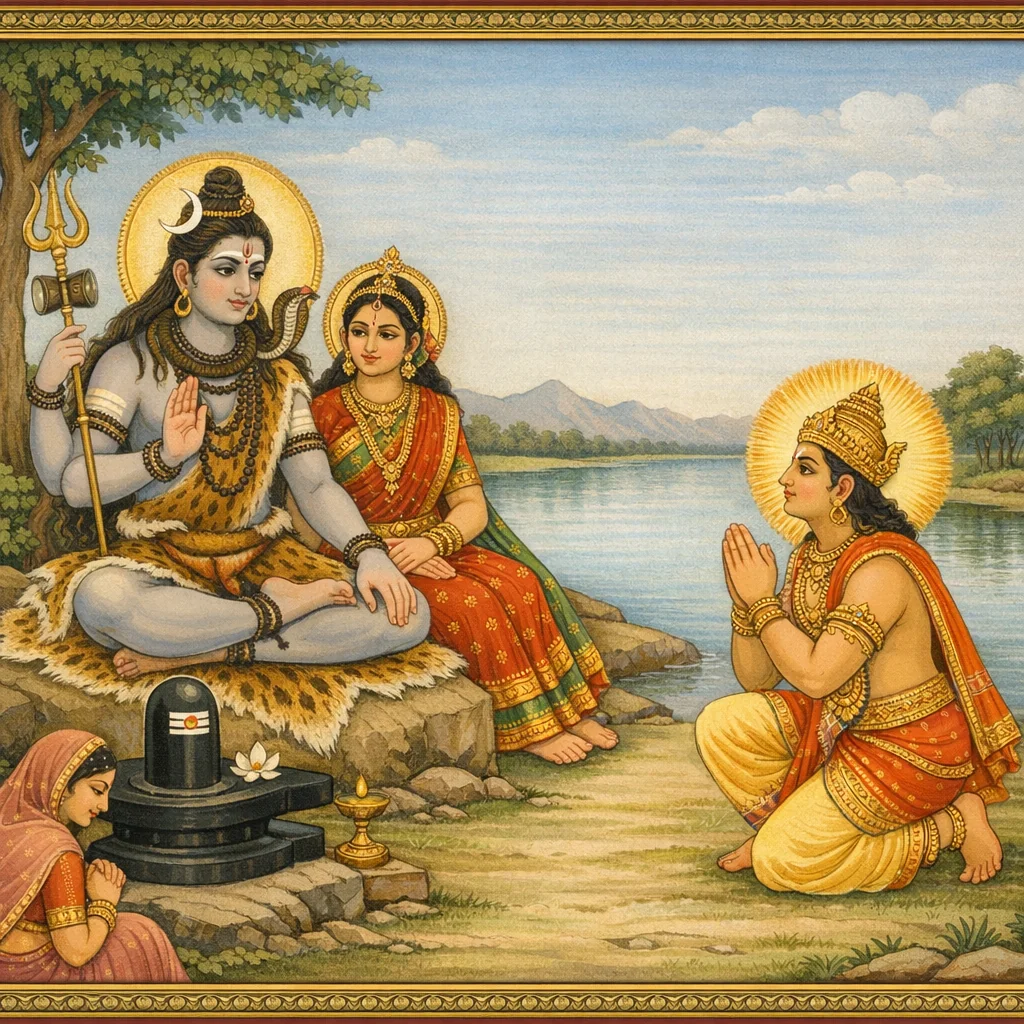
This chapter unfolds as a question-and-answer discourse: Mārkaṇḍeya directs Yudhiṣṭhira to visit the famed Prabhāseśvara tīrtha, praised across the three worlds as a “svarga-sopāna,” a stairway to heaven. Yudhiṣṭhira asks for a brief account of its origin and the fruits it bestows. The tīrtha’s origin is traced to Prabhā, the (unfortunate) wife of Ravi, the Sun, who performs fierce austerity—living on air and remaining absorbed in meditation for a year—until Śiva grants her a boon. Prabhā declares a social-ethical norm that for a woman her husband is her “deity,” whatever his qualities, and confesses her sorrow born of perceived ill fortune. Śiva promises, by his grace, to restore her marital favor; Umā (Pārvatī) questions how this can be practically fulfilled, whereupon Bhānu (Sūrya) arrives on the northern bank of the Narmadā. Śiva commands Sūrya to protect and satisfy Prabhā, and at Umā’s request Sūrya agrees to make Prabhā foremost among wives. Prabhā then asks that a portion (aṃśa) of Sūrya remain at the site to “open” the tīrtha, and a liṅga said to embody all the gods is established, becoming known as Prabhāseśa. The chapter turns to pilgrimage discipline: Prabhāseśvara is said to grant immediate desired results, especially on Māgha śukla saptamī, through rites performed under proper brahminical guidance—association with a horse, devotional bathing, and gifts to dvijas. Detailed dāna patterns follow, notably go-dāna with specified qualities; the phalaśruti proclaims that bathing and especially kanya-dāna at this tīrtha dissolve even grave transgressions, lead to the worlds of the Sun and Rudra, and yield merit comparable to great sacrifices, while the timeless merit of go-dāna is extolled with special emphasis on caturdaśī.
Shlokas
Verse 1
श्रीमार्कण्डेय उवाच । ततो गच्छेत्तु राजेन्द्र प्रभासेश्वरमुत्तमम् । विख्यातं त्रिषु लोकेषु स्वर्गसोपानमुत्तमम्
Śrī Mārkaṇḍeya said: Then, O lord of kings, one should go to the excellent Prabhāseśvara, famed in the three worlds as the supreme stairway to heaven.
Verse 2
युधिष्ठिर उवाच । प्रभासं तात मे ब्रूहि कथं जातं महाफलम् । स्वर्गसोपानदं दृश्यं संक्षेपात्कथयस्व मे
Yudhiṣṭhira said: Father, tell me of Prabhāsa—how did it come to yield such great fruit? This visible “giver of the stairway to heaven”—explain it to me in brief.
Verse 3
श्रीमार्कण्डेय उवाच । दुर्भगा रविपत्नी च प्रभानामेति विश्रुता । तया चाराधितः शम्भुरुग्रेण तपसा पुरा
Śrī Mārkaṇḍeya said: There was a woman named Prabhā, the wife of Ravi (the Sun), renowned as “unfortunate.” In former times she worshipped Śambhu through fierce austerity.
Verse 4
वायुभक्षा स्थिता वर्षं वर्षं ध्यानपरायणा । ततस्तुष्टो महादेवः प्रभायाः पाण्डुनन्दन
Living on air alone and devoted to meditation year after year, Prabhā endured; then Mahādeva became pleased with her, O son of Pāṇḍu.
Verse 5
ईश्वर उवाच । कस्मात्संक्लिश्यसे बाले कथ्यतां यद्विवक्षितम् । अहं हि भास्करोऽप्येको नानात्वं नैव विद्यते
Īśvara said: Child, why do you torment yourself? Speak what you wish to ask. For I am truly the One; I am Bhāskara (the Sun) as well—indeed, no multiplicity exists.
Verse 6
प्रभोवाच । नान्यो देवः स्त्रियः शम्भो विना भर्त्रा क्वचित्प्रभो । सगुणो निर्गुणो वापि धनाढ्यो वाप्यकिंचनः
Prabhā said: O Śambhu, for a woman there is no other deity anywhere apart from her husband, O Lord—whether he is virtuous or lacking virtue, whether wealthy or destitute.
Verse 7
प्रियो वा यदि वा द्वेष्यः स्त्रीणां भर्तैव दैवतम् । दुर्भगत्वेन दग्धाहं सखीमध्ये सुरेश्वर । भर्त्तर्यल्लब्धसौख्यास्मि तेन क्लिश्याम्यहं भृशम्
Whether dear or hostile, for women the husband alone is their deity. I am scorched by “ill-fortune” among my companions, O Lord of gods; since I have found no happiness with my husband, I suffer exceedingly.
Verse 8
ईश्वर उवाच । वल्लभा भास्करस्यैव मत्प्रसादाद्भविष्यसि
Īśvara said: By my grace, you shall indeed become the beloved of Bhāskara, the Sun.
Verse 9
पार्वत्युवाच । अप्रमाणं भवद्वाक्यं भास्करोऽपि करिष्यति । वृथा क्लेशो भवेदस्याः प्रभायाः परमेश्वर
Pārvatī said: “O Parameśvara, even Bhāskara will render your word without authority. Then all of Prabhā’s suffering, O Supreme Lord, would become futile.”
Verse 10
उमावाक्यान्महेशानध्यातस्तिमिरनाशनः । आगतो गगनाद्भानुर्नर्मदोत्तररोधसि
Prompted by Umā’s words, Maheśa meditated upon the matter. Then Bhānu, the destroyer of darkness, came down from the sky to the northern bank of the Narmadā.
Verse 11
भानुरुवाच । आहूतोऽस्मि कथं देव ह्यघासुरनिषूदन
Bhānu (the Sun) said: “How have I been summoned, O Deva—O slayer of Aghāsura?”
Verse 12
ईश्वर उवाच । प्रभां पालय भो भानो संतोषेण परेण हि
Īśvara said: “O Bhānu, protect Prabhā—do so with the highest contentment.”
Verse 13
उमोवाच । प्रभाया मन्दिरे नित्यं स्थीयतां हिमनाशन । अग्रपत्नी समस्तानां भार्याणां क्रियतां रवे
Umā said: “O dispeller of cold, dwell always in Prabhā’s abode. And, O Ravi, let her be made the foremost wife among all your consorts.”
Verse 14
भानुरुवाच । एवं देवि करिष्यामि तव वाक्यं वरानने । एतच्छ्रुत्वा प्रभाहूता प्रत्युवाच महेश्वरम्
Bhānu said: “So be it, O Devī; I shall do as you say, O fair-faced one.” Hearing this, Prabhā—having been summoned—replied to Maheśvara.
Verse 15
प्रभोवाच । स्वांशेन स्थीयतां देव मन्मथारे उमापते । एकांशः स्थाप्यतामत्र तीर्थस्योन्मीलनाय च
Prabhā said: “O God, O destroyer of Manmatha, O lord of Umā—remain here by a portion of your own power. And let one portion be established here for the unfolding of this tīrtha as well.”
Verse 16
श्रीमार्कण्डेय उवाच । सर्वदेवमयं लिङ्गं स्थापितं तत्र पाण्डव । प्रभासेश इति ख्यातं सर्वलोकेषु दुर्लभम्
Śrī Mārkaṇḍeya said: “There, O Pāṇḍava, a liṅga embodying all the gods was स्थापित (established). It is renowned as ‘Prabhāseśa’, and is rare to be attained in all the worlds.”
Verse 17
अन्यानि यानि तीर्थानि काले तानि फलन्ति वै । प्रभासेशस्तु राजेन्द्र सद्यः कामफलप्रदः
Other tīrthas yield their fruits in due time; but Prabhāseśa, O best of kings, grants the desired fruit at once.
Verse 18
माघमासे सिते पक्षे सप्तम्यां च विशेषतः । अश्वं यः स्पर्शयेत्तत्र यथोक्तब्राह्मणे नृप
In the month of Māgha, in the bright fortnight—especially on the seventh lunar day—O king, whoever there touches a horse in accordance with the stated brāhmaṇa injunctions…
Verse 19
इन्द्रत्वं प्राप्यते तेन भास्करस्याथवा पदम् । स्नात्वा परमया भक्त्या दानं दद्याद्द्विजातये
By that merit one attains the status of Indra, or even the station of Bhāskara, the Sun. Having bathed with supreme devotion, one should give a charitable gift to a twice-born (Brāhmaṇa).
Verse 20
गोप्रदाता लभेत्स्वर्गं सत्यलोकं वरेश्वर । सर्वाङ्गसुन्दरीं शुभ्रां क्षीरिणीं तरुणीं शुभाम्
O excellent Lord, the giver of a cow attains heaven—even Satyaloka—and is rewarded with a radiant, auspicious, milk-yielding, youthful cow, flawless in beauty in every limb.
Verse 21
सवत्सां घण्टासंयुक्तां कांस्यपात्रावदोहिनीम् । ददते ये नृपश्रेष्ठ न ते यान्ति यमालयम्
O best of kings, those who give a cow with her calf, adorned with a bell and provided with a bronze milking vessel—such donors do not go to Yama’s abode.
Verse 22
अथ यः परया भक्त्या स्नानं देवस्य कारयेत् । स प्राप्नोति परं लोकं यावदाभूतसम्प्लवम्
Now, whoever, with supreme devotion, causes the Lord’s ritual bathing to be performed, attains the highest world, enduring until the cosmic dissolution.
Verse 23
दौर्भाग्यं नाशमायाति स्नानमात्रेण पाण्डव । तत्र तीर्थे तु यो भक्त्या कन्यादानं प्रयच्छति
O Pāṇḍava, misfortune is destroyed by bathing alone. And whoever, with devotion, offers there at that sacred ford the kanyā-dāna, the gift of a maiden—
Verse 24
ब्राह्मणाय विवाहेन दापयेत्पाण्डुनन्दन । समानवयसे देया कुलशीलधनैस्तथा
O son of Pāṇḍu, one should give her in marriage to a Brāhmaṇa. She should be given to a groom of suitable age, and likewise endowed with good family, character, and means.
Verse 25
ये ददन्ते महाराज ह्यपि पातकसंयुताः । तेषां पापानि लीयन्ते ह्युदके लवणं यथा
O great king, even those burdened with sins—if they give in charity—their sins dissolve, like salt in water.
Verse 26
स्वामिद्रोहकृतं पापं निक्षेपस्यापहारिणि । मित्रघ्ने च कृतघ्ने च कूटसाक्ष्यसमुद्भवम्
(Even) the sin born of treachery to one’s master; of one who steals a deposit entrusted to him; of one who kills a friend; of the ungrateful; and that arising from false testimony—
Verse 27
तद्ग्रामोद्यानभेदोत्थं परदारनिषेवणम् । वार्द्धुषिकस्य यत्पापं यत्पापं स्तेयसम्भवम्
Likewise, the sin arising from damaging a village park or garden; from consorting with another’s wife; the sin of the usurer; and the sin that arises from theft—
Verse 28
कूपभेदोद्भवं यच्च बैडालव्रतधारिणः । दाम्भिकं वृक्षच्छेदोत्थं विवाहस्य निषेधजम्
Also, the sin arising from breaking a well; that of one who keeps the ‘cat-vow’ (hypocritical asceticism); the sin of hypocrisy; that arising from cutting down trees; and that born of obstructing a marriage—
Verse 29
आरामस्थतरुच्छेदमगम्यागमनोद्भवम् । स्वभार्यात्यजने यच्च परभार्यासमीहनात्
The sin arising from cutting down trees in a garden; the sin born of approaching a woman who must not be approached; the sin incurred by abandoning one’s own lawful wife; and the sin that comes from desiring another man’s wife—(all these are spoken of here).
Verse 30
ब्रह्मस्वहरणे यच्च गरदे गोविघातिनि । विद्याविक्रयणोत्थं च संसर्गाद्यच्च पातकम्
And the sin involved in stealing a brāhmaṇa’s property; the sin of administering poison; the sin of killing a cow; the sin that arises from selling sacred learning; and whatever sin is born from corrupt association—(all these are included).
Verse 31
श्वबिडालवधाद्घोरं सर्पशूद्रोद्भवं तथा । भूमिहर्तुश्च यत्पापं भूमिहारिणि चैव हि
The dreadful sin from killing dogs and cats; likewise the sin connected with harming serpents and śūdras; and the sin belonging to one who seizes land, and indeed also to one who steals and carries off land—(all are included).
Verse 32
मा ददस्वेति यत्पापं गोवह्निब्राह्मणेषु च । तत्पापं याति विलयं कन्यादानेन पाण्डव
O Pāṇḍava, whatever sin is incurred by saying “Do not give” with regard to cows, the sacred fire, and brāhmaṇas—that sin is destroyed through kanyādāna, the gift of a maiden.
Verse 33
स गत्वा भास्करं लोकं रुद्रलोके शुभे व्रजेत् । क्रीडते रुद्रलोकस्थो यावदिन्द्राश्चतुर्दश
Having reached the world of Bhāskara, the Sun, he then proceeds to the auspicious world of Rudra; dwelling in Rudra’s realm, he sports there for as long as fourteen Indras (cycles) endure.
Verse 34
सर्वपापक्षये जाते शिवे भवति भावना । एतद्व्रजति यस्तीर्थं प्रभासं पाण्डुनन्दन
When all sins are exhausted, the mind becomes filled with devotion to Śiva. O son of Pāṇḍu, this is what befalls one who goes to the sacred tīrtha called Prabhāsa.
Verse 35
सर्वतीर्थफलं प्राप्य सोऽश्वमेधफलं लभेत् । गोप्रदानं महापुण्यं सर्वपापक्षयं परम् । प्रशस्तं सर्वकालं हि चतुर्दश्यां विशेषतः
Having obtained the fruit of all pilgrimages, he gains the fruit of the Aśvamedha sacrifice. The donation of a cow is supremely meritorious and brings about the highest destruction of all sins. It is auspicious at all times—especially on the fourteenth lunar day (caturdaśī).