Adhyaya 91
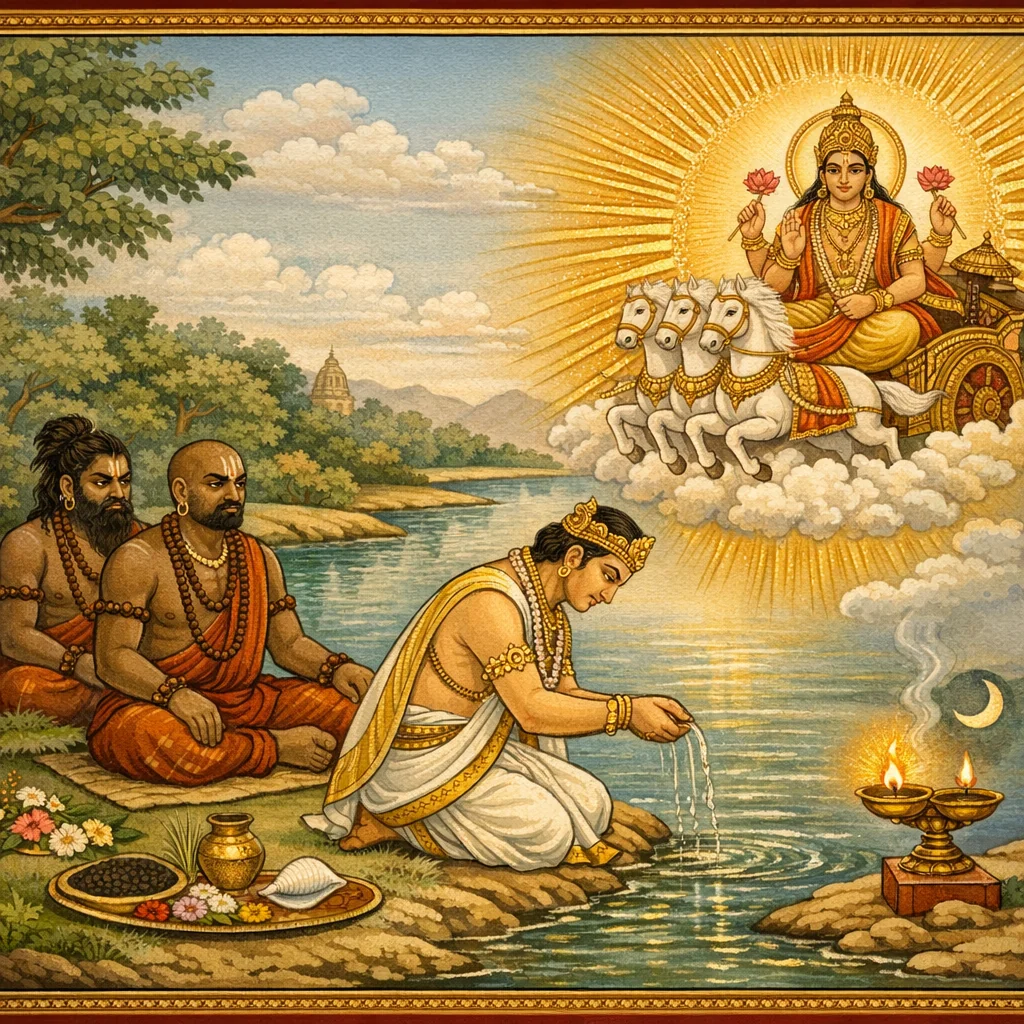
Mārkaṇḍeya tells a king of a supremely purifying tīrtha linked with Caṇḍāditya—an installed, worshipful form of the Sun (Bhāskara). He explains its origin: the fierce daityas Caṇḍa and Muṇḍa perform long tapas on the auspicious bank of the Narmadā, meditating on the Sun as the dispeller of darkness throughout the three worlds. Pleased, Sahasrāṃśu, the thousand-rayed Sun, offers a boon. They ask to be invincible against all devas and to be free from disease at all times. The Sun grants this, and through their devotional installation (sthāpanā) becomes associated with that place as Caṇḍabhānu/Caṇḍāditya. The chapter then teaches pilgrimage observances and rewards: one should come seeking self-attainment (ātma-siddhi), perform tarpaṇa for gods, humans, and ancestors, and offer a ghee lamp—especially on the sixth lunar day (ṣaṣṭhī). The phalaśruti promises release from sins, attainment of the Sun’s city or realm, and enduring victory and freedom from illness for those who hear Caṇḍabhānu’s origin narrative.
Shlokas
Verse 1
श्रीमार्कण्डेय उवाच । ततो गच्छेन्महीपाल तीर्थपरमपावनम् । चण्डादित्यं नृपश्रेष्ठ स्थापितं चण्डमुण्डयोः
Śrī Mārkaṇḍeya said: Then, O protector of the earth, one should go to the supremely purifying tīrtha—O best of kings—to Caṇḍāditya, the Sun shrine established by Caṇḍa and Muṇḍa.
Verse 2
आस्तां पुरा महादैत्यौ चण्डमुण्डौ सुदारुणौ । नर्मदातीरमाश्रित्य चेरतुर्विपुलं तपः
In ancient times there were two mighty and terrible asuras, Caṇḍa and Muṇḍa. Taking refuge on the bank of the Narmadā, they undertook immense austerities (tapas).
Verse 3
ध्यायन्तौ भास्करं देवं तमोनाशं जगत्त्रये । तुष्टस्तत्तपसा देवः सहस्रांशुरुवाच ह
Meditating upon Bhāskara, the divine dispeller of darkness in the three worlds, they worshipped through austerity. Pleased by that tapas, the thousand-rayed god spoke.
Verse 4
साधु साध्विति तौ पार्थ नर्मदायाः शुभे तटे । वरं प्रार्थयतं वीरौ यथेष्टं चेतसेच्छितम्
‘Well done, well done,’ the god said to those two heroes, O Pārtha, upon the auspicious bank of the Narmadā. ‘Ask for a boon—whatever you desire, whatever your mind longs for.’
Verse 5
चण्डमुण्डावूचतुः । अजेयौ सर्वदेवानां भूयास्वावां समाहितौ । सर्वरोगैः परित्यक्तौ सर्वकालं दिवाकर
Caṇḍa and Muṇḍa said: “O Divākara (Sun), may we two become unconquerable even by all the gods, firm in concentrated resolve, and forever abandoned by every disease.”
Verse 6
एवमस्त्विति तौ प्राह भास्करो वारितस्करः । इत्युक्त्वान्तर्दधे भानुर्दैत्याभ्यां तत्र भास्करः
Bhāskara (the Sun), the restrainer of thieves, said to those two, “So be it.” Having spoken thus, that Bhānu (Sun) vanished from before the two demons there.
Verse 7
स्थापितः परया भक्त्या तं गच्छेदात्मसिद्धये । गीर्वाणांश्च मनुष्यांश्च पित्ःंस्तत्रापि तर्पयेत्
Having established (the deity) with supreme devotion, one should go there for one’s own spiritual accomplishment; and there, one should also offer satisfaction (tarpana) to the gods, to human beings, and to the ancestors.
Verse 8
स वसेद्भास्करे लोके विरिञ्चिदिवसं नृप । घृतेन बोधयेद्दीपं षष्ठ्यां स च नरेश्वर । मुच्यते सर्वपापैस्तु प्रतियाति पुरं रवेः
O King, he dwells in the world of Bhāskara for a ‘day of Brahmā’—a vast span. On the sixth lunar day (ṣaṣṭhī tithi), O lord of men, if he kindles a lamp with ghee, he is freed from all sins and goes onward to the city of Ravi, the Sun.
Verse 9
उत्पत्तिं चण्डभानोर्यः शृणोति भरतर्षभ । विजयी स सदा नूनमाधिव्याधिविवर्जितः
O bull among the Bhāratas, whoever hears the origin of Caṇḍabhānu becomes ever victorious, and indeed remains free from mental affliction and bodily disease.
Verse 91
। अध्याय
Chapter marker: “Adhyāya” (Chapter).