Adhyaya 88
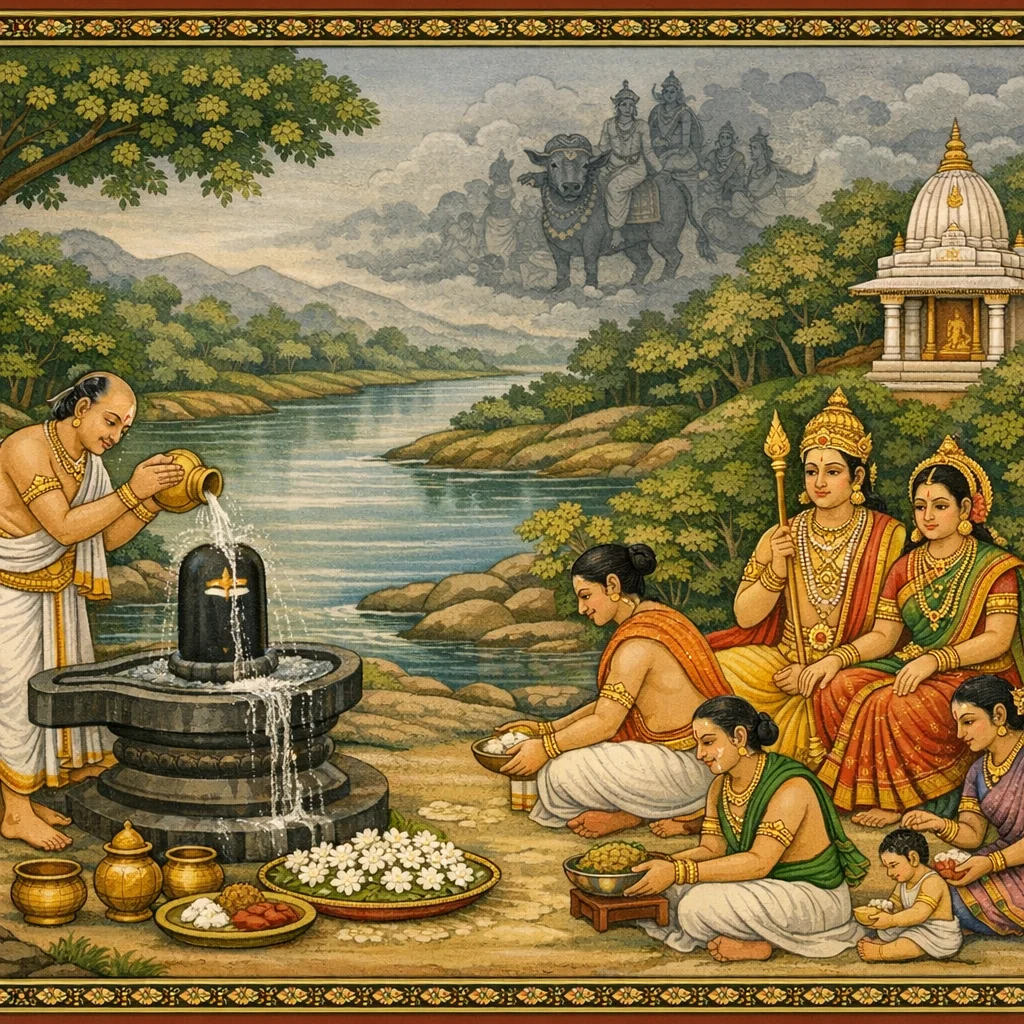
The chapter gives a rite-and-fruit guide for worship at Kāpilatīrtha, said to have been established by Kapila and praised as a destroyer of all sins (sarvapātakanāśana). Mārkaṇḍeya instructs a king to perform ritual bathing and divine service on prescribed lunar dates—especially the bright fortnight’s aṣṭamī and caturdaśī—and to offer abhiṣeka with the milk and ghee of a kapilā cow. It prescribes fragrant anointing with śrīkhaṇḍa sandal paste and worship with sweet-smelling white flowers, requiring the worshipper to restrain anger (jitakrodha). A protective phalaśruti follows: devotees of Kapileśvara are said to avoid Yama’s punitive realms, and the dreadful visions of torment are not encountered by the learned through this worship. The chapter then joins pilgrimage ethics to social duty: after bathing in the meritorious waters of the Revā, one should feed auspicious brāhmaṇas and give dānas—cow, cloth, sesame, umbrella, and bed—by which the king becomes dhārmika. Concluding benefits include vigor and tejas, a stable lineage with living children (jīvatputra), pleasant speech, and freedom from hostile factions.
Shlokas
Verse 1
श्रीमार्कण्डेय उवाच । तस्यैवानन्तरं पार्थ कापिलं तीर्थमाश्रयेत् । स्थापितं कपिलेनैव सर्वपातकनाशनम्
Śrī Mārkaṇḍeya said: “Immediately after that, O son of Pṛthā, one should resort to the Kāpila Tīrtha, established by Kapila himself—destroyer of all sins.”
Verse 2
अष्टम्यां च सिते पक्षे चतुर्दश्यां नरेश्वर । स्नापयेत्परया भक्त्या कपिलाक्षीरसर्पिषा
On the eighth day of the bright fortnight, and on the fourteenth, O lord of men, one should bathe (the deity) with supreme devotion using the milk and ghee of a tawny cow.
Verse 3
श्रीखण्डेन सुगन्धेन गुण्ठयेत महेश्वरम् । ततः सुगन्धपुष्पैश्च श्वेतैश्च नृपसत्तम
One should anoint Maheśvara with fragrant sandalwood paste; then worship with sweet-smelling flowers, including white ones, O best of kings.
Verse 4
येऽर्चयन्ति जितक्रोधा न ते यान्ति यमालयम् । असिपत्त्रवनं घोरं यमचुल्ही सुदारुणा
Those who worship here, having conquered anger, do not go to Yama’s abode—nor to the dreadful forest of sword-like leaves, nor to the most terrifying “Yama’s furnace” of torment.
Verse 5
दृश्यते नैव विद्वद्भिः कपिलेश्वरपूजनात् । स्नात्वा रेवाजले पुण्ये भोजयेद्ब्राह्मणाञ्छुभान्
The wise declare that such merit is truly obtained through worship of Kapileśvara. Having bathed in the sacred waters of the Revā, one should feed virtuous brāhmaṇas.
Verse 6
गोप्रदानेन वस्त्रेण तिलदानेन भारत । छत्रशय्याप्रदानेन राजा भवति धार्मिकः
O Bhārata, by gifting cows, by giving garments, by donating sesame, and by offering umbrellas and beds, a king becomes truly righteous, established in dharma.
Verse 7
तीव्रतेजा विघोरश्च जीवत्पुत्रः प्रियंवदः । शत्रुवर्गो न तस्य स्यात्कदाचित्पाण्डुनन्दन
O son of Pāṇḍu, he becomes radiant with keen energy and formidable to opponents; his sons live, his speech becomes pleasing, and an enemy-host never arises against him at any time.
Verse 88
। अध्याय
End of the chapter (adhyāya).