Adhyaya 86
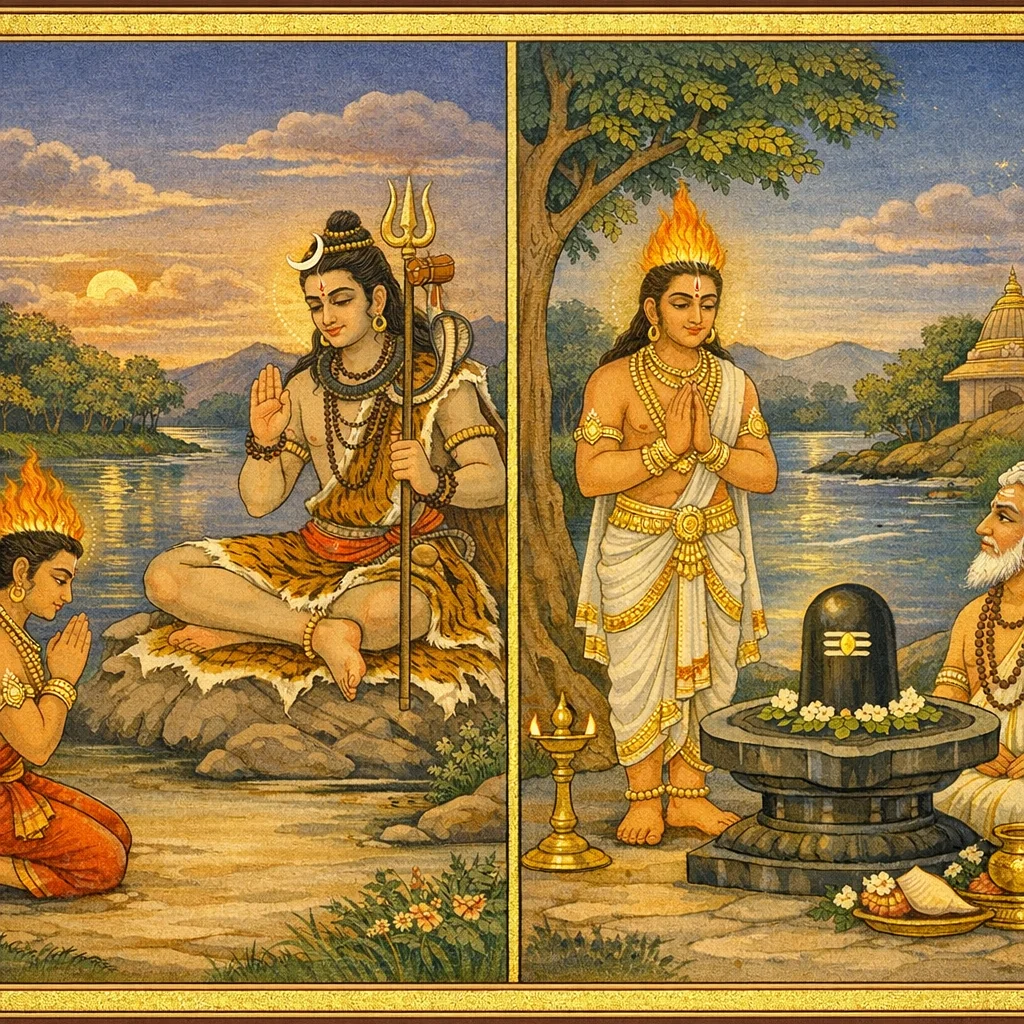
This adhyāya unfolds as a dialogue: Yudhiṣṭhira asks Mārkaṇḍeya about the origin of Piṅgaleśvara at Piṅgalāvarta, a sacred spot near a confluence on the northern bank of the Revā. Mārkaṇḍeya relates that Havyavāhana (Agni) is stricken—burned by Rudra’s potent seed—and falls into disease. Agni then undertakes a devout pilgrimage, reaches the Revā, and performs fierce austerities for a long time, even sustaining himself on wind alone. Pleased, Śiva grants a boon; Agni begs release from his affliction. Śiva instructs him to bathe at that tīrtha, and Agni is immediately restored to his divine form. In gratitude, Agni establishes the deity by pratiṣṭhā as Piṅgaleśvara and worships through the sacred Name with hymns of praise. The chapter ends with phalaśruti and ethical-ritual counsel: one who fasts there, having conquered anger, gains extraordinary merit culminating in Rudra-like attainment; and the gift of a decorated kapilā cow with her calf to a worthy brāhmaṇa is extolled as leading to the highest goal.
Shlokas
Verse 1
श्रीमार्कण्डेय उवाच । ततो गच्छेन्महाराज पिङ्गलावर्तमुत्तमम् । सङ्गमस्य समीपस्थं रेवाया उत्तरे तटे । हव्यवाहेन राजेन्द्र स्थापितः पिङ्गलेश्वरः
Śrī Mārkaṇḍeya said: Then, O great king, one should go to the excellent Piṅgalāvarta, near the confluence, on the northern bank of the Revā. There, O best of kings, Havyavāhana (Agni) installed Piṅgaleśvara.
Verse 2
युधिष्ठिर उवाच । हव्यवाहेन भगवन्नीश्वरः स्थापितः कथम् । एतदाख्याहि मे सर्वं प्रसादाद्वक्तुमर्हसि
Yudhiṣṭhira said: O revered one, how was the Lord installed by Havyavāhana (Agni)? Please tell me all of this; out of grace, you should speak.
Verse 3
मार्कण्डेय उवाच । शम्भुना रेतसा राजंस्तर्पितो हव्यवाहनः । प्राप्तसौख्येन रौद्रेण गौर्याक्रीडनचेतसा
Mārkaṇḍeya said: O king, Havyavāhana (Agni) was satisfied by Śambhu’s seed; and with that fierce energy—born of Śiva’s delight while sporting with Gaurī—he attained a wondrous potency.
Verse 4
हव्यवाहमुखे क्षिप्तं रुद्रेणामिततेजसा । रुद्रस्य रेतसा दग्धस्तीर्थयात्राकृतादरः
Cast into the mouth of Havyavāhana by Rudra of immeasurable radiance, Agni was scorched by Rudra’s seed; thereafter he became intent upon undertaking pilgrimage to the sacred tīrthas.
Verse 5
सागरांश्च नदीर्गत्वा क्रमाद्रेवां समागतः । चचार परया भक्त्या ध्यानमुग्रं हुताशनः
Having gone to seas and rivers, in due course Hutāśana (Agni) reached the Revā. There, with supreme devotion, he practised intense meditation.
Verse 6
वायुभक्षः शतं साग्रं यावत्तेपे हुताशनः । तावत्तुष्टो महादेवो वरदो जातवेदसः । संनिधौ समुपेत्याथ वचनं चेदमब्रवीत्
Living only on air, Hutāśana (Agni) performed austerities for a full hundred years and more. Then Mahādeva, pleased and ready to grant boons to Jātavedas, came into his presence and spoke these words.
Verse 7
ईश्वर उवाच । वरं वृणीष्व हव्याश यस्ते मनसि वर्तते
Īśvara said: “O Havyāśa (Agni), choose the boon that abides in your heart.”
Verse 8
वह्निरुवाच । नमस्ते सर्वलोकेश उग्रमूर्ते नमोऽस्तु ते । रेतसा तव संदग्धः कुष्ठी जातो महेश्वर । कृपां कुरु महादेव मम रोगं विनाशय
Vahni (Agni) said: “Homage to You, Lord of all worlds; homage to Your fierce form. O Maheśvara, scorched by Your fiery potency, I have become afflicted with leprosy. O Mahādeva, show compassion—destroy my disease.”
Verse 9
ईश्वर उवाच । हव्यवाह भवारोगो मत्प्रसादाच्च सत्वरम् । अत्र तीर्थे कृतस्नानः स्वरूपं प्रतिपत्स्यसे
Īśvara said: “O Havyavāha, by My grace your disease will quickly cease. Having bathed at this tīrtha here, you shall regain your true divine form.”
Verse 10
इत्युक्त्वा च महादेवस्तत्रैवान्तरधीयत । अनन्तरं हव्यवाहः सस्नौ रेवाजले त्वरन्
Having spoken thus, Mahādeva vanished on that very spot. Immediately thereafter, Havyavāha hastened and bathed in the sacred waters of the Revā.
Verse 11
तदैव रोगनिर्मुक्तोऽभवद्दिव्यस्वरूपवान् । स्थापयामास देवेशं स वह्निः पिङ्गलेश्वरम्
At that very moment he was freed from disease and shone forth in a divine form. Then Vahni established the Lord of the gods as Piṅgaleśvara.
Verse 12
नाम्ना संपूजयामास तुष्टाव स्तुतिभिर्मुदा । ततो जगाम देशं स्वं देवानां हव्यवाहनः
He worshipped the Lord with the proper rites and invoked Him by His name; joyfully he praised Him with hymns. Then Havyavāhana, bearer of the gods’ offerings, departed to his own abode.
Verse 13
हव्यवाहेन भूपैवं स्थापितः पिङ्गलेश्वरः । जितक्रोधो हि यस्तत्र उपवासं समाचरेत्
Thus, O king, Piṅgaleśvara was established by Havyavāha (Agni). Whoever there, having conquered anger, duly observes a fast—
Verse 14
अतिरान्त्रफलं तस्य अन्ते रुद्रत्वमाप्नुयात् । गुणान्विताय विप्राय कपिलां तत्र भारत
For him the reward becomes exceedingly great; in the end he attains Rudra-nature, union with Rudra. And there, O Bhārata, one should gift a tawny kapilā cow to a virtuous brāhmaṇa endowed with good qualities—
Verse 15
अलंकृत्य सवत्सां च शक्त्यालङ्कारभूषिताम् । यः प्रयच्छति राजेन्द्र स गच्छेत्परमां गतिम्
O lord of kings, whoever there donates a cow with her calf—adorned and furnished with fitting ornaments—attains the supreme destination.
Verse 86
। अध्याय
“Adhyāya” — a chapter colophon marker indicating the chapter boundary or ending in the manuscript tradition.