Adhyaya 83
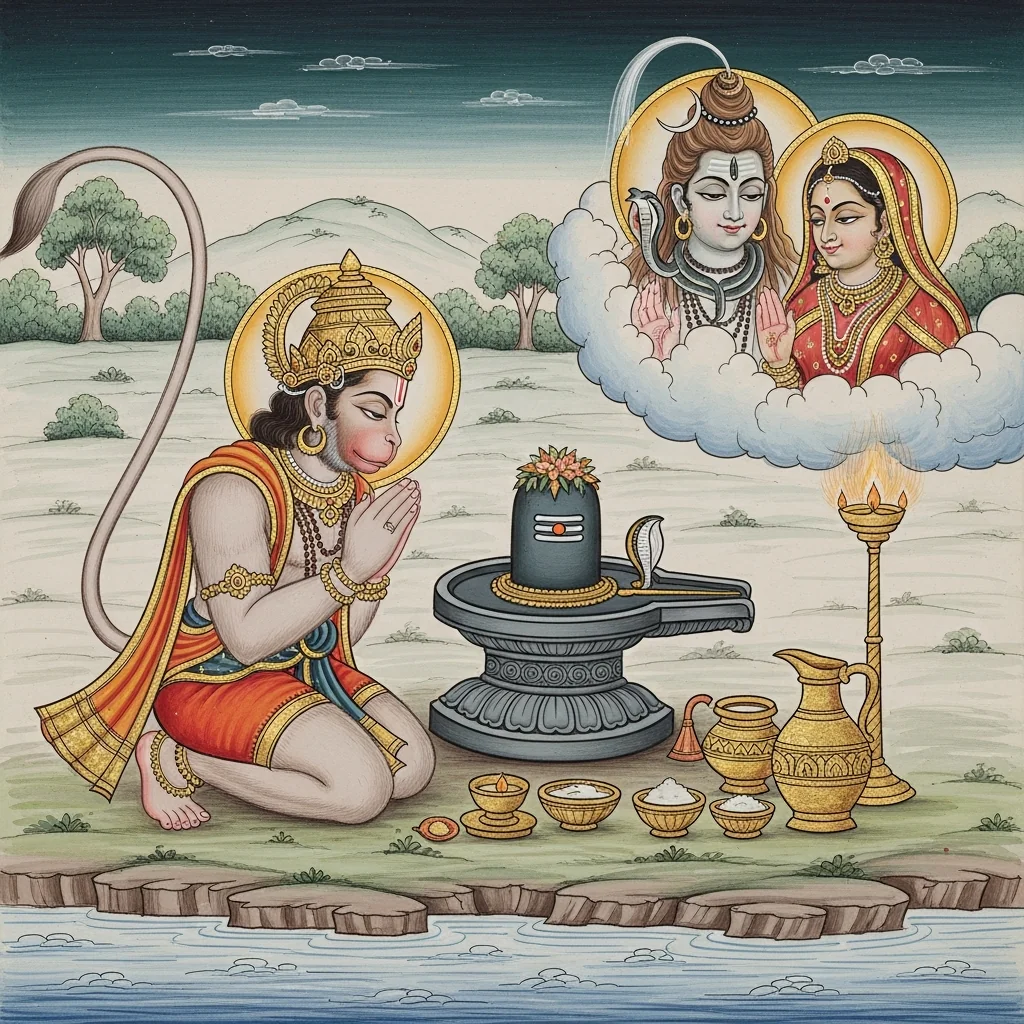
This chapter is a theological dialogue between Mārkaṇḍeya and Yudhiṣṭhira on a Revā/Narmadā-bank tīrtha called Hanūmanta/Hanūmanteśvara, praised as able to remove grave demerit, even brahmahatyā-like impurity. It first identifies the site as a distinguished liṅga on the southern bank of the Revā, and Yudhiṣṭhira asks how the name Hanūmanteśvara arose. Mārkaṇḍeya recounts the epic origin: after the Rāma–Rāvaṇa war and the destruction of rākṣasas, Nandinī warns Hanumān that extensive killing has left him burdened with impurity and directs him to the Narmadā for austerity and sacred bathing. Hanumān worships for a long time; Śiva appears with Umā, grants darśana, assures him of purification through the Narmadā’s māhātmya, and bestows further boons, including honorific names of Hanumān. Hanumān then establishes the liṅga Hanūmānīśvara/Hanūmanteśvara, described as indestructible and wish-fulfilling. A second narrative offers “visible proof” through King Supārva and his son Śatabāhu, a morally wayward ruler, who meets a brāhmaṇa charged with immersing bone-remains at Hanūmanteśvara. The brāhmaṇa relates a princess’s memory of a former life: her body was killed in the forest, and a bone fragment fell into the Narmadā at this tīrtha, yielding a meritorious rebirth and a firm ethical resolve against remarriage. The text prescribes the bone-collection and immersion rite in Aśvina month, the dark fortnight, and a Śiva-related tithi, with night vigil and post-rite bathing, while warning that greed and mental attachment can obstruct purification. The chapter closes with ritual directions: aṣṭamī and caturdaśī (especially Aśvina kṛṣṇa caturdaśī), abhiṣeka with honey-milk, ghee, sugared curd, and kuśa-water; sandal anointing, bilva and seasonal flowers, lamp offering, śrāddha with qualified brāhmaṇas, and strong emphasis on go-dāna as the highest gift, since the cow is “sarvadevamayī.” Even distant remembrance of Hanūmanteśvara is said to relieve demerit.
Shlokas
Verse 1
श्रीमार्कण्डेय उवाच । ततो गच्छेन्महाराज तीर्थं परमशोभनम् । ब्रह्महत्याहरं प्रोक्तं रेवातटसमाश्रयम् । हनूमताभिधं ह्यत्र विद्यते लिङ्गमुत्तमम्
Śrī Mārkaṇḍeya said: Then, O great king, one should go to a supremely beautiful tīrtha, said to remove the sin of brahmin-slaying, situated on the bank of the Revā. Here there is an excellent Liṅga known as ‘Hanūmata’.
Verse 2
युधिष्ठिर उवाच । हनूमन्तेश्वरं नाम कथं जातं वदस्व मे । ब्रह्महत्याहरं तीर्थं रेवादक्षिणसंस्थितम्
Yudhiṣṭhira said: Tell me how the name ‘Hanūmateśvara’ arose—this tīrtha that removes brahmahatyā, situated on the southern side of the Revā.
Verse 3
श्रीमार्कण्डेय उवाच । साधु साधु महाबाहो सोमवंशविभूषण । गुह्याद्गुह्यतरं तीर्थं नाख्यातं कस्यचिन्मया
Śrī Mārkaṇḍeya said: “Well spoken, well spoken, O mighty-armed ornament of the Lunar line. This tīrtha is more secret than the secret; I have disclosed it to no one.”
Verse 4
तव स्नेहात्प्रवक्ष्यामि पीडितो वार्द्धकेन तु । पूर्वं जातं महद्युद्धं रामरावणयोरपि
Out of affection for you I shall relate it, though pressed by old age. In former times there arose a great battle, even between Rāma and Rāvaṇa.
Verse 5
पुलस्त्यो ब्रह्मणः पुत्रो विश्रवास्तस्य वै सुतः । रावणस्तेन संजातो दशास्यो ब्रह्मराक्षसः
Pulastya was a son of Brahmā, and his son indeed was Viśravā. From him was born Rāvaṇa—the ten-faced one—renowned as a brahma-rākṣasa.
Verse 6
त्रैलोक्यविजयी भूतः प्रसादाच्छूलिनः स च । गीर्वाणा विजिताः सर्वे रामस्य गृहिणी हृता
By the favor of the Trident-bearing Lord he became a conqueror of the three worlds; all the gods were subdued, and Rāma’s wife was carried away.
Verse 7
वारितः कुम्भकर्णेन सीतां मोचय मोचय । विभीषणेन वै पापो मन्दोदर्या पुनःपुनः
That sinner was restrained again and again—by Kumbhakarṇa, by Vibhīṣaṇa, and repeatedly by Mandodarī—saying, “Release Sītā, release her!”
Verse 8
त्वं जितः कार्तवीर्येण रैणुकेयेन सोऽपि च । स रामो रामभद्रेण तस्य संख्ये कथं जयः
You were defeated by Kārtavīrya, and he in turn by Rāma Jāmadagnya, the son of Reṇukā. That very Rāma was defeated by Rāmabhadra; so in battle, how could victory ever be assured for him?
Verse 9
रावण उवाच । वानरैश्च नरैरृक्षैर्वराहैश्च निरायुधैः । देवासुरसमूहैश्च न जितोऽहं कदाचन
Rāvaṇa said: “Never have I been defeated—neither by vānara, nor by men, nor by bears, nor by boars, unarmed though they be; nor even by hosts of devas and asuras.”
Verse 10
श्रीमार्कण्डेय उवाच । सुग्रीवहनुमद्भ्यां च कुमुदेनाङ्गदेन च । एतैरन्यैः सहायैश्च रामचन्द्रेण वै जितः
Śrī Mārkaṇḍeya said: “Indeed you were defeated by Rāmacandra—together with Sugrīva and Hanumān, with Kumuda and Aṅgada, and with these and other allies.”
Verse 11
रामचन्द्रेण पौलस्त्यो हतः संख्ये महाबलः । वनं भग्नं हताः शूराः प्रभञ्जनसुतेन च
The mighty Paulastya (Rāvaṇa) was slain in battle by Rāmacandra; the grove was laid waste, and heroic warriors too were struck down by the son of Prabhañjana (Hanumān).
Verse 12
रावणस्य सुतो जन्ये हतश्चाक्षकुमारकः । आयामो रक्षसां भीमः सम्पिष्टो वानरेण तु
In battle, Rāvaṇa’s son Akṣakumāra was slain; and a dreadful champion of the rākṣasas was crushed by a vānara.
Verse 13
एवं रामायणे वृत्ते सीतामोक्षे कृते सति । अयोध्यां तु गते रामे हनुमान्स महाकपिः
Thus, when the events of the Rāmāyaṇa had come to pass and Sītā’s deliverance was accomplished, and when Rāma had gone to Ayodhyā, the great monkey Hanumān proceeded onward.
Verse 14
कैलासाख्यं गतः शैलं प्रणामाय महेशितुः । तिष्ठ तिष्ठेत्यसौ प्रोक्तो नन्दिना वानरोत्तमः
He went to the mountain called Kailāsa to bow to Maheśa. Nandin addressed the best of the vānaras: “Stop, stop!”
Verse 15
ब्रह्महत्यायुतस्त्वं हि राक्षसानां वधेन हि । भैरवस्य सभा नूनं न द्रष्टव्या त्वया कपे
Surely you are burdened with the sin of brahmahatyā because of the slaying of the Rākṣasas. Therefore, O monkey, the assembly of Bhairava should certainly not be approached or beheld by you.
Verse 16
हनुमानुवाच । नन्दिनाथ हरं पृच्छ पातकस्योपशान्तिदम् । पापोऽहं प्लवगो यस्मात्संजातः कारणान्तरात्
Hanumān said: “O lord Nandin, ask Hara (Śiva) for that which brings the pacification of sin. For I, though a plavaga, have become sinful due to another circumstance.”
Verse 17
नन्द्युवाच । रुद्रदेहोद्भवा किं ते न श्रुता भूतले स्थिता । श्रवणाज्जन्मजनितं द्विगुणं कीर्तनाद्व्रजेत्
Nandin said: “O one born from Rudra’s body, have you not heard this while dwelling on the earth? By merely hearing, the sin accumulated from birth is pacified; by proclaiming it in kīrtana, a double measure of merit is attained.”}]}
Verse 18
त्रिंशज्जन्मार्जितं पापं नश्येद्रेवावगाहनात् । तस्मात्त्वं नर्मदातीरं गत्वा चर तपो महत्
Sin accumulated over thirty births is destroyed by bathing in the sacred Revā. Therefore go to the bank of the Narmadā and undertake great austerity.
Verse 19
गन्धर्वाहसुतोऽप्येवं नन्दिनोक्तं निशम्य च । प्रयातो नर्मदातीरमौर्व्यादक्षिणसङ्गमम्
Thus, the son of Gandharvāhā too—having heard what Nandin said—set out for the bank of the Narmadā, to the southern confluence with the Aurvī.
Verse 20
दध्यौ सुदक्षिणे देवं विरूपाक्षं त्रिशूलिनम् । जटामुकुटसंयुक्तं व्यालयज्ञोपवीतिनम्
Facing south, he meditated upon the God—Virūpākṣa, the Trident-bearer—adorned with a crown of matted locks and wearing a serpent as the sacred thread.
Verse 21
भस्मोपचितसर्वाङ्गं डमरुस्वरनादितम् । उमार्द्धाङ्गहरं शान्तं गोनाथासनसंस्थितम्
He contemplated Him whose whole body was covered with sacred ash, resonant with the sound of the ḍamaru; tranquil, bearing Umā as half His body, and seated upon the lord of bulls (Nandin).
Verse 22
वत्सरान् सुबहून् यावदुपासांचक्र ईश्वरम् । तावत्तुष्टो महादेव आजगाम सहोमया
For many years he worshipped the Lord. Then Mahādeva, pleased, came there together with Umā.
Verse 23
उवाच मधुरां वाणीं मेघगम्भीरनिस्वनाम् । साधु साध्वित्युवाचेशः कष्टं वत्स त्वया कृतम्
He spoke in a sweet voice, deep as the rumbling of thunderclouds: “Well done, well done,” said the Lord. “O dear child, you have accomplished a difficult undertaking.”
Verse 24
न च पूर्वं त्वया पापं कृतं रावणसंक्षये । स्वामिकार्यरतस्त्वं हि सिद्धोऽसि मम दर्शनात्
And you did not commit sin earlier in the destruction of Rāvaṇa. Indeed, devoted to your master’s mission, you have attained success and fulfillment through beholding Me.
Verse 25
हनुमांश्च हरं दृष्ट्वा उमार्द्धाङ्गहरं स्थिरम् । साष्टाङ्गं प्रणतोऽवोचज्जय शम्भो नमोऽस्तु ते । जयान्धकविनाशाय जय गङ्गाशिरोधर
Seeing Hara—steadfast, bearing Umā as half of His body—Hanūmān bowed in eightfold prostration and said: “Victory to You, Śambhu; salutations to You. Victory to the destroyer of Andhaka; victory to the One who bears Gaṅgā upon His head.”
Verse 26
एवं स्तुतो महादेवो वरदो वाक्यमब्रवीत् । वरं प्रार्थय मे वत्स प्राणसम्भवसम्भव
Thus praised, Mahādeva—the giver of boons—spoke: “Ask a boon of Me, dear child, O offspring of the source of life-breath (the Wind-god).”
Verse 27
श्रीहनुमानुवाच । ब्रह्मरक्षोवधाज्जाता मम हत्या महेश्वर । न पापोऽहं भवेदेव युष्मत्सम्भाषणे क्षणात्
Śrī Hanūmān said: “O Maheśvara, by slaying a brahmarākṣasa, the sin of killing has arisen for me. O Lord, may I not remain sinful—even for a moment—after speaking with You.”
Verse 28
ईश्वर उवाच । नर्मदातीर्थमाहात्म्याद्धर्मयोगप्रभावतः । मन्मूर्तिदर्शनात्पुत्र निष्पापोऽसि न संशयः
Īśvara said: “By the greatness of the Narmadā sacred tīrtha, by the power of dharma joined with yoga, and by beholding My very form, my son—you are free from sin; of this there is no doubt.”
Verse 29
अन्यं च ते प्रयच्छामि वरं वानरपुंगव । उपकाराय लोकानां नामानि तव मारुते
“And I grant you another boon, O foremost of monkeys: for the welfare of the worlds, O son of the Wind, your names shall be proclaimed.”
Verse 30
हनूमानं जनिसुतो वायुपुत्रो महाबलः । रामेष्टः फाल्गुनो गोत्रः पिङ्गाक्षोऽमितविक्रमः
“He is Hanūmān—son of Añjanā, son of Vāyu, of great strength; beloved of Rāma; of the Phālguna line; tawny-eyed, of immeasurable valor.”
Verse 31
उदधिक्रमणश्रेष्ठो दशग्रीवस्य दर्पहा । लक्ष्मणप्राणदाता च सीताशोकनिवर्तनः
“Foremost in crossing the ocean; the crusher of the pride of Daśagrīva (Rāvaṇa); the giver of life to Lakṣmaṇa; and the remover of Sītā’s sorrow.”
Verse 32
इत्युक्त्वान्तर्दधे देव उमया सह शङ्करः । हनूमानीश्वरं तत्र स्थापयामास भक्तितः
Having spoken thus, Śaṅkara—the Lord—vanished together with Umā. Thereupon Hanūmān, with devotion, established Īśvara there as a sacred manifestation (shrine).
Verse 33
आत्मयोगबलेनैव ब्रह्मचर्यप्रभावतः । ईश्वरस्य प्रसादेन लिङ्गं कामप्रदं हि तत् । अच्छेद्यमप्रतर्क्यं च विनाशोत्पत्तिवर्जितम्
By the strength of inner yoga alone, and by the power of brahmacarya, through Īśvara’s grace that liṅga indeed became a bestower of desired aims—uncuttable, beyond reasoning, and free from decay or origination.
Verse 34
श्रीमार्कण्डेय उवाच । हनूमन्तेश्वरे पुत्र प्रत्यक्षप्रत्ययं शृणु । यद्वृत्तं द्वापरस्यादौ त्रेतान्ते पाण्डुनन्दन
Śrī Mārkaṇḍeya said: “O son, at Hanūmanteśvara hear the direct and evident testimony—what occurred at the beginning of the Dvāpara age, and at the close of the Tretā, O delight of the Pāṇḍus.”
Verse 35
सुपर्वा नाम भूपालो बभूव वसुधातले । तस्य राज्ञः सदा सौख्यं नरा दीर्घायुषः सदा
On the face of the earth there was a king named Suparvā. Under his rule there was constant well-being, and the people were ever blessed with long life.
Verse 36
स पुत्रधनसंयुक्तश्चौरोपद्रववर्जितः । शतबाहुर्बभूवास्य पुत्रो भीमपराक्रमः
He was endowed with sons and wealth, and his realm was free from the distress of thieves. His son was Śatabāhu, a prince of formidable valor.
Verse 37
आसक्तोऽसौ सदा कालं पापधर्मैर्नरेश्वर । अटाट्यत धरां सर्वां पर्वतांश्च वनानि च
O lord of men, he was continually given over to sinful ways; roaming restlessly, he wandered across the whole earth—through mountains and forests alike.
Verse 38
वधार्थं मृगयूथानामागतो विन्ध्यपर्वतम् । तरुजातिसमाकीर्णे हस्तियूथसमाचिते
Seeking to slay the herds of deer, he came to the Vindhya mountain—thick with many kinds of trees and crowded with troops of elephants.
Verse 39
सिंहचित्रकशोभाढ्ये मृगवाराहसंकुले । क्रीडित्वा स वने राजा नर्मदामानतः क्वचित्
In that forest—splendid with lions and shining marvels, crowded with deer and boars—the king sported about; and at a certain point he drew near the Narmadā.
Verse 40
हनूमन्तवने प्राप्तः शतक्रोशप्रमाणके । चिञ्चिणीवनशोभाढ्ये कदम्बतरुसंकुले
He reached Hanūmantavana, extending for a hundred krośas—beautiful with groves of tamarind and dense with kadamba trees.
Verse 41
नित्यं पालाशजम्बीरैः करंजखदिरैस्तथा । पाटलैर्बदरैर्युक्तैः शमीतिन्दुकशोभितम्
It was ever adorned with palāśa and jambīra trees, with karañja and khadira as well—joined by pāṭala and badara, and beautified by śamī and tinduka.
Verse 42
मृगयूथैः समाछन्नशिखण्डिस्वरनादितम् । पारावतकसङ्घानां समन्तात्स्वरशोभितम्
Covered with herds of deer and resonant with the calls of peacocks, it was on every side beautified by the sweet sounds of flocks of doves.
Verse 43
शरत्कालेऽरमद्राजा बहुले चाश्विनस्य सः । वनमध्यं गतोऽद्राक्षीद्भ्रमन्तं पिङ्गलद्विजम्
In the autumn season, at the full moon of Āśvina, the king took his pleasure; entering the heart of the forest, he beheld a tawny-hued brāhmaṇa wandering about.
Verse 44
पुस्तिकाकरसंस्थं च पप्रच्छ चपलं द्विजम्
And he questioned that restless brāhmaṇa, who held a small book in his hand.
Verse 45
शतबाहुरुवाच । एकाकी त्वं वने कस्माद्भ्रमसे पुस्तिकाकरः । इतस्ततोऽपि सम्पश्यन् कथयस्व द्विजोत्तम
Śatabāhu said: “Why do you wander alone in this forest, carrying your manuscript in hand? Looking about here and there, tell me, O best of brāhmaṇas.”
Verse 46
ब्राह्मण उवाच । कान्यकुब्जात्समायातः प्रेषितो राजकन्यया । अस्थिक्षेपाय वै राजन्हनूमन्तेश्वरे जले
The brāhmaṇa said: “I have come from Kānyakubja, sent by the king’s daughter, O King, to consign (certain) bones into the waters at Hanūmanteśvara.”
Verse 47
राजोवाच । अस्थिक्षेपो जले कस्माद्धनूमन्तेश्वरे द्विज । क्रियते केन कार्येण साश्चर्यं कथ्यतां मम
The King said: “Why is the immersion of bones performed in the waters at Hanūmanteśvara, O brāhmaṇa? For what purpose is it done? Tell me this wondrous matter.”
Verse 48
सुपर्वणः सुतो यानं त्यक्त्वा भूमौ प्रणम्य च । कृताञ्जलिपुटो भूत्वा ब्राह्मणाय नरेश्वर । समस्तं कथयामास वृत्तान्तं स्वं पुरातनम्
O lord of men, Suparvan’s son dismounted from his conveyance, bowed to the earth, and with palms joined in reverence, recounted to the Brahmin the whole of his ancient tale.
Verse 49
ब्राह्मण उवाच । शिखण्डी नाम राजास्ति कन्यकुब्जे प्रतापवान् । अपुत्रोऽसौ महीपालः कन्या जाता मनोरथैः
The Brahmin said: “In Kānyakubja there is a valorous king named Śikhaṇḍī. Though that ruler had no son, a daughter was born, in accord with his cherished wish.”
Verse 50
जातिस्मरा सुचार्वङ्गी नर्मदायाः प्रभावतः । पित्रा च सैकदा कन्या विवाहाय प्रजल्पिता
By the power of the sacred Narmadā, the maiden was jātismarā—one who remembers former births—and she was beautifully formed. Once, her father spoke of giving her in marriage.
Verse 51
अनित्ये पुत्रि संसारे कन्यादानं ददाम्यहम् । श्वःकृत्यमद्य कुर्वीत पूर्वाह्णे चापराह्णिकम् । न हि प्रतीक्षते मृत्युः कृतं चास्य न चाकृतम्
“Daughter, in this impermanent world I shall give you in marriage. Tomorrow’s duty should be done today, and even the afternoon’s duty in the forenoon—for Death does not wait, whether a thing has been done or left undone.”
Verse 52
कन्योवाच । इच्छेयं यत्र काले हि तत्र देया त्वया पितुः । पुत्रीवाक्यादसौ राजा विस्मितो वाक्यमब्रवीत्
The maiden said: “Father, you should give me (in marriage) at the time I choose.” Hearing his daughter’s words, the king, astonished, replied.
Verse 53
शिखण्ड्युवाच । कथ्यतां मे महाभागे साश्चर्यं भाषितं त्वया । पितुर्वाक्येन सा बालोत्तमा ह्यागतान्तिकम्
Śikhaṇḍī said: “O most fortunate one, tell me clearly the wondrous utterance you have spoken.” At her father’s word, that excellent maiden drew near.
Verse 54
कथयामास यद्वृत्तं हनूमन्तेश्वरे नृप । कलापिनी ह्यहं तात युता भर्त्रावसं तदा
O King, she then recounted what had occurred at Hanūmanteśvara: “Dear father, at that time I was Kalāpinī, dwelling there together with my husband.”
Verse 55
रेवौर्व्यासङ्गमन्तिस्था रेवाया दक्षिणे तटे । हनूमन्तवने पुण्ये चिक्रीडाहं यदृच्छया
Near the confluence of the Revā, on the river’s southern bank, in the holy forest of Hanūmant, I happened to wander and sport there.
Verse 56
भर्तृयुक्ता च संसुप्ता रजन्यां सरले नगे । आगता लुब्धकास्तत्र क्षुधार्ता वनमुत्तमम्
While I was with my husband, I fell into deep sleep at night beneath a pine-like tree; then hunters arrived there, tormented by hunger, in that excellent forest.
Verse 57
भर्तृयोगयुता पापैर्दृष्टाहं वधचिन्तकैः । पाशबन्धं समादाय बद्धाहं स्वामिना सह
Though I was with my husband, those sinful men, intent on killing, saw me; taking up their noose-ropes, they bound me together with my lord.
Verse 58
ग्रीवां ते मोटयामासुः पिच्छाछोटनकं कृतम् । हुताशनमुखे तैस्तु सह कान्तेन लुब्धकैः
They twisted your neck, fashioning a feathered adornment; then those hunters, together with my beloved, cast us at the very mouth of the fire.
Verse 59
परिभर्ज्यावयोर्मांसं भक्षयित्वा यथेष्टतः । सुप्ताः स्वस्थेन्द्रिया रात्रौ सा गता शर्वरी क्षयम्
Roasting our flesh and eating as they pleased, they slept through the night with senses sated; thus that night passed to its end.
Verse 60
प्रभाते मांसशेषं च जम्बुकैर्गृध्रघातिभिः । मच्छरीरोद्भवं चास्थि स्नायुमांसेन चावृतम्
At dawn the leftover flesh was seized by jackals, slayers of vultures; and a bone born of my body remained, still wrapped in sinew and flesh.
Verse 61
गृहीतं घातिनैकेन चाकाशात्पतितं तदा । तं मांसभक्षणं दृष्ट्वा परे पक्षिण आगताः
Then a single predator seized it, and it fell from the sky; seeing that act of flesh-eating, other birds arrived as well.
Verse 62
दृष्ट्वा पक्षिसमूहं तु अस्थिखण्डं व्यसर्जयत् । विहगानां समस्तानां धावतां चैव पश्यताम्
But seeing the flock of birds, it dropped the fragment of bone, while all the birds ran in and watched.
Verse 63
पतितं नर्मदातोये हनूमन्तेश्वरे नृप । मदीयमस्थिखण्डं च पतितं नर्मदाजले
O King, a fragment of my bone fell into the waters of the Narmadā at Hanūmanteśvara; it fell into the Narmadā’s sacred stream.
Verse 64
तस्य तीर्थस्य पुण्येन जाताहं पुत्रिका तव । भूपकन्या त्वहं जाता पूर्णचन्द्रनिभानना
By the merit of that sacred ford, I was born as your daughter; I became a king’s maiden, with a face like the full moon.
Verse 65
जातिस्मरा नरेन्द्रस्य संजाता भवतः कुले । तस्माद्विवाहं नेच्छामि मम भर्ता नृपोत्तम
In your royal lineage, O king, I have arisen with the power of remembering former births. Therefore I do not wish for marriage—my husband is a most excellent king.
Verse 66
विषमे वर्ततेऽद्यापि शकुन्तमृगजातिषु । तस्यास्थिशेषं राजेन्द्र तस्मिंस्तीर्थे भविष्यति
Even today he remains in a perilous state, among the births of birds and beasts. Yet, O lord of kings, the remaining bones of his body will be found at that sacred ford.
Verse 67
तत्क्षेपणार्थं वै तात प्रेषयाद्य द्विजोत्तमम् । एतत्ते सर्वमाख्यातं कारणं नृपसत्तम
So, dear father, for the purpose of properly consigning them, send at once an excellent brāhmaṇa. O best of kings, I have explained to you the entire reason.
Verse 68
मद्भर्ता विषमे स्थाने शकुन्तमृगजातिषु । यदि प्रेषयसे तात कंचित्त्वं नर्मदातटे
My husband is in grievous plight, among the births of birds and beasts. If you send someone, dear father, let it be to the bank of the Narmadā.
Verse 69
तस्याहं कथयिष्यामि स्थानैश्चिह्नैश्च लक्षितम् । शिखण्डिनाप्यहं तत्र ह्याहूतो ह्यवनीपते
I shall tell you of that place, distinguished by its sites and signs. There, too, I was indeed summoned by Śikhaṇḍin, O lord of the earth.
Verse 70
दास्यामि विंशतिग्रामान्गच्छ त्वं नर्मदातटे । प्रेषणं मे प्रतिज्ञातमलक्ष्म्या पीडितेन तु
I shall grant twenty villages—go you to the bank of the Narmadā. This mission of mine has been vowed, urged by one afflicted by misfortune.
Verse 71
कन्योवाच । गच्छ त्वं नर्मदां पुण्यां सर्वपापक्षयंकरीम् । आग्नेय्यां सोमनाथस्य हनूमन्तेश्वरः परः
The maiden said: Go to the holy Narmadā, the destroyer of all sins. To the southeast of Somanātha stands the supreme shrine of Hanūmanteśvara.
Verse 72
अर्धक्रोशेन रेवाया विस्तीर्णो वटपादपः । करंजः कटहश्चैव सन्निधाने वटस्य च
Half a krośa from the Revā stands a spreading banyan tree; and near that banyan are a karañja tree and a kaṭaha tree as well.
Verse 73
न्यग्रोधमूलसांनिध्ये सूक्ष्मान्यस्थीनि द्रक्ष्यसि । समूह्य तानि संगृह्य गच्छ रेवां द्विजोत्तम
Near the roots of the banyan you will see tiny bones. Gather them together, collect them carefully, and then proceed to the sacred Revā, O excellent brāhmaṇa.
Verse 74
आश्विनस्यासिते पक्षे त्रिपुरारिस्तु वै तिथौ । स्नाप्य त्रिशूलिनं भक्त्या रात्रौ त्वं कुरु जागरम्
In the dark fortnight of Āśvina, on the lunar day sacred to Tripurāri, bathe the Trident-bearing Lord with devotion, and keep a night-long vigil.
Verse 75
क्षिपेः प्रभाते तानि त्वं नाभिमात्रजलस्थितः । इत्युच्चार्य द्विजश्रेष्ठ विमुक्तिस्तस्य जायताम्
“At dawn you should cast those (bones) in, standing in water up to the navel.” Having uttered this instruction, O best of twice-born, liberation is granted to him.
Verse 76
क्षिप्त्वास्थीनि पुनः स्नानं कर्तव्यं त्वघनाशनम् । एवं कृते तु राजेन्द्र गतिस्तस्य भविष्यति
After casting the bones, one should bathe again—this destroys sin. When this is done, O lord of kings, his destined passage to a good state will surely come to be.
Verse 77
कथितं कन्यया यच्च तत्सर्वं पुस्तिकाकृतम् । आगतोऽहं नृपश्रेष्ठ तीर्थेऽत्र दुरितापहे
Whatever was told by the maiden—all of it I have written down in a booklet. Therefore I have come, O best of kings, to this tīrtha that removes sin.
Verse 78
सोऽभिज्ञानं ततो दृष्ट्वा नीत्वास्थीनि नरेश्वर । पूर्वोक्तेन विधानेन प्राक्षिपं नार्मदा मसिपुष्पवृष्टिःऽशु साधु साध्विति पाण्डव । विमानं च ततो दिव्यमागतं बर्हिणस्तदा
Then, seeing the token of recognition, O lord of men, I took the bones and, according to the rite previously declared, cast them into the Narmadā. At once there fell a shower of sword-like flowers, and cries of “Sādhu, sādhu—well done, well done!”, O Pāṇḍava; and then a divine vimāna arrived there.
Verse 79
दिव्यरूपधरो भूत्वा गतो नाके कलापवान् । एवं तु प्रत्ययं दृष्ट्वा हनूमन्तेश्वरे नृप
Assuming a divine form, he went to heaven, radiant with splendor. Seeing such proof, O king, (this was witnessed) at Hanūmanteśvara.
Verse 80
चकारानशनं विप्रः शतबाहुश्च भूपतिः । शोषयामासतुस्तौ स्वमीश्वराराधने रतौ
The Brāhmaṇa undertook fasting, and so did King Śatabāhu. Both of them, devoted to the worship of their Lord Īśvara, began to wither their bodies through austerity.
Verse 81
ध्यायन्तौ तस्थतुर्देवं शतबाहुद्विजोत्तमौ । मासार्धेन मृतो राजा शतबाहुर्महामनाः
Meditating on the Lord, those two—Śatabāhu and the excellent Brāhmaṇa—remained steadfast. After half a month, the great-minded King Śatabāhu died.
Verse 82
किङ्कणीजालशोभाढ्यं विमानं तत्र चागतम् । साधु साधु नृपश्रेष्ठ विमानारोहणं कुरु
A heavenly vimāna arrived there, splendid with nets of tinkling bells. “Sādhu, sādhu, O best of kings—ascend the vimāna!”
Verse 83
। अध्याय
End of the chapter (closing marker).
Verse 84
अप्सरस ऊचुः । लोभावृतो ह्ययं विप्रो लोभात्पापस्य संग्रहः । हनूमन्तेश्वरे राजन्ये मृताः सत्त्वमास्थिताः
The Apsarases said: “This brāhmaṇa is truly veiled by greed; from greed arises the gathering of sin. Yet those of royal lineage who died at Hanūmanteśvara attained steadfast virtue (sattva).”
Verse 85
ते यान्ति शांकरे लोके सर्वपापक्षयंकरे । नैव पापक्षयश्चास्य ब्राह्मणस्य नरेश्वर
They attain Śaṅkara’s realm, the place that brings about the destruction of all sins. Yet, O lord of men, for this brāhmaṇa there was still no cessation of sin.
Verse 86
गृहं च गृहिणी चित्ते ब्राह्मणस्य प्रवर्तते । शतबाहुस्ततो विप्रमुवाच विनयान्वितः
In the brāhmaṇa’s mind, thoughts of “home” and “wife” began to rise again. Then Śatabāhu, with humility, addressed the brāhmaṇa.
Verse 87
त्यज मूलमनर्थस्य लोभमेनं द्विजोत्तम । इत्युक्त्वा स्वर्ययौ राजा स्वर्गकन्यासमावृतः
“Abandon this greed, O best of the twice-born—this is the root of misfortune.” Saying so, the king departed for heaven, surrounded by celestial maidens.
Verse 88
दिनैः कैश्चिद्गतो विप्रः स्वर्गं वैतालिकैर्वृतः । बर्ही च काशीराजस्य पुत्रस्तीर्थप्रभावतः
After some days, the brāhmaṇa went to heaven, accompanied by celestial bards. And Barhī, the son of the king of Kāśī, attained the same through the power of that sacred tīrtha.
Verse 89
आत्मानं कन्यया दत्तं पूर्वजन्म व्यचिन्तयन् । सा च तं प्रौढमालोक्य पितुराज्ञामवाप्य च । स्वयंवरे स्वभर्तारं लेभे साध्वी नृपात्मजम्
Recalling his former birth, he reflected on how he had been “given away” by the maiden. And she, seeing him now mature and having gained her father’s consent, chose as her husband in the svayaṃvara that virtuous prince.
Verse 90
श्रीमार्कण्डेय उवाच । एतद्वृत्तान्तमभवत्तस्मिंस्तीर्थे नृपोत्तम । एतस्मात्कारणान्मेध्यं तीर्थमेतत्सदा नृप
Śrī Mārkaṇḍeya said: “O best of kings, this entire episode occurred at that tīrtha. For this reason, O king, this sacred ford is ever pure and sanctifying.”
Verse 91
अष्टम्यां वा चतुर्दश्यां सर्वकालं नरेश्वर । विशेषाच्चाश्विने मासि कृष्णपक्षे चतुर्दशीम्
On the eighth lunar day or on the fourteenth—at any time, O king—yet especially on the fourteenth day of the dark fortnight in the month of Āśvina.
Verse 92
स्नापयेदीश्वरं भक्त्या क्षौद्रक्षीरेण सर्पिषा । दध्ना च खण्डयुक्तेन कुशतोयेन वै पुनः
With devotion one should bathe the Lord—using honey and milk, with ghee, with curd mixed with sugar, and again with water sanctified by kuśa grass.
Verse 93
श्रीखण्डेन सुगन्धेन गुण्ठयेच्च महेश्वरम् । ततः सुगन्धपुष्पैश्च बिल्वपत्रैश्च पूजयेत्
One should anoint Maheśvara with fragrant sandal paste; then worship Him with sweet-smelling flowers and with bilva leaves.
Verse 94
मुचकुन्देन कदेन जातीकाशकुशोद्भवैः । उन्मत्तमुनिपुष्पौघैः पुष्पैस्तत्कालसम्भवैः
With mucakunda blossoms, with kadā flowers, with jasmine, and with flowers born of kāśa grass and kuśa—indeed with abundant ‘unmattamuni’ flowers and with whatever blooms are available in that season—
Verse 95
अर्चयेत्परया भक्त्या हनूमन्तेश्वरं शिवम् । घृतेन दापयेद्दीपं तैलेन तदभावतः
With supreme devotion one should worship Śiva as Hanūmanteśvara. One should offer a lamp with ghee; if ghee is unavailable, then with oil.
Verse 96
श्राद्धं च कारयेत्तत्र ब्राह्मणैर्वेदपारगैः । सर्वलक्षणसम्पूर्णैः कुलीनैर्गृहपालकैः
And there one should have the śrāddha performed by Brāhmaṇas who are masters of the Vedas—complete in all proper marks of conduct and qualification, of good lineage, and devoted to household discipline.
Verse 97
तर्पयेद्ब्राह्मणान् भक्त्या वसनान्नहिरण्यतः । नरकस्था दिवं यान्तु प्रोच्येति प्रणमेद्द्विजान्
With devotion one should satisfy Brāhmaṇas with gifts of clothing, food, and gold. Saying, “May those who are in hell attain heaven,” one should then bow to the twice-born.
Verse 98
पतितान् वर्जयेद्विप्रान् वृषली यस्य गेहिनी । स्ववृषं चापरित्यज्य वृषैरन्यैर्वृषायते
One should avoid fallen Brāhmaṇas; and also one whose wife is a vṛṣalī—a woman who, abandoning her own husband, lives as the “wife” of other men.
Verse 99
वृषलीं तां विदुर्देवा न शूद्री वृषली भवेत् । ब्रह्महत्या सुरापानं गुरुदारनिषेवणम्
The gods know her to be a vṛṣalī; a Śūdra woman does not become a vṛṣalī merely by birth. The term is bound to grievous sins—killing a Brāhmaṇa, drinking liquor, and violating the teacher’s wife.
Verse 100
सुवर्णहरणन्यासमित्रद्रोहोद्भवं तथा । नश्यते पातकं सर्वमित्येवं शङ्करोऽब्रवीत्
Likewise, sins arising from stealing gold, betraying a trust, and treachery toward a friend—indeed all sin—perish: thus Śaṅkara (Śiva) declared.
Verse 101
श्रीमार्कण्डेय उवाच । वाक्प्रलापेन भो वत्स बहुनोक्तेन किं मया । सर्वपातकसंयुक्तो दद्याद्दानं द्विजन्मने
Śrī Mārkaṇḍeya said: “O child, what use is my much speaking—mere talk? Even one burdened with every sin should give a gift (dāna) to a Brāhmaṇa.”
Verse 102
गोदानं च प्रकर्तव्यमस्मिंस्तीर्थे विशेषतः । गोदानं हि यतः पार्थ सर्वदानाधिकं स्मृतम्
And cow-gift (go-dāna) should certainly be performed—especially at this sacred tīrtha. For, O Pārtha, cow-gift is remembered as superior to all other gifts.
Verse 103
सर्वदेवमया गावः सर्वे देवास्तदात्मकाः । शृङ्गाग्रेषु महीपाल शक्रो वसति नित्यशः
Cows are suffused with all the gods; all the gods are embodied within them. Upon the tips of their horns, O protector of the earth, Śakra (Indra) dwells eternally.
Verse 104
उरः स्कन्दः शिरो ब्रह्मा ललाटे वृषभध्वजः । चन्द्रार्कौ लोचने देवौ जिह्वायां च सरस्वती
Skanda abides in her chest; Brahmā in her head; and the Bull-bannered Lord (Śiva) upon her forehead. The Moon and Sun are the two deities in her eyes, and Sarasvatī dwells upon her tongue.
Verse 105
मरुद्गणाः सदा साध्या यस्या दन्ता नरेश्वर । हुङ्कारे चतुरो वेदान् विद्यात्साङ्गपदक्रमान्
O lord of men, the hosts of the Maruts are ever present as her teeth, and the Sādhyas too abide there. From her very ‘huṅ’—the sacred bellow—one should know the four Vedas, together with their auxiliaries and the ordered recitation of the words.
Verse 106
ऋषयो रोमकूपेषु ह्यसंख्यातास्तपस्विनः । दण्डहस्तो महाकायः कृष्णो महिषवाहनः
Countless ascetic seers dwell in her hair-pores. And there is the staff-bearing Lord, vast-bodied and dark-hued, riding upon a buffalo.
Verse 107
यमः पृष्ठस्थितो नित्यं शुभाशुभपरीक्षकः । चत्वारः सागराः पुण्याः क्षीरधाराः स्तनेषु च
Yama abides ever upon her back, the examiner of good and evil deeds. And the four holy oceans are present as streams of milk in her udders.
Verse 108
विष्णुपादोद्भवा गङ्गा दर्शनात्पापनाशनी । प्रस्रावे संस्थिता यस्मात्तस्माद्वन्द्या सदा बुधैः
Gaṅgā, sprung from Viṣṇu’s feet, destroys sins by her very sight. Since she abides in the flowing discharge of the cow, therefore the wise ever bow to her as worthy of worship.
Verse 109
लक्ष्मीश्च गोमये नित्यं पवित्रा सर्वमङ्गला । गोमयालेपनं तस्मात्कर्तव्यं पाण्डुनन्दन
Lakṣmī ever dwells in cow-dung—pure and the source of all auspiciousness. Therefore, O son of Pāṇḍu, one should apply a plastering of cow-dung for purification.
Verse 110
गन्धर्वाप्सरसो नागाः खुराग्रेषु व्यवस्थिताः । पृथिव्यां सागरान्तायां यानि तीर्थानि भारत । तानि सर्वाणि जानीयाद्गौर्गव्यं तेन पावनम्
Gandharvas, Apsarases, and Nāgas abide at the tips of her hooves. O Bhārata, whatever sacred fords (tīrthas) exist on the earth, bounded by the oceans—know them all to be present in the cow; hence whatever comes from the cow is purifying.
Verse 111
युधिष्ठिर उवाच । सर्वदेवमयी धेनुर्गीर्वाणाद्यैरलंकृता । एतत्कथय मे तात कस्माद्गोषु समाश्रिताः
Yudhiṣṭhira said: “The cow is filled with all the gods and adorned by the celestials and the rest. Tell me, revered sir—why have they taken refuge in cows?”
Verse 112
श्रीमार्कण्डेय उवाच । सर्वदेवमयो विष्णुर्गावो विष्णुशरीरजाः । देवास्तदुभयात्तस्मात्कल्पिता विविधा जनैः
Śrī Mārkaṇḍeya said: “Viṣṇu is composed of all the gods, and cows are born from Viṣṇu’s very body. Therefore, from both these truths, people in many ways conceive the presence of the gods in the cow.”
Verse 113
श्वेता वा कपिला वापि क्षीरिणी पाण्डुनन्दन । सवत्सा च सुशीला च सितवस्त्रावगुण्ठिता
Whether white or tawny, rich in milk, O son of Pāṇḍu—together with her calf, gentle by nature, and veiled in a white cloth—such a cow is to be offered as a gift.
Verse 114
कांस्यदोहनिका देया स्वर्णशृङ्गी सुभूषिता । हनूमन्तेश्वरस्याग्रे भक्त्या विप्राय दापयेत्
A bronze milking-vessel should be given, and the cow should be adorned with golden horns and fine ornaments. Before Hanūmanteśvara, with devotion, one should have it bestowed upon a brāhmaṇa.
Verse 115
नियमस्थेन सा देया स्वर्गमानन्त्यमिच्छता । असमर्थाय ये दद्युर्विष्णुलोके प्रयान्ति ते
One established in disciplined observance should make that gift, desiring the endlessness of heaven. Those who give to the needy and without means attain the world of Viṣṇu.
Verse 116
असौ लोके च्युतो राजन्भूतले द्विजमन्दिरे । कुशलो जायते पुत्रो गुणविद्याधनर्द्धिमान्
O King, when such a one falls from that world and is reborn on earth, he is born in a brāhmaṇa household; he becomes a capable son, endowed with virtues, learning, wealth, and prosperity.
Verse 117
सर्वपापहरं तीर्थं हनूमन्तेश्वरं नृप । शृण्वन्विमुच्यते पापाद्वर्णसंकरसंभवात्
O King, Hanūmanteśvara is a sacred tīrtha that removes all sins. By merely hearing of its greatness, one is released from sin—even from the taint arising from varṇa-saṅkara (social mixture).
Verse 118
दूरस्थश्चिन्तयन् पश्यन्मुच्यते नात्र संशयः
Even from far away, one who contemplates and beholds (that sacred reality) is liberated—of this there is no doubt.