Adhyaya 81
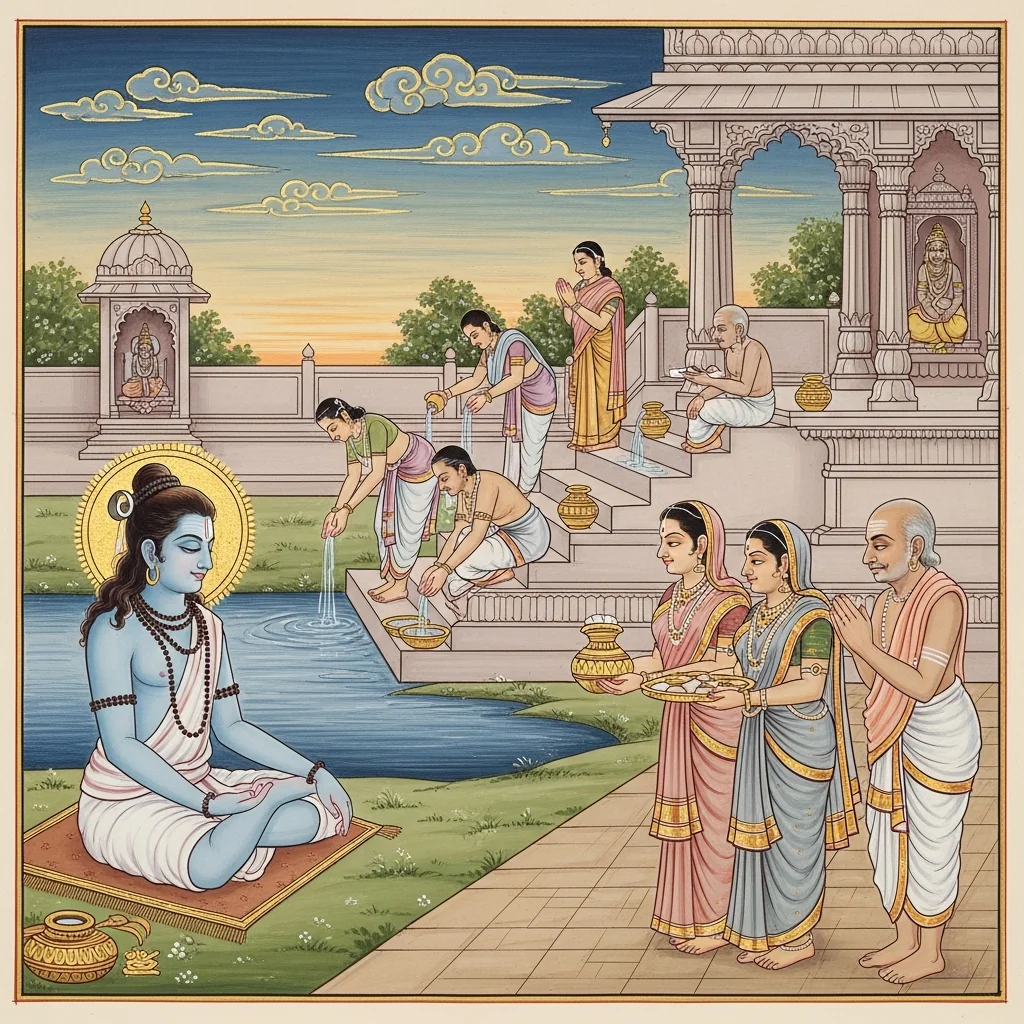
Mārkaṇḍeya instructs a king to visit the exalted Varuṇeśvara tīrtha, praised as the place where Varuṇa attained siddhi by propitiating Girijā-nātha (Śiva) through severe austerities, including observances such as kṛcchra and cāndrāyaṇa. The chapter then lays down the tīrtha discipline: one who bathes there, offers tarpana to satisfy the pitṛs and the deities, and worships Śaṅkara with devotion is said to attain the supreme state (paramā gati). A pointed teaching on charity follows—gifting a water vessel (kuṇḍikā, vardhanī, or a large water container) together with food is extolled, its fruit declared equal to the merit of a twelve-year sacrificial session (satra). It further proclaims that among gifts, the gift of food is foremost and immediately pleasing. Those who die at the tīrtha with a cultivated disposition are said to dwell in Varuṇa’s city until cosmic dissolution; thereafter they are reborn among humans, become steady donors of food, and live for a hundred years.
Shlokas
Verse 1
श्रीमार्कण्डेय उवाच । ततो गच्छेन्महाराज वरुणेश्वरमुत्तमम् । यत्र सिद्धो महादेवो वरुणो नृपसत्तम
Śrī Mārkaṇḍeya said: “Then, O great king, you should go to the excellent Varuṇeśvara—where the great god Varuṇa attained perfection (siddhi), O best of rulers.”
Verse 2
पिण्याकशाकपर्णैश्च कृच्छ्रचान्द्रायणादिभिः । आराध्य गिरिजानाथं ततः सिद्धिं परां गतः
With oil-cake (pīṇyāka), leafy vegetables, and leaves, and by austerities such as the Kṛcchra and Cāndrāyaṇa vows, he worshipped Girijānātha; thereafter he attained the highest perfection.
Verse 3
तत्र तीर्थे तु यः स्नात्वा संतर्प्य पितृदेवताः । पूजयेच्छङ्करं भक्त्या स याति परमां गतिम्
Whoever bathes at that tīrtha, satisfies the Pitṛs and the deities, and then worships Śaṅkara with devotion—he attains the supreme state.
Verse 4
कुण्डिकां वर्धनीं वापि महद्वा जलभाजनम् । अन्नेन सहितं पार्थ तस्य पुण्यफलं शृणु
Whether a small water-pot, a larger vessel, or even a great water-container—when given together with food, O Pārtha, listen to the holy fruit of that gift.
Verse 5
यत्फलं लभते मर्त्यः सत्रे द्वादशवार्षिके । तत्फलं समवाप्नोति नात्र कार्या विचारणा
Whatever reward a mortal gains from a twelve-year satra, that very reward he obtains through this; there is no need for doubt or further deliberation.
Verse 6
सर्वेषामेव दानानामन्नदानं परं स्मृतम् । सद्यः प्रीतिकरं तोयमन्नं च नृपसत्तम
Of all gifts, the gift of food is remembered as the highest. Water and food bring immediate joy and satisfaction, O best of kings.
Verse 7
तत्रतीर्थे मृतानां तु नराणां भावितात्मनाम् । वरुणस्य पुरे वासो यावदाभूतसंप्लवम्
For those men of disciplined spirit who die at that tīrtha, there is residence in the city of Varuṇa until the cosmic dissolution.
Verse 8
पश्चात्पूर्णे ततः काले मर्त्यलोके प्रजायते । अन्नदानप्रदो नित्यं जीवेद्वर्षशतं नरः
When the appointed time is fulfilled, he is born again in the world of mortals. Ever devoted to the gift of food, that man lives for a hundred years.
Verse 81
। अध्याय
Chapter marker (Adhyāya).