Adhyaya 72
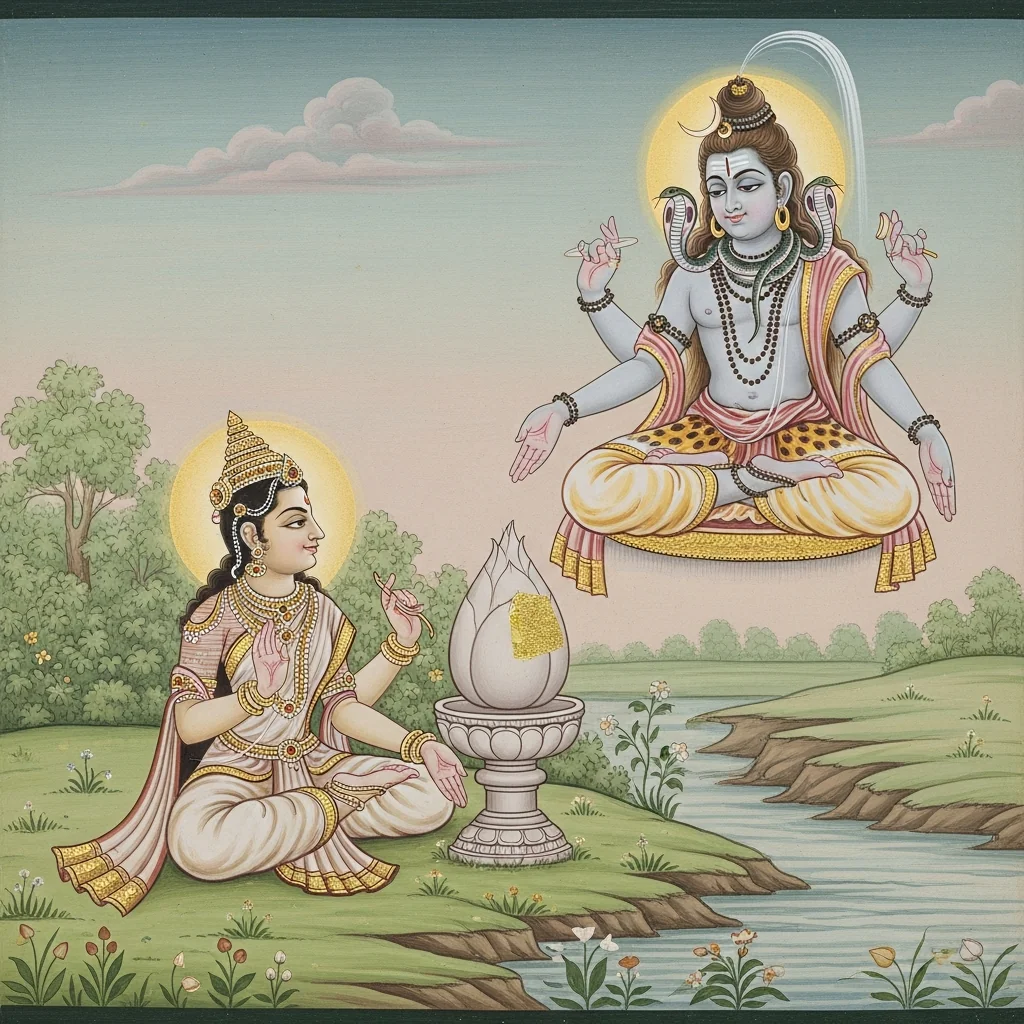
Mārkaṇḍeya directs the royal hearer to Maṇināgeśvara, an auspicious (śubha) shrine on the northern bank of the Narmadā, founded by the nāga Maṇināga for the welfare of beings and praised as a destroyer of sins. Yudhiṣṭhira asks how a venomous serpent could please Īśvara, and an ancient lineage tale is told: Kaśyapa’s wives Kadrū and Vinatā wager over the color of Uccaiḥśravas; through deceit and coercion Kadrū orders the serpents to darken the horse’s hairs to enslave Vinatā. Some comply, while others flee in fear of their mother’s curse, scattering across waters and regions. Fearing the curse’s consequences, Maṇināga performs severe austerities on the Narmadā’s northern bank, meditating on the Imperishable. Śiva (Tripurāntaka) appears, praises his devotion, grants protection from the threatened fate, and promises an exalted abode and benefits for his lineage. At Maṇināga’s request, Śiva agrees to abide there by a fractional presence and commands the स्थापना of a liṅga, thereby establishing the tīrtha’s authority. The chapter then lists ritual times (notably certain tithis), abhiṣeka substances—dadhi, madhu, ghṛta, kṣīra—along with śrāddha guidelines, dāna items, and conduct norms for officiants. The phalaśruti concludes with the fruits: release from sins, auspicious posthumous paths, and protection from serpent-related fear, with special merit in hearing or reciting the tīrtha’s account.
Shlokas
Verse 1
श्रीमार्कण्डेय उवाच । ततो गच्छेत्तु राजेन्द्र मणिनागेश्वरं शुभम् । उत्तरे नर्मदाकूले सर्वपापक्षयंकरम् । स्थापितं मणिनागेन लोकानां हितकाम्यया
Śrī Mārkaṇḍeya said: Then, O best of kings, one should go to the auspicious Maṇināgeśvara on the northern bank of the Narmadā, the destroyer of all sins, established by Maṇināga for the welfare of the people.
Verse 2
युधिष्ठिर उवाच । आशीविषेण सर्पेण ईश्वरस्तोषितः कथम् । क्षुद्राः सर्वस्य लोकस्य भयदा विषशालिनः
Yudhiṣṭhira said: How was the Lord pleased by a venomous serpent? Such creatures are lowly, bearing poison and causing fear to all people.
Verse 3
कथ्यतां तात मे सर्वं पातकस्योपशान्तिदम् । मम सन्तापजं दुःखं दुर्योधनसमुद्भवम्
Tell me, revered sir, everything that brings the pacification of sin. My grief, born of torment and arising from Duryodhana, still afflicts me.
Verse 4
कर्णभीष्मोद्भवं रौद्रं दुःखं पाञ्चालिसम्भवम् । तव वक्त्राम्बुजौघेन प्लावितं निर्वृतिं गतः
The fierce sorrow arising from Karṇa and Bhīṣma, and the grief connected with Pāñcālī—flooded away by the stream from your lotus-like mouth—I have come to peace.
Verse 5
श्रुत्वा तव मुखोद्गीतां कथां वै पापनाशिनीम् । अयुक्तमिदमस्माकं द्विज क्लेशो न शाम्यति
Having heard from your mouth the sacred tale that destroys sin, O twice-born one, it seems unfitting that our distress has still not subsided.
Verse 6
अथवा प्राप्स्यते तात विद्यादानस्य यत्फलम् । तत्फलं प्राप्यते नित्यं कथाश्रवणतो हरेः
Or else, revered sir, the very fruit that comes from gifting knowledge is obtained; indeed, that fruit is gained constantly by listening to the sacred narrations of Hari.
Verse 7
श्रीमार्कण्डेय उवाच । यथायथा त्वं नृप भाषसे च तथातथा मे सुखमेति भारती । शैथिल्यता वा जरयान्वितस्य त्वत्सौहृदं नश्यति नैव तात । शृणुष्व तस्मात्सह बान्धवैश्च कथामिमां पापहरां प्रशस्ताम्
Śrī Mārkaṇḍeya said: “O king, the more you speak, the more my very speech becomes joy. Even if one is weakened and burdened by old age, your friendship does not perish, dear one. Therefore, listen—together with your kinsmen—to this excellent, praised narrative that removes sin.”
Verse 8
कथयामि यथावृत्तमितिहासं पुरातनम्
“I shall recount, exactly as it occurred, an ancient itihāsa—traditional sacred history.”
Verse 9
कथितं पूर्वतो वृत्तैः पारम्पर्येण भारत
“O Bhārata, it has been told since earlier times by those versed in the account, through an unbroken lineage of tradition.”
Verse 10
द्वे भार्ये कश्यपस्यास्तां सर्वलोकेष्वनुत्तमे । गरुत्मन्तं च विनतासूत कद्रूरहीनथ
Kaśyapa had two wives, unsurpassed in all the worlds. Vinatā gave birth to Garutmān (Garuḍa), and Kadrū gave birth to the serpent race, the Nāgas.
Verse 11
संतोषेण च ते तात तिष्ठतः काश्यपे गृहे । कद्रूश्च विनता नाम हृष्टे च वनिते सदा
Dear one, both of them dwelt contentedly in Kaśyapa’s household—Kadrū and the woman named Vinatā—ever cheerful in demeanor.
Verse 12
ताभ्यां सार्द्धं क्रीडते च कश्यपोऽपि प्रजापतिः । ततस्त्वेकदिने प्राप्ते आश्रमस्था शुभानना
Along with them, Prajāpati Kaśyapa too would sport and pass the time. Then, when a certain day arrived, the fair-faced one, staying in the āśrama…
Verse 13
उच्चैःश्रवं हयं दृष्ट्वा मनोवेगसमन्वितम् । पश्य पश्य हि तन्वङ्गी हयं सर्वत्र पाण्डुरम्
Seeing the horse Uccaiḥśravas, swift as the mind, she exclaimed: “Look, look, O slender-limbed one—this horse is white all over!”
Verse 14
धावमानमविश्रान्तं जवेन मनसोपमम् । तं दृष्ट्वा सहसा चाश्वमीर्ष्याभावेन चाब्रवीत्
The horse ran without rest, its speed comparable to the mind. Seeing it, she suddenly spoke, stirred by jealousy about the horse.
Verse 15
कद्रूरुवाच । ब्रूहि भद्रे सहस्रांशोरश्वः किंवर्णको भवेत् । अहं ब्रवीमि कृष्णोऽयं त्वं किं वदसि तद्वद
Kadrū said: “Tell me, dear one—what color is this horse of Sahasrāṃśu (the Sun)? I say it is black. What do you say? Speak your view.”
Verse 16
विनतोवाच । पश्यसे ननु नेत्रैश्च कृष्णं श्वेतं न पश्यसि । असत्यभाषणाद्भद्रे यमलोकं गमिष्यसि
Vinatā said: “You can see with your own eyes—do you not see the white, and (instead) see black? O dear one, by speaking falsehood you will go to Yama’s realm.”
Verse 17
सत्यानृते तु वचने पणस्तव ममैव तु । सहस्रं चैव वर्षाणां दास्यहं तव मन्दिरे
Regarding this wager about truth or falsehood in our words—let it be a stake between you and me: for a full thousand years I shall serve as your bondwoman in your dwelling.
Verse 18
असत्या यदि मे वाणी कृष्ण उच्चैःश्रवा यदि । तदाहं त्वद्गृहे दासी भवामि सर्पमातृके
If my words prove false—if Uccaiḥśravā is indeed black—then, O mother of serpents, I shall become a bondwoman in your house.
Verse 19
यदि उच्चैःश्रवाः श्वेतोऽहं दासी च तवैव तु । एवं परस्परं द्वाभ्यां संवादोऽयं व्यवर्धत
“If Uccaiḥśravā is white, then you shall be my bondwoman.” Thus, between the two of them, this mutual dispute-and-wager grew in intensity.
Verse 20
आश्रमेषु गता बाला रात्रौ चिन्तापरा स्थिता । बन्धुवर्गस्य कथितं समस्तं तद्विचेष्टितम्
The young one went to the hermitages; at night she remained overwhelmed with anxiety, and she told her kinsfolk everything that had occurred in that affair.
Verse 21
पुत्राणां कथितं पार्थ पणं चैव मया कृतम् । हाहाकारः कृतः सर्पैः श्रुत्वा मात्रा पणं कृतम्
She told her sons, ‘O dear one, I have made a wager.’ Hearing that their mother had entered into this wager, the serpents raised a great outcry of alarm.
Verse 22
जाता दासी न सन्देहः श्वेतो भास्करवाहनः । उच्चैःश्रवा हयः श्वेतो न कृष्णो विद्यते क्वचित्
‘She will become a bondwoman—there is no doubt—for the Sun’s mount is white. Uccaiḥśravā, that horse, is white; nowhere is he found to be black.’
Verse 23
कद्रूरुवाच । यथाहं न भवे दासी तत्कार्यं च विचिन्त्यताम् । विशध्वं रोमकूपेषु ह्युच्चैःश्रवहयस्य तु
Kadrū said: “Consider the means by which I may not become a bondwoman. Do enter the pores of the hair of Uccaiḥśravā the horse.”
Verse 24
एकं मुहूर्तमात्रं तु यावत्कृष्णः स दृश्यते । क्षणमात्रेण चैकेन दासी सा भवते मम
“Even if he is seen as black for only a single muhūrta, then in a mere moment she becomes my bondwoman.”
Verse 25
दासीं कृत्वा तु तां तन्वीं विनतां सत्यगर्विताम् । ततः स्वस्थानगाः सर्वे भविष्यथ यथासुखम्
“Having made the slender Vinatā—proud of her truth—a bondwoman, then all of you may return to your own abodes and live at ease.”
Verse 26
सर्पा ऊचुः । यथा त्वं जननी चाम्ब सर्वेषां भुवि पूजिता । तथा सापि विशेषेण वञ्चितव्या न मातरः
The serpents said: “Mother—since you are revered on earth by all, so too is she a mother. Mothers should not be deceived, especially.”
Verse 27
माता च पितृभार्या च मातृमाता पितामही । कर्मणा मनसा वाचा हितं तासां समाचरेत्
One should always act for the welfare of one’s mother, one’s father’s wife (stepmother), the maternal grandmother, and the paternal grandmother—by deed, by thought, and by speech.
Verse 28
सा ततस्तेन वाक्येन क्रुद्धा कालानलोपमा । मम वाक्यमकुर्वाणा ये केचिद्भुवि पन्नगाः
Enraged by those words, she became like the fire of time at cosmic dissolution. “And as for whatever serpents on earth did not obey my command…”
Verse 29
हव्यवाहमुखे सर्वे ते यास्यन्त्यविचारितम् । मातुस्तद्वचनं श्रुत्वा सर्वे चैव भुजङ्गमाः
Hearing their mother’s words, all those serpents, without a moment’s deliberation, were destined to rush into the mouth of Havyavāha (the Fire).
Verse 30
केचित्प्रविष्टा रोमेषु उच्चैःश्रवहयस्य च । नष्टाः केचिद्दशदिशं कद्रूशापभयात्ततः
Some entered into the very hairs of Uccaiḥśravas, the celestial horse; and some, terrified by Kadrū’s curse, vanished and fled in all ten directions.
Verse 31
केचिद्गङ्गाजले नष्टाः केचिन्नष्टाः सरस्वतीम् । केचिन्महोदधौ लीनाः प्रविष्टा विन्ध्यकन्दरे
Some disappeared into the waters of the Gaṅgā; some vanished into the Sarasvatī; some dissolved into the great ocean; and some entered the caves of the Vindhya mountains.
Verse 32
आश्रित्य नर्मदातोये मणिनागोत्तमो नृप । तपश्चचार विपुलमुत्तरे नर्मदातटे
O King, the most excellent Maṇināga took refuge in the waters of the Narmadā and performed abundant austerity on the northern bank of the Narmadā.
Verse 33
मातृशापभयात्पार्थ ध्यायते कामनाशनम् । अच्छेद्यमप्रतर्क्यं च विनाशोत्पत्तिवर्जितम्
O Pārtha, out of fear of his mother’s curse he meditated upon that which destroys desire—indivisible, beyond reasoning, and free from both arising and perishing.
Verse 34
वायुभक्षः शतं साग्रं तदर्धं रविवीक्षकः । एवं ध्यानरतस्यैव प्रत्यक्षस्त्रिपुरान्तकः
For a little over a hundred days he lived on air alone; for half that time he fixed his gaze upon the sun. Thus, to him—absorbed in meditation—Tripurāntaka (Śiva) became directly manifest.
Verse 35
साधु साधु महाभाग सत्त्ववांस्तु भुजंगम । त्वया भक्त्या गृहीतोऽहं प्रीतस्ते ह्युरगेश्वर । वरं याचय मे क्षिप्रं यस्ते मनसि वर्तते
“Well done, well done, noble and steadfast serpent! By your devotion you have won Me over; I am pleased with you, O lord of nāgas. Ask quickly of Me the boon that rests in your heart.”
Verse 36
मणिनाग उवाच । मातृशापभयान्नाथ क्लिष्टोऽहं नर्मदातटे । त्वत्प्रसादेन मे नाथ मातृशापो भवेद्वृथा
Maṇināga said: “O Lord, afflicted by fear of my mother’s curse, I have suffered here on the bank of the Narmadā. By your grace, O Lord, may that mother’s curse become futile.”
Verse 37
ईश्वर उवाच । हव्यवाहमुखं वत्स न प्राप्स्यसि ममाज्ञया । मम लोके निवासश्च तव पुत्र भविष्यति
Īśvara said: “O dear one, you shall not obtain (the state of) ‘Havyavāha-mukha’ by My command. Yet your son shall attain residence in My world.”
Verse 38
मणिनाग उवाच । अत्र स्थाने महादेव स्थीयतामंशभागतः । सहस्रांशेन भागेन स्थीयतां नर्मदाजले । उपकाराय लोकानां मम नाम्नैव शङ्कर
Maṇināga said: “O Mahādeva, be present here in this place as a partial manifestation. Abide—by a thousandth part—within the waters of the Narmadā, O Śaṅkara, for the welfare of the worlds, bearing my name.”
Verse 39
ईश्वर उवाच । स्थापयस्व परं लिङ्गमाज्ञया मम पन्नग । इत्युक्त्वान्तर्हितो देवो जगाम ह्युमया सह
Īśvara said: “O serpent-being, establish the supreme Liṅga by My command.” Having spoken thus, the Deva disappeared and departed together with Umā.
Verse 40
मार्कण्डेय उवाच । तत्र तीर्थे तु ये गत्वा शुचिप्रयतमानसाः । पञ्चम्यां वा चतुर्दश्यामष्टम्यां शुक्लकृष्णयोः
Mārkaṇḍeya said: “Those who go to that tīrtha with purity and a disciplined mind—on the fifth, the fourteenth, or the eighth tithi, in either the bright or the dark fortnight—…”
Verse 41
अर्चयन्ति सदा पार्थ नोपसर्पन्ति ते यमम् । दध्ना च मधुना चैव घृतेन क्षीरयोगतः
“…and they worship continually, O Pārtha; Yama does not draw near to them. (They worship) with curd (dadhi), honey, ghee, and milk, duly combined.”
Verse 42
स्नापयन्ति विरूपाक्षमुमादेहार्धधारिणम् । कामाङ्गदहनं देवमघासुरनिषूदनम्
They perform abhiṣeka, bathing Virūpākṣa—the Lord who bears half of Umā’s body—God who burned Kāma’s limbs and who destroyed Aghāsura.
Verse 43
स्नाप्यमानं च ये भक्त्वा पश्यन्ति परमेश्वरम् । ते यान्ति च परे लोके सर्वपापविवर्जितैः
Those who, with devotion, behold Parameśvara while He is being bathed in abhiṣeka go to the higher world, freed from all sins.
Verse 44
श्राद्धं प्रेतेषु ये पार्थ चाष्टम्यां पञ्चमीषु च । ब्राह्मणैश्च सदा योग्यैर्वेदपाठकचिन्तकैः
O Pārtha, those who perform śrāddha for the departed—on the Aṣṭamī and also on the Pañcamī—using worthy brāhmaṇas who recite and contemplate the Veda…
Verse 45
स्वदारनिरतैः श्लक्ष्णैः परदारविवर्जितैः । षट्कर्मनिरतैस्तात शूद्रप्रेषणवर्जितैः
…by those devoted to their own wives, gentle in conduct, and free from relations with others’ wives; engaged in the six duties, O dear one, and not employing Śūdras as personal servants.
Verse 46
खञ्जाश्च दर्दुराः षण्ढा वार्द्धुष्याश्च कृषीवलाः । भिन्नवृत्तिकराः पुत्र नियोज्या न कदाचन
O son, the lame, the grievously ill, the impotent, the aged, agricultural laborers, and those of irregular livelihood should never be appointed for such rites.
Verse 47
वृषलीमन्दिरे यस्य महिषीं यस्तु पालयेत् । स विप्रो दूरतस्त्याज्यो व्रते श्राद्धे नराधिप
O king, that brāhmaṇa who keeps his buffalo in the dwelling of a low-born woman is to be avoided from afar—especially in vows and in śrāddha rites.
Verse 48
काणाष्टुंटाश्च मण्टाश्च वेदपाठविवर्जिताः । न ते पूज्या द्विजाः पार्थ मणिनागेश्वरे शुभे
O Pārtha, those called ‘kāṇāṣṭuṃṭa’ and ‘maṇṭa’ who are devoid of Vedic recitation are not to be honored as twice-born at the auspicious Maṇināgeśvara.
Verse 49
यदीच्छेदूर्ध्वगमनमात्मनः पितृभिः सह । सर्वाङ्गरुचिरां धेनुं यो दद्यादग्रजन्मने
If one desires ascent to the higher worlds for oneself along with one’s ancestors, one should give to a foremost brāhmaṇa a cow pleasing in form in every limb.
Verse 50
स याति परमं लोकं यावदाभूतसम्प्लवम् । ततः स्वर्गाच्च्युतः सोऽपि जायते विमले कुले
He attains the supreme world until the cosmic dissolution; then, fallen from heaven, he is born again in a pure lineage.
Verse 51
ये पश्यन्ति परं भक्त्या मणिनागेश्वरं नृप । न तेषां जायते वंशे पन्नगानां भयं नृप
O king, those who behold Maṇināgeśvara with supreme devotion—within their lineage no fear of serpents arises, O king.
Verse 52
पन्नगः शङ्कते तेषां मणिनागप्रदर्शनात् । सौपर्णरूपिणस्ते वै दृश्यन्ते नागमण्डले
Because the power of Maṇināga has been revealed to them, serpents fear them; indeed, in the realm of the nāgas they are seen in the form of Garuḍa.
Verse 53
फलानि चैव दानानां शृणुष्वाथ नृपोत्तम । अन्नं संस्कारसंयुक्तं ये ददन्ते नरोत्तमाः
Now hear, O best of kings, the fruits of gifts: those best of men who give food, duly prepared and sanctified by proper rites…
Verse 54
तोयं शय्यां तथा छत्रं कन्यां दासीं सुभाषिणीम् । पात्रे देयं यतो राजन् यदीच्छेच्छ्रेय आत्मनः
Water, a bed, and also an umbrella; a maiden; and an eloquent maidservant—these should be given to a worthy recipient, O king, if one seeks one’s own highest good.
Verse 55
सुरभीणि च पुष्पाणि गन्धवस्त्राणि दापयेत् । दीपं धान्यं गृहं शुभ्रं सर्वोपस्करसंयुतम्
One should also have fragrant flowers, perfumes, and garments given; likewise a lamp, grain, and a clean house furnished with every requisite.
Verse 56
ये ददन्ते परं भक्त्या ते व्रजन्ति त्रिविष्टपम् । मणिनागे नृपश्रेष्ठ यच्च दानं प्रदीयते
Those who give with supreme devotion go to Triviṣṭapa (heaven). O best of kings, whatever gift is offered at Maṇināga (Maṇināgeśvara) …
Verse 57
तस्य दानस्य भावेन स्वर्गे वासो भवेद्ध्रुवम् । पातकानि प्रलीयन्ते आमपात्रे यथा जलम्
By the pure intention behind that act of giving, residence in heaven becomes certain. Sins melt away, just as water disappears in an unbaked clay vessel.
Verse 58
नर्मदातोयसंसिद्धं भोज्यं विप्रे ददाति यः । सोऽपि पापैर्विनिर्मुक्तः क्रीडते दैवतैः सह
Whoever offers to a brāhmaṇa food prepared with the waters of the Narmadā—he too becomes freed from sins and sports in joy together with the gods.
Verse 59
ततः स्वर्गच्युतानां हि लक्षणं प्रवदाम्यहम् । दीर्घायुषो जीवपुत्रा धनवन्तः सुशोभनाः
Next, I shall declare the marks of those who have fallen from heaven: they are long-lived, blessed with living sons, wealthy, and radiant in appearance.
Verse 60
सर्वव्याधिविनिर्मुक्ताः सुतभृत्यैः समन्विताः । त्यागिनो भोगसंयुक्ता धर्माख्यानरताः सदा
Free from every disease, surrounded by sons and attendants; generous yet enjoying rightful comforts, they ever delight in the telling and hearing of dharma.
Verse 61
देवद्विजगुरोर्भक्तास्तीर्थसेवापरायणाः । मातापितृवशा नित्यं द्रोहक्रोधविवर्जिताः
Devoted to God, to brāhmaṇas, and to their teachers; steadfast in the service of sacred tīrthas; ever obedient to mother and father, free from treachery and anger.
Verse 62
एभिरेव गुणैर्युक्ता ये नराः पाण्डुनन्दन । सत्यं ते स्वर्गादायाताः स्वर्गे वासं व्रजन्ति ते
O son of Pāṇḍu, men endowed with these very qualities—truly they have come from heaven, and they go again to dwell in heaven.
Verse 63
सर्वतीर्थवरं तीर्थं मणिनागं नृपोत्तम । तीर्थाख्यानमिदं पुण्यं यः पठेच्छृणुयादपि
O best of kings, Maṇināga is the foremost among all sacred tīrthas. This holy account of the tīrtha—whoever reads it or even hears it—
Verse 64
सोऽपि पापैर्विनिर्मुक्तः शिवलोके महीयते । न विषं क्रमते तेषां विचरन्ति यथेच्छया
He too is freed from sins and is honored in Śiva’s world. Poison does not overcome them, and they move about as they wish.
Verse 65
भाद्रपद्यां च यत्षष्ठ्यां पुण्यं सूर्यस्य दर्शने । तत्फलं समवाप्नोति आख्यानश्रवणेन तु
Whatever merit is gained by beholding the Sun on the sixth day of Bhādrapada—one attains that very fruit simply by listening to this sacred account.
Verse 72
। अध्याय
(Chapter colophon marker: “Adhyāya”.)