Adhyaya 69
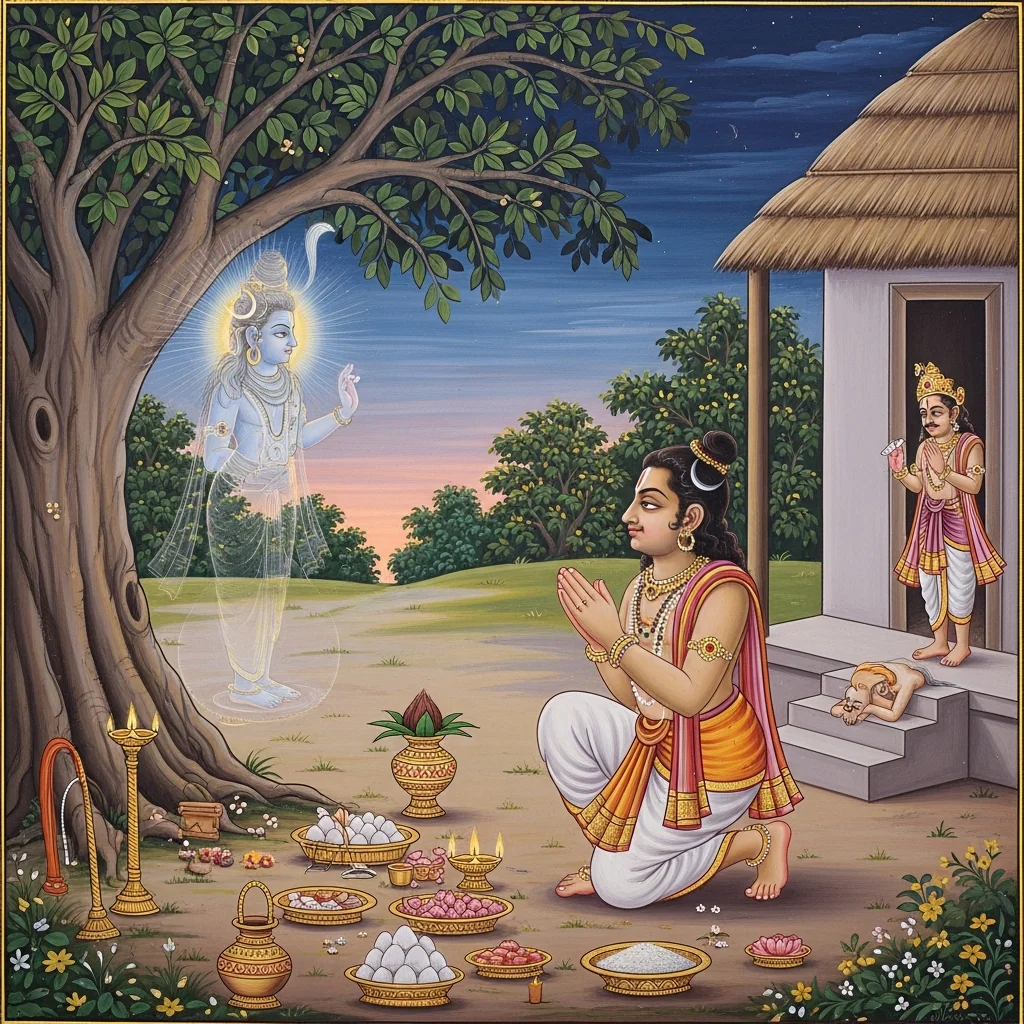
Mārkaṇḍeya describes a sequence of pilgrimage that leads to the excellent Maṅgaleśvara. The shrine is said to have been established by Bhūmiputra (Maṅgala/Aṅgāraka) out of compassion for the welfare of all beings. On the fourteenth lunar day, Śiva (Śaṅkara, Śaśiśekhara) manifests as Maṅgaleśvara, responds to intense devotion, and grants a boon. Maṅgala asks for enduring favor across births, declaring that he was born from Śiva’s bodily perspiration and dwells among the grahas (planetary deities). He also seeks recognition and worship by the gods. Śiva grants that, in this place, the Lord will be known by Maṅgala’s name, and then disappears. Maṅgala installs the liṅga and worships it through yogic power. The chapter then gives prescriptive guidance: the Maṅgaleśvara liṅga removes suffering; the wise should satisfy brāhmaṇas at the tīrtha—especially with spouse-inclusive rites—and observe the Aṅgāraka-related vow. It details concluding gifts for Śiva (cows/bulls, red garments, animals of specified colors, and items such as an umbrella, bed, and red garlands/anointing), all offered with inner purity. It also instructs śrāddha on the fourth and eighth tithis in both fortnights, avoiding financial deceit. The stated fruits include ancestral satisfaction for a yuga, auspicious progeny and repeated birth with favorable status, bodily radiance through the tīrtha’s influence, and the removal of sin for those who regularly recite this account with devotion.
Shlokas
Verse 1
श्रीमार्कण्डेय उवाच । ततो गच्छेत्तु राजेन्द्र मङ्गलेश्वरमुत्तमम् । स्थापितं भूमिपुत्रेण लोकानां हितकाम्यया
Śrī Mārkaṇḍeya said: Then, O king, one should go to the excellent Maṅgaleśvara, established by the son of the Earth, desiring the welfare of the people.
Verse 2
तोषितः परया भक्त्या शङ्करः शशिशेखरः । चतुर्दश्यां गुरुर्देवः प्रत्यक्षो मङ्गलेश्वरः
Pleased by supreme devotion, Śaṅkara—moon-crested—becomes manifest as Maṅgaleśvara. On the fourteenth lunar day, the divine Guru is directly present there.
Verse 3
ब्रूहि पुत्र वरं शुभ्रं तं ते दास्यामि मङ्गल
“Speak, my son, a pure and auspicious boon; that boon I shall grant you, O blessed one.”
Verse 4
मङ्गल उवाच । प्रसादं कुरु मे शम्भो प्रतिजन्मनि शङ्कर । त्वदङ्गस्वेदसम्भूतो ग्रहमध्ये वसाम्यहम्
Maṅgala said: “Show me grace, O Śambhu, O Śaṅkara, in every birth. Born from the sweat of Your body, I dwell among the planets.”
Verse 5
त्वत्प्रसादेन ईशान पूज्योऽहं सर्वदैवतैः । कृतार्थो ह्यद्य संजातस्तव दर्शनभाषणात्
“By Your grace, O Īśāna, I am worthy of worship by all the deities. Today I am truly fulfilled, through seeing You and speaking with You.”
Verse 6
स्थानेऽस्मिन् देवदेवेश मम नाम्ना महेश्वरः । एवं भवतु ते पुत्रेत्युक्त्वा चान्तरधीयत
At this very place, O Lord of the gods, let there be a Maheśvara bearing my name. Saying, “So be it, my son,” he then vanished from sight.
Verse 7
मङ्गलोऽपि महात्मा वै स्थापयित्वा महेश्वरम् । आत्मयोगबलेनैव शूलिनापूजयत्ततः
Maṅgala too, that great-souled one, having established Maheśvara there, then worshipped the Trident-bearing Lord by the power of his own yogic discipline.
Verse 8
सर्वदुःखहरं लिङ्गं नाम्ना वै मङ्गलेश्वरम् । तत्र तीर्थे तु वै राजन्ब्राह्मणान्प्रीणयेत्सुधीः
That liṅga—remover of all sorrow—is known by the name Māṅgaleśvara. At that tīrtha, O King, the wise should honor and gratify the brāhmaṇas.
Verse 9
सपत्नीकान्नृपश्रेष्ठ चतुर्थ्यङ्गारके व्रते । पत्नीभर्तारसंयुक्तं विद्वांसं श्रोत्रियं द्विजम्
O best of kings, in the Aṅgāraka vow on the fourth lunar day, one should honor brāhmaṇas together with their wives—learned, Veda-trained śrotriyas, accompanied by their spouses.
Verse 10
व्रतान्ते चैव गौर्धुर्यैः शिवमुद्दिश्य दीयते । प्रीयतां मे महादेवः सपत्नीको वृषध्वजः
And at the conclusion of the vow, excellent cows are to be given, dedicating the gift to Śiva: “May Mahādeva—bull-bannered, together with His consort—be pleased with me.”
Verse 11
वस्त्रयुग्मं प्रदातव्यं लोहितं पाण्डुनन्दन । धूर्वहौ रक्तवर्णौ च शुभ्रं कृष्णं तथैव च
O son of Pāṇḍu, a pair of garments should be given, red in color. Likewise, garments of reddish hue may be offered, and also white and black.
Verse 12
छत्रं शय्यां शुभां चैव रक्तमाल्यानुलेपनम् । दातव्यं पाण्डवश्रेष्ठ विशुद्धेनान्तरात्मना
A parasol, an auspicious bed, and also red garlands and unguents should be given, O best of the Pāṇḍavas—done with a heart purified within.
Verse 13
चतुर्थ्यां तु तथाष्टम्यां पक्षयोः शुक्लकृष्णयोः । श्राद्धं तत्रैव कर्तव्यं वित्तशाठ्येन वर्जितः
On the fourth and likewise on the eighth tithi, in both the bright and dark fortnights, śrāddha should be performed there itself—free from deceit regarding one’s wealth.
Verse 14
प्रेता भवन्ति सुप्रीता युगमेकं महीपते । सपुत्रो जायते मर्त्यः प्रतिजन्म नृपोत्तम
O king, the departed spirits become greatly pleased for a full yuga. And, O best of kings, that mortal is born—life after life—blessed with sons.
Verse 15
तस्य तीर्थस्य भावेन सर्वाङ्गरुचिरो नृप । मङ्गलं भवते वंशो नाशुभं विद्यते क्वचित्
O king, by the sanctifying power of that tīrtha, one becomes radiant in all limbs. The lineage becomes auspicious, and misfortune is found nowhere.
Verse 16
भक्त्या यः कीर्तयेन्नित्यं तस्य पापं व्यपोहति
Whoever, with devotion, continually praises, his sin is driven away.
Verse 69
। अध्याय
End of the chapter (adhyāya).