Adhyaya 68
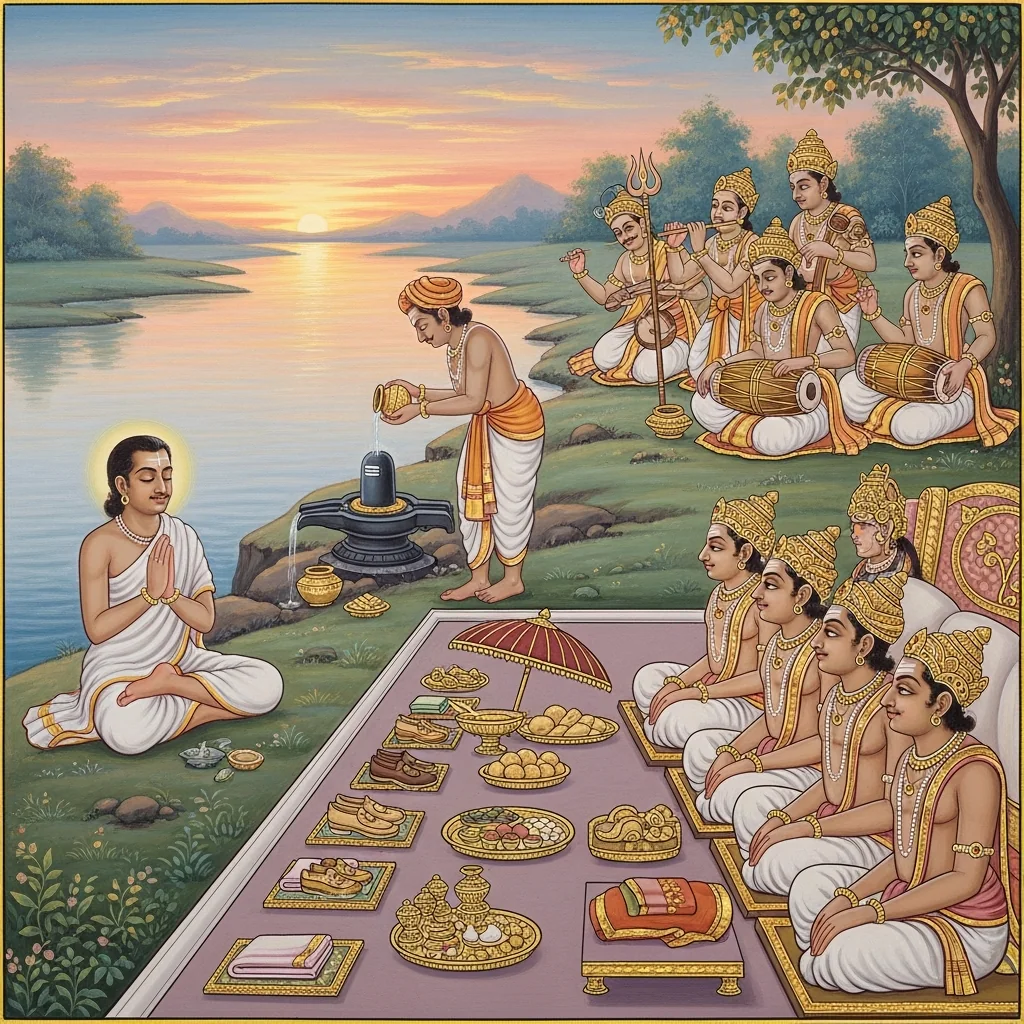
Mārkaṇḍeya instructs Yudhiṣṭhira to go to Dhanadā’s tīrtha on the southern bank of the Narmadā, praised as a universal destroyer of sin and as granting the fruit of all tīrthas. A timed observance is taught: on Trayodaśī of the bright fortnight in the month of Caitra, one should be self-controlled, fast, and keep a night-long vigil. Dhanadā is to be ritually bathed with pañcāmṛta, a ghee-lamp is to be offered, and devotion is to be supported with song and instruments. At dawn, one should honor worthy Brahmins—fit to accept gifts, grounded in learning and śāstric discourse, devoted to śrauta/smārta conduct, and ethically restrained. Gifts include cows, gold, clothing, footwear, and food, with optional umbrella and bed; this is said to remove sins completely across three births. The phalāśruti distinguishes results by disposition: heaven for the undisciplined, liberation for the disciplined. The poor gain repeated access to food; innate noble status and relief from suffering are obtained; and Narmadā water destroys disease. Special merit is given to gifting knowledge (vidyā-dāna) at Dhanadā’s tīrtha, leading to the “world of the Sun” free of ailments; and those who make abundant offerings at Devadroṇī on Revā’s southern bank attain the “world of Śaṅkara,” devoid of sorrow.
Shlokas
Verse 1
श्रीमार्कण्डेय उवाच । धनदस्य तु तत्तीर्थं ततो गच्छेद्युधिष्ठिर । नर्मदादक्षिणे कूले सर्वपापक्षयंकरम्
Śrī Mārkaṇḍeya said: Then, O Yudhiṣṭhira, one should go to that sacred tīrtha of Dhanada (Kubera) on the southern bank of the Narmadā—an expiation that brings about the destruction of all sins.
Verse 2
सर्वतीर्थफलं तत्र प्राप्यते नात्र संशयः । चैत्रमासत्रयोदश्यां शुक्लपक्षे जितेन्द्रियः
There, the fruit of all tīrthas is obtained—of this there is no doubt. On the thirteenth lunar day in the bright fortnight of the month of Caitra, with the senses restrained,
Verse 3
उपोष्य परया भक्त्या रात्रौ कुर्वीत जागरम् । पञ्चामृतेन राजेन्द्र स्नापयेद्धनदं बुधः
Fasting with supreme devotion, one should keep vigil through the night. O best of kings, the wise devotee should bathe Dhanada (Kubera) with pañcāmṛta.
Verse 4
दीपं घृतेन दातव्यं गीतं वाद्यं च कारयेत् । प्रभाते पूजयेद्विप्रानात्मनः श्रेय इच्छति
A lamp fed with ghee should be offered, and singing and instrumental music should be arranged. At dawn, one who seeks one’s own highest good should honor the brāhmaṇas.
Verse 5
प्रतिग्रहसमर्थांश्च विद्यासिद्धान्तवादिनः । श्रौतस्मार्तक्रियायुक्तान् परदारपराङ्मुखान्
—those brāhmaṇas who are fit to accept gifts, who expound learning and established doctrine, who are engaged in Śrauta and Smārta rites, and who turn away from another’s wife.
Verse 6
पूजयेद्गोहिरण्येन वस्त्रोपानहभोजनैः । छत्रशय्याप्रदानेन सर्वपापक्षयो भवेत्
One should worship by offering cows and gold, as well as clothes, footwear, and food. By gifting umbrellas and beds, the complete destruction of all sins comes to pass.
Verse 7
त्रिजन्मजनितं पापं वरदस्य प्रभावतः । स्वर्गदं दुर्विनीतानां विनीतानां च मोक्षदम्
By the power of the boon-bestowing One, sin accumulated over three births is removed. It grants heaven to the ill-disciplined, and liberation (mokṣa) to the well-disciplined.
Verse 8
अन्नदं च दरिद्राणां भवेज्जन्मनिजन्मनि । कुलीनत्वं दुःखहानिः स्वभावाजायते नरे
For the poor, it becomes a giver of food in birth after birth. Nobility of character and the removal of suffering arise naturally in a person.
Verse 9
व्याधिध्वंसो भवेत्तेषां नर्मदोदकसेवनात् । धनदस्य तु यस्तीर्थे विद्यादानं प्रयच्छति
For them, diseases are destroyed by drinking the sacred water of Narmadā. And whoever, at Dhanada’s tīrtha, bestows the gift of knowledge—
Verse 10
स याति भास्करे लोके सर्वव्याधिविवर्जिते । देवद्रोणीं च तत्रैव स्वशक्त्या पाण्डुनन्दन
He goes to the world of Bhāskara, free from every disease. And there indeed he attains Deva-droṇī as well, according to his own capacity, O son of Pāṇḍu.
Verse 11
ये प्रकुर्वन्ति भूयिष्ठां रेवाया दक्षिणे तटे । ते यान्ति शांकरे लोके सर्वदुःखविवर्जिते
Those who perform these rites abundantly on the southern bank of the Revā go to Śaṅkara’s world, free from every sorrow.
Verse 68
। अध्याय
“Chapter” (a colophon or section marker indicating the chapter boundary).