Adhyaya 67
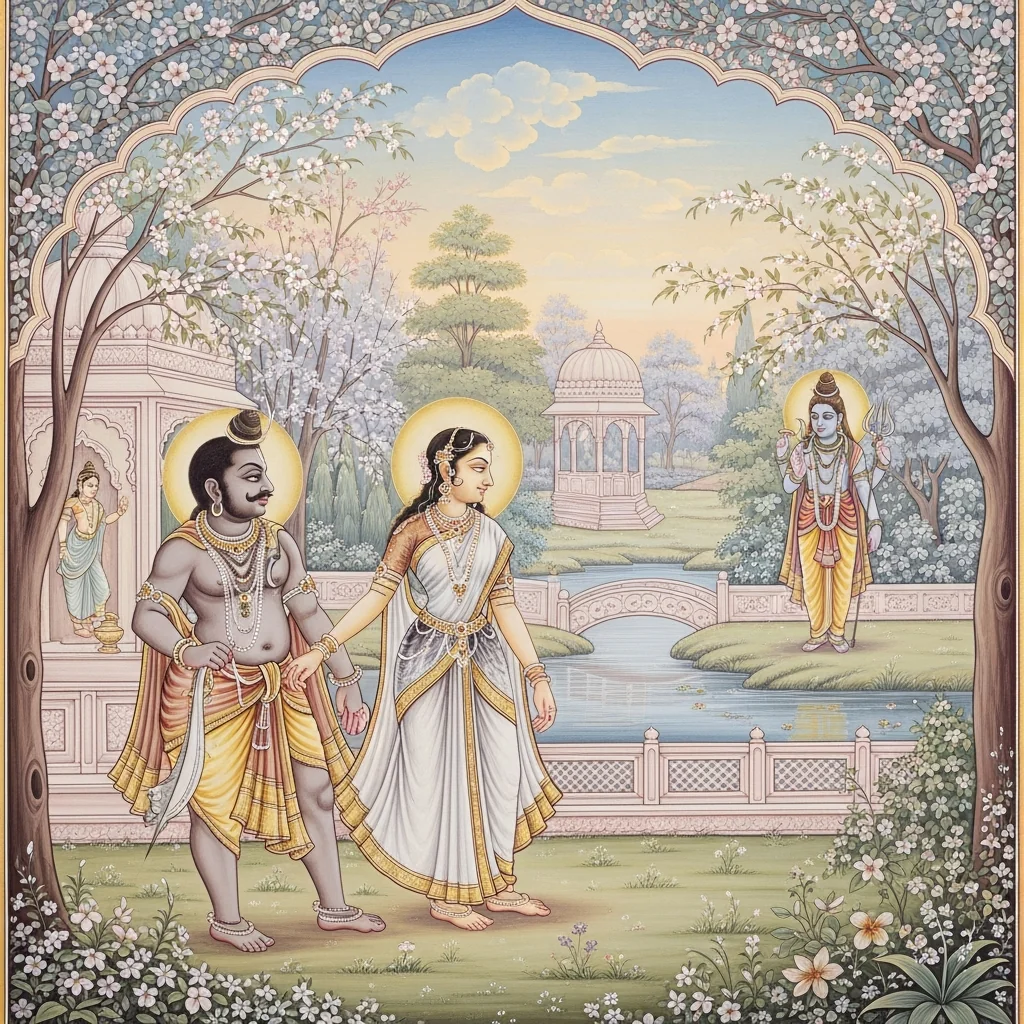
Chapter 67, narrated by Mārkaṇḍeya, offers a tīrtha-centered theological teaching. It introduces a highly meritorious water-based pilgrimage site called Luṅkeśvara, also explained as Liṅgeśvara or a “sparśa-liṅga,” emphasizing sanctity gained through contact with the liṅga. The narrative turns on a boon-born crisis: the daitya Kālapṛṣṭha performs fierce tapas, including the ascetic practice of “smoke-drinking,” and Pārvatī urges Śiva to grant him a boon. Śiva warns against giving under coercion and notes the ethical danger of yielding to improper prompting, yet he grants a perilous boon—any being whose head is touched by the daitya’s hand is reduced to ash. The daitya then tries to use this power against Śiva, leading to a chase across the worlds. Seeking aid, Śiva sends Nārada to Viṣṇu, who intervenes through māyā by manifesting an enchanting spring-grove and a captivating maiden. Deluded by desire, the daitya follows a cue of social custom and places his hand upon his own head, perishing instantly. The chapter concludes with phalaśruti and ritual guidance: bathing or drinking at Luṅkeśvara destroys sins tied to the body’s constituents and vast karmic spans; fasting on specified lunar days and small gifts to learned brāhmaṇas multiply merit; and guardian deities are named as upholding the site’s sanctity.
Shlokas
Verse 1
श्रीमार्कण्डेय उवाच । तस्यैवानन्तरं तात जलमध्ये व्यवस्थितम् । लुङ्केश्वरमिति ख्यातं सुरासुरनमस्कृतम्
Śrī Mārkaṇḍeya said: Immediately after that, dear one, situated in the midst of the waters, is a place famed as Luṅkeśvara—revered by both devas and asuras.
Verse 2
इदं तीर्थं महापुण्यं नानाश्चर्यं महीतले । अस्य तीर्थस्य माहात्म्यमुत्पत्तिं शृणु भारत
This tīrtha is supremely meritorious, a wonder of many kinds upon the earth. Hear, O Bhārata, the greatness and the origin of this sacred ford.
Verse 3
आसीत्पुरा महावीर्यो दानवो बलदर्पितः । कालपृष्ठ इति ख्यातः सुतो ब्रह्मसुतस्य च
Long ago there was a great and mighty Dānava, intoxicated with the pride of strength. He was famed as Kālapṛṣṭha, and was the son of Brahmā’s son.
Verse 4
गङ्गातटं समाश्रित्य चचार विपुलं तपः । अधोमुखोऽपि संस्थित्वापिबद्धूममहर्निशम्
Taking refuge on the bank of the Gaṅgā, he undertook immense austerities; even standing upside down, he drank smoke day and night.
Verse 5
ततश्चानन्तरं देवस्तिष्ठते ह्युमया सह । दृष्ट्वा तं पार्वती सा तु तपस्युग्रे व्यवस्थितम्
Then, immediately afterward, the Lord stood there together with Umā. Seeing that man firmly engaged in a fierce austerity, Pārvatī took notice of him.
Verse 6
पश्य पश्य महादेव धूमाशी तिष्ठते नरः । प्रसीद तं कुरुष्वाद्य देहि शीघ्रं वरं विभो
“Look, look, O Mahādeva—this man stands here, living on smoke. Be gracious to him today, O Lord; quickly grant him a boon.”
Verse 7
ईश्वर उवाच । यदुक्तं वचनं देवि न तन्मे रोचते प्रिये । स्वकार्यं च सदा चिन्त्यं परकार्यं विसर्जयेत्
Īśvara said: “Beloved Devī, I do not approve of the words you have spoken. One should always attend to one’s own rightful duty, and set aside the business of others.”
Verse 8
मूर्खस्त्रीबालशत्रूणां यश्छन्देनानुवर्तते । व्यसने पतते घोरे सत्यमेतदुदीरितम्
(Śiva continued:) “Whoever, yielding to mere impulse, follows the urges of fools, women, children, and enemies falls into dreadful calamity—this is truly declared.”
Verse 9
देव्युवाच । भार्ययाभ्यर्थितो भर्ता कारणं बहु भाषते । लघुत्वं याति सा नारी एवं शास्त्रेषु पठ्यते
The Goddess said: “When a wife presses her husband with requests, he offers many justifications; and that woman comes to be regarded lightly—so it is read in the śāstras.”
Verse 10
प्राणत्यागं करिष्यामि यदि मां त्वं न मन्यसे । पार्वत्या प्रेरितो देवो गतोऽसौ दानवं प्रति
“I shall give up my life if you do not heed me.” Urged by Pārvatī, the Lord then went toward that Dānava.
Verse 11
ईश्वर उवाच । किमर्थं पिबसे धूमं किमर्थं तप्यसे तपः । किं दुःखं किं नु सन्तापो वद कार्यमभीप्सितम्
Īśvara said: “For what purpose do you drink smoke? For what purpose do you perform tapas, austerity? What sorrow is this, what burning distress? Speak—what is the desired aim?”
Verse 12
युवा त्वं दृश्यसेऽद्यापि वर्षविंशतिरेव च । तदाचक्ष्व हि मे सर्वं तपसः कारणं महत्
“You still appear to be young—only twenty years of age. Therefore tell me everything: what is the great reason for your tapas, your austerity?”
Verse 13
दानव उवाच । अचला दीयतां भक्तिर्मम स्थैर्यं तवोपरि । अपरं वर्षसाहस्रं निर्विघ्नं मे गतं विभो
The Dānava said: “Grant me unwavering devotion and steadfastness toward You. Another thousand years have passed for me without obstacle, O Mighty One.”
Verse 14
दिवसानां सहस्रे द्वे पूर्णे त्वत्तपसा मम
“Two thousand days have been completed by me through that austerity, with You as its aim.”
Verse 15
ईश्वर उवाच । याचयाभीप्सितं कार्यं तुष्टोऽहं तव सुव्रत । देवस्य वचनं श्रुत्वा चिन्तयामास दानवः
Īśvara said: “Ask for the boon you desire; I am pleased with you, O keeper of noble vows.” Hearing the Lord’s words, the demon began to ponder.
Verse 16
किं नाकं याचयाम्यद्य किमद्य सकलां महीम् । एवं संचिन्तयामास कामबाणेन पीडितः
“Should I ask today for heaven, or should I ask for the entire earth?” Thus he deliberated, tormented by the arrows of desire.
Verse 17
दानव उवाच । यदि तुष्टोऽसि मे देव वरं दास्यसि मे प्रभो । सङ्ग्रामैस्तु न तुष्टोऽहं बलं नास्तीति किंचन
The demon said: “If You are pleased with me, O God—if You will grant me a boon, O Lord—know that I am not satisfied with battles; it is not that I lack strength at all.”
Verse 18
यस्य मूर्धन्यहं देव पाणिना समुपस्पृशे । देवदानवगन्धर्वो भस्मसाद्यातु तत्क्षणात्
“O God, whomever I touch upon the crown of the head with my hand—be he deva, asura, or gandharva—may he that very instant be reduced to ashes.”
Verse 19
ईश्वर उवाच । यत्त्वया चिन्तितं किंचित्तत्सर्वं सफलं तव । उत्तिष्ठ गच्छ शीघ्रं त्वं भवनं प्रति दानव
Īśvara said: “Whatever you have conceived within your mind—indeed all of it—shall bear fruit for you. Rise, and go swiftly to your dwelling, O asura.”
Verse 20
दानव उवाच । स्थीयतां देवदेवेश यावज्ज्ञास्यामि ते वरम् । युष्मन्मूर्ध्नि न्यसे पाणिं प्रत्ययो मे भवेद्यथा
The asura said: “Remain, O Lord of lords, until I am certain of your boon. Let me place my hand upon your head, so that I may have proof.”
Verse 21
ततश्चानन्तरं देवश्चिन्तयानो महेश्वरः । न स्कन्दो न हरिर्ब्रह्मा यः कार्येषु क्षमोऽधुना
Then, at once, Maheśvara began to reflect: “Neither Skanda, nor Hari, nor Brahmā is at present the one suited to deal with this matter.”
Verse 22
ज्ञात्वा चैवापदं प्राप्तां देवः प्रार्थयते वृषम् । अनेन सह पापेन युध्यस्व साम्प्रतं क्षणम्
Recognizing the danger that had arisen, the Lord implored Vṛṣa: “Fight now, for but a moment, with this sinner.”
Verse 23
करं प्रासारयद्दैत्यो देवं मूर्ध्नि किल स्पृशेत् । लाङ्गूलेनाहतो दैत्यो विषण्णः पतितो भुवि
The daitya stretched forth his hand, intending to touch the God upon the head. Struck by a sweep of the tail, the daitya fell to the earth, dejected.
Verse 24
देवस्तु दक्षिणामाशां गतश्चैवोमया सह । भयभीतो निरीक्षेत ग्रीवां भज्य पुनःपुनः
But the Lord went toward the southern quarter together with Umā. Fearful, he kept looking back again and again, craning his neck repeatedly.
Verse 25
गते चादर्शनं देवे युयुधे वृषभेण सः । द्वावेतौ बलिनां श्रेष्ठौ युयुधाते महाबलौ
When the Deva had departed and was no longer in sight, he fought with Vṛṣabha. Those two—foremost among the mighty—engaged in battle, both of them of tremendous strength.
Verse 26
प्रहारैर्वज्रसदृशैः कोपेन घटिकात्रयम् । पाणिभ्यां न स्पृशेद्यो वै वृषभस्य शिरस्तथा
With blows like thunderbolts, in wrath for three ghaṭikās, he could not even touch with his hands the head of Vṛṣabha—such was the bull’s might.
Verse 27
हत्वा लाङ्गूलपातेन आगतो वृषभस्तदा । उत्थितश्चाप्यसौ दैत्यो व्रजते वृषपृष्ठतः
Then Vṛṣabha struck him down with a sweep of his tail and came forward; yet that daitya rose again and pursued, clinging close behind the bull’s back.
Verse 28
वायुवेगेन सम्प्राप्तो यत्र देवो महेश्वरः । आगतं दानवं दृष्ट्वा वृषो वचनमब्रवीत्
Swift as the wind, he reached the place where the Deva Maheśvara abode. Seeing the Dānava drawing near, Vṛṣa spoke these words.
Verse 29
आरुह्य पृष्ठे मे देव शीघ्रमेव हि गम्यताम् । आरुह्य वृषभं देवो जगाम चोमया सह
“Mount my back, O Deva—let us depart at once, without delay.” Then the Deva mounted Vṛṣabha and went forth together with Umā.
Verse 30
नाकं प्राप्तस्ततो देवो गतः शक्रस्य मन्दिरम् । नात्यजद्देवपृष्ठं तु दानवो बलदर्पितः
Then the Deva reached Svarga and went to Śakra’s palace. Yet the Dānava, intoxicated with the pride of strength, would not release the Deva’s back.
Verse 31
इन्द्रलोकं परित्यज्य ब्रह्मलोकं गतस्तदा । यत्रयत्र व्रजेद्देवो भयात्सह दिवौकसैः
Abandoning Indra’s realm, he then went to Brahmā’s world. Wherever the Deva went, the dwellers of heaven followed after him in fear.
Verse 32
अपश्यत्तत्र तत्रैव पृष्ठे लग्नं तु दानवम् । सर्वांल्लोकान् भ्रमित्वा तु देवो विस्मयमागतः
There, and there again, he beheld the Dānava clinging fast upon his back. After wandering through all the worlds, the Deva was seized with astonishment.
Verse 33
न स्थानं विद्यते किंचिद्यत्र विश्रम्यते क्षणम् । देवदानवयोस्तत्र युद्धं ज्ञात्वा सुदारुणम्
There was no place at all where he could rest even for a moment. Knowing that the battle there between the Devas and the Dānavas was exceedingly dreadful, all were struck with alarm.
Verse 34
हर्षितात्मा मुनिस्तत्र चिरं नृत्यति नारदः । धन्योऽहमद्य मे जन्म जीवितं च सुजीवितम्
There the sage Nārada, his heart filled with joy, danced for a long while. “Blessed am I today—blessed is my birth, and well-lived indeed is my life!”
Verse 35
महान्तं च कलिं दृष्ट्वा संतोषः परमोऽभवत् । देवदानवयोस्तत्र युद्धं त्यक्त्वा च नारदः
Seeing that the conflict had grown immense, Nārada felt the highest satisfaction; and abandoning the battle there between the Devas and the Dānavas, he departed.
Verse 36
आजगाम ततो विप्रो यत्र देवो महेश्वरः । दृष्ट्वा देवोऽथ तं विप्रं प्रतिपूज्याब्रवीदिदम्
Then the brāhmaṇa (Nārada) came to where Lord Maheśvara was. Seeing the brāhmaṇa, the Lord honored him duly and spoke these words.
Verse 37
भो नारद मुनिश्रेष्ठ जानीषे केशवं क्वचित् । गत्वा तत्र च शीघ्रं त्वं केशवाय निवेदय
“O Nārada, best of sages—do you know where Keśava is? Go there quickly and report this matter to Keśava.”
Verse 38
नारद उवाच । देवदानवसिद्धानां गन्धर्वोरगरक्षसाम् । सर्वेषामेव देवेशो हरते ध्रुवमापदम्
Nārada said: “For Devas, Dānavas, Siddhas, Gandharvas, Nāgas, and Rakṣasas—for all indeed—the Lord of the gods surely removes calamity.”
Verse 39
असंभाव्यं न वक्तव्यं मनसापि न चिन्तयेत् । ईदृशीं नैव बुध्यामि आपदं च विभो तव
“One should not speak of the impossible, nor even imagine it in the mind. O Lord, I cannot conceive of such a calamity befalling You.”
Verse 40
ईश्वर उवाच । गच्छ नारद शीघ्रं त्वं यत्र देवो जनार्दनः । विदितं च त्वया सर्वं यत्कृतं दानवेन तु
Īśvara said: “Go, Nārada, quickly to where Lord Janārdana is. You already know everything that has been done by the Dānava.”
Verse 41
अवध्यो दानवो ह्येष सेन्द्रैरपि मरुद्गणैः । गत्वा तु केशवं देवं निवेदय महामुने
“This Dānava is indeed unkillable even by Indra together with the hosts of the Maruts. Therefore go and inform the god Keśava, O great sage.”
Verse 42
नारद उवाच । न तु गच्छाम्यहं देव सुप्तः क्षीरोदधौ सुखी । केशवः प्रेरणे ह्येषामादेशो दीयतां प्रभो
Nārada said: “Yet I will not go, O Lord—for Keśava lies asleep, happily, upon the Ocean of Milk. Since Keśava is the one who impels these (gods), let an order be given by You, O Master.”
Verse 43
मात्रा स्वस्रा दुहित्रा वा राजानं च तथा प्रभुम् । गुरुं चैवादितः कृत्वा शयानं न प्रबोधयेत्
Even one’s mother, sister, or daughter—and likewise a king or a lord—should not be awakened. Having first offered due reverence to the guru, one should not rouse him while he lies down.
Verse 44
ईश्वर उवाच । यदि क्वचिदगारेषु वह्निरुत्पद्यते महान् । निधनं यान्ति तत्रस्था यद्बुध्येरन्नसूरयः
Īśvara said: “If, in some house, a great fire suddenly arises, those who are inside will meet destruction—if the prudent do not become aware in time.”
Verse 45
नारद उवाच । शीघ्रं गच्छ महादेव आत्मानं रक्ष सुप्रभो । गच्छाम्यहं न सन्देहो यत्र देवो जनार्दनः
Nārada said: “Go quickly, O Mahādeva—protect yourself, O radiant Lord. As for me, without any doubt I shall go to the place where the divine Janārdana is.”
Verse 46
ततो नन्दिमहाकालौ स्तम्भहस्तौ भयानकौ । जघ्नतुर्दानवं तत्र मुद्गरादिभिरायुधैः
Then Nandī and Mahākāla—terrifying, with pillars in their hands—struck down the Dānava there with weapons such as clubs and the like.
Verse 47
त्रयोऽपि च महाकायाः सप्ततालप्रमाणकाः । न शमो जायते तेषां युध्यतां च परस्परम्
All three were of huge bodies, each measuring the height of seven tālas; and no calm arose in them as they fought one another.
Verse 48
ततश्चानन्तरं विप्रोऽगच्छत्तं केशवं प्रति । सुप्तं क्षीरार्णवेऽपश्यच्छेषपर्यङ्कसंस्थितम्
Immediately thereafter, the sage brāhmaṇa went toward Keśava. He beheld Him asleep in the Ocean of Milk, resting upon the couch of Śeṣa.
Verse 49
लक्ष्म्या पादयुगं गृह्य ऊरूपरि निवेशितम् । अप्सरोगीयमानं तु भक्त्यानम्य च केशवम्
Lakṣmī, holding His pair of feet, had placed them upon her thighs; and as the Apsarases sang, Nārada bowed in devotion to Keśava.
Verse 50
अद्य मे सफलं जन्म जीवितं च सुजीवितम् । उत्थापयस्व देवेशं लक्ष्मि त्वमविशङ्किता
“Today my birth is fulfilled, and my life well-lived. O Lakṣmī—without hesitation—please awaken the Lord of the gods.”
Verse 51
नारदस्य वचः श्रुत्वा पदाङ्गुष्ठं व्यमर्दयत् । नारदस्तिष्ठते द्वारि उत्तिष्ठ मधुसूदन
Hearing Nārada’s words, she pressed and massaged His big toe. “Nārada stands at the door—arise, O Madhusūdana!”
Verse 52
देवोऽपि नारदं दृष्ट्वा परं हर्षमुपागतः । स्वागतं तु मुनिश्रेष्ठ सुप्रभाताद्य शर्वरी
The Lord too, seeing Nārada, was filled with great joy. “Welcome, best of sages! Today the night has turned to a blessed morning.”
Verse 53
नारद उवाच । अद्य मे सफलं देव प्रभातं तव दर्शनात् । कुशलं च न देवानां शीघ्रमुत्तिष्ठ गम्यताम्
Nārada said: “Today, O Lord, my morning is fulfilled by your darśana. Yet the gods are not well—rise quickly; we must go.”
Verse 54
श्रीविष्णुरुवाच । ब्रह्मा चेन्द्रश्च रुद्रश्च ये चान्ये तु मरुद्गणाः । आपदः कारणं यच्च तत्समाख्यातुमर्हसि
Śrī Viṣṇu said: “Brahmā, Indra, Rudra, and the other hosts of the Maruts—tell me what has caused their calamity; you ought to explain it.”
Verse 55
नारद उवाच । दानवेन महातीव्रं तपस्तप्तं सुदारुणम् । रुद्रेण च वरो दत्तो भस्मत्वं मनसेप्सितम्
Nārada said: “A Dānava performed exceedingly intense and dreadful austerities; and Rudra granted him a boon he desired in his mind—the power to reduce others to ashes.”
Verse 56
वरदानबलेनैव स देवं हन्तुमर्हति । ईदृशं चेष्टितं ज्ञात्वा नीतो देवोऽमरैः सह
“By the strength of that boon alone, he is capable of slaying even a god. Knowing such intent, the Deva was brought there along with the immortals.”
Verse 57
नारदस्य वचः श्रुत्वा जगाम समुनिर्हरिः । दृष्ट्वा देवस्तमीशानं गच्छन्तं दिशमुत्तराम्
Hearing Nārada’s words, Hari—the sage among beings—set out. And the Deva, seeing Īśāna (Śiva) proceeding toward the northern direction, followed after him.
Verse 58
दृष्ट्वा देवं च रुद्रोऽथ परिष्वज्य पुनःपुनः । नमस्कृत्य जगन्नाथं देवं च मधुसूदनः
Seeing the Deva, Rudra then embraced him again and again. And Madhusūdana, bowing in reverence, offered salutations to Jagannātha, the Lord of the universe.
Verse 59
विष्णुरुवाच । भयस्य कारणं देव कथ्यतां च महेश्वर । देवदानवयक्षाणां प्रेषयेयं यमालयम्
Viṣṇu said: “O Deva, O Maheśvara—tell me the cause of this fear. I shall send to Yama’s abode the devas, dānavas, and yakṣas.”
Verse 60
ललाटे च कृतो धर्मो युष्माकं च महेश्वर । छित्त्वा शिरस्तथाङ्गानि इन्द्रियाणि न संशयः
“O Maheśvara, the ordinance is set upon your very forehead: severing the head, the limbs, and the senses—without doubt.”
Verse 61
ईश्वर उवाच । नास्ति सौख्यं च मूर्खेषु नास्ति सौख्यं च रोगिषु । पराधीनेन सौख्यं तु स्त्रीजिते च विशेषतः
Īśvara said: “There is no happiness among fools; there is no happiness among the diseased. And happiness does not belong to one who is dependent on another—especially to one conquered by a woman.”
Verse 62
स्त्रीजितेन मया विष्णो वरो दत्तस्तु दानवे । यस्य मूर्ध्नि न्यसेत्पाणिं स भवेद्भस्मपुंजवत्
“O Viṣṇu, when I had been overcome, I granted a boon to the Dānava: whomever he places his hand upon the head of, that one becomes like a heap of ashes.”
Verse 63
अजेयश्चामरश्चैव मया ह्युक्तः स केशव । हन्तुमिच्छति मां पाप उपायस्तव विद्यते
O Keśava, I declared him unconquerable and deathless. Now that sinful one seeks to slay me—if you have a means to deal with him, devise it.
Verse 64
विष्णुरुवाच । गच्छन्तु अमराः सर्वे युष्माभिः सह शङ्कर । उपायं सर्जयाम्यद्य वधार्थं दानवस्य च
Viṣṇu said: “O Śaṅkara, let all the immortals go with you. Today I shall devise a means for the slaying of that Dānava.”
Verse 65
रेवायाश्च तटे तिष्ठ देव त्वममरैः सह । कालक्षेपो न कर्तव्यो गम्यतां त्वरितं प्रभो
O Lord, remain on the bank of the Revā together with the immortals. No delay should be made—go swiftly, O Master.
Verse 66
दक्षिणा यत्र गङ्गा च रेवा चैव महानदी । यत्रयत्र च दृश्येत प्राची चैव सरस्वती
Where the Gaṅgā lies to the south and the Revā is the great river, there—wherever it is beheld—the Sarasvatī too is present, flowing eastward.
Verse 67
। अध्याय
Chapter (Adhyāya).
Verse 68
सप्तजन्मकृतं पापं नश्यते नात्र संशयः । एतत्तीर्थं महापुण्यं सर्वपातकनाशनम्
Sin accumulated over seven births is destroyed—of this there is no doubt. This tīrtha is supremely meritorious, a destroyer of all transgressions.
Verse 69
गम्यतां तत्र देवेश लुङ्केशं त्वं सहामरैः । विष्णोस्तु वचनादेव प्रविष्टो ह्रदमुत्तमम्
“Proceed there, O Lord of the gods, along with the immortals, to Luṅkeśa. By Viṣṇu’s very command he entered the excellent lake.”
Verse 70
रतिं सुमहतीं चक्रे सह तत्र मरुद्गणैः । ततश्चानन्तरं देवो मायां कृत्वा ह्यनेकधा
“There he enjoyed great delight together with the hosts of the Maruts. Then, immediately afterward, the god fashioned manifold illusions.”
Verse 71
वसन्तमासं संसृज्य उद्यानवनशोभितम् । अशोकैर्बकुलैश्चैव ब्रह्मवृक्षैः सुशोभनैः
“He brought forth the season of spring, adorning the place with gardens and groves—beautiful with aśoka trees, bakula trees, and splendid brahma-vṛkṣas.”
Verse 72
श्रीवृक्षैश्च कपित्थैश्च शिरीषैर्राजचम्पकैः । श्रीफलैश्च तथा तालैः कदम्बोदुम्बरैस्तथा
“It was adorned with śrī-trees and kapittha, with śirīṣa and royal campaka; with śrīphala as well, and with tāla palms, and also with kadamba and udumbara.”
Verse 73
अश्वत्थादिद्रुमैश्चैव नानावृक्षैरनेकशः । नानापुष्पैः सुगन्धाढ्यैर्भ्रमरैश्च निनादितम्
With aśvattha and other trees, with many kinds of trees in abundance; with diverse flowers rich in fragrance, and resonant with the humming of bees.
Verse 74
तस्मिन्मध्ये महावृक्षो न्यग्रोधश्च सुशोभनः । बहुपक्षिसमायुक्तः कोकिलारावनादितः
In its midst stood a great tree—a splendid nyagrodha (banyan), filled with many birds and made melodious by the calls of cuckoos.
Verse 75
कृष्णेन च कृतं तस्मिन्कन्यारूपं च तत्क्षणात् । न तस्याः सदृशी कन्या त्रैलोक्ये सचराचरे
In that very moment, Kṛṣṇa fashioned there a maiden-form. In all the three worlds—among beings moving and unmoving—no girl was equal to her.
Verse 76
अन्याश्च कन्यकाः सप्त सुरूपाः शुभलोचनाः । दिव्यरूपधराः सर्वा दिव्याभरणभूषिताः
And there were seven other maidens—beautiful in form, auspicious-eyed—each bearing a radiant, celestial appearance and adorned with divine ornaments.
Verse 77
पुमांसमभिकाङ्क्षन्त्यो यद्येकः कामयेत्स्त्रियः । मौक्तिकैर्रत्नमाणिक्यैर्वैडूर्यैश्च सुशोभनैः
If a single man were to desire women who themselves long for a man, they appeared in splendor—adorned with pearls, gems, rubies, and shining vaidūrya (cat’s-eye) stones.
Verse 78
कामहारैश्च वंशैश्च बद्धो हिन्दोलकः कृतः । आरूढाश्च महाकन्या गायन्ते सुस्वरं तदा
A swing was fashioned and bound with desire-stirring garlands and bamboo poles. Then the great maidens mounted it and sang with sweet, well-tuned voices.
Verse 79
मारुतः शीतलो वाति वनं स्पृष्ट्वा सुशोभनम् । वातेन प्रेरितो गन्धो दानवो घ्राणपीडितः
A cool breeze blew, brushing the lovely forest. Driven by that wind, the fragrance reached the Dānava, and his nose was overpowered by it.
Verse 80
ततः कुसुमगन्धेन विस्मयं परमं गतः । आघ्राय चेदृशं पुण्यं न दृष्टं न श्रुतं मया
Then, because of that floral fragrance, he fell into the greatest astonishment: “Having smelled such holiness, I have never seen nor heard of anything like this.”
Verse 81
वने चिन्तयतः किंचिद्ध्वनिगीतं सुशोभनम् । गीतस्य च ध्वनिं श्रुत्वा मोहितो मायया हरेः
While he was pondering in the forest, a certain lovely sound of song arose. Hearing the resonance of that singing, he was deluded by the māyā of Hari.
Verse 82
व्याधस्यैव महाकूटे पतन्ति च यथा मृगाः । कालस्पृष्टस्तथा कृष्णे पतितश्च नराधिप
O lord of men, just as deer fall into the great snare of a hunter, so too—touched by fate—he fell into Kṛṣṇa’s design.
Verse 83
दृष्ट्वा कन्यां च तां दैत्यो मूर्च्छया पतितो भुवि । पतितेन तु दृष्टैका कन्या वटतले स्थिता
Seeing that maiden, the Daitya fell to the ground in a swoon. And as he lay fallen, he beheld a maiden standing beneath the banyan tree.
Verse 84
आस्यं दृष्ट्वा तु नारीणां पुनः कामेन पीडितः । गृहीत्वा हेमदण्डं तु तां पातयितुमिच्छति
But on seeing the faces of the women, he was again tormented by desire. Seizing a golden staff, he wished to strike her down.
Verse 85
कन्योवाच । मा मानुस्पर्शयत्वं हि कुमार्यहं कुलोत्तम । भो मुञ्च मुञ्च मां शीघ्रं यावद्गच्छाम्यहं गृहम्
The maiden said: “Do not touch me as a man, O noble one. I am an unmarried girl. Release me—release me quickly—so that I may go back to my home.”
Verse 86
दानव उवाच । अहं विवाहमिच्छामि त्वया सह सुशोभने । भूपृष्ठे सकले राज्ञी भवस्येवं न संशयः
The Dānava said: “Fair one, I desire marriage with you. Over the whole surface of the earth you shall become a queen—of this there is no doubt.”
Verse 87
कन्योवाच । पिता रक्षति कौमार्ये भर्ता रक्षति यौवने । पुत्रो रक्षति वृद्धत्वे न स्त्री स्वातन्त्र्यमर्हति
The maiden said: “A father guards a woman in maidenhood, a husband guards her in youth, and a son guards her in old age; a woman is not regarded as fit for independence.”
Verse 88
न स्वातन्त्र्यं ममैवास्ति उत्पन्नाहं महत्कुले । याच्यस्तु मत्पिता भ्राता मातापि हि तथैव च
“I have no independence of my own, for I was born in a great family. You must request my father and my brother—and my mother as well, in the same way.”
Verse 89
दानव उवाच । यदि मां नेच्छसे त्वद्य स्वातन्त्र्यं नावलम्बसे । ममापि च तदा हत्या सत्यं च शुभलोचने
The Dānava said: “If today you do not choose me and do not rely on your own independence, then there will be killing even on my side—this is the truth, O fair-eyed one.”
Verse 90
कन्योवाच । विश्वासो नैव कर्तव्यो यादृशे तादृशे नरे । नराः स्त्रीषु विचित्राश्च लम्पटाः काममोहिताः
The maiden said: “One should not place trust in such a man as you. Men behave in strange ways toward women—licentious, deluded by desire.”
Verse 91
परिणीय तु मां त्वं हि भुङ्क्ष्व भोगान्मया सह । जन्मनाशो भवेत्पश्चान्न त्वं नान्यो भवेन्मम
“First marry me properly; then enjoy life’s pleasures together with me. Afterwards, even if life is lost, let there be no other for me—neither you (as a violator) nor anyone else.”
Verse 92
ब्राह्मणी क्षत्रिणी वैशी शूद्री यावत्तथैव च । द्वितीयो न भवेद्भर्ता एकाकी चेह जन्मनि
“Whether a Brāhmaṇa woman, a Kṣatriya woman, a Vaiśya woman, or a Śūdra woman—so it is: in this very life there should not be a second husband; one remains with only one.”
Verse 93
दानव उवाच । यत्त्वया गदितं वाक्यं तन्मया धारितं हृदि । प्रत्ययं मे कुरुष्वाद्य यत्ते मनसि रोचते
The Dānava said: “The words you have spoken I have kept within my heart. Grant me assurance today—whatever seems right to your mind.”
Verse 94
कन्योवाच । जानीष्व गोपकन्यां मां क्रीडामि सखिभिः सह । अस्मत्कुलेषु यद्दिव्यं तत्कुरुष्व यथाविधि
The maiden said: “Know me as a cowherd girl, playing with my companions. Whatever sacred custom is ordained in our families—perform it, in the proper manner.”
Verse 95
न तद्दिव्यं कुलेऽस्माकं विषं कोशं न तत्तुला । गोपान्वयेषु सर्वेषु हस्तः शिरसि दीयते
“In our lineage there is no such ‘marvel’—no store of poison, no weighing-scale of that kind. Among all the cowherd clans, a hand is placed upon the head as a blessing.”
Verse 96
कामान्धेनैव राजेन्द्र निक्षिप्तो मस्तके करः । तत्क्षणाद्भस्मसाद्भूतो दग्धस्तृणचयो यथा
“O lord of kings, blinded by desire he placed his hand upon the head; in that very instant he was reduced to ashes—like a heap of dry grass consumed by fire.”
Verse 97
केशवोपरि देवैस्तु पुष्पवृष्टिः शुभा कृता । हृष्टाः सर्वेऽगमन्देवाः स्वस्थानं विगतज्वराः
“Then the gods showered auspicious flowers upon Keśava. Delighted, all the devas returned to their own abodes, their distress dispelled.”
Verse 98
क्षीरोदं केशवो गच्छत्कालपृष्ठे निपातिते । य इदं शृणुयाद्भक्त्या चरितं दानवस्य च
When the demon had been cast down, Keśava went to the Ocean of Milk. Whoever, with devotion, listens to this account of the demon’s deeds…
Verse 99
स जयी जायते नित्यं शङ्करस्य वचो यथा । एतस्मात्कारणाद्राजंल्लिङ्गेश्वरमिति श्रुतम्
He is ever born victorious—just as Śaṅkara has declared. For this reason, O King, it is renowned by the name “Liṅgeśvara”.
Verse 100
लीनं च पातकं यस्मात्स्नानमात्रेण नश्यति । त्वगस्थि शोणितं मांसं मेदःस्नायुस्तथैव च
Because there, even ingrained sin perishes by bathing alone—sins clinging to skin, bone, blood, flesh, fat, and sinews alike.
Verse 101
मज्जाशुक्रगतं पापं नश्यते जन्मकोटिजम् । लुङ्केश्वरे महाराज तोयं पिबति भक्तितः
Sin lodged even in marrow and seed—accumulated over crores of births—perishes, O great king, when one drinks the water at Luṅkeśvara with devotion.
Verse 102
त्रिभिः प्रसृतिमात्राभिः पापं याति सहस्रधा । विशेषेण चतुर्दश्यामुभौ पक्षौ तु चाष्टमी
By merely three handful-measures, sin is shattered a thousandfold—especially on the fourteenth lunar day (in either fortnight), and also on the eighth day.
Verse 103
उपोष्य यो नरो भक्त्या पित्ःणां पाण्डुनन्दन । उद्धृतास्तेन ते सर्वे नारकीयाः पितामहाः
O son of Pāṇḍu, the man who fasts with devotion for the sake of the Pitṛs—by him all those forefathers, even if fallen into hellish states, are lifted up.
Verse 104
काकिणीं चैव यो दद्याद्ब्राह्मणे वेदपारगे । तेन दानफलं सर्वं कुरुक्षेत्रादिकं च यत्
And whoever gives even a kākiṇī coin to a Brāhmaṇa who has mastered the Vedas—by that, he obtains the entire fruit of charity, including the merits associated with Kurukṣetra and other famed holy places.
Verse 105
प्राप्तं तु नान्यथा राजञ्छङ्करो वदते त्विदम् । स्पर्शलिङ्गमिदं राजञ्छङ्करेण तु निर्मितम्
O King, it is indeed so and not otherwise—Śaṅkara himself declares this: this is the Sparśa-liṅga, O King, fashioned by Śaṅkara.
Verse 106
स्पर्शमात्रे मनुष्याणां रुद्रवासोऽभिजायते । तेन दानफलं सर्वं कुरुक्षेत्रादिकं च यत्
By merely touching it, humans attain residence in Rudra’s abode; thereby one gains the entire fruit of charity—and also the merit associated with Kurukṣetra and other famed holy fields.
Verse 107
एतस्मात्कारणाद्राजंल्लोकपालाश्च रक्षकाः । दुर्गा च रक्षणे सृष्टा चतुर्हस्तधरा शुभा
For this very reason, O King, the Lokapālas were appointed as guardians; and Durgā too was manifested for protection—auspicious, bearing four hands.
Verse 108
धनदो लोकपालेशो रक्षकश्चेश्वरस्य च । रक्षति च सदा कालं ग्रहव्यापाररूपतः
Dhanada (Kubera), lord among the Lokapālas, is also a protector of the Lord; and he ever guards Time itself, operating through the workings of the planets.
Verse 109
पुत्रभ्रातृसमारूपैः स्वामिसम्बन्धरूपिभिः । लङ्केश्वरं च राजेन्द्र देवैर्नाद्यापि मुच्यते
O lord of kings, even today the gods do not release the Lord of Laṅkā, for they are bound by ties that appear as sonhood and brotherhood—bonds of allegiance to a master.