Adhyaya 66
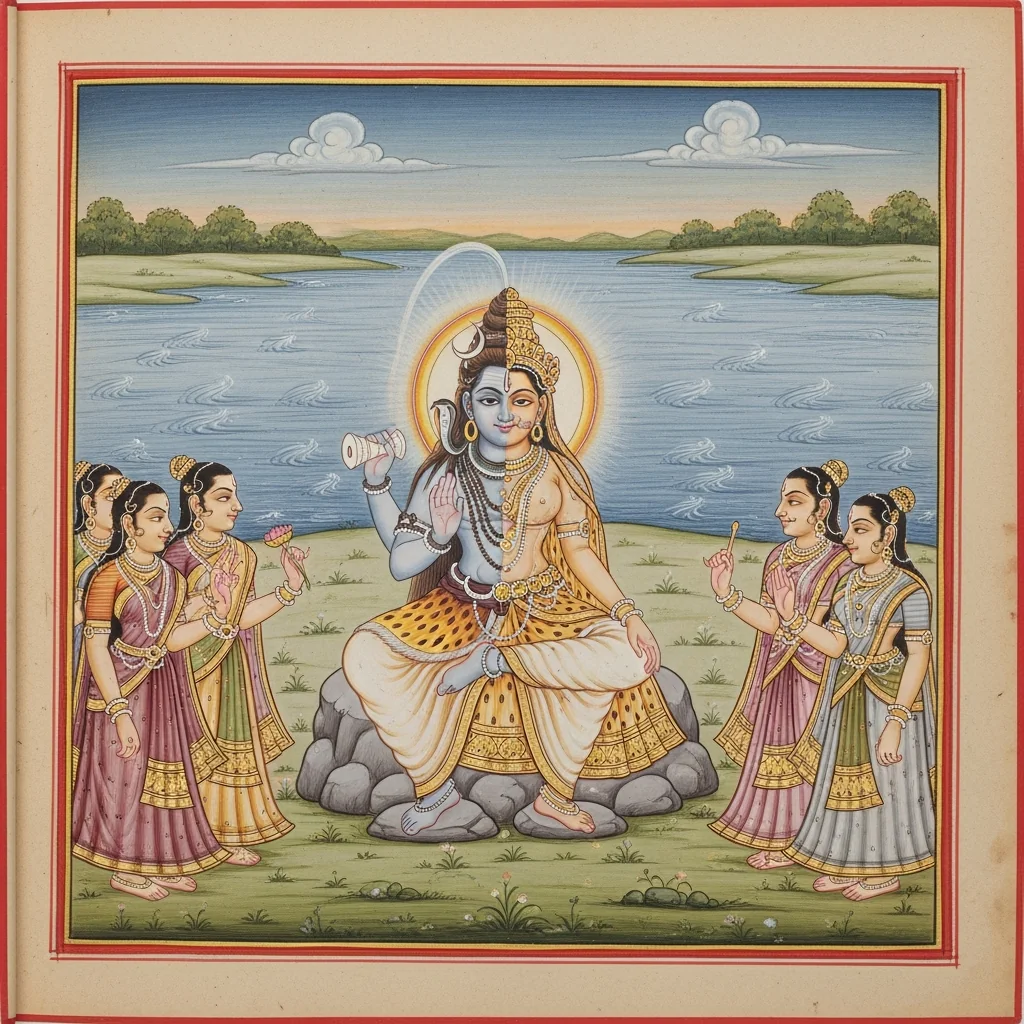
Mārkaṇḍeya instructs Yudhiṣṭhira to go to the unsurpassed Mātṛtīrtha, near a confluence on the southern bank of the Narmadā. Its sanctity is explained through an origin account: the divine Mothers (Mātṛs) manifested on that riverbank, and Śiva—described as having Umā as half of his being and wearing a serpent as his sacred thread—answered the appeal of an assembly of Yoginīs. Śiva authorizes the tīrtha to be famed on earth and then vanishes, making divine sanction the ground of its power. The chapter prescribes an observance on navamī (the ninth lunar day): a disciplined, pure devotee should fast and worship within the Mothers’ sphere (mātṛ-gocara). The fruits are both devotional—pleasing the Mātṛs and Śiva—and practical: for women said to be barren, bereaved of children, or without sons, a teacher skilled in mantra and śāstra should initiate a bathing rite with a golden vessel fitted with five gems and fruits; the teacher then administers the bath in a bronze vessel to obtain a son. It concludes that whatever desire one contemplates is fulfilled, and that no tīrtha surpasses Mātṛtīrtha.
Shlokas
Verse 1
श्रीमार्कण्डेय उवाच । ततो गच्छेत्तु राजेन्द्र मातृतीर्थमनुत्तमम् । सङ्गमस्य समीपस्थं नर्मदादक्षिणे तटे
Śrī Mārkaṇḍeya said: Then, O lord of kings, one should go to the unsurpassed Mātṛtīrtha, situated near the confluence (saṅgama), on the southern bank of the Narmadā.
Verse 2
मातरस्तत्र राजेन्द्र संजाता नर्मदातटे । उमार्धनारिर्देवेशो व्यालयज्ञोपवीतधृक्
O best of kings, the Mothers manifested there on the bank of the Narmadā. There also is the Lord of gods—Śiva, whose other half is Umā—wearing a sacred thread made of serpents.
Verse 3
उवाच योगिनीवृन्दं कष्टंकष्टमहो हर । अजेयाः सर्वदेवानां त्वत्प्रसादान्महेश्वर
He spoke to the host of Yoginīs: “Alas, alas, O Hara! Through your favor, O Maheśvara, they have become unconquerable even to all the gods.”
Verse 4
तीर्थमत्र विधानेन प्रख्यातं वसुधातले । एवं भवतु योगिन्य इत्युक्त्वान्तरधाच्छिवः
“Let this tīrtha here become renowned on the earth through proper ordinance.” Saying, “So be it, O Yoginīs,” Śiva then vanished from sight.
Verse 5
श्रीमार्कण्डेय उवाच । तत्र तीर्थे तु यो भक्त्या नवम्यां नियतः शुचिः । उपोष्य परया भक्त्या पूजयेन्मातृगोचरम्
Śrī Mārkaṇḍeya said: Whoever, at that tīrtha, on the ninth lunar day, disciplined and pure, fasts and—filled with supreme devotion—worships the sphere of the Mothers (Mātṛs),
Verse 6
तस्य स्युर्मातरः प्रीताः प्रीतोऽयं वृषवाहनः । वन्ध्याया मृतवत्साया अपुत्राया युधिष्ठिर
For him the Mothers become pleased, and this Bull-bannered Lord (Śiva) too is pleased. O Yudhiṣṭhira, for a barren woman, for one whose children have died, or for one without a son—
Verse 7
स्नापनं चारभेत्तत्र मन्त्रशास्त्रविदुत्तमः । सहिरण्येन कुम्भेन पञ्चरत्नफलान्वितः
There the foremost knower of mantra and ritual science should begin the ceremonial bathing (snāpana), using a water-pot together with gold, endowed with the “fruit” of the five gems.
Verse 8
स्नापयेत्पुत्रकामायाः कांस्यपात्रेण देशिकः । पुत्रं सा लभते नारी वीर्यवन्तं गुणान्वितम्
The officiating teacher should perform the bathing rite for a woman who longs for a son, using a bronze vessel; thus that woman gains a son—vigorous in vitality and endowed with virtues.
Verse 9
यो यं काममभिध्यायेत्ततः स लभते नृप । मातृतीर्थात्परं तीर्थं न भूतं न भविष्यति
Whatever desire one contemplates there, that very thing he attains, O king. A tīrtha greater than Mātṛtīrtha has never existed, nor will it ever exist.
Verse 66
। अध्याय
End of the chapter (colophon marker).