Adhyaya 63
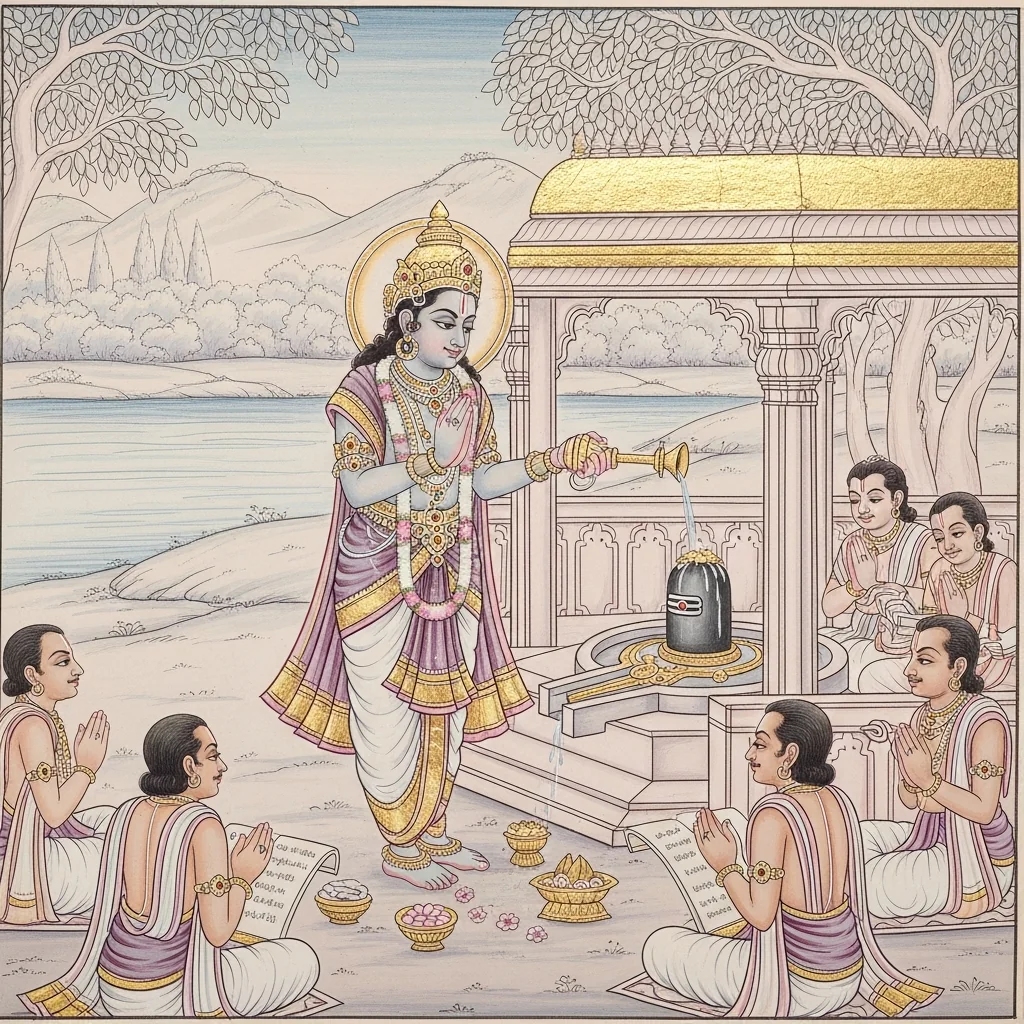
Mārkaṇḍeya instructs the royal listener to go to the eminent Kumāreśvara, a famed tīrtha near Agastyeśvara on the bank of the Narmadā. The chapter proclaims it a powerful pilgrimage-site upon the Narmadā. It explains the sacred origin: in ancient times Ṣaṇmukha (Skanda) worshipped here with intense devotion and attained siddhi, becoming commander of the divine hosts and a subduer of enemies; from that precedent the place is established as a potent tīrtha. For pilgrims a discipline is prescribed: approach with one-pointed mind and control of the senses, with special observance on Kārttika caturdaśī and aṣṭamī. The rites include bathing/abhiṣeka of Girijā-nātha (Śiva) with curd, milk, and ghee; devotional singing; and proper piṇḍa-dāna, ideally in the presence of learned brāhmaṇas devoted to orthodox duties. A doctrine of merit is stated: whatever is given there becomes akṣaya (imperishable), the tīrtha embodies all tīrthas, and the darśana of Kumāra yields puṇya. The concluding phalāśruti declares that one who dies in connection with this sacred economy attains heaven, affirmed as the Lord’s truthful proclamation.
Shlokas
Verse 1
श्रीमार्कण्डेय उवाच । ततो गच्छेत्तु राजेन्द्र कुमारेश्वरमुत्तमम् । प्रसिद्धं सर्वतीर्थानामगस्त्येश्वरसन्निधौ
Śrī Mārkaṇḍeya said: Then, O lord of kings, one should go to the most excellent Kumāreśvara, renowned among all tīrthas, situated near Agastyeśvara.
Verse 2
षण्मुखेन पुरा तात सर्वपातकनाशनम् । आराध्य परया भक्त्या सिद्धिः प्राप्ता नराधिप
Formerly, dear one, by worshipping Ṣaṇmukha with supreme devotion—he who destroys all sins—siddhi was attained, O king.
Verse 3
देवसैन्याधिपो जातः सर्वशत्रुनिबर्हणः । उग्रतेजा महात्मासौ संजातस्तीर्थसेवनात्
He became the commander of the gods’ army, the destroyer of all enemies. That great soul, blazing with fierce splendor, arose through service to the sacred tīrtha.
Verse 4
तदाप्रभृति तत्तीर्थं संजातंनर्मदातटे । तत्र तीर्थे तु यो गत्वा एकचित्तो जितेन्द्रियः
From that time onward, that sacred tīrtha came to be on the bank of the Narmadā. Whoever goes to that tīrtha, single-minded and with senses restrained…
Verse 5
कार्त्तिकस्य चतुर्दश्यामष्टम्यां च विशेषतः । स्नापयेद्गिरिजानाथं दधिदुग्धेन सर्पिषा
Especially on Kārttika’s fourteenth lunar day, and also on the eighth, one should bathe Girijānātha (Śiva) with curd, milk, and ghee.
Verse 6
गीतं तत्र प्रकर्तव्यं पिण्डदानं यथाविधि । ब्राह्मणैः श्रोत्रियैः पार्थ षट्कर्मनिरतैः शुभैः
There sacred singing should be performed, and piṇḍa-offerings given according to rule—through auspicious, Veda-learned brāhmaṇas (śrotriyas) devoted to the six duties, O son of Pāṇḍu.
Verse 7
यत्किंचिद्दीयते तत्र अक्षयं पाण्डुनन्दन । सर्वतीर्थमयं तीर्थ निर्मितं शिखिना नृप
Whatever is given there becomes imperishable, O son of Pāṇḍu. That tīrtha is the very essence of all tīrthas—established by Śikhin (Kumāra/Skanda), O king.
Verse 8
एतत्ते सर्वमाख्यातं कुमारेश्वरजं फलम् । कुमारदर्शनात्पुण्यं प्राप्यते पाण्डुनन्दन
All this has been declared to you—the fruit that arises from Kumāreśvara. By the very darśana (sacred sight) of Kumāra, merit is obtained, O son of Pāṇḍu.
Verse 9
मृतः स्वर्गमवाप्नोति सत्यमीश्वरभाषितम्
If one dies (in that sanctified state or place), he attains heaven—this is truth, spoken by the Lord.
Verse 63
। अध्याय
Adhyāya — the sacred marker indicating the end of the chapter.