Adhyaya 62
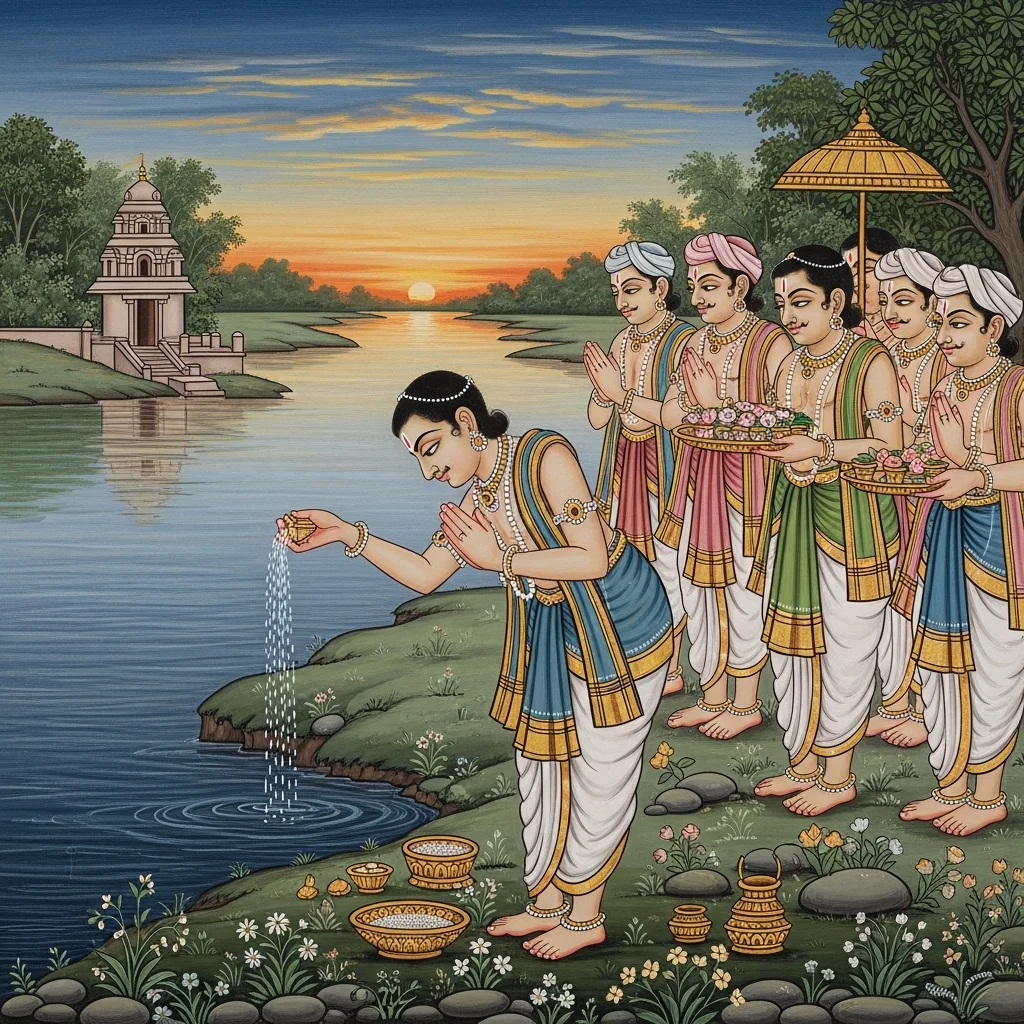
Adhyāya 62 records Mārkaṇḍeya’s instruction to a king on visiting the renowned tīrtha of Kroḍīśvara. It first narrates the origin: after the devas destroy the dānava forces, they gather the severed heads and consign them to the waters of the Narmadā, recalling bonds of kinship; then they bathe, establish Umāpati (Śiva), and worship him for welfare and for “worldly accomplishment” (lokasiddhi). Thus the tīrtha becomes known on earth as “Kroḍī,” famed as sin-destroying (pāpa-ghna). The chapter then lays out the observance: devotional fasting on the 8th and 14th lunar days of both fortnights; a night-vigil before Śūlin with sacred narration and Vedic study; morning worship of Tridaśeśvara; bathing the deity with pañcāmṛta, anointing with sandal, offering leaves and flowers, mantra-japa facing south, and a disciplined act of water-immersion. It also prescribes south-facing water-offerings (tila-añjali) for the departed, śrāddha, and feeding/gifting to disciplined, Veda-oriented brāhmaṇas, declaring multiplied merit. In the phalaśruti, death at the tīrtha according to rule grants long residence in Śivaloka as long as one’s bones remain in Narmadā water, followed by rebirth as a wealthy, honored, virtuous, long-lived person who later remembers the tīrtha and attains the highest goal by worshipping Kroḍīśvara. The chapter further urges building a shrine on the northern bank of the Revā with honestly acquired wealth, open to all varṇas and to women according to capacity, and concludes that devoted hearing of this tīrtha-māhātmya destroys sin within six months.
Shlokas
Verse 1
श्रीमार्कण्डेय उवाच । ततो गच्छेत्तु राजेन्द्र करोडीश्वरमुत्तमम् । यत्र वै निहतास्तात दानवाः सपदानुगाः
Śrī Mārkaṇḍeya said: Then, O lord of kings, one should go to the most excellent Karoḍīśvara—where, dear one, the Dānavas together with their followers were slain.
Verse 2
इन्द्रादिदेवैः संहृष्टैः सततं जयबुद्धिभिः । तेषां ये पुत्रपौत्राश्च पूर्ववैरमनुस्मरम्
With Indra and the other gods rejoicing, ever intent on victory, the sons and grandsons of those (Dānavas) remembered their former enmity.
Verse 3
क्रुद्धैर्देवसमूहैश्च दानवा निहता रणे । तेषां शिरांसि संगृह्य सर्वे देवाः सवासवाः
In battle the Dānavas were slain by the enraged hosts of the gods. Gathering their heads, all the gods together with Vāsava (Indra) did as follows.
Verse 4
निक्षिप्य नर्मदातोये बन्धुभावमनुस्मरम् । तत्र स्नात्वा सुराः सर्वे स्थापयित्वा उमापतिम्
Casting them into the waters of the Narmadā, remembering the bond of kinship, all the gods bathed there and then established Umāpati (Śiva) at that place.
Verse 5
इन्द्रेण सहिताः सर्वेऽपूजयंल्लोकसिद्धये । हृष्टचित्ताः सुराः सर्वे जग्मुराकाशमण्डलम्
All of them, together with Indra, worshipped (Śiva) for the attainment of worldly welfare and success. Then, with hearts rejoicing, all the gods departed to the sphere of the sky.
Verse 6
दानवानां महाभाग सूदिता कोटिरुत्तमा । तदा प्रभृति तत्तीर्थं करोडीति महीतले
O noble one, an excellent crore of Dānavas was slain there; from that very time onward, on the earth that sacred ford became renowned as “Karoḍī.”
Verse 7
विख्यातं तु तदा लोके पापघ्नं पाण्डुनन्दन । अष्टम्यां च चतुर्दश्यामुभौ पक्षौ च भक्तितः । उपोष्य शूलिनश्चाग्रे रात्रौ कुर्वीत जागरम्
Then it became famed in the world as a destroyer of sins, O son of Pāṇḍu. On the eighth and on the fourteenth lunar days—during both fortnights—one should, with devotion, fast and keep a night-vigil before Śūlin (Śiva).
Verse 8
सत्कथापाठसंयुक्तो वेदाध्ययनसंयुतः । प्रभाते विमले प्राप्ते पूजयेत्त्रिदशेश्वरम्
Engaged in the recitation of sacred narratives and joined with Vedic study, when the pure morning arrives one should worship the Lord of the gods.
Verse 9
पञ्चामृतेन संस्नाप्य श्रीखण्डेन च गुण्ठयेत् । शस्तैः पल्लवपुष्पैश्च पूजयेत्तु प्रयत्नतः
After bathing the Deity with pañcāmṛta, one should anoint Him with sandal paste; and with choice tender leaves and flowers, one should worship with earnest care.
Verse 10
बहुरूपं जपन्मन्त्रं दक्षिणाशां व्यवस्थितः । यथोक्तेन विधानेन नाभिमात्रे जले क्षिपेत्
Standing facing the southern direction, repeating the Bahurūpa mantra, one should—according to the stated procedure—cast the offering into water up to the navel.
Verse 11
तिलाञ्जलिं तु प्रेताय दक्षिणाशामुपस्थितः । श्राद्धं तत्रैव विप्राय कारयेद्विजितेन्द्रियः
Facing the southern direction, one should offer a handful of water with sesame for the departed; and there itself, with senses restrained, one should have a śrāddha performed by a brāhmaṇa.
Verse 12
विषमैरग्रजातैश्च वेदाभ्यसनतत्परैः । गोहिरण्येन सम्पूज्य ताम्बूलैर्भोजनैस्तथा
And one should honour worthy brāhmaṇas—foremost-born, intent on Vedic study—worshipping them fully with gifts of cows and gold, as well as with betel and food.
Verse 13
भूषणैः पादुकाभिश्च ब्राह्मणान्पाण्डुनन्दन । भवेत्कोटिगुणं तस्य नात्र कार्या विचारणा
O son of Pāṇḍu, by gifting ornaments and sandals to brāhmaṇas, the fruit becomes a crore-fold; of this there is no need for doubt or deliberation.
Verse 14
तस्मिंस्तीर्थे तु यः कश्चित्त्यजेद्देहं विधानतः । तस्य भवति यत्पुण्यं तच्छृणुष्व नराधिप
At that tīrtha, whoever—according to the proper observance—casts off the body: hear, O king, what merit becomes his.
Verse 15
यावदस्थीनि तिष्ठन्ति मर्त्यस्य नर्मदाजले । तावद्वसति धर्मात्मा शिवलोके सुदुर्लभे
So long as a mortal’s bones remain in the waters of the Narmadā, for so long does that righteous-souled one dwell in Śiva’s world—so hard to attain.
Verse 16
ततः कालाच्च्युतस्तस्मादिह मानुषतां गतः । कोटिधनपतिः श्रीमाञ्जायते राजपूजितः
Then, when his destined time there is exhausted, he falls from that state and is born here in human life—becoming a wealthy lord of immense riches, prosperous and honoured by kings.
Verse 17
सर्वधर्मसमायुक्तो मेधावी बीजपुत्रकः । विख्यातो वसुधापृष्ठे दीर्घायुर्मानवो भवेत्
He becomes a long-lived human—endowed with every dharmic virtue, intelligent, blessed with offspring, and renowned upon the face of the earth.
Verse 18
पुनः स्मरति तत्तीर्थं तत्र गत्वा नृपोत्तम । करोडेश्वरमभ्यर्च्य प्राप्नोति परमां गतिम्
O best of kings, when he again remembers that sacred ford and goes there, worshipping Karoḍeśvara, he attains the supreme state.
Verse 19
इन्द्रचन्द्रयमैर्रुद्रैरादित्यैर्वसुभिस्तथा । विश्वेदेवैस्तथा सर्वैः स्थापितस्त्रिदशेश्वरः
Established by Indra, Candra, Yama, the Rudras, the Ādityas, the Vasus, and all the Viśvedevas—thus stands the Lord revered by the thirty-three gods.
Verse 20
रेवाया उत्तरे कूले लोकानां हितकाम्यया । मानवो भक्तिसंयुक्तः प्रासादं कारयेत्तु यः
Whoever, endowed with devotion, builds a temple on the northern bank of the Revā, desiring the welfare of all people—
Verse 21
तस्मिंस्तीर्थे नरश्रेष्ठ सद्गतिं समवाप्नुयात् । न्यायोपात्तधनेनैव दारुपाषाणकेष्टकैः
O best of men, at that tīrtha he attains a blessed destiny—building the shrine with wealth obtained righteously, using timber, stone, and bricks.
Verse 22
ब्राह्मणः क्षत्रियैर्वैश्यैः शूद्रैः स्त्रीभिश्च शक्तितः । तेऽपि यान्ति नरा लोके शांकरे सुरपूजिते
Brahmins, Kṣatriyas, Vaiśyas, Śūdras, and women too—each according to ability—those people also attain the Śaṅkara-world, worshipped by the gods.
Verse 23
यः शृणोति सदा भक्त्या माहात्म्यं तीर्थजं नृप । तस्य पापं प्रणश्येत षण्मासाभ्यन्तरं च यत्
O king, whoever constantly listens with devotion to the tīrtha’s māhātmya—his sin is destroyed, even that accumulated within the past six months.
Verse 62
। अध्याय
Chapter (colophon marker).