Adhyaya 61
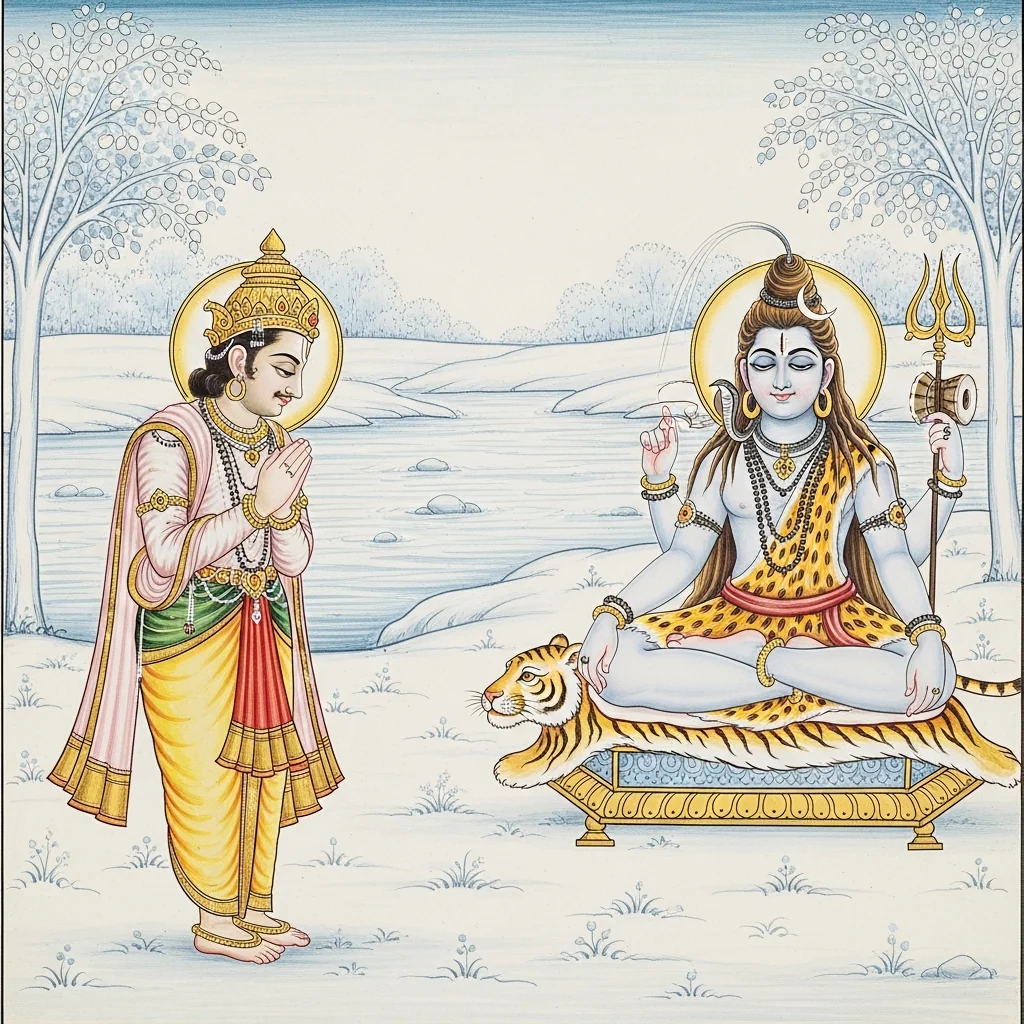
Mārkaṇḍeya points the listener to a supremely meritorious place on the southern bank of the Narmadā called Śakra-tīrtha, praised as a remover of accumulated sin. Its sanctity is grounded in an origin-legend: Indra (Śakra) once performed fierce austerities there with intense devotion to Maheśvara (Śiva). Pleased, Umāpati granted boons—Indra’s lordship among the devas, royal prosperity, and the power to overcome hostile beings, here described as dānavas. The chapter then turns to practice, prescribing a devotional fast on Kārttika kṛṣṇa trayodaśī as a means of release from sins, including those connected with troubling dreams, inauspicious omens, and afflictive influences attributed to graha/śākinī categories. Darśana of Śakreśvara is said to destroy wrongdoing accrued from birth, and the text also names transgressions for which purification is promised in this sacred setting. Finally, it enjoins dāna—especially gifting a cow (or a suitable draft animal) to an exemplary Brahmin—performed with devotion by one seeking heavenly abode, and concludes with a concise statement of the site’s promised fruits (phalāni).
Shlokas
Verse 1
श्रीमार्कण्डेय उवाच । ततो गच्छेत्परं पुण्यं नर्मदादक्षिणे तटे । शक्रतीर्थं सुविख्यातमशेषाघविनाशनम्
Śrī Mārkaṇḍeya said: Then one should go to another supremely holy place on the southern bank of the Narmadā—Śakratīrtha, famed everywhere, the destroyer of all sins.
Verse 2
पुरा शक्रेण तत्रैव तपो वै दुरतिक्रमम् । प्रारब्धं परया भक्त्या देवं प्रति महेश्वरम्
Formerly, Śakra undertook right there severe, arduous tapas, with supreme devotion directed toward the god Maheśvara.
Verse 3
ततः संतोषितो देव उमापतिर्नराधिप । देवेन्द्रत्वं वरं राज्यं दानवानां वधं ददौ
Then Umāpati, pleased, O king, granted him the boon of Indrahood and sovereignty, and the power to slay the Dānavas.
Verse 4
लब्धं शक्रेण नृपते नर्मदातीर्थभावतः । ततः पुण्यतमं तीर्थं संजातं वसुधातले
O king, Śakra obtained this through the sanctity of the Narmadā tīrtha. Therefore that place became the most meritorious tīrtha upon the face of the earth.
Verse 5
कार्त्तिकस्य तु मासस्य कृष्णपक्षे त्रयोदशीम् । उपोष्य वै नरो भक्त्या सर्वपापैः प्रमुच्यते
Indeed, one who devoutly fasts on the thirteenth day of the dark fortnight in the month of Kārttika is released from all sins.
Verse 6
दुःस्वप्नसम्भवैः पापैर्दुर्निमित्तसमुद्भवैः । ग्रहशाकिनिसम्भूतैर्मुच्यते पाण्डुनन्दन
O son of Pāṇḍu, one is freed from sins arising from evil dreams, from inauspicious omens, and from afflictions born of planets and śākinīs.
Verse 7
शक्रेश्वरं नृपश्रेष्ठ ये प्रपश्यन्ति भक्तितः । तेषां जन्मकृतं पापं नश्यते नात्र संशयः
O best of kings, those who behold Śakreśvara with devotion—of them the sin accumulated through births is destroyed; of this there is no doubt.
Verse 8
अगम्यागमने चैव अवाह्ये चैव वाहिते । स्वामिमित्रविघाते यन्नश्यते नात्र संशयः
Even the sin arising from going to one who should not be approached, from carrying what must not be carried, and from harming one’s lord or one’s friend—this too is destroyed; of this there is no doubt.
Verse 9
गोप्रदानं प्रकर्तव्यं शुभं ब्राह्मणपुंगवे । धुर्यं वा दापयेत्तस्मिन् सर्वाङ्गरुचिरं नृप
O king, one should perform the auspicious gift of a cow to an eminent brāhmaṇa; or else arrange the gift of a yoked draught-ox, handsome in all its limbs.
Verse 10
दातव्यं परया भक्त्या स्वर्गे वासमभीप्सता । एतत्ते सर्वमाख्यातं शक्रेश्वरफलं नृप
It should be given with supreme devotion by one who longs to dwell in heaven. Thus, O king, the entire fruit of Śakreśvara has been declared to you.
Verse 61
। अध्याय
“Adhyāya” — a chapter marker indicating the boundary of a chapter/section in the manuscript tradition.