Adhyaya 60
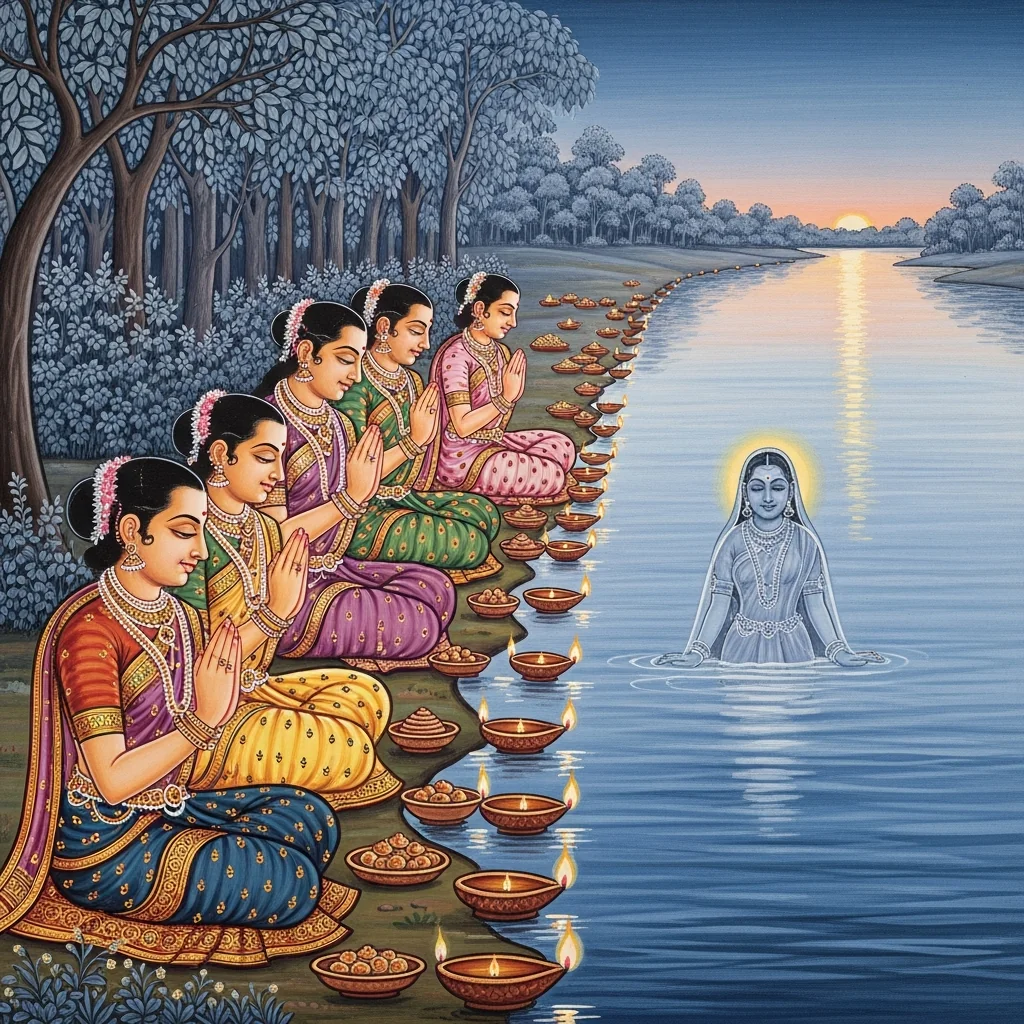
Mārkaṇḍeya resumes his instruction to Yudhiṣṭhira, extolling Ādityeśvara and Ravītīrtha as a supreme sacred site whose efficacy surpasses renowned tīrthas. He recounts a tale heard near Rudra: during a famine, many sages gather on the Narmadā and enter a forested tīrtha region, where they meet fearsome figures—women and men bearing nooses—who urge them onward to their “masters” at the tīrtha. The sages offer a long hymn to Narmadā, praising her power to purify and protect. The Goddess Narmadā manifests and grants extraordinary boons, including a rare assurance oriented toward liberation. Next, five powerful men engaged in bathing and worship explain that even grave transgressions can be removed by the tīrtha’s influence; they worship Bhāskara (the Sun) and inwardly remember Hari, culminating in a transformation witnessed by the sages. The chapter then sets forth Ravītīrtha’s ritual observances: visiting during eclipses and auspicious calendrical junctures, fasting, night vigil, lamp offerings, Vaiṣṇava kathā and Veda-recitation, Gāyatrī-japa, honoring brāhmaṇas, and gifts of food, gold, land, garments, shelter, and vehicles. The phalaśruti promises purification and residence in the solar realm for faithful listeners, while advising discretion in conveying the tīrtha’s secrets to those marked by serious ethical breaches.
Shlokas
Verse 1
श्रीमार्कण्डेय उवाच । भूयोऽप्यहं प्रवक्ष्यामि आदित्येश्वरमुत्तमम् । सर्वदुःखहरं पार्थ सर्वविघ्नविनाशनम्
Śrī Mārkaṇḍeya said: Again I shall proclaim the supreme Ādityeśvara, O son of Pṛthā—He who removes all sorrow and destroys every obstacle.
Verse 2
आयुःश्रीवर्द्धनं नित्यं पुत्रदं स्वर्गदं शिवम् । यस्य तीर्थस्य चान्यानि तीर्थानि कुरुनन्दन
O delight of the Kurus, that tīrtha ever increases longevity and prosperity; it grants sons and heaven, and it is auspicious. To it, the other holy places too are gathered as though subordinate.
Verse 3
नालभन्त श्रियं नाके मर्त्ये पातालगोचरे । कुरुक्षेत्रं गया गङ्गा नैमिषं पुष्करं तथा
Neither in heaven, nor on earth, nor in the realms of the netherworld do they obtain such spiritual splendor; even Kurukṣetra, Gayā, the Gaṅgā, Naimiṣa, and Puṣkara do not equal it.
Verse 4
वाराणसी च केदारं प्रयागं रुद्रनन्दनम् । महाकालं सहस्राक्षं शुक्लतीर्थं नृपोत्तम
O best of kings, even Vārāṇasī, Kedāra, Prayāga, Rudranandana, Mahākāla, Sahasrākṣa, and Śuklatīrtha do not equal its glory.
Verse 5
रवितीर्थस्य सर्वाणि कलां नार्हन्ति षोडशीम् । रवितीर्थे हि यद्वृत्तं तच्छृणुष्व नृपोत्तम
All other tīrthas do not deserve even a sixteenth part of the merit of Ravitīrtha. Therefore, O best of kings, listen to what happened at Ravitīrtha.
Verse 6
स्नेहात्ते कथयिष्यामि वार्द्धकेनातिपीडितः । शृण्वन्तु ऋषयः सर्वे तपोनिष्ठा महौजसः
Out of affection for you, though sorely afflicted by old age, I shall narrate it. Let all the ṛṣis—steadfast in tapas and mighty in spiritual vigor—listen.
Verse 7
श्रुतं मे रुद्रसांनिध्ये नन्दिस्कन्दगणैः सह । पार्वत्या पृष्टः शम्भुश्च रवितीर्थस्य यत्फलम्
I have heard, in Rudra’s presence, together with Nandi, Skanda, and the gaṇas, that Śambhu—questioned by Pārvatī—declared the fruit of Ravitīrtha.
Verse 8
शम्भुना च यदाख्यातं गिरिजायाः ससम्भ्रमम् । तत्सर्वमेकचित्तेन रुद्रोद्गीतं श्रुतं मया
And whatever Śambhu related to Girijā with earnest attention—everything sung forth by Rudra—I have heard with a single, undistracted mind.
Verse 9
तत्तेऽहं सम्प्रवक्ष्यामि शृणु यत्नेन पाण्डव । दुर्भिक्षोपहता विप्रा नर्मदां तु समाश्रिताः
That I shall now tell you—listen carefully, O Pāṇḍava. Struck by famine, the brāhmaṇas took refuge on the bank of the Narmadā.
Verse 10
उद्दालको वशिष्ठश्च माण्डव्यो गौतमस्तथा । याज्ञवल्क्योऽथ गर्गश्च शाण्डिल्यो गालवस्तथा
There were Uddālaka, Vasiṣṭha, Māṇḍavya, and Gautama; and also Yājñavalkya, Garga, Śāṇḍilya, and Gālava.
Verse 11
नाचिकेतो विभाण्डश्च वालखिल्यादयस्तथा । शातातपश्च शङ्खश्च जैमिनिर्गोभिलस्तथा
There were Nāciketa and Vibhāṇḍa, and also the Vālakhilyas and others; Śātātapa and Śaṅkha as well, and Jaimini and Gobhila too.
Verse 12
जैगीषव्यः शतानीकः सर्व एव समागताः । तीर्थयात्रा कृता तैस्तु नर्मदायाः समन्ततः
Jaigīṣavya and Śatānīka—indeed all of them—assembled. And they performed a pilgrimage to the tīrthas all around the Narmadā.
Verse 13
आदित्येश्वरमायाताः प्रसङ्गादृषिपुंगवाः । वृक्षैः संछादितं शुभ्रं धवतिन्दुकपाटलैः
Drawn onward by the unfolding account, the foremost sages came to Ādityeśvara. They beheld that radiant holy region, canopied by trees—dhava, tinduka, and pāṭala—shining with auspicious beauty.
Verse 14
जम्बीरैरर्जुनैः कुब्जैः शमीकेसरकिंशुकैः । तस्मिंस्तीर्थे महापुण्ये सुगन्धिकुसुमाकुले
That most meritorious tīrtha was filled with fragrant blossoms, adorned with jambīra and arjuna trees, with kubja, śamī, kesara, and kiṃśuka—making the holy ground a garland of scent and sanctity.
Verse 15
पुन्नागनालिकेरैश्च खदिरैः कल्पपादपैः । अनेकश्वापदाकीर्णं मृगमार्जारसंकुलम्
It was graced with punnāga and coconut palms, with khadira and wish-fulfilling trees; and yet the forest was teeming with many wild creatures—filled with deer and prowling beasts—vivid in its untamed life.
Verse 16
ऋक्षहस्तिसमाकीर्णं चित्रकैश्चोपशोभितम् । प्रविष्टा ऋषयः सर्वे वने पुष्पसमाकुले
All the sages entered the forest—crowded with bears and elephants and adorned with citraka plants—a woodland overflowing with blossoms.
Verse 17
वनान्ते च स्त्रियो दृष्ट्वा रक्ता रक्ताम्बरान्विताः । रक्तमाल्यानुशोभाढ्या रक्तचन्दनचर्चिताः
At the forest’s edge they saw women—flushed red, clad in red garments—adorned with red garlands and anointed with red sandal paste.
Verse 18
रक्ताभरणसंयुक्ताः पाशहस्ता भयावहाः । तासां समीपगा दृष्टाः कृष्णजीमूतसन्निभाः
They wore red ornaments, held nooses in their hands, and were terrifying; near them were seen others, dark as black rain-clouds.
Verse 19
महाकाया भीमवक्त्राः पाशहस्ता भयावहाः । अनावृष्ट्युपमा दृष्टा आतुराः पिङ्गलोचनाः
They were huge-bodied, dreadful-faced, holding nooses and terrifying—seen like the calamity of drought itself—restless and distressed, with tawny, glaring eyes.
Verse 20
दीर्घजिह्वा करालास्या तीक्ष्णदंष्ट्रा दुरासदा । वृद्धा नारी कुरुश्रेष्ठ दृष्टान्या ऋषिपुंगवैः
Then the foremost sages saw another—an aged woman, O best of the Kurus—long-tongued, with a gaping, horrid mouth, sharp fangs, and difficult to approach.
Verse 21
ततः समीपगा वृद्धा तस्य वृन्दस्य भारत । स्वाध्यायनिरता विप्रा दृष्टास्तैः पापकर्मभिः
Then, O Bhārata, that aged woman drew near to that group. The brāhmaṇas, intent upon Vedic study, were seen by those of sinful deeds.
Verse 22
ऊचुस्ते तु समूहेन ब्राह्मणांस्तपसि स्थितान् । अस्माकं स्वामिनः सर्वे तिष्ठन्ते तीर्थमध्यतः । ते प्रस्थाप्या महाभागाः सर्वथैव त्वरान्विताः
Then they spoke together to the brāhmaṇas established in austerity: “All our masters are standing in the very midst of the tīrtha. You noble ones must be sent there—by all means, and with haste.”
Verse 23
तच्छ्रुत्वा वचनं तेषां सर्वे चैव त्वरान्विताः । जग्मुस्ते नर्मदाकक्षं दृष्ट्वा रेवां द्विजोत्तमाः
Hearing their words, all of them, filled with urgency, set out at once. Those foremost among the twice-born went to the banks of the Narmadā and there beheld Revā, the sacred river.
Verse 24
ततः केचित्स्तुवन्त्यन्ये जय देवि नमोऽस्तु ते
Then some began to praise her, while others cried out: “Victory to you, O Goddess—salutations be to you!”
Verse 25
नमोऽस्तु ते सिद्धगणैर्निषेविते नमोऽस्तु ते सर्वपवित्रमङ्गले । नमोऽस्तु ते विप्रसहस्रसेविते नमोऽस्तु रुद्राङ्गसमुद्भवे वरे
Salutations to you, attended by hosts of Siddhas. Salutations to you, the auspicious one who sanctifies all that is pure. Salutations to you, served by thousands of brāhmaṇas. Salutations to you, O excellent one, born from Rudra’s own body.
Verse 26
नमोऽस्तु ते सर्वपवित्रपावने नमोऽस्तु ते देवि वरप्रदे शिवे । नमामि ते शीतजले सुखप्रदे सरिद्वरे पापहरे विचित्रिते
Salutations to you, purifier even of all that is pure. Salutations to you, O Goddess—bestower of boons, auspicious Śivā. I bow to you whose waters are cool and grant ease; O best of rivers, remover of sins, wondrously adorned.
Verse 27
अनेकभूतौघसुसेविताङ्गे गन्धर्वयक्षोरगपाविताङ्गे । महागजौघैर्महिषैर्वराहैरापीयसे तोयमहोर्मिमाले
O you whose body is well-attended by multitudes of beings, whose form is sanctified by Gandharvas, Yakṣas, and Nāgas—great herds of elephants, buffaloes, and boars drink your waters; wondrous indeed is your garland of waves.
Verse 28
नमामि ते सर्ववरे सुखप्रदे विमोचयास्मानघपाशबद्धान्
I bow to you, O bestower of every blessing, giver of well-being. Release us who are bound by the nooses of sin.
Verse 29
भ्रमन्ति तावन्नरकेषु मर्त्या यावत्तवाम्भो नहि संश्रयन्ति । स्पृष्टं करैश्चन्द्रमसो रवेश्चेत्तद्देवि दद्यात्परमं पदं तु
Mortals wander in hells so long as they do not take refuge in your waters. If your water—touched by the rays of the Moon and the Sun—be contacted, then, O Goddess, it grants the supreme state indeed.
Verse 30
अनेकसंसारभयार्दितानां पापैरनेकैरभिवेष्टितानाम् । गतिस्त्वमम्भोजसमानवक्त्रे द्वन्द्वैरनेकैरभिसंवृतानाम्
For those tormented by the many fears of worldly existence, for those wrapped about by countless sins—you are the refuge, O lotus-faced one, for those enclosed by many pairs of opposites.
Verse 31
नद्यश्च पूता विमला भवन्ति त्वां देवि सम्प्राप्य न संशयोऽत्र । दुःखातुराणामभयं ददासि शिष्टैरनेकैरभिपूजितासि
Even rivers become purified and stainless upon reaching you, O Goddess—of this there is no doubt. You grant fearlessness to those distressed by suffering, and you are worshipped by many virtuous and learned people.
Verse 32
विण्मूत्रदेहाश्च निमग्नदेहा भ्रमन्ति तावन्नरकेषु मर्त्याः । महाबलध्वस्ततरङ्गभङ्गं जलं न यावत्तव संस्पृशन्ति
Mortals—foul-bodied and sunk in degradation—wander through hells so long as they do not touch your water, whose wave-crests are shattered by mighty force.
Verse 33
म्लेच्छाः पुलिन्दास्त्वथ यातुधानाः पिबन्ति येऽंभस्तव देवि पुण्यम् । तेऽपि प्रमुच्यन्ति भयाच्च घोरात्किमत्र विप्रा भवपाशभीताः
O Goddess, even mlecchas, Pulindas, and yātudhānas—whoever drinks your sacred water—are freed from dreadful fear. What wonder then that brāhmaṇas, afraid of the bondage of worldly becoming, should be delivered here?
Verse 34
सरांसि नद्यः क्षयमभ्युपेता घोरे युगेऽस्मिन्कलिनावसृष्टे । त्वं भ्राजसे देवि जलौघपूर्णा दिवीव नक्षत्रपथे च गङ्गा
When this dreadful age, cast down by Kali, has come, lakes and rivers fall into decline. Yet you, O Goddess, shine forth, full with torrents of water, like the celestial Gaṅgā upon the pathway of the stars.
Verse 35
तव प्रासादाद्वरदे विशिष्टे कालं यथेमं परिपालयित्वा । यास्याम मोक्षं तव सुप्रसादाद्वयं यथा त्वं कुरु नः प्रसादम्
By your grace, O excellent bestower of boons, may we live out and uphold this span of time rightly; and by your great favor may we attain liberation (mokṣa). Therefore, grant your gracious blessing upon us.
Verse 36
त्वामाश्रिता ये शरणं गताश्च गतिस्त्वमम्बेव पितेव पुत्रान् । त्वत्पालिता यावदिमं सुघोरं कालं त्वनावृष्टिहतं क्षिपामः
Those who rely on you and come seeking shelter—you alone are their refuge, like a mother and like a father to their children. Protected by you, may we pass beyond this most dreadful time, stricken by the lack of rain.
Verse 37
एवं स्तुता तदा देवी नर्मदा सरितां वरा । प्रत्यक्षा सा परा मूर्तिर्ब्राह्मणानां युधिष्ठिर
Thus praised, the Goddess Narmadā—the best among rivers—became manifest to the brāhmaṇas as that supreme, visible form, O Yudhiṣṭhira.
Verse 38
श्रीमार्कण्डेय उवाच । पठन्ति ये स्तोत्रमिदं नरेन्द्र शृण्वन्ति भक्त्या परया प्रशान्ताः । ते यान्ति रुद्रं वृषसंयुतेन यानेन दिव्याम्बरभूषिताङ्गाः
Śrī Mārkaṇḍeya said: O king, those serene ones who recite this hymn, or listen to it with supreme devotion, go to Rudra, borne in a chariot yoked with a bull, their bodies adorned with divine garments.
Verse 39
ये स्तोत्रमेतत्सततं जपन्ति स्नात्वा च तोयेन तु नर्मदायाः । तेभ्योऽन्तकाले सरिदुत्तमेयं गतिं विशुद्धामचिराद्ददाति
Those who constantly repeat this hymn and bathe in Narmadā’s waters—at the time of death this best of rivers swiftly grants them a pure and sanctified destiny.
Verse 40
प्रातः समुत्थाय तथा शयानो यः कीर्तयेतानुदिनं स्तवेन्द्रम् । देहक्षयं स्वे सलिले ददाति समाश्रयं तस्य महानुभाव
Whether rising in the morning or even while lying down, whoever daily proclaims this king of hymns—at the end of the body the great-souled (Narmadā) grants him refuge in her own waters.
Verse 41
पापैर्विमुक्ता दिवि मोदमानाः सम्भोगिनश्चैव तु नान्यथा च
Freed from sins, they rejoice in heaven, enjoying divine delights—truly, it is not otherwise.
Verse 42
प्रसन्ना नर्मदा देवी स्तोत्रेणानेन भारत । जलेनाप्यायितान् विप्रान् दक्षिणापथवाहिनी
O Bhārata, the Goddess Narmadā, pleased by this hymn—she who flows along the southern course—nourished and refreshed the brāhmaṇas with her waters.
Verse 43
अमृतत्वं तु वो दद्मि योगिभिर्यन्न गम्यते । दुर्लभं यत्सुरैः सर्वैर्मत्प्रसादाल्लभिष्यथ
“I grant you immortality—unattainable even by yogins, and rare among all the gods. By my grace alone you shall obtain it.”
Verse 44
इति ते ब्राह्मणा राजंल्लब्धा वरमनुत्तमम् । गमिष्यन्तः प्रीतचित्ता ददृशुश्चित्रमद्भुतम्
Thus, O King, those brāhmaṇas—having received the unsurpassed boon—set out with joyful hearts and beheld a wondrous marvel.
Verse 45
श्रीमार्कण्डेय उवाच । दृष्टास्तैः पुरुषाः पार्थ नर्मदातटसंस्थिताः । स्नानदेवार्चनासक्ताः पञ्च एव महाबलाः
Śrī Mārkaṇḍeya said: “O Pārtha, they saw five mighty men stationed on the bank of the Narmadā, devoted to ritual bathing and to the worship of the Deity.”
Verse 46
ते दृष्टा ब्राह्मणैः सर्वैर्वेदवेदाङ्गपारगैः । संपृष्टास्तैर्महाराज यथा तदवधारय
Seen by all those brāhmaṇas, well-versed in the Vedas and their Vedāṅgas, they were questioned by them. O great King, understand it as I relate.
Verse 47
विप्रा ऊचुः । वनान्ते स्त्रीयुगं दृष्ट्वा महारौद्रं भयावहम् । वृद्धाश्च पुरुषास्तत्र पाशहस्ता भयावहाः
The brāhmaṇas said: “At the edge of the forest we saw a pair of women—fierce, terrifying, and dreadful. There too were old men, fearsome, holding nooses in their hands.”
Verse 48
दुर्धर्षा दुर्निरीक्ष्याश्च इतश्चेतश्च चञ्चलाः । व्याहरन्तः शुभां वाचं न तत्र गतिरस्ति वै
“They were unassailable and even hard to look upon, darting restlessly here and there. Though they spoke pleasing words, there was truly no way out there.”
Verse 49
अपरस्परयोः सर्वे निरीक्षन्तः पुनःपुनः । तैस्तु यद्वचनं प्रोक्तं तत्सर्वं कथ्यतामिति
All of them kept glancing at one another again and again, and then said: “Whatever was spoken by them—let all of it be told.”
Verse 50
अस्माकं पुरुषाः पञ्च तिष्ठन्ति तत्र सत्तमाः । ते प्रस्थाप्या महाभागाः सर्वथैव त्वरान्विताः
“Five of our men, the best among the worthy, are standing there. Those fortunate ones should be sent forth—by all means, with haste.”
Verse 51
अथ ते पुरुषाः पञ्च श्रुत्वा वाक्यमिदं शुभम् । परस्परं निरीक्षन्तो वदन्ति च पुनःपुनः
Then those five men, having heard these auspicious words, looked at one another and spoke among themselves again and again.
Verse 52
क्व ते कस्य कुतो याताः किमुक्तं तैर्भयावहैः
“Where are they? Whose are they, and from where did they come? What was said by those fearsome ones?”
Verse 53
पुरुषा ऊचुः । तीर्थावगाहनं सर्वैः पूर्वदक्षिणपश्चिमैः । उत्तरैश्च कृतं भक्त्या न पापं तैर्व्यपोहितम्
The men said: “All of us—those from the east, the south, the west, and the north—have devoutly bathed in this sacred tīrtha; yet our sin has not been removed.”
Verse 54
निष्पापाश्चाथ संजातास्तीर्थस्यास्य प्रभावतः । शृण्वन्तु ऋषयः सर्वे वह्निकालोपमा द्विजाः
“Yet, by the power of this very tīrtha, they became sinless. Let all the ṛṣis hear—O twice-born, radiant like Fire and Time.”
Verse 55
पातकानि च घोराणि यान्यचिन्त्यानि देहिनाम् । पापिष्ठेन तु चैकेन गुरुदारा निषेविता
“There are dreadful sins—unthinkable for embodied beings. One most sinful man even violated his teacher’s wife.”
Verse 56
हृतं चान्येन मित्रस्वं सुवर्णं च धनं तथा । ब्रह्महत्या महारौद्रा कृता चान्येन पातकम्
One stole a friend’s property—gold and wealth. Another committed the dreadfully fierce sin of slaying a brāhmaṇa.
Verse 57
सुरापानं तु चान्यस्य संजातं चाप्यकामतः । गोवध्या चाप्यकामेन कृता चैकेन पापिना
Another fell into the sin of drinking liquor—though unintentionally. And one sinner, even without intent, committed the killing of a cow.
Verse 58
अकामतोऽपि सर्वेषां पातकानि नराधिप । ब्राह्मणानां तु ते श्रुत्वा वाक्यं तद्विस्मयान्विताः
O king, even without intention, sins befall all. But when they heard the brāhmaṇas’ words, they were filled with wonder.
Verse 59
सद्य एव तदा जाताः पापिष्ठा गतकल्मषाः । तीर्थस्यास्य प्रभावेन नर्मदायाः प्रभावतः
At that very moment, those once most sinful became free of defilement—through the power of this tīrtha, through the power of the Narmadā.
Verse 60
न क्वचित्पातकानां तु प्रवेशश्चात्र जायते । एवं संचित्य ते सर्वे पापिष्ठाश्च परस्परम्
Here, sins find no entry at all. Thus, those men—once steeped in sin—gathered together and spoke among themselves.
Verse 61
चित्रभानुः स्मृतस्तैस्तु विचिन्त्य हृदये हरिम् । स्नात्वा रेवाजले पुण्ये तर्पिताः पितृदेवताः
Then they remembered Citrabhānu; and, meditating upon Hari within their hearts, they bathed in the holy waters of the Revā and offered tarpaṇa to satisfy the Pitṛs and the deities.
Verse 62
नत्वा तु भास्करं देवं हृदि ध्यात्वा जनार्दनम् । प्रदक्षिणं तु तं भक्त्या ज्वलन्तं जातवेदसम्
Having bowed to the god Bhāskara and meditated on Janārdana in the heart, they reverently circumambulated that blazing Jātavedas (the sacred Fire/Sun) with devotion.
Verse 63
पतिताः पाण्डवश्रेष्ठ पापोद्विग्ना महीपते । सात्त्विकीं वासनां कृत्वा त्यक्त्वा रजस्तमस्तथा
O best of the Pāṇḍavas, O king—those who had fallen and were tormented by their sins, by cultivating a sāttvika disposition and casting off rajas and tamas, became fit for higher spiritual attainment.
Verse 64
हतं तैः पावके सर्वं रेवाया उत्तरे तटे । विमानस्थास्तदा दृष्टा ब्राह्मणैस्ते युधिष्ठिर
O Yudhiṣṭhira—on the northern bank of the Revā, everything was consumed by fire because of them; then the brāhmaṇas saw them, seated in celestial vimānas.
Verse 65
आश्चर्यमतुलं दृष्टमृषिभिर्नर्मदातटे । तदाप्रभृति ते सर्वे रागद्वेषविवर्जिताः
On the bank of the Narmadā, the sages witnessed an incomparable wonder; from that time onward, all of them became free from attachment and aversion (rāga and dveṣa).
Verse 66
रवितीर्थं द्विजा हृष्टाः सेवन्ते मोक्षकाङ्क्षया । तीर्थस्यास्य च यत्पुण्यं तच्छृणुष्व नराधिप
Joyful brāhmaṇas resort to Ravitīrtha with the longing for liberation. O king, hear now the merit belonging to this sacred ford.
Verse 67
पीडितो वृद्धभावेन भक्त्या प्रीतो नरेश्वर । उद्देशं कथयिष्यामि द्विक्रोशाभ्यन्तरे स्थितः
O king, though afflicted by old age, I am pleased by your devotion. I shall describe the location—situated within a circuit of two krośas.
Verse 68
कुरुक्षेत्रं यथा पुण्यं रवितीर्थं श्रुतं मया । ईश्वरेण पुरा ख्यातं षण्मुखस्य नराधिप
Just as Kurukṣetra is holy, so have I heard Ravitīrtha to be. O king, in ancient times Īśvara proclaimed it to Ṣaṇmukha (Skanda).
Verse 69
श्रुतं रुद्राच्च तैः सर्वैरहं तत्र समीपगः ईश्वर उवाच । मार्तण्डग्रहणे प्राप्ते ये व्रजन्ति षडानन । रवितीर्थे कुरुक्षेत्रे तुल्यमेतत्फलं लभेत्
And this was heard by all of them from Rudra, while I stood nearby. Īśvara said: ‘O Ṣaḍānana, when a solar eclipse occurs, those who go to Ravitīrtha obtain the same fruit as at Kurukṣetra.’
Verse 70
स्नाने दाने तथा जप्ये होमे चैव विशेषतः । कुरुक्षेत्रे समं पुण्यं नात्र कार्या विचारणा
In bathing, charity, recitation, and especially in fire-offerings, the merit here is equal to that of Kurukṣetra—no doubt need be raised about it.
Verse 71
ग्रामे वा यदि वारण्ये पुण्या सर्वत्र नर्मदा । रवितीर्थे विशेषेण रेवा पुण्यफलप्रदा
Whether in a village or in the forest, the Narmadā is holy everywhere; yet at Ravitīrtha in particular, the Revā bestows the fruit of great merit.
Verse 72
षष्ठ्यां सूर्यदिने भक्त्या व्यतीपाते च वै धृतौ । संक्रान्तौ ग्रहणेऽमायां ये व्रजन्ति जितेन्द्रियाः
Those self-controlled devotees who go with faith on the sixth lunar day, on Sunday, at Vyatīpāta and at Dhṛti, at Saṅkrānti, during an eclipse, and on the new-moon day become recipients of exceptional merit.
Verse 73
कामक्रोधैर्विमुक्ताश्च रागद्वेषैस्तथैव च । उपोष्य परया भक्त्या देवस्याग्रे नराधिप
Freed from lust and anger, and likewise from attachment and aversion, one should undertake a fast with supreme devotion in the presence of the deity, O king.
Verse 74
रात्रौ जागरणं कृत्वा दीपं देवस्य बोधयेत् । कथां वै वैष्णवीं पार्थ वेदाभ्यसनमेव च
Keeping vigil through the night, one should awaken (honour) the deity with a lamp; and, O son of Pṛthā, one should also engage in Vaiṣṇava sacred recitation and the study of the Vedas.
Verse 75
ऋग्वेदं वा यजुर्वेदं सामवेदमथर्वणम् । ऋचमेकां जपेद्यस्तु स वेदफलमाप्नुयात्
Whether it be the Ṛgveda, the Yajurveda, the Sāmaveda, or the Atharvaveda—whoever recites even a single ṛc (Vedic verse) attains the fruit of the Vedas.
Verse 76
गायत्र्या च चतुर्वेदफलमाप्नोति मानवः । प्रभाते पूजयेद्विप्रानन्नदानहिरण्यतः
By the japa of the Gāyatrī, a person attains the fruit of the four Vedas. At dawn, one should honour the brāhmaṇas with gifts of food and gold.
Verse 77
भूमिदानेन वस्त्रेण अन्नदानेन शक्तितः । छत्रोपानहशय्यादिगृहदानेन पाण्डव
By gifting land, clothing, and food according to one’s capacity—and by donating umbrellas, footwear, beds, and even houses—O Pāṇḍava, one gains great merit.
Verse 78
ग्रामधूर्वहदानेन गजकन्याहयेन च । विद्याशकटदानेन सर्वेषामभयं भवेत्
By donating villages and beasts of burden, and also elephants, maidservants, and horses; and by gifting vehicles (carts) and the means of learning—fearlessness arises for all.
Verse 79
शत्रुश्च मित्रतां याति विषं चैवामृतं भवेत् । ग्रहा भवन्ति सुप्रीताः प्रीतस्तस्य दिवाकरः
Even an enemy turns to friendship, and poison itself becomes like nectar. The planets become greatly favourable; the Sun, Divākara, is pleased with him.
Verse 80
एतत्ते सर्वमाख्यातं रवितीर्थफलं नृप । ये शृण्वन्ति नरा भक्त्या रवितीर्थफलं शुभम्
Thus I have fully declared to you, O king, the fruit of Ravitīrtha. Those people who listen with devotion to this auspicious account of Ravitīrtha’s merit—
Verse 81
तेऽपि पापविनिर्मुक्ता रविलोके वसन्ति हि । गोदानेन च यत्पुण्यं यत्पुण्यं भृगुदर्शने
They too, freed from sins, indeed dwell in the world of the Sun. Whatever merit arises from gifting a cow, and whatever merit arises from beholding Bhṛgu—
Verse 82
केदार उदकं पीत्वा तत्पुण्यं जायते नृणाम् । अब्दमश्वत्थसेवायां तिलपात्रप्रदो भवेत्
By drinking the water at Kedāra, that very merit arises for people. And by serving the aśvattha tree for a year, one becomes a giver of a vessel filled with sesame as a pious gift.
Verse 83
तत्फलं समवाप्नोति आदित्येश्वरकीर्तनात् । श्रुते यस्य प्रभावे न जायते यन्नृपात्मज
O prince, by praising Ādityeśvara one surely attains that very fruit. Hearing of whose power, that result is not left unmanifest; it is certainly brought forth.
Verse 84
तत्सर्वं कथयिष्यामि भक्त्या तव महीपते । पापानि च प्रलीयन्ते भिन्नपात्रे यथा जलम्
O lord of the earth, I shall tell you all of that with devotion. And sins dissolve away, like water in a cracked vessel that cannot hold it.
Verse 85
तीर्थस्याभिमुखो नित्यं जायते नात्र संशयः । गुह्याद्गुह्यतरं तीर्थं कथितं तव पाण्डव
He becomes ever turned toward the tīrtha—of this there is no doubt. O Pāṇḍava, a pilgrimage-place more secret than the secret has been told to you.
Verse 86
पापिष्ठानां कृतघ्नानां स्वामिमित्रावघातिनाम् । तीर्थाख्यानं शुभं तेषां गोपितव्यं सदा बुधैः
From the most sinful—those ungrateful and those who betray their lord or their friends—the wise should ever keep concealed the auspicious account of the tīrtha.