Adhyaya 58
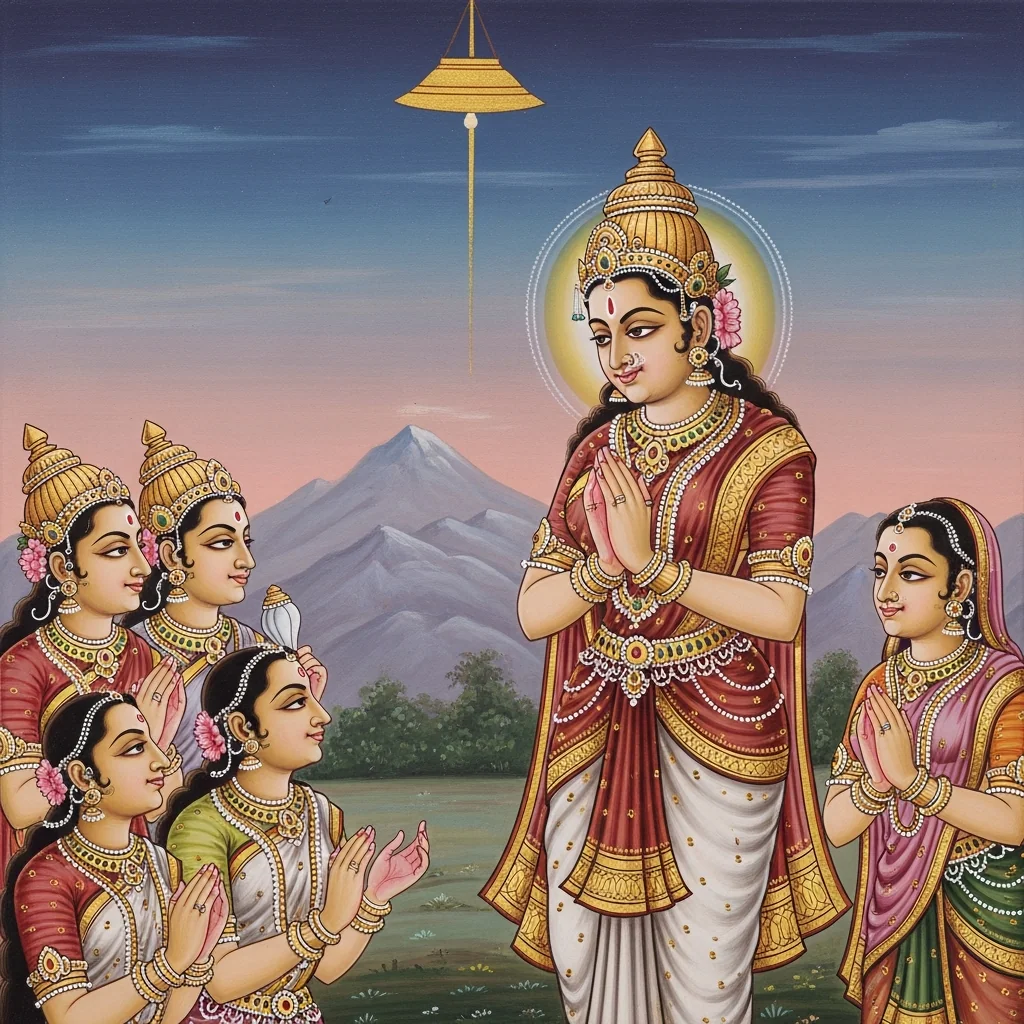
Chapter 58 delivers a tightly ordered tīrtha-māhātmya of Śūlabheda and ends with a phalaśruti. Uttānapāda asks Īśvara about Bhānumatī’s deed and its meaning. Īśvara recounts how she approaches a kuṇḍa, instantly recognizes its sanctity, and responds with proper observance: she summons and honors brāhmaṇas, gives dāna according to rule, and steadies her resolve. She then worships pitṛs and devas, keeps her vows for a prescribed period (a fortnight in Madhu-māsa is mentioned), and on amāvāsyā goes to a mountain region. After ascending the peak, she requests the brāhmaṇas to carry a message of reconciliation to her family and kin, declaring that by her own tapas at Śūlabheda she will relinquish the body and attain the heavenly state. They agree, removing doubt. She sets her garments in order and, with one-pointed mind, casts off her body; celestial women appear, invite her onto a divine vimāna bound for Kailāsa, and she ascends before the onlookers. Mārkaṇḍeya closes by affirming the account’s transmission and proclaiming a strong phalaśruti: devoted reading or hearing—at a tīrtha or even in a temple—frees one from grave, long-accumulated sins, including many social, ritual, and trust-breaking transgressions, all cut off by the power of “Śūlabheda.” Further merit is promised for recitation during śrāddha while brāhmaṇas dine, bringing joy to the pitṛs, and listeners gain auspicious well-being, longevity, and fame.
Shlokas
Verse 1
उत्तानपाद उवाच । अथातो देवदेवेश भानुमत्यकरोच्च किम् । एष मे संशयो देव कथयस्व प्रसादतः
Uttānapāda said: “Now then, O Lord of the gods, what did Bhānumatī do? This is my doubt, O God—tell me, out of grace.”
Verse 2
ईश्वर उवाच । चिन्तयित्वा मुहूर्तं सा गता कुण्डस्य सन्निधौ । दृष्ट्वा कुण्डस्य माहात्म्यं राज्ञी हर्षेण पूरिता
Īśvara said: “After reflecting for a moment, she went to the vicinity of the sacred pond. Seeing the greatness of that kuṇḍa, the queen was filled with joy.”
Verse 3
विप्रान् बहून् समाहूय पूजयामास तत्क्षणात् । दत्त्वा तु विधिवद्दानं ब्राह्मणेभ्यो नृपात्मज
Summoning many brāhmaṇas at once, the king’s child immediately honored them; and, having duly performed dāna according to rule, she gave gifts to the brāhmaṇas.
Verse 4
निश्चयं परमं कृत्वा स्थिता शान्तेन चेतसा । ततः सम्पूज्य विधिवत्पितॄन्देवान्नराधिप
Having formed an unshakable resolve, she remained with a tranquil mind. Then, O ruler of men, she duly worshiped the Pitṛs and the Devas according to proper rite.
Verse 5
क्षपयित्वा पक्षमेकं मधुमासस्य सा स्थिता । अमावास्यां ततो राज्ञी गता पर्वतसन्निधौ
After completing a full fortnight of the month of Madhu, she remained steadfast. Then, on the day of amāvasyā, the new moon, the queen went to the vicinity of the mountain.
Verse 6
नगशृङ्गं समारुह्य कृत्वा मुकुलितौ करौ । विज्ञाप्य ब्राह्मणान् सर्वानिदं वचनमब्रवीत्
Climbing to the mountain’s peak and folding her hands in reverence, she respectfully addressed all the brāhmaṇas and spoke these words.
Verse 7
मम माता पिता भ्राता ये चान्ये सखिबान्धवाः । क्षमापयित्वा सर्वांस्तान्वचनं मम कथ्यताम्
“To my mother, father, brother, and all other friends and kin—having sought forgiveness from them all, let my message be conveyed.”
Verse 8
त्वत्पुत्री शूलभेदे तु तपः कृत्वा स्वशक्तितः । विसृज्य चैव सात्मानं तस्मिंस्तीर्थे दिवं ययौ
“Your daughter, at Śūlabheda, performed tapas to the best of her ability; and, relinquishing her body there at that tīrtha, she went to heaven.”
Verse 9
ब्राह्मणा ऊचुः । संदेशं कथयिष्यामस्त्वयोक्तं शोभनव्रते । मातापितृभ्यां सुश्रोणि मा तेऽभूदत्र संशयः
The brāhmaṇas said: “We shall convey the message you have spoken, O you of auspicious vow. O fair-hipped lady, have no doubt here—we will tell it to your mother and father.”
Verse 10
ततो विसृज्य तांल्लोकान् स्थिता पर्वतमूर्धनि । अर्धोत्तरीयवस्त्रेण गाढं बद्धा पुनःपुनः
Then, renouncing those worldly ties, she stood upon the mountain’s summit, and with her half upper garment she bound herself tightly again and again.
Verse 11
ततश्चिक्षेप सात्मानमेकचित्ता नराधिप । नगार्द्धे पतिता यावत्तावद्दृष्टाः सुराङ्गनाः
Then, O king, with her mind fixed in single-pointedness, she cast herself down. As she fell toward the mountainside, at that very moment celestial maidens were seen.
Verse 12
भोभो वत्से महाभागे भानुमत्यतितापसि । दिव्यं विमानमारुह्य कैलासं प्रति गम्यताम्
“Come, come, dear child—O most fortunate Bhānumatī, great ascetic! Ascend this divine vimāna and go toward Kailāsa.”
Verse 13
ततः सा पश्यतां तेषां जनानां त्रिदिवं गता
Then, before the very eyes of those people, she departed to Tridiva, the heavenly worlds.
Verse 14
मार्कण्डेय उवाच । इति ते कथितः सर्वः शूलभेदस्य विस्तरः । यः श्रुतः शङ्करात्पूर्वमृषिदेवसमागमे
Mārkaṇḍeya said: Thus I have told you in full the detailed account of Śūlabheda, just as it was formerly heard from Śaṅkara in the great assembly of sages and gods.
Verse 15
य इदं पठते भक्त्या तीर्थे देवकुलेऽपि वा । स मुच्यते महापापादपि जन्मशतार्जितात्
Whoever recites this with devotion—whether at a tīrtha or even in a temple—is freed from great sins, even those accumulated over a hundred births.
Verse 16
ब्रह्महा च सुरापी च स्तेयी च गुरुतल्पगः । गोघाती स्त्रीविघाती च देवब्रह्मस्वहारकः
Even a slayer of a brāhmaṇa, a drinker of liquor, a thief, one who violates the guru’s bed; a killer of cows, a killer of women, and one who steals property belonging to gods or brāhmaṇas—
Verse 17
स्वामिद्रोही मित्रघाती तथा विश्वासघातकः । परन्यासापहारी च परनिक्षेपलोपकः
A betrayer of his master, a slayer of a friend, a breaker of trust; one who steals another’s entrusted deposit, and one who embezzles what another has placed in safekeeping—
Verse 18
रसभेदी तुलाभेदी तथा वार्द्धुषिकस्तु यः । यः कन्याविघ्नकर्ता च तथा विक्रयकारकः
One who adulterates goods, one who tampers with weights and measures, and one who practices usury; one who obstructs a maiden’s lawful marriage, and likewise one who sells her—
Verse 19
परभार्या भ्रातृभार्या गौः स्नुषा कन्यका तथा । अभिगामी परद्वेषी तथा धर्मप्रदूषकः
One who approaches another man’s wife, his brother’s wife, a cow, a daughter-in-law, or a maiden; one who bears hatred toward others, and one who corrupts dharma—
Verse 20
मुच्यन्ते सर्वे एवैते शूलभेदप्रभावतः
All these indeed are released (from their sins) by the power of Śūlabheda.
Verse 21
य इदं श्रावयेच्छ्राद्धे विप्राणां भुञ्जतां नृप । मुदं प्रयान्ति संहृष्टाः पितरस्तस्य सर्वशः
O king, whoever has this recited at a śrāddha, while the brāhmaṇas are eating—his Pitṛs rejoice on every side, filled with delight.
Verse 22
यश्चेदं शृणुयाद्भक्त्या पठ्यमानं नरो वशी । स मुक्तः सर्वपापेभ्यः सर्वकल्याणभाग्भवेत्
And the self-controlled man who listens to this being recited with devotion is freed from all sins and becomes a recipient of every auspicious good.
Verse 23
इदं यशस्यमायुष्यमिदं पावनमुत्तमम् । पठतां शृण्वतां नृणामायुःकीर्तिविवर्धनम्
This account bestows fame and long life; it is supremely purifying. For people who recite it or listen to it, it increases lifespan and renown.
Verse 24
इति कथितमिदं ते शूलभेदस्य पुण्यं महिमन हि मनुष्यैः श्रूयते यत्सपापैः । मदनरिपुतटिन्या याम्यकूलस्थितस्य प्रबलदुरितकन्दोच्छेदकुद्दालकल्पम्
Thus has been told to you the holy merit and greatness of Śūlabheda—something that even sin-laden people may hear. Situated on the southern bank of the river of the Foe of Madana (Śiva’s river, the Revā), it is like a mattock that uproots the powerful root-knots of sin.
Verse 58
। अध्याय
End of the chapter (adhyāya).