Adhyaya 57
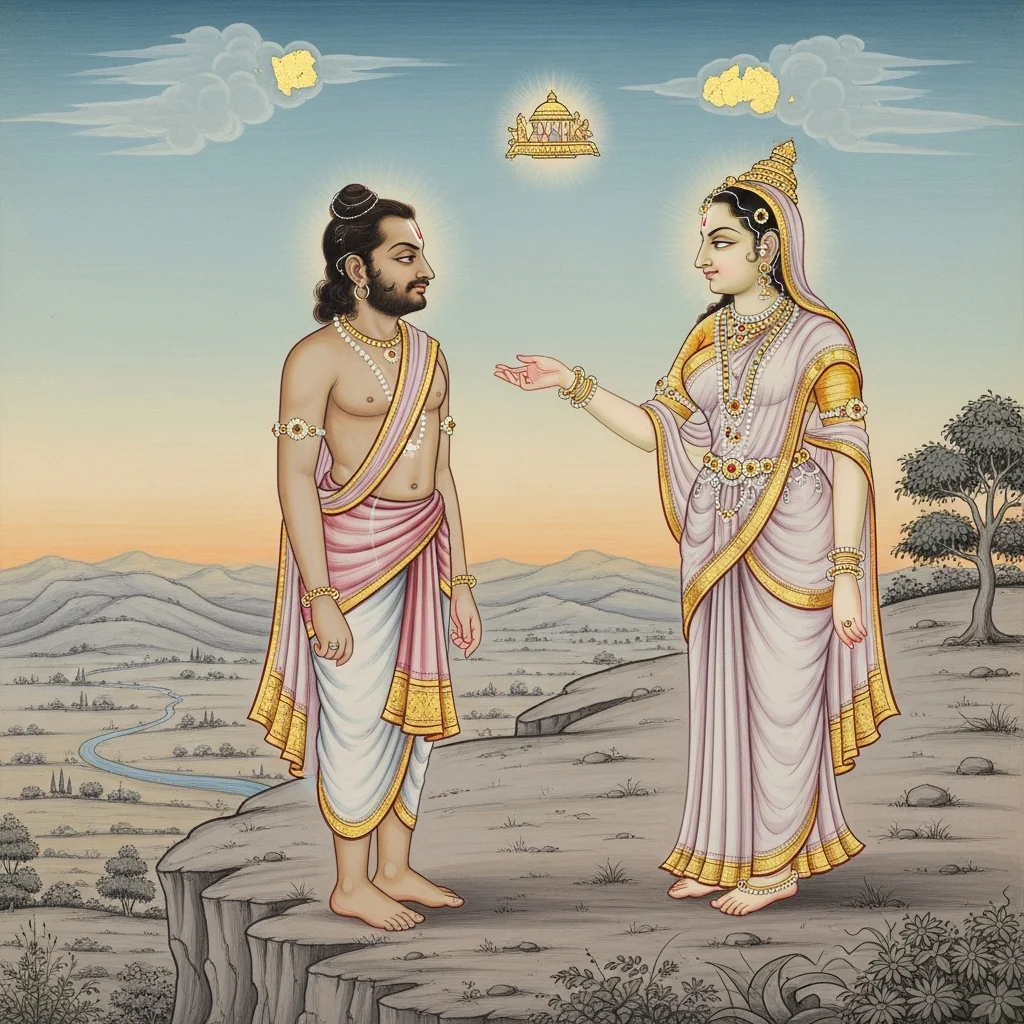
This chapter offers a twofold theological teaching. First, Bhānumatī undertakes a disciplined Śaiva observance on key lunar days: she feeds Brahmins, keeps the upavāsa-niyama (fasting and restraint), bathes in Markaṇḍa’s lake (Markaṇḍasya hrada), and worships Maheśvara—also hailed as Vṛṣabhadhvaja—with pañcāmṛta, fragrances, incense, lamps, offerings, and flowers. She maintains an all-night vigil (kṣapā-jāgaraṇa) with Purāṇic recitation, song, dance, and hymns. The Brahmins then identify the occasion as the Padmaka festival, specifying tithi/nakṣatra/yoga/karana markers and declaring that gifts, oblations, and japa performed there become akṣaya, of unfailing merit. Next, the narrative turns to an ethical dialogue. Bhānumatī meets a Śabara who, with his wife, is preparing to leap from the mountain Bhṛgumūrdhan—not from immediate misery, but from fear of saṃsāra and anxiety that, having gained human birth, he has failed to practice dharma. Bhānumatī counsels that time still remains for dharma and for purification through vows and giving. The Śabara refuses wealth-based support, voicing a scruple about food-debt and impurity—“one who eats another’s food eats that person’s wrongdoing”—and remains resolved. Binding himself with a half-garment, he meditates on Hari and falls; soon after, he and his wife are seen ascending in a divine aerial vehicle, signifying liberation and an exalted destiny.
Shlokas
Verse 1
ईश्वर उवाच । भानुमती द्विजान्भोज्य बुभुजे भुक्तशेषतः । भुक्त्वा सुसुखमास्थाय तदन्नं परिणाम्य च
Īśvara said: “Bhānumatī, having fed the twice-born (brāhmaṇas), ate what remained. After eating, she rested in great comfort, and the food was well digested.”
Verse 2
त्रयोदश्यां ततो गत्वा मदनाख्यतिथौ तदा । मार्कण्डस्य ह्रदे स्नात्वानर्च्य देवं गुहाशयम्
“Then, on the thirteenth lunar day—on the date known as Madana—she went and bathed in Mārkaṇḍa’s lake, and worshipped the God who dwells in the cave.”
Verse 3
कृतोपवासनियमा स्नापयित्वा महेश्वरम् । पञ्चामृतसुगन्धेन धूपदीपनिवेदनैः
Having observed the disciplines of fasting, she bathed Maheśvara with fragrant pañcāmṛta and served Him with incense, lamps, and offerings.
Verse 4
आर्चयद्विविधैः पुष्पैर्नैवेद्यैश्च सुशोभनैः । क्षपाजागरणं कृत्वा श्रुत्वा पौराणिकीं कथाम्
She worshipped with many kinds of flowers and splendid food-offerings. Keeping vigil through the night, she listened to a sacred Purāṇic narrative.
Verse 5
नृत्यगीतैस्तथा स्तोत्रैर्दध्यौ देवं महेश्वरम् । अन्नं विस्तारितं सर्वं देवस्याग्रे यथाविधि
With dance, song, and hymns, he meditated upon Lord Maheśvara; and, according to proper rule, he laid out all the food offerings before the Deity.
Verse 6
चातुर्वर्ण्यसुताः सर्वे भोजिताः सपरिच्छदाः । चतुर्दश्यां दिनं यावत्सम्पूज्य वृषभध्वजम्
All the sons of the four varṇas were fed, together with due provisions; and on the fourteenth lunar day he worshipped the Bull-bannered Lord (Śiva) throughout the day.
Verse 7
शङ्खवादित्रभेरीभिः पटहध्वनिनादितम् । क्षपाजागरणं कृत्वा प्रभूतजनसंकुलम्
With conches, instruments, kettle-drums, and the resounding beat of drums, he kept the night-long vigil amid a great gathering of people.
Verse 8
नृत्यगीतैस्तथा स्तोत्रैः प्रेरिता सा निशा तदा । प्रभाते भोजिता विप्राः पायसैर्मधुसर्पिषा
Thus that night passed on with dance, song, and hymns; and at dawn the brāhmaṇas were fed with payasa, honey, and ghee.
Verse 9
दत्त्वा दानानि विप्रेभ्यः शक्त्या विप्रानुसारतः । अर्चयित्वा महापुष्पैः सुगन्धैर्मदनेन च
Having given gifts to the brāhmaṇas according to one’s capacity and what was due to them, he then worshipped with grand flowers, fragrant offerings, and incense.
Verse 10
विचित्रैः सूक्ष्मवस्त्रैश्च देवः सम्पूज्य वेष्टितः । स्रग्दामलम्बमानैश्च बहुदीपसमुज्ज्वलैः
After being perfectly worshipped, the Deity was adorned and wrapped in fine, variegated garments, with hanging garlands, and made radiant by many lamps.
Verse 11
पक्वान्नैर्विविधैर्भक्ष्यैः सुवृत्तैर्मोदकादिभिः । ततस्ते ब्राह्मणाः सर्वे वेदाध्ययनतत्पराः
With various cooked foods and many kinds of well-prepared edibles—modakas and the like—then all those brāhmaṇas, devoted to Vedic study, were duly honoured.
Verse 12
तत्पर्व कीर्तयांश्चक्रुः पद्मकं नाम नामतः । आदित्यस्य दिनं त्वद्य तिथिः पञ्चदशी तथा
They proclaimed that festival by name as “Padmaka”; and they said: “Today is the day of Āditya (Sunday), and the lunar tithi is the fifteenth as well.”
Verse 13
त्वाष्ट्रमेव च नक्षत्रं संक्रान्तिर्विषुवन्तथा । व्यतीपातस्तथा योगः करणविष्टिरेव च
Moreover, the nakṣatra is Tvāṣṭra; there is also a saṃkrānti and an equinox. There is Vyatīpāta, as well as an auspicious yoga, and the karaṇa is Viṣṭi too.
Verse 14
पद्मकं नाम पर्वैतदयनादिचतुर्गुणम् । अत्र दत्तं हुतं जप्तं सर्वं भवति चाक्षयम्
This festival is called “Padmaka” and yields fourfold results due to factors such as the ayana. Whatever is given in charity here, offered into fire, or repeated as japa—all of it becomes imperishable.
Verse 15
ते द्विजा भानुमत्याथ शूलभेदं गताः सह । ददृशुः शबरं कुण्डे भार्यया सह संस्थितम्
Then those brāhmaṇas, together with Bhānumatī, went to Śūlabheda. There they saw a Śabara standing at the sacred pool, accompanied by his wife.
Verse 16
ऐशानीं स दिशं गत्वा पर्वते भृगुमूर्धनि । पतितुं च समारूढो भार्यया सह पार्थिव
O King, going toward the northeastern quarter, he climbed upon the mountain called Bhṛgumūrdhan, intending to cast himself down, together with his wife.
Verse 17
भानुमत्युवाच । तिष्ठ तिष्ठ महासत्त्व शृणुष्व वचनं मम । किमर्थं त्यजसि प्राणानद्यापि च युवा भवान्
Bhānumatī said: “Stop, stop, O noble one—listen to my words. Why do you abandon your life-breaths, when you are still young even now?”
Verse 18
कः सन्तापः क उद्वेगः किं दुःखं व्याधिरेव च । शिशुः संदृश्यसेऽद्यापि कारणं कथ्यतामिदम्
“What anguish is this, what agitation? What sorrow—or even illness—afflicts you? You still appear like a mere youth; tell me the reason for this.”
Verse 19
शबर उवाच । कारणं नास्ति मे किंचिन्न दुःखं किंचिदेव तु । संसारभयभीतोऽहं नान्या बुद्धिः प्रवर्तते
The Śabara said: “I have no particular cause, nor any specific sorrow. But I am terrified by the fear of saṃsāra; no other resolve arises in me.”
Verse 20
दुःखेन लभ्यते यस्मान्मानुष्यं जन्म भाग्यतः । मानुष्यं जन्म चासाद्य या न धर्मं समाचरेत्
“For human birth is obtained only with hardship, and by good fortune. And one who, having attained a human birth, does not practice dharma…”
Verse 21
स गच्छेन्निरयं घोरमात्मदोषेण सुन्दरि । तस्मात्पतितुमिच्छामि तीर्थेऽस्मिन्पापनाशने
“…such a person goes to a dreadful hell through his own fault, O fair one. Therefore I wish to cast myself down at this tīrtha that destroys sins.”
Verse 22
राज्ञ्युवाच । अद्यापि वर्तते कालो धर्मस्योपार्जने तव । कृतापकृतकर्मा वै व्रतदानैर्विशुध्यति
The queen said: “Even now, the time remains for you to acquire dharma. Indeed, one who has done both wrong and right deeds becomes purified through vows and charitable gifts.”
Verse 23
अहं दास्यामि धान्यं वा वासांसि द्रविणं बहु । नित्यमाचर धर्मं त्वं ध्यायन्नित्यं महेश्वरम्
“I will give you grain, garments, and abundant wealth. You, for your part, practice dharma daily—ever meditating upon Maheśvara.”
Verse 24
शबर उवाच । नैवाहं कामये वित्तं न धान्यं वस्त्रमेव च । यो यस्यैवान्नमश्नाति स तस्याश्नाति किल्बिषम्
The Śabara said: “I do not desire wealth, nor grain, nor even clothing. Whoever eats another’s food, in truth eats that person’s demerit.”
Verse 25
राज्ञ्युवाच । कन्दमूलफलाहारो भ्रमित्वा भैक्ष्यमुत्तमम् । अवगाह्य सुतीर्थानि सर्वपापैः प्रमुच्यते
The queen said: “Living on roots, tubers, and fruits, and wandering to receive excellent alms, one who bathes at these supremely holy fords is released from all sins.”
Verse 26
ततो विमुक्तपापस्तु यत्किंचित्कुरुते शुचिः । कर्मणा तेन पूतस्त्वं सद्गतिं प्राप्स्यसि ध्रुवम्
“Then, freed from sin, whatever act a purified person performs—by that very deed you will be sanctified and will surely attain a good destination.”
Verse 27
शबर उवाच । अन्नमद्य मया त्यक्तं प्राणेभ्योऽपि महत्तरम् । सत्यं न लोपयेद्देवि निश्चितात्र मतिर्मम
The Śabara said: “Today I have renounced food—something dearer even than life-breath. O Goddess, I will not abandon truth; my resolve in this matter is firm.”
Verse 28
प्रसादः क्रियतां देवि क्षमस्वाद्य जनैः सह । अर्धोत्तरीयवस्त्रेण संयम्यात्मानमुद्यतः
“O Goddess, be gracious; forgive me today together with the people. Having restrained himself, and girded with a half upper-cloth, he stood ready.”
Verse 29
भार्यया सहितो व्याधो हरिं ध्यात्वा पपात ह । नगार्धात्पतितो यावद्गतजीवो नराधिप
“The hunter, together with his wife, meditating on Hari, fell. Falling from the mountainside, he lost his life, O king.”
Verse 30
चूर्णीभूतौ हि तौ दृष्ट्वा कुण्डस्योपरि भूमिप । त्रिमुहूर्ते गते काले शबरो भार्यया सह
“Seeing those two crushed to pieces upon the kuṇḍa, O king, when three muhūrtas of time had passed, the Śabara—together with his wife—(… ).”
Verse 31
दिव्यं विमानमारूढो गतश्चानुत्तमां गतिम्
“Mounting a divine vimāna, he went on to the unsurpassed state.”
Verse 57
। अध्याय
“Adhyāya” — chapter colophon marker.