Adhyaya 55
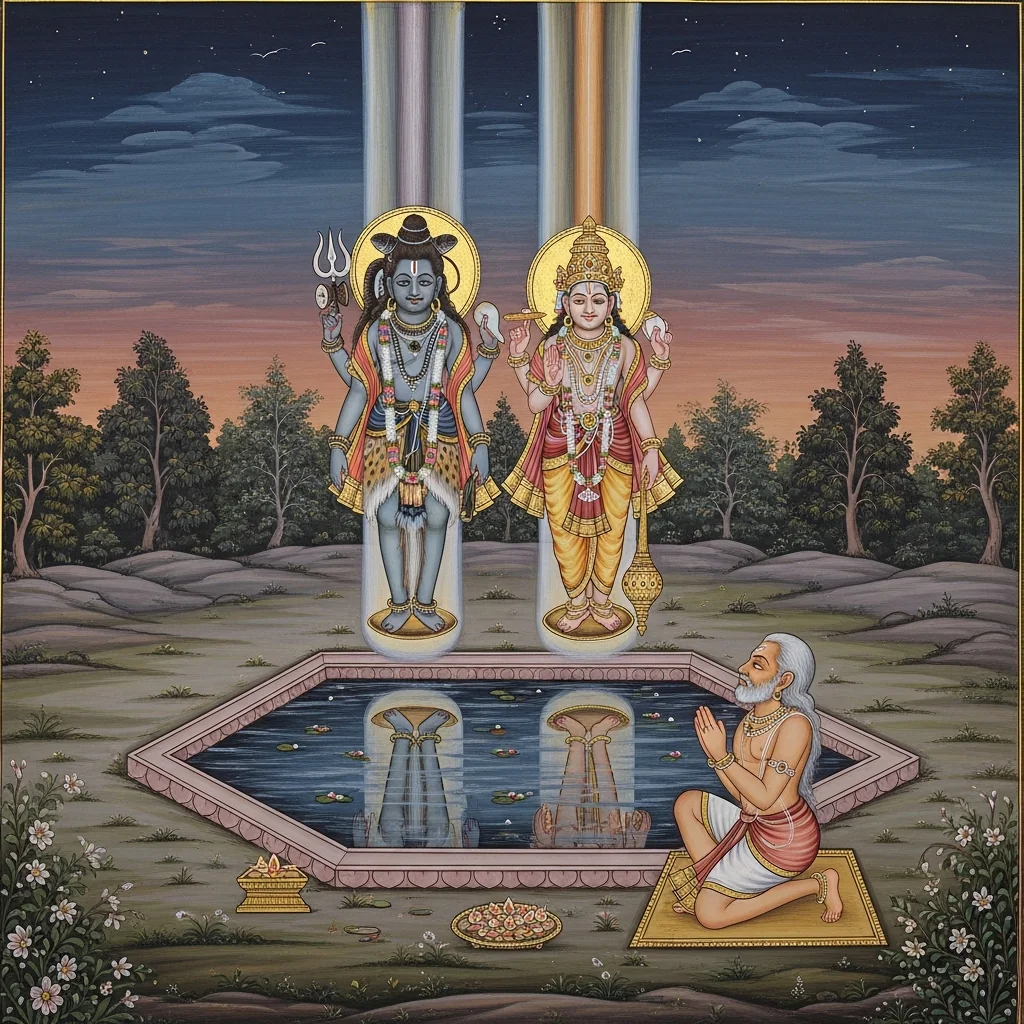
Uttānapāda asks about King Citraseṇa after witnessing the might of a tīrtha. Īśvara relates that Citraseṇa climbed Bhṛgutunga and performed fierce tapas beside a kuṇḍa, meditating on Brahmā, Viṣṇu, and Maheśvara. Rudra and Keśava appear before him, restrain him from premature self-abandonment, and counsel him to return, enjoy rightful prosperity, and rule without hindrance. Citraseṇa rejects royal attachment and instead prays that the divine triad remain there forever, that the place become as meritorious as Gayāśiras, and that he gain leadership among Śiva’s gaṇas. Īśvara grants the boon: the three deities abide at Śūlabheda in partial manifestation through the three times; Citraseṇa becomes the gaṇādhipa named Nandi, functioning like Gaṇeśa and receiving precedence of worship near Śiva. The chapter then defines the tīrtha’s superior merit (surpassing others except Gayā), gives the kuṇḍa-area measures for ritual acts, and proclaims the power of śrāddha and piṇḍa: liberation for ancestors, benefit even for difficult deaths lacking rites, purification of inadvertent sins by mere bathing, and exalted results for renunciation undertaken there. A concluding phalaśruti praises reciting, hearing, writing, and gifting this māhātmya as removing demerit, granting desired ends, and securing residence in Rudra’s realm for as long as the text is preserved.
Shlokas
Verse 1
उत्तानपाद उवाच । माहात्म्यं तीर्थजं दृष्ट्वा चित्रसेनो नरेश्वरः । किं चकार क्व वा वासं किमाहारो बभूव ह
Uttānapāda said: “Having beheld the greatness born of the sacred ford, what did King Citrasena do? Where did he reside, and what food did he subsist upon?”
Verse 2
ईश्वर उवाच । भृगुतुङ्गं समारुह्य ऐशानीं दिशमाश्रितः । तपश्चचार विपुलं कुण्डे तत्र नृपोत्तमः
Īśvara said: “Ascending Bhṛgutuṅga and taking refuge in the northeastern quarter, that best of kings performed abundant austerity there at the sacred pool.”
Verse 3
सर्वान् देवान् हृदि ध्यात्वा ब्रह्मविष्णुमहेश्वरान् । विचिक्षेप यदात्मानं प्रत्यक्षौ रुद्रकेशवौ । करे गृहीत्वा राजानं रुद्रो वचनमब्रवीत्
Meditating within his heart upon all the gods—Brahmā, Viṣṇu, and Maheśvara—when he was about to cast off his own body, Rudra and Keśava appeared before him. Taking the king by the hand, Rudra spoke these words.
Verse 4
ईश्वर उवाच । प्राणत्यागं महाराज मा काले त्वं कृथा वृथा । अद्याप्यसि युवा त्वं वै न युक्तं मरणं तव
Īśvara said: “O great king, do not abandon your life before its time—do not do so in vain. Even now you are young; death is not fitting for you.”
Verse 5
स्वस्थानं गच्छ शीघ्रं त्वं भुक्त्वा भोगान्यथेप्सितान् । कुरु निष्कण्टकं राज्यं नाके शक्र इवापरः
“Return swiftly to your own abode. Enjoy the pleasures you have rightly desired, and establish a kingdom free of thorns (free of troubles and enemies), like another Śakra (Indra) in heaven.”
Verse 6
चित्रसेन उवाच । न राज्यं कामये देव न पुत्रान्न च बान्धवान् । न भार्यां न च कोशं च न गजान्न तुरंगमान्
Citrasena said: “O Lord, I do not desire a kingdom; nor sons, nor kinsmen; neither wife nor treasury; neither elephants nor horses.”
Verse 7
मुञ्च मुञ्च महादेव मा विघ्नः क्रियतां मम । स्वर्गप्राप्तिर्ममाद्यैव त्वत्प्रसादान्महेश्वर
“Release me, release me, O Mahādeva—let no obstacle be made for me. Let my attainment of heaven be today itself, O Maheśvara, by your grace.”
Verse 8
ईश्वर उवाच । यस्याग्रतो भवेद्ब्रह्मा विष्णुः शम्भुस्तथैव च । स्वर्गेण तस्य किं कार्यं स गतः किं करिष्यति
Īśvara said: “For one before whom Brahmā, Viṣṇu, and Śambhu are present—what need has he of heaven? Even if he were to go there, what would he truly accomplish?”
Verse 9
तुष्टा वयं त्रयो देवा वृणीष्व वरमुत्तमम् । यथेप्सितं महाराज सत्यमेतदसंशयम्
“We three gods are pleased. Choose the highest boon. Whatever you desire, O great king—this is true, without doubt.”
Verse 10
चित्रसेन उवाच । यदि तुष्टास्त्रयो देवा ब्रह्मविष्णुमहेश्वराः । अद्यप्रभृति युष्माभिः स्थातव्यमिह सर्वदा
Citrasena said: “If the three Gods—Brahmā, Viṣṇu, and Maheśvara—are indeed pleased, then from this very day onward you must dwell here always.”
Verse 11
गयाशिरो यथा पुण्यं कृतं युष्माभिरेव च । तथैवेदं प्रकर्तव्यं शूलभेदं च पावनम्
“Just as the holy Gayāśiras was made a place of merit by you yourselves, so too should this purifying place—Śūlabheda—be established as a sacred tīrtha.”
Verse 12
यत्रयत्र स्थिता यूयं तत्रतत्र वसाम्यहम् । गणानां चैव सर्वेषामाधिपत्यमथास्तु मे
“Wherever you abide, there I too shall dwell; and may lordship over all the Gaṇas be granted to me.”
Verse 13
ईश्वर उवाच । अद्यप्रभृति तिष्ठामः शूलभेदे नरेश्वर । त्रिकालां हि त्रयो देवाः कलांशेन वसामहे
Īśvara said: “From this day onward, O lord of men, we shall abide at Śūlabheda. Truly, the three Gods dwell here through a portion of their divine power in all three times.”
Verse 14
नन्दिसंज्ञो गणाधीशो भविष्यति भवान्ध्रुवम् । मत्समीपे तु भवत आदौ पूजा भविष्यति
“You shall surely become the Gaṇa-lord named Nandi. And in my presence, your worship shall be performed first.”
Verse 15
प्रक्षिप्य तानि चास्थीनि यत्र दीर्घतपा ययौ । सकुटुम्बो विमानस्थः स्वर्गतस्त्वं तथा कुरु
“Cast those bones into the place where Dīrghatapā went; then you too—together with your family—mounted in a celestial car, shall attain heaven. Do so accordingly.”
Verse 16
एवं देवा वरं दत्त्वा चित्रसेनाय पार्थिव । कुण्डमूर्धनि याम्यायां त्रयो देवास्तदा स्थिताः
Thus, O king, the Gods granted a boon to Citrasena; and then the three deities took their station at the head of the sacred pool, on its southern side.
Verse 17
परस्परं वदन्त्येवं पुण्यतीर्थमिदं परम् । यथा हि गयाशिरः पुण्यं पूर्वमेव पठ्यते । तथा रेवातटे पुण्यं शूलभेदं न संशयः
Speaking among themselves, they declared: “This is a supreme tīrtha, a most holy ford. Just as Gayāśiras is from of old renowned as meritorious, so too on the bank of the Revā, Śūlabheda is meritorious—there is no doubt.”
Verse 18
ईश्वर उवाच । इदं तीर्थं तथा पुण्यं यथा पुण्यं गयाशिरः । सकृत्पिण्डोदकेनैव नरो निर्मलतां व्रजेत्
Īśvara said: “This tīrtha is as meritorious as the holy Gayāśiras. By offering piṇḍa and water even once, a man attains purity.”
Verse 19
एकं गयाशिरो मुक्त्वा सर्वतीर्थानि भूपते । शूलभेदस्य तीर्थस्य कलां नार्हन्ति षोडशीम्
“O king, leaving aside Gayāśiras alone, all other tīrthas do not equal even a sixteenth part of the merit of the Śūlabheda tīrtha.”
Verse 20
कुण्डमुदीच्यां याम्यायां दशहस्तप्रमाणतः । रौद्रवारुणकाष्ठायां प्रमाणं चैकविंशति
The sacred pool (kuṇḍa) measures ten cubits to the north and ten cubits to the south; and in the directions of Rudra and Varuṇa its measure is declared to be twenty-one cubits.
Verse 21
एतत्प्रमाणं तत्तीर्थं पिण्डदानादिकर्मसु । नाधर्मनिरता दातुं लभन्ते दानमत्र हि
Such is the measure of that tīrtha for rites like offering piṇḍas and other ancestral acts. For those devoted to adharma do not obtain here the fruit of giving; indeed, in this place charity yields no true merit for them.
Verse 22
विष्णुस्तु पितृरूपेण ब्रह्मरूपी पितामहः । प्रपितामहो रुद्रोऽभूदेवं त्रिपुरुषाः स्थिताः
Viṣṇu stands in the form of the Father; Brahmā as the Grandfather; and Rudra becomes the Great-grandfather—thus are the three ancestral persons established.
Verse 23
कदा पश्यति तीर्थं वै कदा नस्तारयिष्यति । इति प्रतीक्षां कुर्वन्ति पुत्राणां सततं नृप । शूलभेदे नरः स्नात्वा दृष्ट्वा शूलधरं सकृत्
“When will he behold the sacred ford—when will he carry us across to deliverance?” Thus, O King, do the ancestors ever wait upon their sons. But at Śūlabheda, once a man has bathed and even once beheld the Lord who bears the trident, liberation is assured.
Verse 24
नापुत्रो नाधनो रोगी सप्तजन्मसु जायते । एकविंशतिं पितुः पक्षे मातुश्वैवेकविंशतिम्
For seven births he is not born sonless, nor poor, nor diseased. He delivers twenty-one generations on the father’s side, and likewise twenty-one on the mother’s side.
Verse 25
भार्यापक्षे दशैवेह कुलान्येतानि तारयेत् । शूलभेदवने राजञ्छाकमूलफलैरपि
And on the wife’s side he delivers ten families here. O King, in the forest of Śūlabheda—even with mere greens, roots, and fruits, when offered with devotion—this merit is attained.
Verse 26
एकस्मिन्भोजिते विप्रे कोटीर्भवति भोजिता । पञ्चस्थानेषु यः श्राद्धं कुरुते भक्तिमान्नरः
If even one brāhmaṇa is fed, it is as though a crore have been fed. The devoted man who performs śrāddha in the five sacred places gains such multiplied merit.
Verse 27
कुलानि प्रेतभूतानि सर्वाण्यपि हि तारयेत् । द्विजदेवप्रसादेन पितॄणां च प्रसादतः
He delivers even all families that have fallen into the state of preta-spirits. By the grace of the brāhmaṇas—‘gods on earth’—and by the satisfaction of the Pitṛs, this is accomplished.
Verse 28
श्राद्धदो निवसेत्तत्र यत्र देवो महेश्वरः । स्युरात्मघातिनो ये च गोब्राह्मणहनाश्च ये
Let the performer of śrāddha dwell there where the god Maheśvara abides. There too are found those who have slain themselves, and those who have killed cows and brāhmaṇas—grievous sinners.
Verse 29
दंष्ट्रिभिर्जलपाते च विद्युत्पातेषु ये मृताः । न येषामग्निसंस्कारो नाशौचं नोदकक्रिया
Those who died by fanged creatures, or by falling into water, or by lightning-strikes—those for whom there was no funeral rite by fire, no period of impurity observed, and no water-oblation performed—are also included.
Verse 30
तत्र तीर्थे तु यस्तेषां श्राद्धं कुर्वीत भक्तितः । मोक्षावाप्तिर्भवेत्तेषां युगमेकं न संशयः
Whoever, with devotion, performs the śrāddha rites for them at that sacred tīrtha—there is no doubt that for them liberation (mokṣa) is attained within a single yuga.
Verse 31
अज्ञानाद्यत्कृतं पापं बालभावाच्च यत्कृतम् । तत्सर्वं नाशयेत्पापं स्नानमात्रेण भूपते
O King, whatever sin was committed out of ignorance, and whatever was done due to childish immaturity—mere bathing there destroys all of that sin.
Verse 32
रजकेन यथा धौतं वस्त्रं भवति निर्मलम् । तथा पापोऽपि तत्तीर्थे स्नातो भवति निर्मलः
Just as a garment washed by a washerman becomes spotless, so too—even a sinner—becomes pure after bathing at that tīrtha.
Verse 33
संन्यासं कुरुते योऽत्र तीर्थे विधिसमन्वितम् । ध्यायन्नित्यं महादेवं स गच्छेत्परमं पदम्
Whoever, at this tīrtha, undertakes saṃnyāsa in accordance with proper rule and ever meditates on Mahādeva—he attains the supreme state.
Verse 34
क्रीडित्वा स यथाकामं स्वेच्छया शिवमन्दिरे । वेदवेदाङ्गतत्त्वज्ञो जायतेऽसौ शुभे कुले
After freely delighting as he wishes in Śiva’s temple, he is born in an auspicious family, becoming a knower of the truth of the Vedas and the Vedāṅgas.
Verse 35
रूपवान्सुभगश्चैव सर्वव्याधिविवर्जितः । राजा वा राजपुत्रो वाचारसमन्वितः
He becomes handsome and fortunate, free from all diseases—either a king or a prince—endowed with noble conduct.
Verse 36
एतत्ते कथितं राजंस्तीर्थस्य फलमुत्तमम् । यच्छ्रुत्वा मानवो नित्यं मुच्यते सर्वकिल्बिषैः
O King, I have thus told you the unsurpassed fruit of this tīrtha; hearing it, a person is continually freed from all sins.
Verse 37
य इदं श्रावयेन्नित्यमाख्यानं द्विजपुंगवान् । श्राद्धे देवकुले वापि पठेत्पर्वणि पर्वणि
That foremost Brāhmaṇa who regularly causes this sacred account to be heard, and who recites it at śrāddha rites or in a temple, at every festival occasion—
Verse 38
गीर्वाणास्तस्य तुष्यन्ति मनुष्याः पितृभिः सह । पठतां शृण्वतां चैव नश्यते सर्वपातकम्
The devas are pleased with him, and people together with their ancestors as well; for those who recite and those who listen, every sin is destroyed.
Verse 39
लिखित्वा तीर्थमाहात्म्यं ब्राह्मणेभ्यो ददाति यः । जातिस्मरत्वं लभते प्राप्नोत्यभिमतं फलम्
Whoever writes down this tīrtha-māhātmya and gives it to Brāhmaṇas attains remembrance of past births and obtains the desired fruit.
Verse 40
रुद्रलोके वसेत्तावद्यावदक्षरमन्वितम्
He dwells in Rudra’s world for exactly as long as the merit of that imperishable sacred syllable remains with him.
Verse 55
। अध्याय
“Chapter” — a scribal/section marker indicating the chapter boundary.