Adhyaya 52
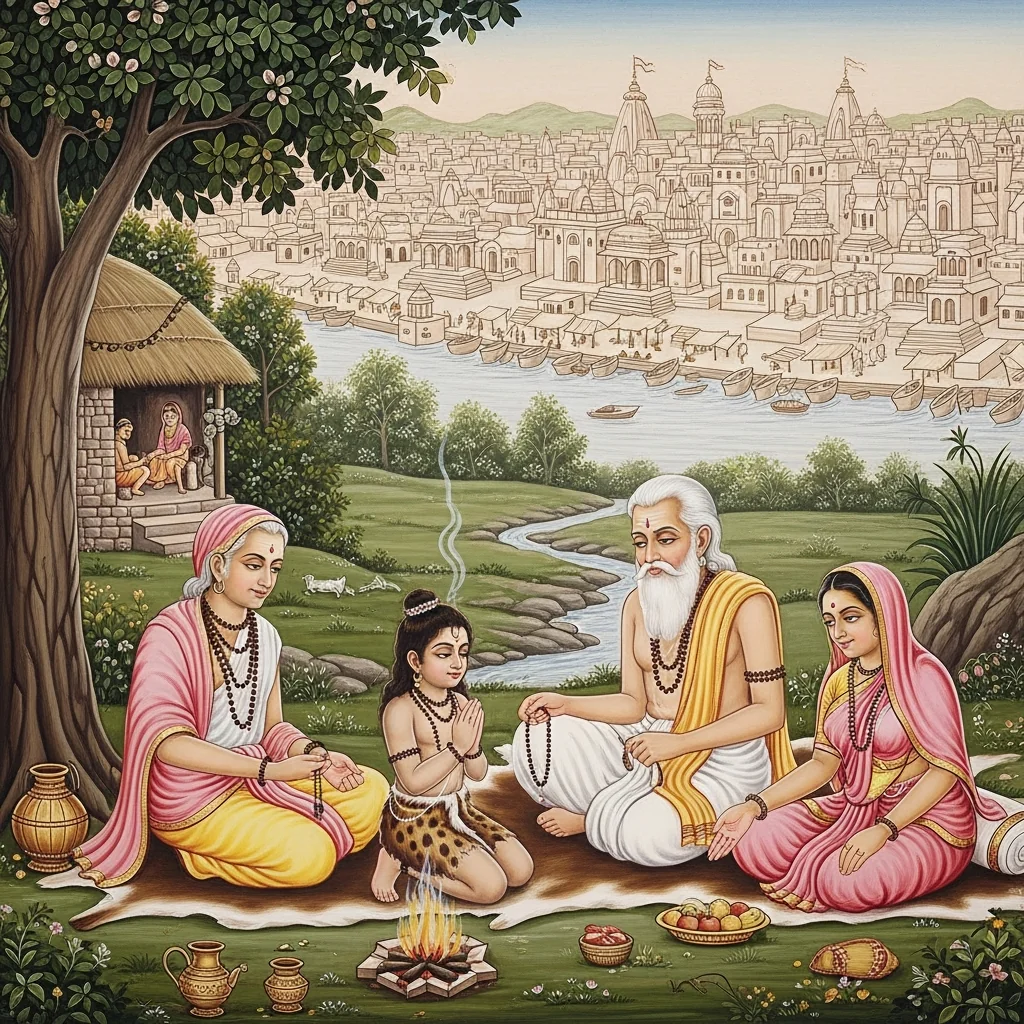
Chapter 52 begins with Īśvara announcing an earlier account of a great ascetic who, together with his household, attained heaven; King Uttānapāda requests to hear that narrative in full. The discourse then turns to Kāśī, portraying King Citrasena’s Vārāṇasī as prosperous—resounding with Vedic recitation, bustling with commerce, and rich in temples and āśramas. North of the city, within Mandāravana, lies a famed hermitage where the Brahmin ascetic Dīrghatapā dwells, renowned for intense tapas. Ascetic life is shown as compatible with family order: he lives with wife, son, and daughter-in-law, attended by five sons. The youngest, Ṛkṣaśṛṅga, is Veda-trained, celibate, virtuous, yogic, and austere in diet. A distinctive motif appears—he moves in deer-form and mingles with deer herds, yet returns daily to venerate his parents, embodying disciplined filial devotion. The excerpt ends with a decisive turn: by fate (daiva-yoga) Ṛkṣaśṛṅga dies, setting the stage for reflection on destiny, merit, and the afterlife course of ascetic households.
Shlokas
Verse 1
ईश्वर उवाच । अन्यदाख्यानकं वक्ष्ये पुरा वृत्तं नराधिप । सकुटुम्बो गतः स्वर्गं मुनिर्यत्र महातपाः
Īśvara said: O King, I shall relate another ancient account. It tells of that great ascetic sage who, together with his family, attained heaven at that sacred place.
Verse 2
उत्तानपाद उवाच । कथं नाकं गतो विप्रः सकुटुम्बो महानृषिः । कौतुकं परमं देव कथयस्व मम प्रभो
Uttānapāda said: O Deva, how did that great brāhmaṇa-sage, together with his family, ascend to heaven? This is my highest wonder—tell me, O Lord.
Verse 3
ईश्वर उवाच । चित्रसेन इति ख्यातः काशीराजः पुराभवत् । शूरो दाता सुधर्मात्मा सर्वकामसमृद्धिमान्
Īśvara said: Long ago there was a king of Kāśī renowned as Citrasena—valiant, generous, devoted to righteous conduct, and endowed with the fulfillment of every worthy desire.
Verse 4
सा पुरी जनसंकीर्णा नानारत्नोपशोभिता । वाराणसीति विख्याता गङ्गातीरमुपाश्रिता
That city was thronged with people and adorned with many kinds of jewels. It was famed as Vārāṇasī and rested upon the bank of the sacred Gaṅgā.
Verse 5
शरच्चन्द्रप्रतीकाशा विद्वज्जनविभूषिता । इन्द्रयष्टिसमाकीर्णा गोपगोकुलसंवृता
She shone like the autumn moon, adorned by assemblies of learned people, filled with lofty Indra-pillars, and surrounded by cowherds and herds of cattle.
Verse 6
बहुध्वजसमाकीर्णा वेदध्वनिनिनादिता । वणिग्जनैर्बहुविधैः क्रयविक्रयशालिनी
It was crowded with many banners and resounded with the reverberation of Vedic recitation; it flourished with trade—filled with merchants of many kinds engaged in buying and selling.
Verse 7
यन्त्रादानैः प्रतोलीभिरुच्चैश्चान्यैः सुशोभिता । देवतायतनैर्दिव्यैराश्रमैर्गहनैर्युता
It was splendid with lofty gateways and other impressive structures, and it was endowed with divine temples of the gods and secluded hermitages.
Verse 8
नानापुष्पफलैर्रम्या कदलीखण्डमण्डिता । पनसैर्बकुलैस्तालैरशोकैराम्रकैस्तथा
Delightful with many flowers and fruits, it was ornamented with groves of banana trees, with jackfruit and bakula, with palms, aśoka, and mango trees as well.
Verse 9
राजवृक्षकपित्थैश्च दाडिमैरुपशोभिता । वेदाध्ययननिर्घोषैः पवित्रीकृतमङ्गला
It was further adorned with rājavṛkṣa, kapittha, and pomegranate trees; and its auspiciousness was sanctified by the loud, unceasing resonance of Vedic study.
Verse 10
तस्या उत्तरदिग्भागे आश्रमोऽभूत्सुशोभनः । तन्मन्दारवनं नाम त्रिषु लोकेषु विश्रुतम्
In its northern quarter there stood a most beautiful hermitage. That forest was called Mandāravana, renowned throughout the three worlds.
Verse 11
बहुमन्दारसंयुक्तं तेन मन्दारकं विदुः । विप्रो दीर्घतपा नाम सर्वदा तत्र तिष्ठति
Because it abounds in mandāra trees, it is known as Mandāraka. There a brāhmaṇa named Dīrghatapas always resides.
Verse 12
तपस्तपति सोऽत्यर्थं तेन दीर्घतपाः स्मृतः । स तिष्ठति सपत्नीकः ससुतः सस्नुषस्तथा
He performs austerities (tapas) with great intensity; therefore he is remembered as “Dīrghatapas.” He lives there with his wife, his sons, and likewise his daughters-in-law.
Verse 13
शुश्रूषन्ति सदा तस्य पुत्राः पञ्च प्रयत्नतः । तस्य पुत्रः कनीयांस्तु ऋक्षशृङ्गो महातपाः
His five sons constantly serve him with diligent effort. Among his sons, the youngest was Ṛkṣaśṛṅga, a great ascetic.
Verse 14
वेदाध्ययनसम्पन्नो ब्रह्मचारी गुणान्वितः । योगाभ्यासरतो नित्यं कन्दमूलफलाशनः
He was accomplished in Vedic study, a disciplined brahmacārin endowed with virtues—ever devoted to yogic practice, living on roots, tubers, and fruits.
Verse 15
तिष्ठते मृगरूपेण मृगयूथचरस्तदा । दिनान्ते च दिनान्ते च मातापित्रोः समीपगः
He stayed in the form of a deer, moving then among herds of deer. At each day’s end, he would come near his mother and father.
Verse 16
अभिवादयते नित्यं भक्तिमान्मुनिपुत्रकः । पुनर्गच्छति तत्रैव कानने गिरिगह्वरे
That devoted sage’s son would daily offer salutations, and then return again to that very forest, to the mountain ravines.
Verse 17
क्रीडन्बालमृगैः सार्द्धं प्रत्यहं स मुनेः सुतः । कदाचिद्दैवयोगेन ऋक्षशृङ्गो ममार सः
Playing every day with young deer, that sage’s son—Ṛkṣaśṛṅga—once, by the turn of fate, met his death.
Verse 52
। अध्याय
End of the chapter (adhyāya marker).