Adhyaya 50
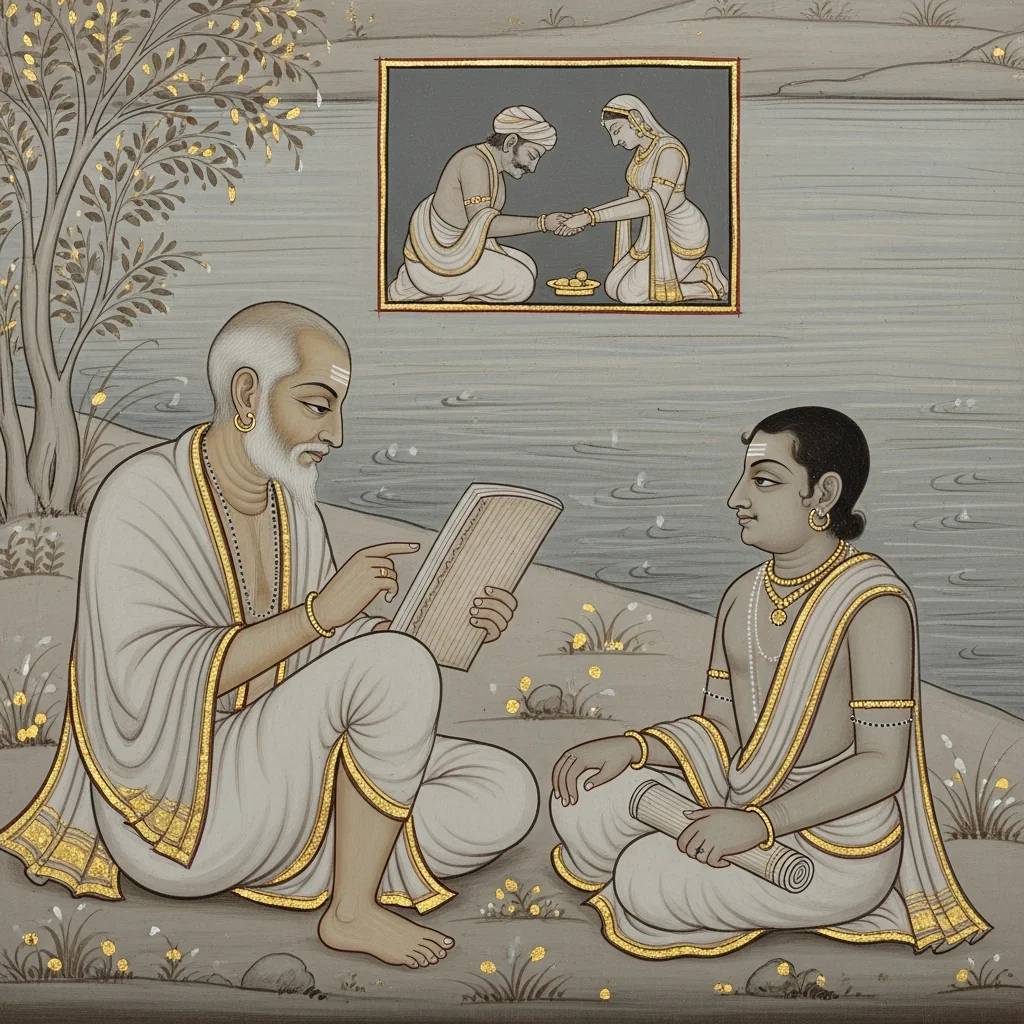
This chapter is cast as a theological dialogue between Uttānapāda and Īśvara. It first defines who is fit to receive honor and dāna, arguing through analogies that a Brahmin who does not study the Veda (anadhīyāna/anṛca) bears only the name, and offerings made to such a person yield no ritual fruit. A list of moral, ritual, and social disqualifications follows, concluding that gifts given to improper recipients become ineffective. The teaching then turns to the procedure of tīrtha-śrāddha: maintaining purity after the household śrāddha, observing boundary rules, traveling to a specified tīrtha, bathing, and performing śrāddha at multiple stations with prescribed offerings, including piṇḍa with payasa, honey, and ghee. The phala is set out—long satisfaction of the ancestors and graded heavenly results for particular gifts (footwear, bed, horse, umbrella, a house with grains, tiladhenu, water and food), with strong emphasis on annadāna. Finally, it instructs on kanyādāna as the highest of gifts: the proper recipient is of good lineage, virtuous, and learned, while monetizing marriage arrangements is condemned. Dāna is also classified as unsolicited, invited, or begged-for, and the chapter ends with warnings against giving to the incapable and against improper acceptance of gifts.
Shlokas
Verse 1
उत्तानपाद उवाच । द्विजाश्च कीदृशाः पूज्या अपूज्याः कीदृशाः स्मृताः । श्राद्धे वैवाहिके कार्ये दाने चैव विशेषतः
Uttānapāda said: “What kind of twice-born are deemed worthy of honor, and what kind are remembered as unworthy—especially in the śrāddha rites for the ancestors, in marriage ceremonies, and most particularly when giving dāna?”
Verse 2
यदि श्रद्धा भवेद्दैवयोगाच्छ्राद्धादिके विधौ । एतदाख्याहि मे देव कस्य दानं न दीयते
“If, by a providential turn, faith arises to perform the śrāddha and similar rites in due manner, then tell me, O Lord: to whom should a gift not be given?”
Verse 3
ईश्वर उवाच । यथा काष्ठमयो हस्ती यथा चर्ममयो मृगः । ब्राह्मणश्चानधीयानस्त्रयस्ते नामधारकाः
The Lord said: “As an elephant made of wood, and as a deer made of hide, so too is the Brahmin who does not study the Veda—these three are merely bearers of a name.”
Verse 4
यथा षण्ढोऽफलः स्त्रीषु यथा गौर्गवि चाफला । यथा चाज्ञेऽफलं दानं तथा विप्रोऽनृचोऽफलः
“As a sterile man is fruitless with women, as a cow is fruitless with another cow, and as a gift to an ignorant person yields no fruit—so a ‘Brahmin’ without Vedic recitation is fruitless as a recipient.”
Verse 5
यथाऽनृणे बीजमुप्त्वा वप्ता न लभते फलम् । तथानृचे हविर्दत्त्वा न दाता लभते फलम्
“Just as a sower does not obtain fruit by sowing seed in barren ground, so too, after giving an oblation (havis) to one who is without Vedic verses, the giver does not obtain the fruit.”
Verse 6
रोगी हीनातिरिक्ताङ्गः काणः पौनर्भवस्तथा । अवकीर्णी श्यावदन्तः सर्वाशी वृषलीपतिः
“One who is diseased; one with missing or extra limbs; one who is one-eyed; one who has remarried in a censured manner; one who has violated brahmacarya; one with blackened teeth; one who eats everything indiscriminately; and one whose spouse is a śūdra-woman—these are counted among the unfit.”
Verse 7
मित्रध्रुक्पिशुनः सोमविक्रयी परनिन्दकः । पितृमातृगुरुत्यागी नित्यं ब्राह्मणनिन्दकः
“A betrayer of friends; a slanderer; a seller of soma; one who disparages others; one who abandons father, mother, or teacher; and one who constantly reviles Brahmins—such persons are unfit.”
Verse 8
शूद्रान्नं मन्त्रसंयुक्तं यो विप्रो भक्षयेन्नृप । सोऽस्पृश्यः कर्मचाण्डालः स्पृष्ट्वा स्नानं समाचरेत्
O King, if a Brahmin eats food belonging to a śūdra, even when sanctified with mantras, he becomes untouchable— a “cāṇḍāla by conduct”; and whoever touches him should perform a purificatory bath.
Verse 9
कुनखी वृषली स्तेयी वार्द्धुष्यः कुण्डगोलकौ । महादानरतो यश्च यश्चात्महनने रतः
One with deformed nails; a vṛṣalī (a woman of degraded conduct in this context); a thief; a usurer; a kuṇḍa and a golaka (persons of irregular birth status); one devoted to ostentatious “great gifts”; and one intent on self-destruction—these too are counted among the unfit.
Verse 10
भृतकाध्यापकः क्लीबः कन्यादूष्यभिशस्तकः । एते विप्राः सदा त्याज्याः परिभाव्य प्रयत्नतः
A Brāhmaṇa who teaches for wages, a kḷība (impotent and thus unfit for prescribed duties), and one accused of corrupting a maiden—such “vipras” should always be avoided, after careful consideration and due diligence.
Verse 11
प्रतिग्रहं गृहीत्वा तु वाणिज्यं यस्तु कारयेत् । तस्य दानं न दातव्यं वृथा भवति तस्य तत्
But one who, after accepting gifts (as a priestly recipient), engages in trade—no charity should be given to him; whatever is given to him becomes fruitless.
Verse 12
श्रुताध्ययनसम्पन्ना ये द्विजा वृत्ततत्पराः । तेषां यद्दीयते दानं सर्वमक्षयतां व्रजेत्
Those twice-born who are endowed with sacred learning and study, and who are devoted to righteous conduct—whatever charity is given to them, all of it attains imperishable, unfailing merit.
Verse 13
दरिद्रान्भर भूपाल मा समृद्धान् कदाचन । व्याधितस्यौषधं पथ्यं नीरुजस्य किमौषधैः
Support the poor, O king—never merely the prosperous. Medicine and wholesome regimen are for the sick; what need has the healthy for medicines?
Verse 14
उत्तानपाद उवाच । कीदृशोऽथ विधिस्तत्र तीर्थश्राद्धस्य का क्रिया । दानं च दीयते यद्वत्तन्ममाख्याहि शङ्कर
Uttānapāda said: “What, then, is the proper procedure there? What is the rite for performing śrāddha at a sacred ford? And how exactly should gifts be given? Tell me that, O Śaṅkara.”
Verse 15
ईश्वर उवाच । श्राद्धं कृत्वा गृहे भक्त्या शुचिश्चापि जितेन्द्रियः । गुरुं प्रदक्षिणीकृत्य भोज्य सीमान्तके ततः
Īśvara said: “Having performed śrāddha at home with devotion—being pure and self-controlled—one should circumambulate one’s teacher, and then feed (the invited Brāhmaṇas) at the boundary (of the settlement).”
Verse 16
वाग्यतः प्रव्रजेत्तावद्यावत्सीमां न लङ्घयेत् । शूलभेदं ततो गत्वा स्नानं कुर्याद्यथाविधि
Maintaining silence, one should proceed without crossing the boundary. Then, going to Śūlabheda, one should bathe according to the prescribed rite.
Verse 17
पञ्चस्थानेषु च श्राद्धं हव्यकव्यादिभिः क्रमात् । पिण्डदानं च यः कुर्यात्पायसैर्मधुसर्पिषा
And in five places, one should perform śrāddha in due sequence with havya and kavya offerings and the rest; and whoever offers piṇḍas made with rice-milk (pāyasa), honey, and ghee—
Verse 18
पितरस्तस्य तृप्यन्ति द्वादशाब्दानि पञ्च च । अक्षतैर्बदरैर्बिल्वैर्गुदमधुसर्पिषा
His ancestors are satisfied for twelve years and five more, when offerings are made with unbroken grains, jujube (badara) fruits, bilva fruits, jaggery (guda), honey, and ghee.
Verse 19
सापि तत्फलमाप्नोति तीर्थेऽस्मिन्नात्र संशयः । उपानहौ च यो दद्याद्ब्राह्मणेभ्यः प्रयत्नतः
She too attains that very fruit at this sacred ford—of this there is no doubt. And whoever, with care, gives footwear to Brāhmaṇas—
Verse 20
सोऽपि स्वर्गमवाप्नोति हयारूढो न संशयः । शय्यामश्वं च यो दद्याच्छत्त्रिकां वा विशेषतः
He too attains heaven—mounted upon a horse, without doubt—especially the one who donates a bed, a horse, or in particular a parasol.
Verse 21
गच्छेद्विमानमारूढः सोऽप्सरोवृन्दवेष्टितः । उत्तमं यो गृहं दद्यात्सप्तधान्यसमन्वितम्
He departs mounted in a celestial chariot, surrounded by hosts of Apsarases—he who donates an excellent house furnished with the seven grains.
Verse 22
स्वेच्छया मे वसेल्लोके काञ्चने भवने हि सः । तिलधेनुं च यो दद्यात्सवत्सां वस्त्रसंप्लुताम्
He indeed dwells in my world at will, in a golden mansion—he who donates a ‘sesame-cow’ (tila-dhenu) together with her calf, well adorned and covered with cloth.
Verse 23
नाकपृष्ठे वसेत्तावद्यावदाभूतसम्प्लवम् । गृहे वा यदि वारण्ये तीर्थवर्त्मनि वा नृप
He dwells upon heaven’s heights so long as the cosmic dissolution does not come—whether he abides at home, in the forest, or upon the pilgrim-road to the tīrthas, O king.
Verse 24
तोयमन्नं च यो दद्याद्यमलोकं स नेक्षते । सर्वदानानि दीयन्ते तेषां फलमवाप्यते
Whoever gives water and food does not behold Yama’s realm. When all forms of charity are bestowed, their respective fruits are attained.
Verse 25
उदकं चात्र दानं च दद्यादभयमेव च । अन्नदानात्परं दानं न भूतं न भविष्यति
Here one should give water, gifts, and indeed fearlessness (abhaya) as well. No charity greater than the gift of food has existed, nor will it ever exist.
Verse 26
कन्यादानं तु यः कुर्याद्वृषं वा यः समुत्सृजेत् । तस्य वासो भवेत्तत्र यत्राहमिति नान्यथा
But whoever performs kanyā-dāna (the sacred gift of a maiden in marriage), or whoever releases a bull (vṛṣotsarga), for him there is dwelling precisely where I am—thus it is, and not otherwise.
Verse 27
उत्तानपाद उवाच । कन्यादानं कथं स्वामिन् कर्तव्यं धार्मिकैः सदा । परिग्रहो यथा पोष्यः कन्योद्वाहस्तथैव च
Uttānapāda said: “O Lord, how should the righteous always perform kanyā-dāna? How should the groom be accepted and maintained, and likewise how should the maiden’s marriage be conducted?”
Verse 28
अन्यत्पृच्छामि देवेश कस्य कन्या न दीयते । दातव्यं कुत्र तद्देव कस्मै दत्तमथाक्षयम्
I ask something further, O Lord of gods: to whom should a maiden not be given? Where should she be given, O God—and to whom, when given, does it become imperishable merit?
Verse 29
उत्तमं मध्यमं वापि कनीयः स्यात्कथं विभो । राजसं तामसं वापि निःश्रेयसमथापि वा
How, O Mighty Lord, is it to be considered superior, middling, or inferior? How is it rājasa or tāmasa—or how does it become niḥśreyasa (leading to the highest good)?
Verse 30
ईश्वर उवाच । सर्वेषामेव दानानां कन्यादानं विशिष्यते । यो दद्यात्परया भक्त्याभिगम्य तनयां निजाम्
Īśvara said: Among all forms of charity, the gifting of a maiden in marriage (kanyādāna) is pre-eminent. Whoever, approaching with supreme devotion, gives his own daughter attains the highest merit.
Verse 31
कुलीनाय सुरूपाय गुणज्ञाय मनीषिणे । सुलग्ने सुमुहूर्ते च दद्यात्कन्यामलंकृताम्
One should give the adorned maiden to a man of good lineage, pleasing form, discernment of virtue, and wisdom—at an auspicious wedding moment and a favorable muhūrta.
Verse 32
अश्वान्ना गांश्च वासांसि योऽत्र दद्यात्स्वशक्तितः । तस्य वासो भवेत्तत्र पदं यत्र निरामयम्
Whoever here gives—according to his capacity—horses, food, cows, and garments, for him there will be a dwelling in that realm: a station where there is freedom from disease and affliction.
Verse 33
येनात्र दुहिता दत्ता प्राणेभ्योऽपि गरीयसी । तेन सर्वमिदं दत्तं त्रैलोक्यं सचराचरम्
He who here has given a daughter—dearer even than the life-breaths—in the sacred gift of a maiden, has, as it were, given the entire three worlds, with all that moves and all that does not move.
Verse 34
यः कन्यार्थं ततो लब्ध्वा भिक्षते चैव तद्धनम् । स भवेत्कर्मचण्डालः काष्ठकीलो भवेन्मृतः
Whoever, having obtained wealth on the pretext of “for the daughter,” then begs and consumes that very money, becomes a caṇḍāla in conduct; and at death he becomes like a wooden stake, bereft of auspicious passage.
Verse 35
गृहेऽपि तस्य योऽश्नीयाज्जिह्वालौल्यात्कथंचन । चान्द्रायणेन शुध्येत तप्तकृच्छ्रेण वा पुनः
Even one who eats in that man’s house—somehow, out of mere greed of the tongue—should purify himself by the Cāndrāyaṇa vow, or again by the Tapta-Kṛcchra penance.
Verse 36
उत्तानपाद उवाच । वित्तं न विद्यते यस्य कन्यैवास्ति च यद्गृहे । कथं चोद्वाहनं तस्य न याञ्चां कुरुते यदि
Uttānapāda said: If a man has no wealth, yet has only a daughter in his house, how can he arrange her marriage if he does not make a request (seek help)?
Verse 37
ईश्वर उवाच । अवितेनैव कर्तव्यं कन्योद्वहनकं नृप । कन्यानाम समुच्चार्य न दोषाय कदाचन
Īśvara said: O King, the maiden’s marriage should indeed be performed even without wealth. When the maiden’s name is duly pronounced in the rite, it is never a fault to proceed in simplicity.
Verse 38
अभिगम्योत्तमं दानं यच्च दानमयाचितम् । भविष्यति युगस्यान्तस्तस्यान्तो नैव विद्यते
A gift given by personally approaching the recipient is the highest; and a gift given without being asked is likewise praised. Though the yuga may end, the end of that merit is not found.
Verse 39
अभिगम्योत्तमं दानं स्मृतमाहूय मध्यमम् । याच्यमानं कनीयः स्याद्देहि देहीति चाधमम्
Charity given by personally approaching is remembered as the highest; charity given after being invited is middling. Charity given only when asked is lesser; and that extracted with repeated “Give, give!” is the lowest.
Verse 40
यथैवाश्माश्मनाबद्धो निक्षिप्तो वारिमध्यतः । द्वावेतौ निधनं यातस्तद्वदन्नमपात्रके
Just as a stone tied to another stone and cast into the midst of water makes both sink to destruction, so too does food given to an unfit recipient bring ruin.
Verse 41
असमर्थे ततो दानं न प्रदेयं कदाचन । दातारं नयतेऽधस्तादात्मानं च विशेषतः
Therefore, a gift should never be given to one who is unfit; it drags the donor downward—and the recipient himself even more so.
Verse 42
समर्थस्तारयेद्द्वौ तु काष्ठं शुष्कं यथा जले । यथा नौश्च तथा विद्वान्प्रापयेदपरं तटम्
But a capable and worthy person can carry two across, like dry wood upon water; like a boat, the wise one conveys others to the farther shore.
Verse 43
आहिताग्निश्च गृह्णाति यः शूद्राणां प्रतिग्रहम् । इह जन्मनि शूद्रोऽसौ मृतः श्वा चोपजायते
Even one who tends the sacred fires—if he accepts gifts from Śūdras—becomes a Śūdra in this very life; and after death he is born as a dog.
Verse 44
वृथा क्लेशश्च जायेत ब्राह्मणे ह्यग्निहोत्रिणि । असत्प्रतिग्रहं कुर्वन्गुप्तं नीचस्य गर्हितम्
For an agnihotrin Brāhmaṇa, suffering arises in vain when he performs the blameworthy, base acceptance of improper gifts—especially when done secretly.
Verse 45
अभोज्यः स भवेन्मर्त्यो दह्यते कारिषाग्निना । कटकारो भवेत्पश्चात्सप्त जन्म न संशयः
Such a man becomes unfit to be fed; he is burned by the fire of dung, a degrading fate. Thereafter, without doubt, for seven births he becomes a maker of mats or baskets.
Verse 46
लज्जादाक्षिण्यलोभाच्च यद्दानं चोपरोधजम् । भृत्येभ्यश्च तु यद्दानं तद्वृथा निष्फलं भवेत्
A gift given out of embarrassment, mere politeness, greed, or compulsion—and likewise a gift given to servants as a pressured offering—becomes vain and fruitless.
Verse 50
। अध्याय
End of the chapter (adhyāya).