Adhyaya 47
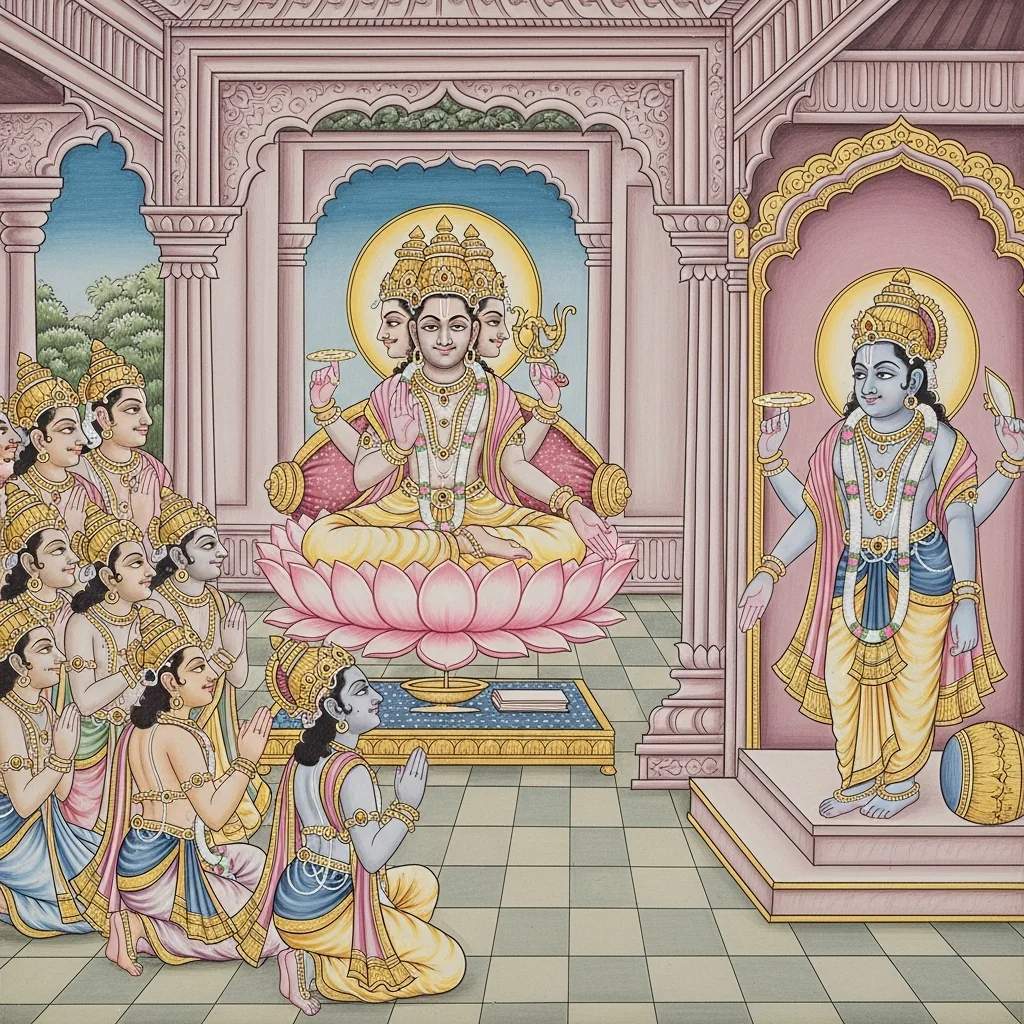
This adhyāya unfolds as a report of calamity followed by a divine response. Mārkaṇḍeya relates how the devas, led by Indra, arrive in Brahmaloka with splendid conveyances, bow in formal prostration, and praise Brahmā. They then declare their distress: the mighty asura Andhaka has defeated them, seized their wealth and jewels, and forcibly taken Indra’s consort. Brahmā reflects and states a crucial constraint—Andhaka is “avadhya” for the devas, not readily slayable by them due to prior boons or cosmic law. Therefore the devas, with Brahmā at their head, go to Viṣṇu (Keśava/Janārdana), offering hymns and surrender. Viṣṇu asks the cause, and on hearing their humiliation vows to kill the wrongdoer wherever he may be—netherworld, earth, or heaven. Rising with conch, discus, mace, and bow, he reassures the devas and sends them back to their abodes, ending the chapter with the promise of divine protection and the imminent restoration of order.
Shlokas
Verse 1
श्रीमार्कण्डेय उवाच । गीर्वाणाश्च ततः सर्वे ब्रह्माणं शरणं गताः । गजैर्गिरिवराकारैर्हयैश्चैव गजोपमैः
Śrī Mārkaṇḍeya said: Then all the gods went to Brahmā for refuge, arriving with elephants shaped like mighty mountains and with horses comparable to elephants.
Verse 2
स्यन्दनैर्नगराकारैः सिंहशार्दूलयोजितैः । कच्छपैर्महिषैश्चान्यैर्मकरैश्च तथापरे
They came in chariots shaped like cities, yoked with lions and tigers; others arrived drawn by tortoises and buffaloes, and still others by mighty makaras.
Verse 3
ब्रह्मलोकमनुप्राप्ता देवाः शक्रपुरोगमाः । दृष्ट्वा पद्मोद्भवं देवं साष्टाङ्गं प्रणताः सुराः
The gods, led by Indra, reached Brahmaloka; and on seeing the Lord born of the lotus (Brahmā), the devas bowed down in full prostration.
Verse 4
देवा ऊचुः । जय देव जगद्वन्द्य जय संसृतिकारक । पद्मयोने सुरश्रेष्ठ त्वामेव शरणं गताः
The gods said: “Victory to you, O God, revered by the world! Victory to you, the ordainer of embodied existence! O lotus-born, best of the gods—unto you alone we have come for refuge.”
Verse 5
सोद्वेगं भाषितं श्रुत्वा देवानां भावितात्मनाम् । मेघगम्भीरया वाचा देवराजमुवाच ह
Hearing the agitated words of the gods—noble-souled and self-disciplined—Brahmā spoke to the king of the gods in a voice deep as thunderclouds.
Verse 6
किमत्रागमनं देवाः सर्वेषां वै विवर्णता । केनापमानिताः सर्वे शीघ्रं मे कथ्यतां स्वयम्
Brahmā said: “Why have you come here, O gods? Why is there pallor upon you all? By whom have you all been dishonored? Tell me at once, yourselves.”
Verse 7
देवा ऊचुः । अन्धकाख्यो महादैत्यो बलवान् पद्मसम्भव । तेन देवगणाः सर्वे धनरत्नैर्वियोजिताः
The gods said: “O Lotus-born One, there is a mighty great demon named Andhaka. By him all the hosts of gods have been deprived of wealth and jewels.”
Verse 8
हत्वा देवगणांस्तावदसिचक्रपरद्द्विश्वधैः । गृहीत्वा शक्रभार्यां स दानवोऽपि गतो बलात्
After slaying the hosts of gods with sword, discus, axe, and double-edged weapons, that dānava—seizing Indra’s wife as well—departed by force.
Verse 9
देवानां वचनं श्रुत्वा ब्रह्मा लोकपितामहः । चिन्तयामास राजेन्द्र वधार्थं दानवस्य ह
Hearing the words of the gods, Brahmā—the grandsire of the worlds—began to ponder, O king, how that dānava might be slain.
Verse 10
अवध्यो दानवः पापः सर्वेषां वो दिवौकसाम् । स त्राता सर्वजगतां नान्यो विद्येत कुत्रचित्
(Brahmā said:) “That sinful demon is invulnerable to all of you, O dwellers in heaven. He alone is the Protector of all the worlds; nowhere is any other to be found.”
Verse 11
एवमुक्ताः सुराः सर्वे ब्रह्मणा तदनन्तरम् । ब्रह्माणं ते पुरस्कृत्य गता यत्र स केशवः । तुष्टुवुर्विविधैः स्तोत्रैर्ब्रह्माद्याश्चक्रपाणिनम्
Thus addressed by Brahmā, all the gods then, placing Brahmā at their head, went to where Keśava was. There Brahmā and the others praised the Discus-bearing Lord with many kinds of hymns.
Verse 12
देवा ऊचुः । जय त्वं देवदेवेश लक्ष्म्या वक्षःस्थलाश्रितः । असुरक्षय देवेश वयं ते शरणं गताः
The gods said: “Victory to You, O Lord of the lords of the gods, upon whose chest Śrī (Lakṣmī) abides! O Lord, destroyer of the asuras—unto You we have come for refuge.”
Verse 13
स्तूयमानः सुरैः सर्वैर्ब्रह्माद्यैश्च जनार्दनः । सम्प्रहृष्टमना भूत्वा सुरसङ्घमुवाच ह
Thus praised by all the gods—by Brahmā and the others—Janārdana, becoming glad at heart, spoke to the assembly of the Devas.
Verse 14
श्रीवासुदेव उवाच । स्वागतं देवविप्राणां सुप्रभाताद्य शर्वरी । किं कार्यं प्रोच्यतां क्षिप्रं कस्य रुष्टा दिवौकसः
Śrī Vāsudeva said: “Welcome, O godly sages. The night has passed and it is now morning. Tell me quickly—what task has arisen, and at whom are the dwellers of heaven angered?”
Verse 15
किं दुःखं कश्च संतापः कुतो वा भयमागतम् । कथयन्तु महाभागाः कारणं यन्मनोगतम्
“What sorrow is this, what distress—and from where has fear come? Let the fortunate ones explain the cause that weighs upon their hearts.”
Verse 16
पराभवः कृतो येन सोऽद्य यातु यमालयम् । एवमुक्तास्तु कृष्णेन कथयामासुरस्य तत्
“He by whom you were humiliated—let him today go to Yama’s abode!” Thus addressed by Kṛṣṇa, they then related to him that matter concerning the demon.
Verse 17
दर्शयन्तः स्वकान्देहान् लज्जमाना ह्यधोमुखाः । हृतराज्या ह्यन्धकेन कृता निस्तेजसः प्रभो
Hanging their heads in shame, they showed their own bodies bearing marks of injury. “Our sovereignty has been taken away by Andhaka, O Lord, and we have been made bereft of splendor.”
Verse 18
पितेव पुत्रं परिरक्ष देव जहीन्द्रशत्रुं सह पुत्रपौत्रैः । तथेति चोक्तः कमलासनेन सुरासुरैर्वन्दितपादपद्मः
“Protect us, O God, as a father protects his son; slay the enemy of Indra along with his sons and grandsons.” Thus addressed by the lotus-seated Brahmā, he—whose lotus-feet were worshipped by Devas and Asuras alike—replied, “So be it.”
Verse 19
शङ्खं चक्रं गदां चापं संगृह्य परमेश्वरः । उत्थितो भोगपर्यङ्काद्देवानां पुरतस्तदा
Taking up the conch, discus, mace, and bow, the Supreme Lord then rose from his serpent-couch, in the very presence of the gods.
Verse 20
श्रीवासुदेव उवाच । पाताले यदि वा मर्त्ये नाके वा यदि तिष्ठति । तं हनिष्याम्यहं पापं येन संतापिताः सुराः
Śrī Vāsudeva said: “Whether he stands in Pātāla, on the earth of mortals, or in heaven—I shall slay that sinful one by whom the gods have been tormented.”
Verse 21
स्वं स्थानं यान्तु गीर्वाणाः संतुष्टा भावितौजसः । विष्णोस्तद्वचनं श्रुत्वा ब्रह्माद्यास्ते सवासवाः
“Let the gods return to their own abodes, satisfied and strengthened in power.” Hearing these words of Viṣṇu, Brahmā and the others—along with Indra—departed accordingly.
Verse 22
स्वयानैस्तु हरिं नत्वा हृदि तुष्टा दिवं ययुः
Bowing to Hari and departing in their own celestial conveyances, they went to heaven with hearts fully satisfied.
Verse 47
। अध्याय
“Chapter.” (A scribal/colophon marker indicating the chapter boundary.)