Adhyaya 43
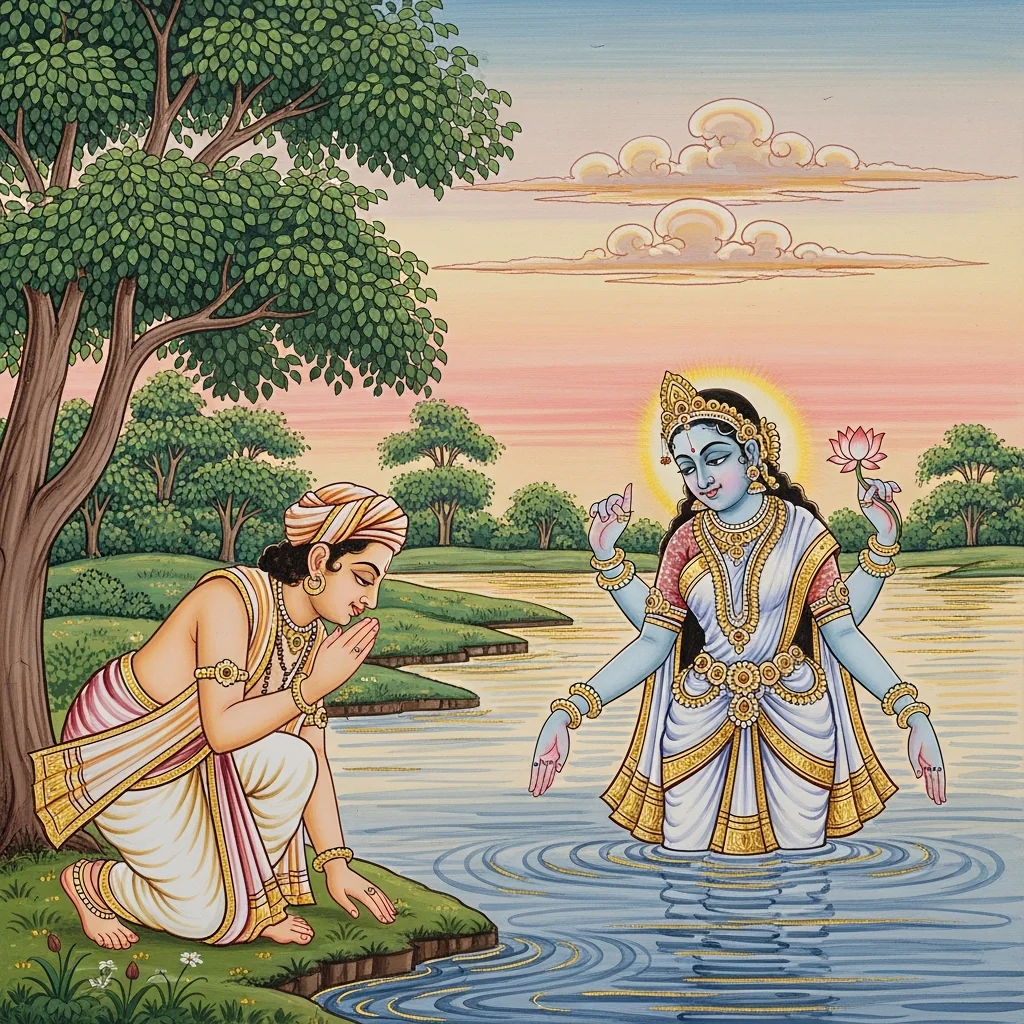
This chapter unfolds as a didactic dialogue in which Mārkaṇḍeya instructs Yudhiṣṭhira in a sequence of tīrtha-based observances and their declared fruits. The pilgrim is first directed to Vimalēśvara, where a “devśilā” (a divine stone/altar said to be fashioned by the gods) is praised; bathing there and honoring Brahmins yields inexhaustible merit even from small gifts. Recommended purificatory dānas are then listed: gold, silver, copper, gems/pearls, land, and cows. A strong phala teaching follows: death at that tīrtha grants residence in Rudra’s world until cosmic dissolution, and a regulated end there (through fasting, fire, or water) is said to lead to the highest state. The discourse expands to solar devotion at a purifying puṣkariṇī, prescribing japa—down to a single ṛc or even a single syllable—linking it to Vedic fruit and release from impurities; when performed rightly, merit is described as multiplied koṭi-fold. The latter half sets ethical disciplines for the end of life across the varṇas (Brahmin, Kṣatriya, Vaiśya, Śūdra), stressing restraint from desire and anger, obedience to śāstra, and service to the Divine; deviation is connected with hells and degraded births. The chapter culminates in praise of Revā/Narmadā as Rudra-born and universally salvific, and gives a daily mantra for one who, upon rising, ritually touches the ground, honoring the river as purifier and remover of sin.
Shlokas
Verse 1
श्रीमार्कण्डेय उवाच । ततो गच्छेत्तु राजेन्द्र विमलेश्वरमुत्तमम् । तत्र देवशिला रम्या स्वयं देवैर्विनिर्मिता
Śrī Mārkaṇḍeya said: “Then, O king of kings, one should go to the supreme shrine of Vimaleśvara. There is a delightful Deva-śilā, a divine stone-altar fashioned by the gods themselves.”
Verse 2
तत्र स्नात्वा तु यो भक्त्या ब्राह्मणान्पूजयेन्नृप । स्वल्पेनापि हि दानेन तस्य चान्तो न विद्यते
O king, whoever bathes there with devotion and honors the brāhmaṇas—even with a small charitable gift—his merit becomes boundless; its end is not found.
Verse 3
युधिष्ठिर उवाच । कानि दानानि विप्रेन्द्र शस्तानि धरणीतले । यानि दत्त्वा नरो भक्त्या मुच्यते सर्वपातकैः
Yudhiṣṭhira said: “O best of brāhmaṇas, which gifts are praised upon the earth—those by giving which a man, with devotion, is freed from all sins?”
Verse 4
श्रीमार्कण्डेय उवाच । सुवर्णं रजतं ताम्रं मणिमौक्तिकमेव च । भूमिदानं च गोदानं मोचयत्पशुभान्नरम्
Śrī Mārkaṇḍeya said: “Gold, silver, copper, jewels and pearls; the gift of land and the gift of cows—these forms of dāna release a man from the bonds of worldly existence.”
Verse 5
तत्र तीर्थे तु यः कश्चित्कुरुते प्राणसंक्षयम् । रुद्रलोके वसेत्तावद्यावदा भूतसम्प्लवम्
Whoever, at that sacred ford (tīrtha), ends his life there, dwells in Rudra’s world for as long as the cosmic dissolution of beings has not yet occurred.
Verse 6
ततः पुष्करिणीं गच्छेत्सर्वपापक्षयंकरीम् । तत्र स्नात्वार्चयेद्देवं तेजोराशिं दिवाकरम्
Thereafter one should go to the sacred Puṣkariṇī, the lotus-pond that destroys all sins. Having bathed there, one should worship the god Divākara, the Sun, the very mass of splendor.
Verse 7
ऋचमेकां जपेत्साम्नः सामवेदफलं लभेत् । यजुर्वेदस्य जपनादृग्वेदस्य तथैव च
By chanting even a single ṛc in the manner of the Sāman, one gains the fruit of the Sāmaveda; and by the japa of Yajurvedic formulas, one likewise gains the fruit of the Ṛgveda as well.
Verse 8
अक्षरं वा जपेन्मन्त्रं ध्यायमानो दिवाकरम् । आदित्यहृदयं जप्त्वा मुच्यते सर्वकिल्बिषैः
Or, meditating on Divākara, one may repeat even a single syllable as a mantra. By chanting the Āditya-hṛdaya, one is freed from all defilements and sins.
Verse 9
तत्र तीर्थे तु यः स्नात्वा विधिना जपेद्द्विजान् । तस्य कोटिगुणं पुण्यं जायते नात्र संशयः
At that sacred tīrtha, whoever bathes there and then performs japa in the proper manner, with the blessing of the twice-born, gains merit a millionfold; of this there is no doubt.
Verse 10
अनाशकेनाग्निगत्या जले वा देहपातनात् । तस्मिंस्तीर्थे मृतो यस्तु स याति परमां गतिम्
Whether by fasting unto death, by entering fire, or by casting off the body in water—whoever dies at that tīrtha attains the highest destination.
Verse 11
ब्राह्मणः क्षत्रियो वैश्यः शूद्रो वा नृपसत्तम । विहितं कर्म कुर्वाणः स गच्छेत्परमां गतिम्
O best of kings, whether one is a brāhmaṇa, kṣatriya, vaiśya, or śūdra—by performing one’s duly enjoined duties, one can attain the supreme state.
Verse 12
युधिष्ठिर उवाच । व्याधिं सत्त्वक्षयं मोहं ज्ञात्वा वर्णा द्विजोत्तम । पापेभ्यो विप्रमुच्यन्ते केन तत्साधनं वद
Yudhiṣṭhira said: O best of the twice-born, when people of the various varṇas recognize disease, the wasting of inner strength, and delusion—by what means are they freed from sins? Tell me the method for that.
Verse 13
श्रीमार्कण्डेय उवाच । तिलोदकी तिलस्नायी कामक्रोधविवर्जितः । ब्राह्मणोऽनशनैः प्राणांस्त्यजल्लभति सद्गतिम्
Śrī Mārkaṇḍeya said: A brāhmaṇa who lives on sesame-water, bathes with sesame, and is free from lust and anger—relinquishing life through fasting—attains a blessed destination.
Verse 14
सङ्ग्रामे सद्गतिं तात क्षत्रियो निधने लभेत् । तदभावान्महाप्राज्ञ सेवमानो लभेदिति
O dear one, a kṣatriya attains a blessed state by dying in battle. If that is not possible, O greatly wise one, he may attain it through devoted service.
Verse 15
व्याधिग्रहगृहीतो वा वृद्धो वा विकलेन्द्रियः । आत्मानं दाहयित्वाग्नौ विधिना सद्गतिं लभेत्
One seized by disease or affliction, or one who is aged, or whose senses have failed—having consigned his body to fire according to proper rule—may attain a blessed state.
Verse 16
वैश्योऽपि हि त्यजन्प्राणानेवं वै शुभभाग्भवेत् । जले वा शुद्धभावेन त्यक्त्वा प्राणाञ्छिवो भवेत्
Even a vaiśya, relinquishing his life in this manner, becomes a recipient of auspicious fortune. Or, by giving up life in water with a purified mind, he becomes blessed—one who attains Śiva’s auspicious state.
Verse 17
शूद्रोऽपि द्विजशुश्रूषुस्तोषयित्वा महेश्वरम् । विमुच्य नान्यथा पापः पतते नरके ध्रुवम्
Even a śūdra, devoted to serving the twice-born and having pleased Maheśvara, is released (from sin). Otherwise, sin is not cast off, and one surely falls into hell.
Verse 18
अथवा प्रणवाशक्तो द्विजेभ्यो गुरवे तथा । पञ्चाग्नौ शोषयेद्देहमापृच्छ्य द्विजसत्तमान्
Or, being devoted to the Praṇava (Oṃ), and likewise devoted to the twice-born and to one’s guru, having taken leave of the best of brāhmaṇas, one should dry up (mortify) the body amid the five fires.
Verse 19
शान्तदान्तजितक्रोधाञ्छास्त्रयुक्तान् विचक्षणान् । तेषां चैवोपदेशेन करीषाग्निं प्रसाधयेत्
He should approach those who are peaceful, self-restrained, conquerors of anger, grounded in the śāstras, and discerning; and by their instruction he should duly prepare the cow-dung fire for the rite.
Verse 20
एवं वर्णा यथात्वेन मूढाहङ्कारमोहिताः । पतन्ति नरके घोरे यथान्धो गिरिगह्वरे
Thus, people of the varṇas, deluded by foolish ego and bewitched by mere status, fall into dreadful hell—like a blind man plunging into a mountain ravine.
Verse 21
ये शास्त्रविधिमुत्सृज्य वर्तन्ते कामचारतः । कृमियोनिं प्रपद्यन्ते तेषां पिण्डो न च क्रिया
Those who cast aside the disciplines enjoined by the śāstras and live by mere whim and desire fall into births among worms; for them there is neither the ancestral piṇḍa offering nor the funeral rites (kriyā).
Verse 22
श्रुतिस्मृत्युदितं धर्मं त्यक्त्वा यथेच्छाचारसेविनः । अष्टाविंशतिर्वै कोट्यो नरकाणां युधिष्ठिर
O Yudhiṣṭhira, those who abandon the dharma taught in Śruti and Smṛti and follow conduct based on mere personal fancy fall into the twenty-eight crores of hells.
Verse 23
प्रत्येकं वा पतन्त्येते मग्ना नरकसागरे । दुर्लभं मानुषं जन्म बहुधर्मार्जितं नृप
O king, each of them falls—submerged in the ocean of hell. Human birth is hard to obtain, won only through the accumulation of much dharma.
Verse 24
तल्लब्ध्वा मदमात्सर्यं यो वै त्यजति मानवः । संनियम्य सदात्मानं ज्ञानचक्षुर्नरो हि सः
Having attained that rare human birth, the one who truly casts away pride and envy, continually restrains the self, and abides in inner discipline—he indeed is a man endowed with the eye of wisdom.
Verse 25
अज्ञानतिमिरान्धस्य ज्ञानांजनशलाकया
For one blinded by the darkness of ignorance, by the rod of the collyrium of knowledge that darkness is dispelled.
Verse 26
यस्य नोन्मीलितं चक्षुर्ज्ञेयो जात्यन्ध एव सः । एतत्ते कथितं सर्वं यत्पृष्टं नृपसत्तम
He whose eye has not been opened should be known as blind from birth. O best of kings, I have told you everything that you asked.
Verse 27
तथानिष्टतराणां हि रुद्रस्य वचनं यथा । नर्मदा सरितां श्रेष्ठा रुद्रदेहाद्विनिःसृता
So too is Rudra’s word unfailing, even toward the most ill-disposed. The Narmadā, best among rivers, streamed forth from Rudra’s very body.
Verse 28
तारयेत्सर्वभूतानि स्थावराणि चराणि च । सर्वदेवाधिदेवेन ईश्वरेण महात्मना
She delivers all beings—both the immobile and the moving—being empowered by the great Lord, the God above all gods.
Verse 29
लोकानां च हितार्थाय महापुण्यावतारिता । मानसं वाचिकं पापं स्नानान्नश्यति कर्मजम्
For the welfare of the worlds she has descended, endowed with supreme merit. By bathing in her, sins born of karma—of mind and of speech—are destroyed.
Verse 30
रुद्रदेहाद्विनिष्क्रान्ता तेन पुण्यतमा हि सा । प्रातरुत्थाय यो नित्यं भूमिमाक्रम्य भक्तितः
Having emerged from Rudra’s body, she is therefore indeed the most holy. Whoever, rising at dawn each day, steps upon the earth with devotion…
Verse 31
एतन्मन्त्रं जपेत्तात स्नानस्य लभते फलम् । नमः पुण्यजले देवि नमः सागरगामिनि
My dear one, whoever repeats this mantra obtains the very fruit of ritual bathing. Salutations to you, O Goddess as holy water; salutations to you who flows onward to the ocean.
Verse 32
नमोऽस्तु पापनिर्मोचे नमो देवि वरानने
Salutations to you, O liberator from sin; salutations to you, O Goddess of beautiful countenance.
Verse 33
नमोऽस्तु ते ऋषिवरसङ्घसेविते नमोऽस्तु ते त्रिनयनदेहनिःसृते । नमोऽस्तु ते सुकृतवतां सदा वरे नमोऽस्तु ते सततपवित्रपावनि
Salutations to you, who are served by assemblies of the best sages. Salutations to you, who issued forth from the body of the Three-eyed Lord. Salutations to you, ever the boon for the meritorious. Salutations to you, O eternally purifying purifier.
Verse 43
। अध्याय
Chapter (marker/colophon).