Adhyaya 42
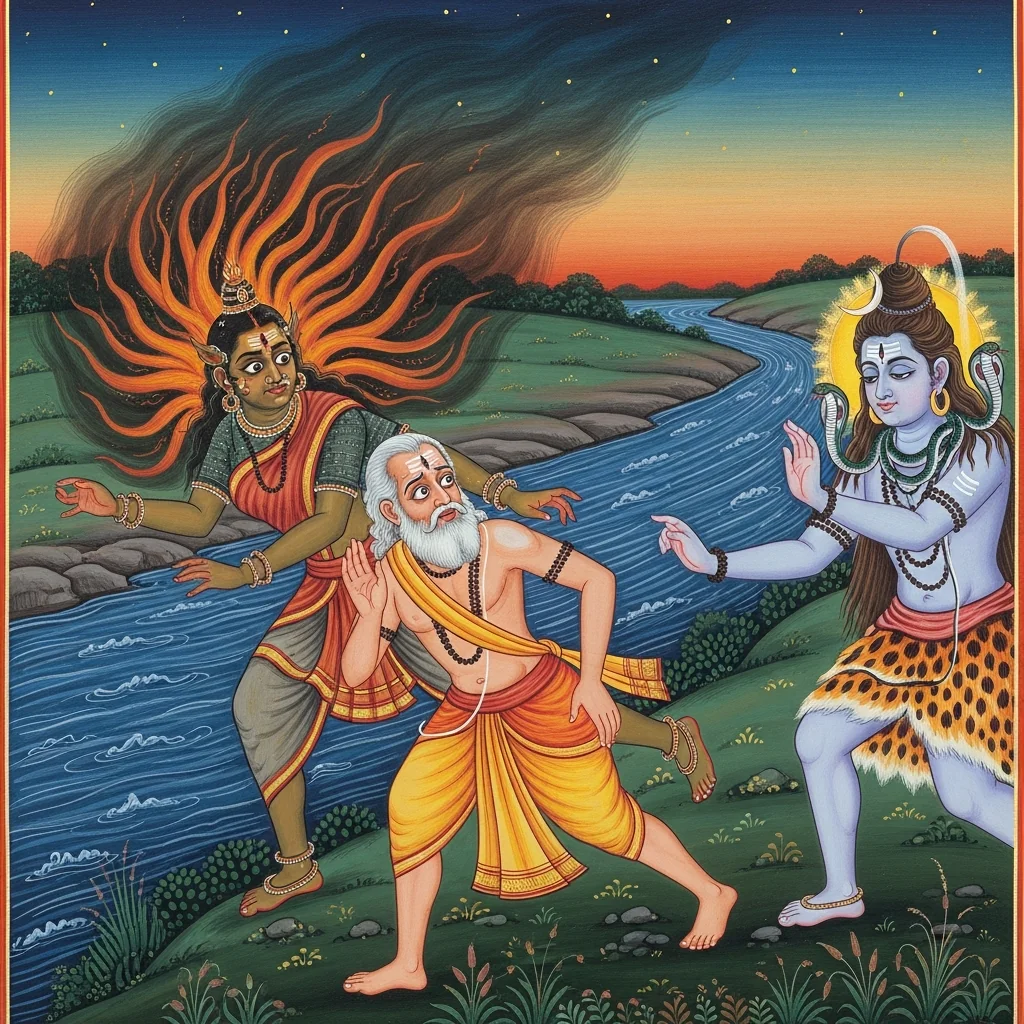
Mārkaṇḍeya, answering Yudhiṣṭhira’s question, recounts the origin connected with Pippaleśvara Tīrtha. It begins with Yājñavalkya’s ascetic practice and a domestic ethical dilemma involving his widowed sister, resulting in the birth of a child who is abandoned beneath an aśvattha (pippala) tree. The child survives, grows, and becomes known as Pippalāda. The narrative then turns to a cosmological and moral encounter with Śanaiścara (Saturn), who begs release from Pippalāda’s anger; a limit is set that Saturn shall not afflict children up to sixteen years of age, establishing a normative rule within the mythic dialogue. Pippalāda’s wrath escalates and produces a destructive kṛtyā aimed at Yājñavalkya; the sage seeks refuge through successive divine realms until Śiva grants protection and brings resolution. Pippalāda performs severe tapas on the bank of the Narmadā, asks Śiva to abide permanently at that tīrtha, and establishes worship there. The chapter ends with pilgrimage observances—snāna, tarpaṇa, feeding Brāhmaṇas, and Śiva-pūjā—explicit statements of merit (even equated with an Aśvamedha), and a phalaśruti promising destruction of sins and relief from bad dreams through recitation or hearing.
Shlokas
Verse 1
श्रीमार्कण्डेय उवाच । ततो गच्छेत्तु राजेन्द्र पिप्पलेश्वरमुत्तमम् । यत्र सिद्धो महायोगी पिप्पलादो महातपाः
Śrī Mārkaṇḍeya said: “Then, O best of kings, one should go to the supreme Pippaleśvara, where the accomplished great yogin Pippalāda—mighty in austerity—abides.”
Verse 2
युधिष्ठिर उवाच । पिप्पलादस्य चरितं श्रोतुमिच्छाम्यहं विभो । माहात्म्यं तस्य तीर्थस्य यत्र सिद्धो महातपाः
Yudhiṣṭhira said: “O venerable one, I wish to hear the life-story of Pippalāda, and the greatness of that tīrtha where the great ascetic, a perfected being, is present.”
Verse 3
कस्य पुत्रो महाभाग किमर्थं कृतवांस्तपः । एतद्विस्तरतः सर्वं कथयस्व ममानघ
“O fortunate one, whose son is he, and for what purpose did he perform tapas (austerity)? Tell me all of this in detail, O sinless one.”
Verse 4
मार्कण्डेय उवाच । मिथिलास्थो महाभागो वेदवेदाङ्गपारगः । याज्ञवल्क्यः पुरा तात चचार विपुलं तपः
Mārkaṇḍeya said: “Formerly, dear one, the illustrious Yājñavalkya—dwelling in Mithilā and fully versed in the Vedas and the Vedāṅgas—undertook extensive tapas (austerity).”
Verse 5
तापसी तस्य भगिनी याज्ञवल्क्यस्य धीमतः । सा सप्तमेऽपि वर्षे च वैधव्यं प्राप दैवतः
Tāpasī, the sister of the wise sage Yājñavalkya—by the decree of fate—became a widow even in her seventh year.
Verse 6
पूर्वकर्मविपाकेन हीनाभूत्पितृमातृतः । नाभूत्तत्पतिपक्षेऽपि कोऽपीत्येकाकिनी स्थिता
By the ripening of former deeds (karma), she was bereft of father and mother; and on her husband’s side too there was no one—thus she remained utterly alone.
Verse 7
भूमौ भ्रमन्ती भ्रातुः सा समीपमगमच्छनैः । चचार च तपः सोऽपि परलोकसुखेप्सया
Wandering upon the earth, she gradually came near her brother; and he too was practicing tapas (austerity), desiring the happiness of the next world.
Verse 8
चचार सापि तत्रस्था शुश्रूषन्ती महत्तपः । कस्मिंश्चित्समये साथ स्नाताहनि रजस्वला
She too dwelt there, devotedly attending upon that great ascetic observance; and at a certain time, after bathing by day, her monthly flow began.
Verse 9
अन्तर्वासो धृतवती दृष्ट्वा कर्पटकं रहः । याज्ञवल्क्योऽपि तद्रात्रौ सुप्तो यत्र सुसंवृतः
Secretly noticing a cloth, she took it as an inner covering; and Yājñavalkya, for his part, slept that night, well-covered in the place where he lay.
Verse 10
स्वप्नं दृष्ट्वात्यजच्छुक्रं कौपीने रक्तबिन्दुवत् । विराजितेन तपसा सिद्धं तदनलप्रभम्
After seeing a dream, he emitted his seed upon his loincloth like a drop of blood; yet by the radiance of his austerity, it became perfected, shining like fire.
Verse 11
यावत्प्रबुद्धो विप्रोऽसौ वीक्ष्योच्छिष्टं तदंशुकम् । चिक्षेप दूरतोऽस्पृश्यं शौचं कृत्वा विधानतः
When that brāhmaṇa awoke and saw the cloth defiled, he cast it far away as untouchable, and then performed purification according to rule.
Verse 12
निषिद्धं तु निशि स्नानमिति सुष्वाप स द्विजः । निशीथे सापि तद्वस्त्रं भगस्यावरणं व्यधात्
Thinking, “Bathing at night is forbidden,” that twice-born man went back to sleep; and at midnight she used that very cloth as a covering for her private parts.
Verse 13
प्रातरन्वेषयामास मुनिर्वस्त्रमितस्ततः । ततः सा ब्राह्मणी प्राह किं अन्वेषयसे प्रभो । केन कार्यं तव तथा वदस्व मम तत्त्वतः
In the morning the sage searched here and there for his garment. Then the brāhmaṇī said, “Lord, what are you seeking? For what purpose do you act so—tell me the truth.”
Verse 14
याज्ञवल्क्य उवाच । अपवित्रो मया भद्रे स्वप्नो दृष्टोऽद्य वै निशि । सक्लेदं तत्र मे वस्त्रं निक्षिप्तं तन्न दृश्यते
Yājñavalkya said: “O blessed one, tonight I beheld an impure dream. Therefore I set my garment aside there, dampened; but now it is nowhere to be seen.”
Verse 15
तच्छ्रुत्वा ब्राह्मणी वाक्यं भीतभीतावदन्नृप । तद्वस्त्रं तु मया विप्र स्नात्वा ह्यन्तः कृतं महत्
Hearing his words, the brāhmaṇī—trembling with fear—said, “O King; O venerable brāhmaṇa: that garment was handled by me. After bathing, I placed it within (my inner quarters), committing a grave impropriety.”
Verse 16
तस्यास्तद्वचनं श्रुत्वा हाहेत्युक्त्वा महामुनिः । निपपात तदा भूमौ छिन्नमूल इव द्रुमः
Hearing her words, the great sage cried, “Alas! Alas!” and at once fell to the ground—like a tree whose roots have been cut.
Verse 17
किमेतदिति सेत्युक्त्वा ह्याकाशमिव निर्मला । आश्वासयन्ती तं विप्रं प्रोवाच वचनं तदा
Saying, “What is this?”, she—pure as the sky—began to console that brāhmaṇa, and at that very moment spoke to him.
Verse 18
वदस्व कारणं तात गुह्याद्गुह्यतरं यदि । प्रतीकारोऽस्य येनैव विमृश्य क्रियते त्वरा
“Tell me the cause, dear one—even if it is more secret than secret—so that, after due reflection, the proper remedy may be carried out swiftly.”
Verse 19
ततः स सुचिरं ध्यात्वा लब्धवाग्वै ततः क्षणम् । प्रोवाच साध्वसमना यत्तच्छृणु नरेश्वर
Then he pondered for a long time; after a moment he regained his speech, and with an anxious mind he said, “Listen, O lord of men, to what has happened.”
Verse 20
नात्र दोषोऽस्ति ते कश्चिन्मम चैव शुभव्रते । तवोदरे तु गर्भो यस्तत्र दैवं परायणम्
“There is no fault here—neither in you nor in me, O woman of auspicious vows. But the child in your womb—there, destiny, the divine dispensation, is the final refuge.”
Verse 21
तस्य तत्त्वेन रक्षा च त्वया कार्या सदैव हि । विनाशी नैव कर्तव्यो यावत्कालस्य पर्ययः
“Therefore you must protect him truly and always. Do not bring about his destruction, until the turning of time, the destined course, has played out.”
Verse 22
तथेति व्रीडिता साध्वी दूयमानेन चेतसा । अपालयच्च तं गर्भं यावत्पुत्रो ह्यजायत
“So be it,” said the virtuous woman; ashamed and inwardly pained, she nevertheless protected that pregnancy until a son was born.
Verse 23
जातमात्रं च तं गर्भं गृहीत्वा ब्राह्मणी च सा । अश्वत्थच्छायामाश्रित्य तमुत्सृज्य वचोऽब्रवीत्
As soon as the child was born, that brāhmaṇī took the newborn, sought the shade of an aśvattha tree, set him down, and spoke these words.
Verse 24
यानि सत्त्वानि लोकेषु स्थावराणि चराणि च । तानि सर्वाणि रक्षन्तु त्यक्तं वै बालकं मया
“May all beings in the worlds—both the immovable and the moving—protect this child whom I have left behind.”
Verse 25
एवमुक्त्वा गता सा तु ब्राह्मणी नृपसत्तम । तथागतः स तु शिशुस्तत्र स्थित्वा मुहूर्तकम्
Having spoken thus, that brāhmaṇī departed, O best of kings. The child, left just as he was, remained there for a brief while.
Verse 26
पाणिपादौ विनिक्षिप्य निकुञ्च्य नयने शुभे । आस्यं तु विकृतं कृत्वा रुरोद विकृतैः स्वरैः
Placing down his hands and feet, and squeezing shut his beautiful eyes, he contorted his face and cried out in harsh, distorted tones.
Verse 27
तेन शब्देन वित्रस्ताः स्थावरा जङ्गमाश्च ये । आकम्पिता महोत्पातैः सशैलवनकानना
By that sound, all beings—both the unmoving and the moving—were terrified; and with great portents the earth, with its mountains, forests, and groves, was shaken.
Verse 28
ततो ज्ञात्वा महद्भूतं क्षुधाविष्टं द्विजर्षभम् । न जहाति नगश्छायां पानार्थाय ततः परम् । अपिबच्च सुतं तस्मादभृतं चैव भारत
Then, realizing the grave plight—that the bull among brāhmaṇas was seized by hunger—she did not leave the tree’s shade, and thereafter sought drink. And, O Bhārata, she drank from him (nursed her son) and thus sustained him.
Verse 29
एवं स वर्धितस्तत्र कुमारो निजचेतसि । चिन्तयामास विश्रब्धः किं मम ग्रहगोचरम्
Thus nurtured there, the boy, calm within his own mind, began to ponder with composure: “What governs my fate—what influence of the grahas (planets) has come upon me?”
Verse 30
ततः क्रूरसभाचारः क्रूरं दृष्ट्वा निरीक्षितः । पपात सहसा भूमौ शनैश्चारी शनैश्चरः
Then Śanaiścara, famed for harsh conduct in the assembly, when fiercely looked upon, suddenly fell to the ground—the slow-moving one brought low.
Verse 31
उवाच च भयत्रस्तः कृताञ्जलिपुटस्तदा । किं मयापकृतं विप्र पिप्पलाद महामुने
Terrified, with palms joined in reverence, he then said: “What wrong have I done, O brāhmaṇa—O Pippalāda, great sage?”
Verse 32
चरन्वै गगनाद्येन पातितो धरणीतले । सौरिणा ह्येवमुक्तस्तु पिप्पलादो महामुनिः
While moving through the sky, he was cast down upon the earth by that very power. Thus addressed by Sauri (Śani), the great sage Pippalāda replied.
Verse 33
क्रोधरूपोऽब्रवीद्वाक्यं तच्छृणुष्व नराधिप । पितृमातृविहीनस्य मम बालस्य दुर्मते । पीडां करोषि कस्मात्त्वं सौरे ब्रूहि ह्यशेषतः
Assuming the form of wrath, he spoke: “Hear, O king. Why do you torment my child, bereft of father and mother? O Sauri, of perverse mind—tell me fully the reason.”
Verse 34
शनैश्चर उवाच । क्रूरस्वभावः सहजो मम दृष्टिस्तथेदृशी । मुञ्चस्व मां तथा कर्ता यद्ब्रवीषि न संशयः
Śanaiścara said: “A harsh nature is innate to me, and my gaze is of that very kind. Release me; I shall do as you say—of this there is no doubt.”
Verse 35
पिप्पलाद उवाच । अद्यप्रभृति बालानां वर्षादा षोडशाद्ग्रह । पीडा त्वया न कर्तव्या एष ते समयः कृतः
Pippalāda said: “From this day onward, O Graha, you must not afflict children from one year of age up to sixteen years. This is the covenant I lay down for you.”
Verse 36
एवमस्त्विति चोक्त्वा स जगाम पुनरागतः । देवमार्गं शनैश्चारी प्रणम्य ऋषिसत्तमम्
Saying, “So be it,” he departed and then returned again, moving slowly along the path of the devas, having bowed to that foremost of sages.
Verse 37
गते चादर्शनं तत्र सोऽपि बालो महाग्रहः । विचिन्तयन्वै पितरं क्रोधेन कलुषीकृतः
When he had gone and was no longer seen there, that youthful, mighty Graha too began brooding over his father, his mind darkened and tainted by anger.
Verse 38
आग्नेयीं धारणां ध्यात्वा जनयामास पावकम् । कृत्यामन्त्रैर्जुहावाग्नौ कृत्या वै संभवत्विति
Meditating upon the fiery Āgneya concentration, he brought forth the sacred fire; and with kṛtyā-mantras he offered into that fire, saying, “Let the Kṛtyā indeed arise.”
Verse 39
तावज्झटिति सा कन्या ज्वालामालाविभूषिता । हुतभुक्सदृशाकारा किं करोमीति चाब्रवीत्
At once, in an instant, there appeared that maiden adorned with garlands of flame, her form resembling the Fire that consumes oblations; and she said, “What shall I do?”
Verse 40
शोषयामि समुद्रान् किं चूर्णयामि च पर्वतान् । अवनिं वेष्टयामीति पातये किं नभस्तलम्
“Shall I dry up the oceans? Shall I pulverize the mountains? Shall I encircle the earth? Or shall I cast down the very vault of the sky?”
Verse 41
कस्य मूर्ध्नि पतिष्यामि घातयामि च कं द्विज । शीघ्रमादिश्यतां कार्यं मा मे कालात्ययो भवेत्
“On whose head shall I fall? Whom shall I strike down, O Brāhmaṇa? Command the task quickly, lest my appointed time be wasted.”
Verse 42
। अध्याय
“Adhyāya” — a chapter marker, indicating the division of the text.
Verse 43
महता क्रोधवेगेन मया त्वं चिन्तिता शुभे । पिता मे याज्ञवल्क्यश्च तस्य त्वं पत माचिरम्
Driven by a mighty surge of wrath, I have summoned you, O auspicious one. My father is Yājñavalkya—fall upon him; do not delay.
Verse 44
एवमुक्त्वागमच्छीघ्रं स्फोटयन्ती नभस्तलम् । मिथिलास्थो महाप्राज्ञस्तपस्तेपे महामनाः
Thus instructed, she sped away, rending the expanse of the sky. Meanwhile, in Mithilā, the great sage—wise and large-hearted—remained absorbed in austerity.
Verse 45
यावत्पश्यति दिग्भागं ज्वलनार्कसमप्रभम् । याज्ञवल्क्यो महातेजा महद्भूतमुपस्थितम्
As Yājñavalkya, the sage of great splendour, looked toward a quarter of the sky blazing with the radiance of fire and sun, he beheld a mighty elemental being standing before him.
Verse 46
तद्दृष्ट्वा सहसायान्तं भीतभीतो महामुनिः । अनुयुक्तोऽथ भूतेन जनकं नृपतिं ययौ
Seeing it rushing toward him, the great sage, terrified, was then pressed by that being and went to King Janaka.
Verse 47
शरण्यं मामनुप्राप्तं विद्धि त्वं नृपसत्तम । महद्भूतभयाद्रक्ष यदि शक्नोषि पार्थिव
“Know me, O best of kings, as one who has come to you for refuge. Protect me from the fear of that mighty being, if you are able, O ruler of the earth.”
Verse 48
ब्रह्मतेजोभवं भूतमनिवार्यं दुरासदम् । न च शक्नोम्यहं त्रातुं राजा वचनमब्रवीत्
The king replied: “That being is born of Brahmā’s blazing tejas—irresistible and unassailable. I am not able to save you.”
Verse 49
ततश्चान्यं नृपश्रेष्ठं शरणार्थी महातपाः । जगाम तेन मुक्तोऽसौ चेन्द्रस्य सदनं भयात्
Then the great ascetic, seeking refuge, went to another best of kings; and, being turned away there as well, he proceeded in fear to Indra’s abode.
Verse 50
देवराज नमस्तेऽस्तु महाभूतभयान्नृप । कम्पमानोऽब्रवीद्विप्रो रक्षस्वेति पुनःपुनः
“O Devarāja, salutations to you, O king of the gods! From fear of the mighty being,” said the trembling brāhmaṇa, “protect me,” again and again.
Verse 51
तस्य तद्वचनं श्रुत्वा देवराजोऽब्रवीदिदम् । न शक्नोमि परित्रातुं ब्रह्मकोपादहं मुने
Hearing his words, the king of the gods said: “O sage, I cannot rescue you—from fear of Brahmā’s wrath.”
Verse 52
ततः स ब्रह्मभवनं ब्राह्मणो ब्रह्मवित्तमः । जगाम विष्णुलोकं च तेनापीत्युक्त एव सः
Then that brāhmaṇa, the foremost knower of Brahman, went to Brahmā’s abode—and also to Viṣṇu’s world; yet there too he was told the same.
Verse 53
ततः स मुनिरुद्विग्नो निराशो जीविते नृप । अनुगम्यमानो भूतेन अगच्छच्छङ्करालयम्
Then the sage, anxious and despairing of his life, O king, and still followed by that being, went to Śaṅkara’s abode.
Verse 54
तस्य योगबलोपेतो महादेवस्य पाण्डव । नखमांसान्तरे गुप्तो यथा देवो न पश्यति
Endowed with yogic power, O Pāṇḍava, that being hid itself in the narrow space between Mahādeva’s nail and flesh, so that the Lord would not see it.
Verse 55
तदन्ते चागमद्भूतं ज्वलनार्कसमप्रभम् । मुञ्च मुञ्चेति पुरुषं देवदेवं महेश्वरम्
At the end of that episode, a supernatural being arrived, radiant like fire and the sun. Crying, “Release him, release him!”, it addressed Maheśvara—the God of gods.
Verse 56
एवमुक्तो महादेवस्तेन भूतेन भारत । योगीन्द्रं दर्शयामास नखमांसान्तरे तदा
Thus addressed by that spirit-being, O Bhārata, Mahādeva then revealed the lordly yogin, seen lodged between the nail and the flesh.
Verse 57
संस्थाप्य भूतं भूतेशः परमापद्गतं मुनिम् । उवाच मा भैस्त्वं विप्र निर्गच्छस्व महामुने
After restraining that spirit and setting it in its proper place, Bhūteśa (Śiva) addressed the sage who had fallen into extreme peril: “Do not fear, O brāhmaṇa; depart safely, O great muni.”
Verse 58
ततः सुसूक्ष्मदेहस्थं भूतं दृष्ट्वाब्रवीदिदम् । किमस्य त्वं महाभूत करिष्यसि वदस्व मे
Then, seeing the spirit abiding in a most subtle body, he said: “O mighty being, what will you do to this one? Tell me.”
Verse 59
कृत्योवाच । क्रोधाविष्टेन देवेश पिप्पलादेन चिन्तिता । अस्य देहं हनिष्यामि हिंसार्थं विद्धि मां प्रभो
The Kṛtyā said: “O Lord of gods, I was devised by Pippalāda when he was seized by anger. I will destroy this man’s body—know me, O Lord, as meant for harm.”
Verse 60
एतच्छ्रुत्वा महादेवो भूतस्य वदनाच्च्युतम् । कटिस्थं याज्ञवल्क्यं च मन्त्रयामास मन्त्रवित्
Hearing this, Mahādeva—the knower of mantras—consulted Yājñavalkya, who was at his waist, and also heeded the utterance that had fallen from the spirit’s mouth.
Verse 61
योगीश्वरेति विप्रस्य कृत्वा नाम युधिष्ठिर । विसर्जयित्वा देवेशस्तत्रैवान्तरधीयत
O Yudhiṣṭhira, having given the brāhmaṇa the name “Yogīśvara,” the Lord of gods dismissed them and then vanished right there.
Verse 62
प्रेषयित्वा तु तं भूतं पिप्पलादोऽपि दुर्मनाः । पितृमातृसमुद्विग्नो नर्मदातटमाश्रितः
After sending forth that spirit, Pippalāda too became despondent; distressed about his father and mother, he took refuge on the bank of the Narmadā.
Verse 63
एकाङ्गुष्ठो निराहारो वर्षादा षोडशान्नृप । तोषयामास देवेशमुमया सह शङ्करम्
O king, standing upon a single toe and fasting, for sixteen years he propitiated Śaṅkara, Lord of the gods, together with Umā.
Verse 64
ततस्तत्तपसा तुष्टः शङ्करो वाक्यमब्रवीत्
Then Śaṅkara, pleased by that austerity, spoke these words.
Verse 65
ईश्वर उवाच । परितुष्टोऽस्मि ते विप्र तपसानेन सुव्रत । वरं वृणीष्व ते दद्मि मनसा चेप्सितं शुभम्
Īśvara said: “O brāhmaṇa, O noble-vowed one, I am fully pleased with you because of this austerity. Choose a boon; I grant you the auspicious desire you have conceived in your mind.”
Verse 66
पिप्पलाद उवाच । यदि मे भगवांस्तुष्टो यदि देयो वरो मम । अत्र संनिहितो देव तीर्थे भव महेश्वर
Pippalāda said: “If the Blessed Lord is pleased with me, and if a boon is to be granted to me—then, O God, remain present here at this sacred tīrtha. O Maheśvara, abide in this holy ford.”
Verse 67
एवमुक्तस्तथेत्युक्त्वा पिप्पलादं महामुनिम् । जगामादर्शनं देवो भूतसङ्घसमन्वितः
Thus addressed, the God said “So be it” to the great sage Pippalāda, and then—accompanied by hosts of beings—He departed from sight.
Verse 68
पिप्पलादो गते देवे स्नात्वा तत्र महाम्भसि । स्थापयित्वा महादेवं जगामोत्तरपर्वतम्
When the God had departed, Pippalāda bathed there in the great waters; and after establishing Mahādeva there, he went to the northern mountain.
Verse 69
तत्र तीर्थे नरो भक्त्या स्नात्वा मन्त्रयुतं नृप । तर्पयित्वा पित्ःन् देवान् पूजयेच्च महेश्वरम्
O King, at that tīrtha a man should bathe with devotion, accompanied by mantras; then, having offered tarpaṇa to the Fathers and to the gods, he should worship Maheśvara.
Verse 70
अश्वमेधस्य यज्ञस्य फलं प्राप्नोत्यनुत्तमम् । मृतो रुद्रपुरं याति नात्र कार्या विचारणा
He attains the unsurpassed fruit of the Aśvamedha sacrifice; and upon death he goes to Rudrapura. About this there is no need for doubt or deliberation.
Verse 71
अथ यो भोजयेद्विप्रान् पित्ःनुद्दिश्य भारत । तस्य ते द्वादशाब्दानि मोदन्ते दिवि तर्पिताः
Further, O Bhārata, whoever feeds brāhmaṇas with the ancestors in mind—those ancestors of his, being thus satisfied, rejoice in heaven for twelve years.
Verse 72
संन्यासेन तु यः कश्चित्तत्र तीर्थे तनुं त्यजेत् । अनिवर्तिका गतिस्तस्य रुद्रलोकात्कदाचन
But whoever, in the state of renunciation, casts off his body at that tīrtha—his onward course is irreversible: never does he return from Rudra’s world.
Verse 73
एतत्सर्वं समाख्यातं यत्पृष्ठे हि त्वयानघ । माहात्म्यं पिप्पलादस्य तीर्थस्योत्पत्तिरेव च
All this has been explained, O sinless one, exactly as you asked—both the greatness of Pippalāda and the very origin of this tīrtha.
Verse 74
एतत्पुण्यं पापहरं धन्यं दुःस्वप्ननाशनम् । पठतां शृण्वतां चैव सर्वपापक्षयो भवेत्
This account is meritorious, sin-destroying, blessed, and a remover of evil dreams. For those who recite it and those who hear it, the destruction of all sins indeed comes to be.