Adhyaya 41
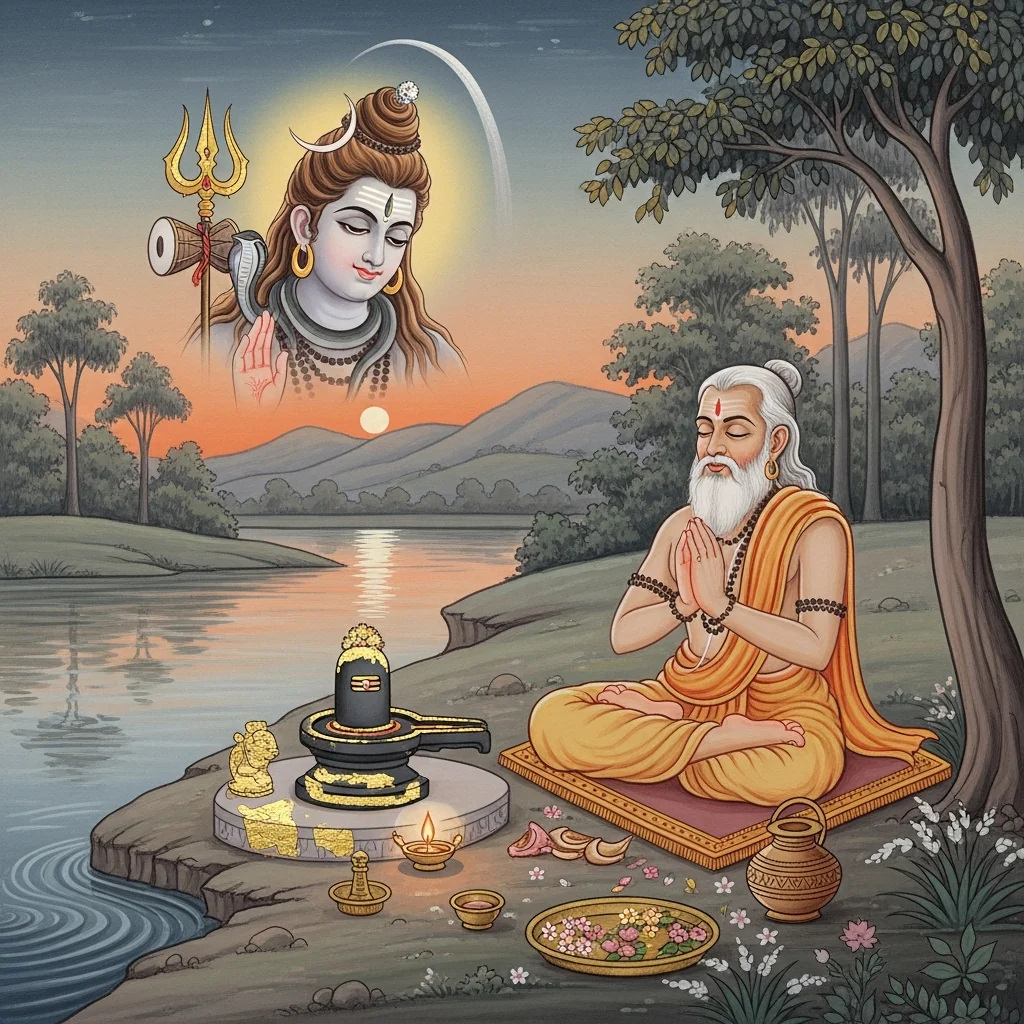
This adhyāya unfolds as a sacred dialogue between the sage Mārkaṇḍeya and King Yudhiṣṭhira, directing the king to the renowned tīrtha of Kuṇḍaleśvara. To establish its greatness, Mārkaṇḍeya recounts that in Tretāyuga Viśravā, of Pulastya’s line, performed vast tapas and begot Dhanada (Vaiśravaṇa/Kubera), who was appointed guardian of wealth and a lokapāla. From that lineage arose the yakṣa Kuṇḍa/Kuṇḍala. With his parents’ consent he undertook severe austerities on the bank of the Narmadā—enduring heat, rain, and cold, practicing breath-discipline, and fasting for long periods. Pleased, Śiva (Vṛṣavāhana) granted him a boon: Kuṇḍala became an invincible attendant, free to move by the favor of the lord of yakṣas. After Śiva returned to Kailāsa, Kuṇḍala established the deity there as “Kuṇḍaleśvara,” adorning and worshipping the liṅga and honoring brāhmaṇas with food and gifts. The phalaśruti declares that fasting and worship at this tīrtha destroy sins; dāna brings heavenly enjoyment; bathing and reciting even a single ṛk yields complete merit; and gifting a cow grants a long stay in heaven proportional to the cow’s hairs, culminating in access to Maheśa’s realm for benefactors.
Shlokas
Verse 1
श्रीमार्कण्डेय उवाच । ततो गच्छेच्च राजेन्द्र कुण्डलेश्वरमुत्तमम् । यत्र सिद्धो महायक्षः कुण्डधारो नृपोत्तम
Śrī Mārkaṇḍeya said: Then, O lord of kings, one should go to the supreme Kuṇḍaleśvara—where the great Yakṣa Kuṇḍadhāra attained perfection, O best of rulers.
Verse 2
तपः कृत्वा सुविपुलं सुरासुरभयंकरम् । पौलस्त्यमन्दिरे चैव चिक्रीड नृपसत्तम
Having performed exceedingly great austerity—terrifying even to gods and asuras—he sported there as well, in the sanctuary of Paulastya, O best of kings.
Verse 3
युधिष्ठिर उवाच । कस्मिन्युगे समुत्पन्नः कस्य पुत्रो महामतिः । तपस्तप्त्वा सुविपुलं तोषितो येन शङ्करः
Yudhiṣṭhira said: In which Yuga was that great-minded one born, and whose son was he—by whom Śaṅkara was pleased after he performed exceedingly vast austerity?
Verse 4
एतद्विस्तरतस्तात कथयस्व ममानघ । शृण्वतश्च न तृप्तिर्मे कथामृतमनुत्तमम्
Tell this to me in full detail, revered sir—O blameless one. As I listen, I do not feel satisfied; this unsurpassed nectar of sacred story never satiates me.
Verse 5
श्रीमार्कण्डेय उवाच । त्रेतायुगे ब्रह्मसमः पौलस्त्योनाम विश्रवाः । तपः कृत्वा सुविपुलं भरद्वाजसुतोद्भवः
Śrī Mārkaṇḍeya said: In the Tretā Yuga there was Viśravā, a descendant of Pulastya, equal to Brahmā in majesty. Born in the line of Bharadvāja’s son, he performed exceedingly abundant austerity.
Verse 6
पुत्रं पौत्रगणैर्युक्तं पत्न्या भक्त्या सुतोषितः । धनदं जनयामास सर्वलक्षणलक्षितम्
Pleased by his wife’s devotion, he begot a son—Dhanada—endowed with all auspicious marks, and surrounded by descendants in a flourishing line.
Verse 7
जातमात्रं तु तं ज्ञात्वा ब्रह्मा लोकपितामहः । चकार नाम सुप्रीत ऋषिदेवसमन्वितः
As soon as he knew the child had been born, Brahmā—the grandsire of the worlds—joyfully bestowed a name, attended by sages and gods.
Verse 8
यस्माद्विश्रवसो जातो मम पौत्रत्वमागतः । तस्माद्वैश्रवणो नाम तव दत्तं मयानघ
“Since you are born of Viśravā and have thus become my grandson, therefore I bestow upon you the name Vaiśravaṇa, O sinless one.”
Verse 9
तथा त्वं सर्वदेवानां धनगोप्ता भविष्यसि । चतुर्थो लोकपालानामक्षयश्चाव्ययो भुवि
“Thus you shall become the guardian of the wealth of all the gods, the fourth among the Lokapālas—imperishable and undecaying upon the earth.”
Verse 10
तस्य भार्या महाराज ईश्वरीति च विश्रुता । यक्षो यक्षाधिपः श्रेष्ठस्तस्य कुण्डोऽभवत्सुतः
O great king, his wife was famed as Īśvarī. That excellent lord of the Yakṣas had a son named Kuṇḍa.
Verse 11
स च रूपं परं प्राप्य मातापित्रोरनुज्ञया । तपश्चचार विपुलं नर्मदातटमाश्रितः
With his parents’ permission, he attained exceptional beauty and then undertook great austerities, dwelling upon the bank of the Narmadā.
Verse 12
ग्रीष्मे पञ्चाग्निसंतप्तो वर्षासु स्थण्डिलेशयः । हेमन्ते जलमध्यस्थो वायुभक्षः शतं समाः
In summer he endured the heat of the five fires; in the rains he lay upon bare ground; in winter he remained amid the waters. Living on air alone, he sustained these disciplines for a hundred years.
Verse 13
एवं वर्षशते पूर्णे एकाङ्गुष्ठेऽभवन्नृप । अस्थिभूतः परं तात ऊर्ध्वबाहुस्ततः परम्
When a hundred years were thus completed, O king, he became as though reduced to a single thumb—mere bone. Thereafter, O dear one, he continued even more, keeping his arms raised aloft.
Verse 14
अतपच्च घृतश्वासः कुण्डलो भरतर्षभ । चतुर्थे वर्षशतके तुतोष वृषवाहनः
Thus Kuṇḍala—whose breath was like ghee, steady and restrained, O bull among the Bharatas—continued his austerities; and in the fourth century of years, Vṛṣavāhana (Śiva, the Bull-bannered Lord) became pleased.
Verse 15
वरं वृणीष्व भो वत्स यत्ते मनसि रोचते । ददामि ते न सन्देहस्तपसा तोषितो ह्यहम्
“Choose a boon, dear child—whatever pleases your heart. I shall grant it to you without doubt, for I am satisfied by your austerity.”
Verse 16
कुण्डल उवाच । यक्षाधिपप्रसादेन तस्यैवानुचरः पुरे । विचरामि यथाकाममवध्यः सर्वशत्रुषु
Kundala said: “By the favor of the lord of the Yakṣas, I dwell in his city as his attendant. I roam wherever I wish, and among all enemies I am inviolable—unable to be slain.”
Verse 17
तथेत्युक्त्वा महादेवः सर्वलोकनमस्कृतः । जगामाकाशमाविश्य कैलासं धरणीधरम्
Saying, “So be it,” Mahādeva—revered by all worlds—entered the sky and departed for Kailāsa, the mountain that upholds the earth.
Verse 18
गते चादर्शनं देवे सोऽपि यक्षो मुदान्वितः । स्थापयामास देवेशं कुण्डलेश्वरमुत्तमम्
When the Deva had passed from sight, that Yakṣa too—filled with joy—installed the Lord of the gods as the excellent Liṅga known as Kundaleśvara.
Verse 19
अलंकृत्वा जगन्नाथं पुष्पधूपानुलेपनैः । विमानैश्चामरैश्छत्रैस्तथा वै लिङ्गपूरणैः
He adorned Jagannātha (the Lord of the universe) with flowers, incense, and unguents; with festive canopies and honors such as fly-whisks and parasols, and also with the prescribed offerings for the Liṅga.
Verse 20
तर्पयित्वा द्विजान्सम्यगन्नपानादिभूषणैः । प्रीणयित्वा महादेवं ततः स्वभवनं ययौ
Having properly satisfied the twice-born with food, drink, and fitting gifts, and having pleased Mahādeva, he then returned to his own abode.
Verse 21
तदाप्रभृति तत्तीर्थं त्रिषु लोकेषु विश्रुतम् । उत्तमं परमं पुण्यं कुण्डलेश्वरनामतः
From that time onward, that holy ford became renowned in the three worlds—supreme and exceedingly meritorious—by the name ‘Kundaleśvara.’
Verse 22
तत्र तीर्थे तु यः कश्चिदुपवासपरायणः । अर्चयेद्देवमीशानं सर्वपापैः प्रमुच्यते
At that tīrtha, whoever is devoted to fasting and worships Īśāna (Śiva) is released from all sins.
Verse 23
सुवर्णं रजतं वापि मणिं मौक्तिकमेव च । दद्याद्भोज्यं ब्राह्मणेभ्यः स सुखी मोदते दिवि
Whether one gives gold or silver, a gem or pearls, and also offers food to the Brāhmaṇas—such a giver becomes happy and rejoices in heaven.
Verse 24
तत्र तीर्थे तु यः स्नात्वा ऋग्यजुःसामगोऽपि वा । ऋचमेकां जपित्वा तु सकलं फलमश्नुते
At that tīrtha, after bathing, whether one is a reciter of the Ṛg, Yajus, or Sāman—by chanting even a single Ṛk-verse, one attains the complete fruit (of the rite).
Verse 25
गां प्रयच्छति विप्रेभ्यस्तत्फलं शृणु पाण्डव । यावन्ति तस्या रोमाणि तत्प्रसूतिकुलेषु च
O Pāṇḍava, listen to the fruit of giving a cow to the Brāhmaṇas: as many hairs as are on that cow—and likewise within the lineages born of her offspring—so great is the measure of merit declared.
Verse 26
तावद्वर्षसहस्राणि स्वर्गलोके महीयते । स्वर्गे वासो भवेत्तस्य पुत्रपौत्रैः समन्वितः
For that many thousands of years he is honored in heaven; and his dwelling in Svarga is obtained, accompanied by sons and grandsons.
Verse 27
तावन्ति वर्षाणि महानुभावः स्वर्गे वसेत्पुत्रपौत्रैश्च सार्द्धम् । तत्रान्नदो याति महेशलोकमसंख्यवर्षाणि न संशयोऽत्र
For that many years the noble man dwells in heaven together with sons and grandsons. There, the giver of food proceeds to Maheśa’s realm for countless years—of this there is no doubt.
Verse 28
स वै सुखी मोदते स्वर्गलोके गन्धर्वसिद्धाप्सरःसम्प्रगीते । एवं तु ते धर्मसुत प्रभावस्तीर्थस्य सर्वः कथितश्च पार्थ
Indeed, he—happy—rejoices in the heavenly world resounding with the songs of Gandharvas, Siddhas, and Apsarases. Thus, O Dharmasuta, O Pārtha, the entire greatness of the tīrtha has been told to you.
Verse 29
श्रुत्वा स्तुवन्मुच्यते सर्वपापैः पुनस्त्रिलोकीमिह तत्प्रभावात्
By hearing it and praising it, one is freed from all sins; and by that very power, one attains again hereafter the blessed state spanning the three worlds.
Verse 41
। अध्याय
“Chapter” — a colophon marking the close of the adhyāya.