Adhyaya 39
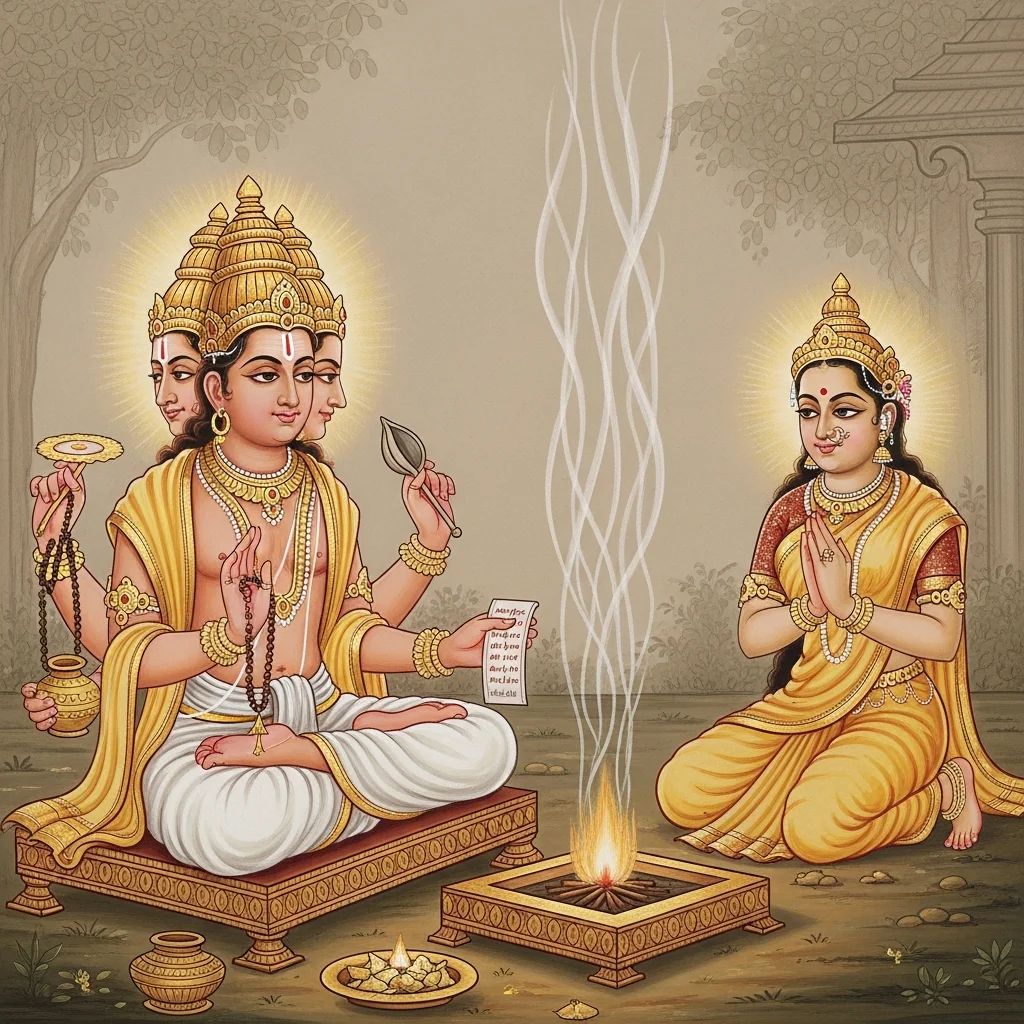
This chapter unfolds as Yudhiṣṭhira’s inquiry and the sage Mārkaṇḍeya’s explanation concerning Kapilā-tīrtha on the Narmadā (Revā). It opens with a brief phalāśruti: a devotional bath at Kapilā-tīrtha—by that act alone—is said to wash away accumulated impurities. Yudhiṣṭhira asks for the tīrtha’s origin and its connection to the sanctity of Narmadeśvara/Narmadā. Mārkaṇḍeya recounts a cosmogonic scene at the dawn of the Kṛta-yuga: Brahmā, absorbed in contemplative rite, beholds a radiant, fire-natured form of Kapilā arising from a blazing kuṇḍa. Brahmā offers a litany of praise, identifying Kapilā with many divine powers and even measures of time, portraying her as all-pervasive within the cosmic order. Pleased, Kapilā asks Brahmā’s purpose; he commissions her to descend from the higher realm to the mortal world for the welfare of beings. Kapilā then goes to the purifying Narmadā, performs austerities on its bank, and thereby establishes the tīrtha’s enduring status. A second unit answers technical questions about how “worlds” and deities are situated in Kapilā’s body, giving an anatomical-cosmological mapping: various lokas rest upon her back, while deities and cosmic principles occupy specific loci (fire in the mouth, Sarasvatī on the tongue, wind in the nasal region, Śiva on the forehead). The chapter closes with applied ritual ethics—praising household veneration of Kapilā, circumambulation and offerings, and prescribing bathing rites, upavāsa (fasting), and tarpaṇa for ancestors—with a promise of benefit to forebears and descendants. It ends by reaffirming that hearing this account is itself purificatory.
Shlokas
Verse 1
श्रीमार्कण्डेय उवाच । ततो गच्छेच्च राजेन्द्र कपिलातीर्थमुत्तमम् । स्नानमात्रान्नरो भक्त्या मुच्यते सर्वकिल्बिषैः
Śrī Mārkaṇḍeya said: “Then, O lord of kings, one should go to the excellent Kapilā Tīrtha. By bathing there alone, a person—when endowed with devotion—is released from all sins and stains of wrongdoing.”
Verse 2
युधिष्ठिर उवाच । आश्चर्यभूतं लोकेषु कथितं द्विजसत्तम । नर्मदेश्वरमाहात्म्यं कापिलं कथयस्व मे
Yudhiṣṭhira said: “O best of the twice-born, it is spoken of among the worlds as something wondrous. Tell me, I pray, the Kapila-related greatness (māhātmya) of Narmadeśvara.”
Verse 3
यस्मिन् कालेऽथ सम्बन्धे उत्पन्नं तीर्थमुत्तमम् । सर्वपापहरं पुण्यं तीर्थं जातं कथं प्रभो
“At what time, and through what circumstance, did this supreme tīrtha arise—this holy ford that removes all sins? How, O revered one, did this meritorious sacred place come into being?”
Verse 4
मार्कण्डेय उवाच । शृणु वक्ष्येऽद्य ते राजन्कपिलातीर्थमुत्तमम् । येन ते विस्मयः सर्वः श्रुत्वा गच्छति भारत
Mārkaṇḍeya said: “Listen, O king; today I shall tell you of the most excellent Kapilā Tīrtha. By hearing of it, O Bhārata, all your wonder will be resolved and brought to rest.”
Verse 5
पुरा कृतयुगस्यादौ ब्रह्मा लोकपितामहः । उत्पादयित्वा सकलं भूतग्रामं चतुर्विधम्
“In ancient times, at the dawn of the Kṛta Yuga, Brahmā—the grandsire of the worlds—brought forth the entire multitude of beings in fourfold order…”
Verse 6
जपहोमपरो भक्त्या क्षणं ध्यात्वा च तिष्ठति । ज्वलमानात्तु कपिला तावत्कुण्डात्समुत्थिता
“Absorbed with devotion in japa and homa, he paused and meditated for a moment. Then Kapilā, blazing with radiance, immediately arose from the kuṇḍa, the sacred pit.”
Verse 7
अग्निज्वालोज्ज्वलैः शृङ्गैस्त्रिनेत्रा सुपयस्विनी । अग्निपूर्णा ह्यग्निमुखा अग्निघ्राणाग्निलोचना
“With horns shining like tongues of fire, three-eyed and rich in milk; filled with fire—fire-faced, with a fiery nose and fiery eyes…”
Verse 8
अग्निखुरा ह्यग्निपृष्ठा अग्निसर्वाङ्गसंस्थितिः । सर्वलक्षणसम्पूर्णा घण्टाललितनिःस्वना
“With hooves of fire and a back of fire—fire established in all her limbs; complete in every auspicious mark, she sounded sweetly with the delicate ringing of her bell…”
Verse 9
दृष्ट्वा तु तां महाभागां कपिलां कुण्डमध्यगाम् । ब्रह्मा लोकगुरुस्तात प्रणम्येदमुवाच ह
Seeing the greatly fortunate Kapilā standing in the midst of the kuṇḍa, Brahmā—the teacher of the worlds—bowed down and then spoke these words.
Verse 10
नमस्ते कपिले पुण्ये सर्वलोकनमस्कृते । मङ्गल्ये मङ्गले देवि त्रिषु लोकेष्वनुपमे
Salutations to you, O holy Kapilā, revered by all worlds. O auspicious one—O very embodiment of auspiciousness—O Goddess, incomparable in the three worlds.
Verse 11
त्वं लक्ष्मीस्त्वं स्मृतिर्मेधा त्वं धृतिस्त्वं वरानने । उमादेवीति विख्याता त्वं सती नात्र संशयः
You are Lakṣmī; you are memory and intelligence; you are steadfastness, O fair-faced one. You are renowned as Goddess Umā—indeed you are Satī; of this there is no doubt.
Verse 12
वैष्णवी त्वं महादेवी ब्रह्माणी त्वं वरानने । कुमारी त्वं महाभागे भक्तिः श्रद्धा तथैव च
You are Vaiṣṇavī, O Great Goddess; you are Brahmāṇī, O lovely-faced one. You are Kumārī, O most fortunate one—and you are devotion and faith as well.
Verse 13
कालरात्रिस्तु भूतानां कुमारी परमेश्वरी । त्वं लवस्त्वं त्रुटिश्चैव मुहूर्तं लक्षमेव च
For beings you are Kālarātri, O Supreme Lady, the eternal Maiden-Goddess. You are the instant and the tiniest moment; you are the muhūrta, and you are the measure of time itself.
Verse 14
संवत्सरस्त्वं मासस्त्वं कालस्त्वं च क्षणस्तथा । नास्ति किंचित्त्वया हीनं त्रैलोक्ये सचराचरे
You are the year; you are the month; you are Time itself, and likewise the moment. In the three worlds—moving and unmoving—there is nothing that is devoid of you.
Verse 15
एवं स्तुता तु मानेन कपिला परमेष्ठिना । तमुवाच महाभागं प्रहृष्य पद्मसम्भवम्
Thus praised with reverent honor by Parameṣṭhin (Brahmā), Kapilā spoke—delighted in heart—to that noble one, the Lotus-born.
Verse 16
प्रसन्ना तव वाक्येन देवदेव जगद्गुरो । किं करोमि प्रियं तेऽद्य ब्रूहि सर्वं पितामह
I am pleased by your words, O God of gods, O teacher of the world. What shall I do today that is dear to you? Tell me everything, O Pitāmaha.
Verse 17
ब्रह्मोवाच । जगद्धिताय जनिता मया त्वं परमेश्वरि । स्वर्गान्मर्त्यं ततो याहि लोकानां हितकाम्यया
Brahmā said: For the welfare of the world you were brought forth by me, O Supreme Lady. Therefore go from heaven to the mortal realm, desiring the good of all beings.
Verse 18
सर्वदेवमयी त्वं तु सर्वलोकमयी तथा । विधिना ये प्रदास्यन्ति तेषां वासस्त्रिविष्टपे
You are composed of all the gods, and likewise you embody all the worlds. Those who, according to proper rule, will make offerings to you—will have their dwelling in Triviṣṭapa (heaven).
Verse 19
एवमुक्त्वा ततो देवी ब्रह्माणं परमेश्वरी । वन्द्यमाना सुरैः सिद्धैराजगाम धरातलम्
Thus having addressed Brahmā, the Supreme Goddess descended to the earth, worshipped and praised by the gods and the Siddhas.
Verse 20
युधिष्ठिर उवाच । यदायातेह सा तात ब्राह्मणो वचनाच्छुभा । तदा देवाश्च लोकाश्च कथमङ्गेषु संस्थिताः
Yudhiṣṭhira said: O dear father, when that auspicious Lady came here at Brahmā’s word, how were the gods and the worlds then established within her limbs?
Verse 21
कथं वा संस्थितागत्य कपिला सा द्विजोत्तम । तीर्थे वा ह्यूषरे क्षेत्र एतन्मे कथय द्विज
O best of the twice-born, how did that Kapilā come and take her place here—at this sacred ford or in this holy field? Tell me this, O brāhmaṇa.
Verse 22
मार्कण्डेय उवाच । सा तदा ब्रह्मणा चोक्ता धात्रा लोकस्य भारत । ब्रह्मलोकाद्गता पुण्यां नर्मदां लोकपावनीम्
Mārkaṇḍeya said: Then, O Bhārata, instructed by Brahmā—the Ordainer of the worlds—she descended from Brahmaloka to the holy Narmadā, purifier of the worlds.
Verse 23
तपः कृत्वा सुविपुलं नर्मदातटमाश्रिता । चचार पृथिवीं सर्वां सशैलवनकाननाम्
Having performed abundant austerity and taking refuge on the bank of the Narmadā, she traversed the entire earth, with its mountains, forests, and wild groves.
Verse 24
तदाप्रभृति राजेन्द्र कपिलातीर्थमुत्तमम् । सर्वपापहरं ख्यातमृषिसङ्घैर्निषेवितम्
From that time onward, O lord of kings, Kapilā-tīrtha became supreme—renowned as the remover of all sins and frequented by hosts of ṛṣis.
Verse 25
तत्तीर्थे विधिवत्स्नात्वा कपिलायाः प्रयच्छति । पृथ्वी तेन भवेद्दत्ता सशैलवनकानना
After bathing there according to rule, one offers gifts unto Kapilā; by that act it is as though the entire earth has been donated—together with its mountains, forests, and wilderness groves.
Verse 26
तां तु पश्यति यो भक्त्या दीयमानां द्विजोत्तमे । तस्य वर्षशतं पापं नश्यते नात्र संशयः
But whoever, O best of brāhmaṇas, beholds her with devotion while offerings are being made—his sins of a hundred years are destroyed; of this there is no doubt.
Verse 27
भूर्भुवः स्वर्महश्चैव जनः सत्यं तपस्तथा । ते तत्पृष्ठं समाश्रित्य स्थिता लोका नृपोत्तम
Bhūr, Bhuvaḥ, Svar, Mahas, Jana, Satya, and likewise Tapas—those worlds abide supported upon her back, O best of kings.
Verse 28
मुखे ह्यग्निः स्थितो देवो दन्तेषु च भुजङ्गमाः । धाता विधाता ह्योष्ठौ च जिह्वायां तु सरस्वती
In her mouth abides the god Agni; in her teeth are the serpents. Dhātā and Vidhātā are upon her lips, and upon her tongue is Sarasvatī.
Verse 29
सहस्रकिरणौ देवौ चन्द्रादित्यौ सुलोचनौ । नासिकामध्यगश्चैव मारुतो नृपसत्तम
The thousand-rayed gods—the Moon and the Sun—are her fair eyes; and in the midst of her nostrils dwells Māruta, the Wind, O best among kings.
Verse 30
ललाटे तु महादेवो ह्यश्विनौ कर्णसंस्थितौ । नरनारायणौ शृङ्गे शृङ्गमध्ये पितामहः
Upon her forehead is Mahādeva; the Aśvins abide in her ears. Upon her horns are Nara and Nārāyaṇa, and between the horns is Pitāmaha (Brahmā).
Verse 31
कम्बलोऽधिगतस्तात पाशधृग्वरुणस्तथा । यमश्च भगवान्देव आश्रित्य चोदरं श्रितः
O dear one, Kambala has taken his place there; and Varuṇa, the wielder of the noose, as well as the blessed god Yama—having resorted to it—abide in its belly (interior).
Verse 32
खुरेषु पन्नगाश्चैवं पुच्छाग्रे सूर्यरश्मयः । एवम्भूतां हि कपिलां सर्वदेवमयीं नृप
Serpents are (seen) upon her hooves in this manner, and at the tip of her tail are the rays of the sun. Such indeed is the tawny cow—filled with all the gods, O king.
Verse 33
ये धारयन्ति च गृहे धन्यास्ते नात्र संशयः । प्रातरुत्थाय यस्तस्याः कुरुते तु प्रदक्षिणाम्
Blessed indeed are those who keep her in their home—of this there is no doubt. And whoever, rising early in the morning, performs pradakṣiṇā, reverent circumambulation, of her…
Verse 34
प्रदक्षिणा कृता तेन सशैलवनकानना । कपिलापञ्चगव्येन यः स्नापयति शङ्करम्
By the circumambulation performed by him, the merit is as though he had traversed the earth with its mountains, forests, and groves. And whoever bathes Śaṅkara with the Kapilā cow’s pañcagavya…
Verse 35
उपवासपरो यस्तु तस्मिंस्तीर्थे नराधिप । स्नात्वा ह्युक्तविधानेन तर्पयेत्पितृदेवताः
But whoever is devoted to fasting at that tīrtha, O lord of men—having bathed according to the enjoined procedure—should offer tarpaṇa to the Pitṛs and to the deities.
Verse 36
तस्य ते वंशजाः सर्वे दश पूर्वे दशापरे । तृप्ता रोहन्ति वै स्वर्गे ध्यायन्तोऽस्य मनोरथान्
All his descendants—ten generations before and ten after—become satisfied and truly ascend to heaven, remembering his cherished intention and meritorious resolve.
Verse 37
एष ते विधिरुद्दिष्टः सम्भवो नृपसत्तम । तीर्थस्य च फलं पुण्यं किमन्यत्परिपृच्छसि
This procedure has been explained to you, O best of kings, together with its origin; and also the holy, meritorious fruit of the tīrtha. What else do you wish to ask?
Verse 38
धन्यं यशस्यमायुष्यं सर्वदुःखघ्नमुत्तमम् । यच्छ्रुत्वा सर्वपापेभ्यो मुच्यते नात्र संशयः
It is blessed, fame-bestowing, life-enhancing, and supreme—destroyer of all sorrow. Hearing it, one is freed from all sins; of this there is no doubt.
Verse 39
अध्याय
“Adhyāya” — a sacred chapter marker, indicating the close of the chapter in the manuscript tradition.