Adhyaya 33
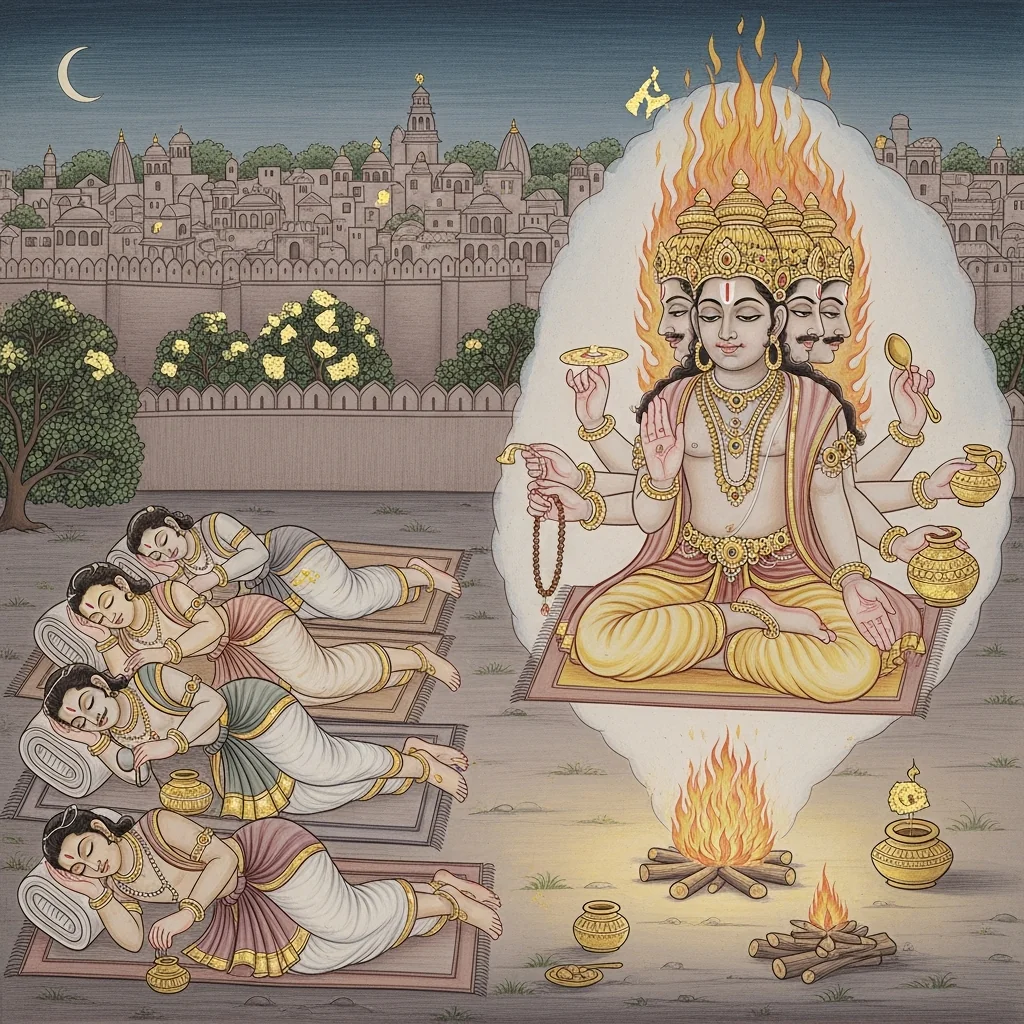
Mārkaṇḍeya instructs Yudhiṣṭhira to proceed to Agnitīrtha and introduces a theological reflection on how Agni becomes “present” at a place through desire and through social-ethical causality. In Kṛtayuga, King Duryodhana rules at Māhiṣmatī and unites with Narmadā, who bears him a daughter, Sudarśanā. When she comes of age, Agni appears disguised as a poor Brahmin and asks for her hand; the king refuses, judging him unfit for want of wealth and status. Agni then vanishes from the sacrificial fire, disrupting rites and alarming the Brahmins. After inquiry and ascetic vigilance, Agni reveals in a dream that the refusal caused his withdrawal. The Brahmins convey the condition: if the king grants the daughter, Agni will blaze again in the royal house. The king agrees, the marriage is arranged, and Agni remains perpetually present at Māhiṣmatī. The text names the place Agnitīrtha and proclaims its merits: bathing and giving at the junctions of the lunar fortnights, offerings to ancestors and deities, the gift of gold equated with the merit of gifting land, and a fasting observance that leads to enjoyment in Agni’s world. The chapter concludes by praising the tīrtha as purifying and beneficial even by hearing alone (the fruit of śravaṇa).
Shlokas
Verse 1
श्रीमार्कण्डेय उवाच । ततो गच्छेत्तु राजेन्द्र अग्नितीर्थमनुत्तमम् । यत्र संनिहितो ह्यग्निर्गतः कामेन मोहितः
Śrī Mārkaṇḍeya said: Then, O best of kings, one should go to the unsurpassed Agnitīrtha, where Agni himself abides—having once come there, bewildered and enchanted by desire.
Verse 2
युधिष्ठिर उवाच । कथं देवो जगद्धाता कामेन कलुषीकृतः । कथं च नित्यदा वास एकस्थानेषु जायते
Yudhiṣṭhira said: How could the god, the supporter of the world, be tainted by desire? And how does it come about that he dwells continually in a single place?
Verse 3
एतत्त्वाश्चर्यमतुलं सर्वलोकेष्वनुत्तमम् । कथयस्व महाभाग परं कौतूहलं मम
This is a wonder beyond compare, unsurpassed in all the worlds. O greatly fortunate one, tell it to me, for my longing to know is profound.
Verse 4
श्रीमार्कण्डेय उवाच । साधु साधु महाप्राज्ञ पृष्टः प्रश्नस्त्वयानघ । कथयामि यथापूर्वं श्रुतमेतन्महेश्वरात्
Śrī Mārkaṇḍeya said: Well asked, well asked, O greatly wise and sinless one; your question is fitting. I shall relate it just as I once heard it from Maheśvara (Śiva).
Verse 5
आसीत्कृतयुगे राजा नाम्ना दुर्योधनो महान् । हस्त्यश्वरथसम्पूर्णो मेदिनीपरिपालकः
In the Kṛta Yuga there was a great king named Duryodhana, whose forces were filled with elephants, horses, and chariots—protector and ruler of the earth.
Verse 6
रूपयौवनसम्पन्नं दृष्ट्वा तं पृथिवीपतिम् । दिव्योपभोगसम्पन्नं प्रार्थयामास नर्मदा
Seeing that lord of the earth, endowed with beauty and youth and blessed with celestial enjoyments and prosperity, Narmadā entreated him to be her husband.
Verse 7
स तु तां चकमे कन्यां त्यक्त्वाऽन्यं प्रमदाजनम् । मुदा परमया युक्तो माहिष्मत्याः पतिर्नृप
The king, lord of Māhiṣmatī, fell in love with that maiden; setting aside other women, he was filled with the highest joy.
Verse 8
रमते स तया सार्द्धं काले वै नृपसत्तम । नर्मदा जनयामास कन्यां पद्मदलेक्षणाम्
In time, O best of kings, he delighted together with her; and Narmadā gave birth to a daughter whose eyes were like lotus petals.
Verse 9
अङ्गप्रत्यङ्गसम्पन्ना यस्माल्लोकेषु विश्रुता । तस्यां पिता च माता च चक्रतुः प्रेमबन्धनम्
Because she was endowed with perfect limbs and features, she became renowned in the worlds; and her father and mother formed a bond of deep affection toward her.
Verse 10
कालेनातिसुदीर्घेण यौवनस्था वराङ्गना । प्रार्थ्यमानापि राजन्वै नात्मानं दातुमिच्छति
After a very long time, when the noble maiden had reached youth, though sought in marriage, O king, she did not wish to give herself in marriage.
Verse 11
ततोऽन्यदिवसे वह्निर्द्विजरूपो महातपाः । राजानं प्रार्थयामास रहो गत्वा शनैः शनैः
Then, on another day, Vahni, the Fire-god, a great ascetic, assuming the form of a brāhmaṇa, approached the king and, in private, softly made his request.
Verse 12
भोभो रघुकुलश्रेष्ठ द्विजोऽहं मन्दसन्ततिः । दरिद्रो ह्यसहायश्च भार्यार्थे वरयामि ताम्
“O! O best of the Raghu line! I am a brāhmaṇa of humble lineage—poor and without support. For the sake of a wife, I seek her hand.”
Verse 13
कन्या सुदर्शना नाम रूपेणाप्रतिमा भुवि । तां ददस्व महाभाग वर्धते तव मन्दिरे
There is a maiden named Sudarśanā, unmatched in beauty upon the earth. O fortunate king, give her to me in marriage—she is growing up within your palace.
Verse 14
ब्रह्मचर्येण निर्विण्ण एकाकी कामपीडितः । याचमानस्य मे तात प्रसादं कर्तुमर्हसि
Worn down by celibacy, alone, and afflicted by desire—O dear one, you ought to show favor to me who now supplicates you.
Verse 15
राजोवाच । नाहं द्रव्यविहीनस्य असवर्णस्य कर्हिचित् । दास्यामि स्वां सुतां शुभ्रां गम्यतां द्विजपुंगव
The king said: “Never will I give my fair daughter to one who is without wealth and not of proper social standing. Depart, O foremost of the twice-born.”
Verse 16
एवमुक्तस्तदा वह्निः परां पीडामुपागतः । न किंचिदुक्त्वा राजानं तत्रैवान्तरधीयत
Thus addressed, Vahni (Agni) was seized by intense distress. Saying nothing to the king, he vanished from that very place.
Verse 17
गते चादर्शनं विप्रे राजा मन्त्रिपुरोहितैः । मन्त्रयित्वाथ काले तु तुष्टो मखमुखे स्थितः
When the brāhmaṇa had gone out of sight, the king consulted with his ministers and priests; and at the proper time, satisfied, he stood at the opening of the sacrifice.
Verse 18
यजतश्च मखे भक्त्या ब्राह्मणैः सह भारत । ततश्चादर्शनं वह्निः सर्वेषां पश्यतामगात्
While he was performing the sacrifice with devotion together with the brāhmaṇas, O Bhārata, then Vahni (Agni) went out of sight—before everyone’s very eyes.
Verse 19
विप्रा दुर्मनसो भूत्वा गता राज्ञो हि मन्दिरम् । वह्निनाशं विमनसो राजानमिदमब्रुवन्
The brāhmaṇas, becoming sorrowful, went to the king’s palace. Troubled at the loss of the sacred fire, they spoke these words to the king.
Verse 20
ब्राह्मणा ऊचुः । दुर्योधन महाराज श्रूयतां महदद्भुतम् । न श्रुतं न च दृष्टं वा कौतुकं नृपपुंगव
The brāhmaṇas said: “O Mahārāja Duryodhana, hear of a great marvel—an astonishing occurrence never heard of nor seen before, O bull among kings.”
Verse 21
अग्निकार्यप्रवृत्तानां सर्वेषां विधिवन्नृप । केनापि हेतुना वह्निर्दृश्यते न ज्वलत्युत
O king, though all have proceeded with the fire-ritual according to rule, for some reason Agni is seen, yet he does not blaze.
Verse 22
तच्छ्रुत्वा विप्रियं घोरं राजा विप्रमुखाच्च्युतम् । आसनात्पतितो भूमौ छिन्नमूल इव द्रुमः
Hearing that dreadful and unwelcome news spoken from the brāhmaṇa’s mouth, the king fell from his seat onto the ground, like a tree cut off at its roots.
Verse 23
आश्वस्य च मुहूर्तेन उन्मत्त इव संस्तदा । निरीक्ष्य च दिशः सर्वा इदं वचनमब्रवीत्
After pausing for a moment, he stood up as if bewildered. Looking in all directions, he then spoke these words.
Verse 24
किमेतदाश्चर्यपरमिति भोभो द्विजोत्तमाः । कथ्यतां कारणं सर्वं शास्त्रदृष्ट्या विभाव्य च
“What is this, so supremely astonishing? O best of the twice-born, please tell the entire cause, examining it through the lens of the śāstras.”
Verse 25
मम वा दुष्कृतं किंचिदुताहो भवतामिह । येन नष्टोऽग्निशालायां हुतभुक्केन हेतुना
“Is there some wrongdoing on my part—or on yours here—because of which the Fire-god has disappeared from the fire-hall? For what reason has this happened?”
Verse 26
मन्त्रच्छिद्रमथान्यद्वा नैव किंचिददक्षिणम् । क्रियाहीनं कृतं वाथ केन वह्निर्न दृश्यते
Was there a flaw in the mantras—or some other cause? Was anything done without the proper dakṣiṇā, or performed lacking the prescribed rites? By what reason is the sacred fire not seen?
Verse 27
अन्नहीनो दहेद्राष्ट्रं मन्त्रहीनस्तु ऋत्विजः । दातारं दक्षिणाहीनो नास्ति यज्ञसमो रिपुः
A yajña lacking food can burn a kingdom; a priest (ṛtvij) lacking mantras can ruin the rite; and when dakṣiṇā is lacking, it harms the patron. There is no enemy equal to a defective sacrifice.
Verse 28
ब्राह्मणा ऊचुः । न मन्त्रहीना हि वयं न च राजन्व्रतैस्तथा । द्रव्येण च न हीनस्त्वमन्यत्पापं विचिन्त्यताम्
The brāhmaṇas said: “We are not deficient in mantras, O King, nor in vows and observances. And you are not lacking in sacrificial resources either. Therefore, consider some other fault—some pāpa—as the cause.”
Verse 29
राजोवाच । तथापि यूयं सहिता उपायं चिन्तयन्त्विति । येन श्रेयो भवेन्नित्यमिह लोके परत्र च
The king said: “Even so, all of you together should consider a means by which enduring well-being may arise—here in this world and also in the next.”
Verse 30
एवमुक्तास्ततः सर्वे ब्राह्मणाः कृतनिश्चयाः । निराहाराः स्थिताः शर्वे यत्र नष्टो हुताशनः
Thus addressed, all the brāhmaṇas, firm in resolve, stood there fasting—at the very place where the sacrificial fire (Hutāśana) had vanished.
Verse 31
ततः स्वप्ने महातेजा हुतभुग्ब्राह्मणांस्तदा । उवाच श्रूयतां सर्वैर्मम नाशस्य कारणम्
Then, in a dream, the radiant Hutabhuk (Agni) spoke to the brāhmaṇas: “Let all of you hear the cause of my disappearance.”
Verse 32
प्रार्थितोऽयं मया राजा सुतां दातुं न चेच्छति । तेन नष्टोऽग्निशरणादहं भो द्विजसत्तमाः
“I requested this king to give his daughter, but he does not consent. Therefore I withdrew from the refuge of the sacred fire, O best of brāhmaṇas.”
Verse 33
। अध्याय
Chapter heading marker (“Adhyāya”).
Verse 34
तच्छ्रुत्वा वचनं विप्रा वैश्वानरमुखोद्गतम् । विस्मयोत्फुल्लनयना राजानमिदमब्रुवन्
Hearing that utterance which issued from the mouth of Vaiśvānara (Agni), the brāhmaṇas—eyes widened in astonishment—spoke these words to the king.
Verse 35
भवतो मतमाज्ञाय सर्वे गत्वाग्निमन्दिरम् । निराहाराः स्थिता रात्रौ पश्यामो जातवेदसम्
Knowing your intention, we shall all go to the temple of Agni; fasting, we will remain there through the night and behold Jātavedas (the Fire-god).
Verse 36
तेनोक्ताः स्वसुतां चेत्तु राजा मे दातुमिच्छति । ततोऽस्य भूयोऽपि गृहे ज्वलेऽहं नान्यथा द्विजाः
He said to them: ‘If the king truly wishes to give me his own daughter, then I shall blaze again in his house—otherwise not, O brāhmaṇas.’
Verse 37
एवं ज्ञात्वा महाराज स्वसुतां दातुमर्हसि
Knowing thus, O great king, you ought to give your own daughter (in marriage).
Verse 38
राजोवाच । भवतां तस्य वा कार्यं देवस्य वचनं हृदि । समयं कर्तुमिच्छामि कन्यादाने ह्यनुत्तमम्
The king said: ‘Whether it concerns you or him, the word of the deity is to be held in the heart. I wish to set a solemn agreement regarding this most excellent act of kanyādāna.’
Verse 39
मम संनिहितो नित्यं गृहे तिष्ठतु पावकः । ददामि रुचिरापाङ्गीं नान्यथा करवाणि वै
‘Let Pāvaka (Agni) dwell ever-present in my house. I will give the maiden of lovely side-glances; I shall do it in no other way.’
Verse 40
एवं ते ब्राह्मणाः श्रुत्वा तथाग्निं प्राप्य सत्वरम् । कथयित्वा विवाहेन योजयामासुराशु वै
Hearing this, those brāhmaṇas quickly approached Agni; conveying the matter, they promptly arranged the marriage.
Verse 41
सुदर्शनाया लाभेन परितुष्टो हुताशनः । ज्वलते सन्निधौ नित्यं माहिष्मत्यां युधिष्ठिर
Pleased by obtaining Sudarśanā, Hutāśana (Agni) blazes ever in close presence at Māhiṣmatī, O Yudhiṣṭhira.
Verse 42
ततः प्रभृति तत्तीर्थमग्नितीर्थं प्रचक्षते । ये तत्र पक्षसन्धौ तु स्नानदानैस्तु भाविताः
From that time onward, that sacred ford has been known as Agnitīrtha. Those who, at the junction of the fortnight, perform bathing and charitable gifts there become purified and ennobled by those acts.
Verse 43
तर्पयन्ति पितॄन् देवांस्तेऽश्वमेधफलैर्युताः । सुवर्णं ये प्रयच्छन्ति तस्मिंस्तीर्थे नराधिप
O king, those who, at that sacred ford, satisfy the Pitṛs and the gods with offerings—and those who donate gold there—become endowed with the merit equal to that of an Aśvamedha sacrifice.
Verse 44
पृथ्वीदानफलं तत्र जायते नात्र संशयः । अनाशकं तु यः कुर्यात्तस्मिंस्तीर्थे नराधिप
O king, there indeed arises the fruit of gifting the earth itself—of this there is no doubt. And whoever performs the vow of anāśaka at that tīrtha, a strict fast abstaining from food, likewise gains great merit.
Verse 45
स मृतो ह्यग्निलोके तु क्रीडते सुरपूजितः । एष ते ह्यग्नितीर्थस्य सम्भवः कथितो मया
When he dies, he sports in Agni’s world, honored by the gods. Thus, O king, the origin and account of Agni-tīrtha has been told to you by me.
Verse 46
सर्वपापहरः पुण्यः श्रुतमात्रो नरोत्तम । धन्यः पापहरो नित्यमित्येवं शङ्करोऽब्रवीत्
“It is holy and removes all sins, O best of men—even by merely hearing of it. Blessed indeed, it ever destroys sin”: thus Śaṅkara (Śiva) spoke.