Adhyaya 32
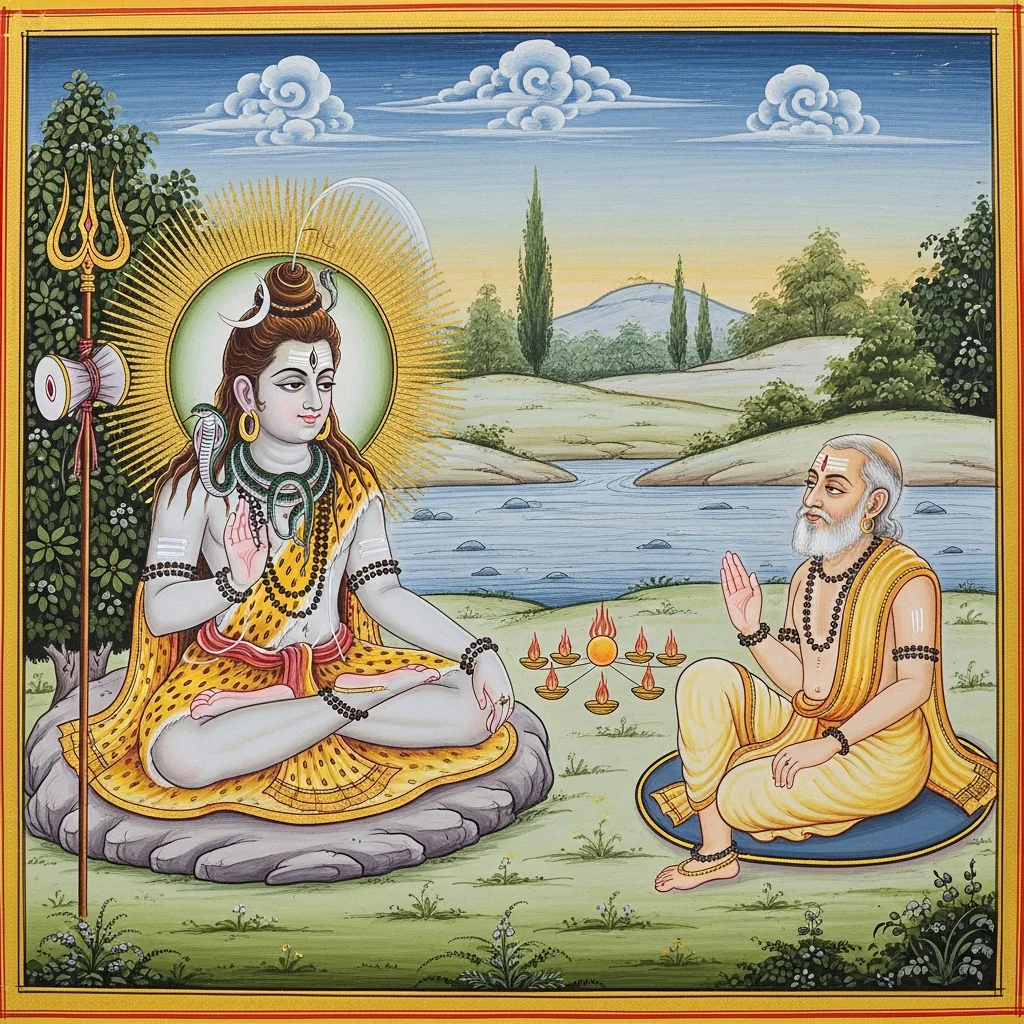
This adhyāya unfolds as a dialogue: Yudhiṣṭhira asks Mārkaṇḍeya to name a mighty siddha connected with the sin-destroying tīrtha called Patreśvara. Mārkaṇḍeya recounts a radiant being—son of Citr(a)/Citr(a)—known as Patreśvara, also called Jaya. In the divine assembly, during Menakā’s dance, he becomes infatuated and loses self-restraint; Indra, seeing this lapse, pronounces a curse of prolonged mortal life, an ethical warning against ajitendriyatā—unconquered senses. To obtain release, the cursed one is directed to undertake twelve years of disciplined practice on the bank of the Narmadā (Revā): bathing, japa, worship of Śaṅkara (Śiva), and severe austerities including pañcāgni tapas. Śiva appears and offers a boon; the devotee asks that Śiva remain at that tīrtha under his name, thus establishing the Patreśvara shrine and its renown in the three worlds. The phalaśruti concludes that a single bath there destroys sins, and worship grants vast merit like the fruit of an Aśvamedha, heavenly enjoyment, auspicious rebirth, longevity, freedom from disease and sorrow, and enduring remembrance of the sacred waters.
Shlokas
Verse 1
श्रीमार्कण्डेय उवाच । पत्त्रेश्वरं ततो गच्छेत्सर्वपापप्रणाशनम् । यत्र सिद्धो महाभागश्चित्रसेनसुतो बली
Śrī Mārkaṇḍeya said: Then one should proceed to Pattreśvara, the destroyer of all sins—where the illustrious and powerful son of Citrasena attained siddhi (spiritual accomplishment).
Verse 2
युधिष्ठिर उवाच । कोऽसौ सिद्धस्तदा ब्रह्मंस्तस्मिंस्तीर्थे महातपाः । पुत्रः कस्य तु को हेतुरेतदिच्छामि वेदितुम्
Yudhiṣṭhira said: O revered brāhmaṇa, who was that perfected siddha at that sacred tīrtha, endowed with great tapas? Whose son was he, and what was the cause of his attainment? I wish to know this.
Verse 3
श्रीमार्कण्डेय उवाच । चित्रोनाम महातेजा इन्द्रस्य दयितः पुरा । तस्य पुत्रो नृपश्रेष्ठ पत्त्रेश्वर इति श्रुतः
Śrī Mārkaṇḍeya said: Formerly there was one named Citra, of great splendor, dear to Indra. O best of kings, his son is renowned by the name Pattreśvara.
Verse 4
रूपवान् सुभगश्चैव सर्वशत्रुभयंकरः । इन्द्रस्य दयितोऽत्यर्थं जय इत्येव चापरः
He was handsome and fortunate, terrifying to all enemies; exceedingly dear to Indra, and also known by another name—Jaya.
Verse 5
स कदाचित्सभामध्ये सर्वदेवसमागमे । मेनकानृत्यगीतेन मोहितः सुचिरं किल
Once, in the midst of an assembly at the gathering of all the gods, he was captivated for a long time by Menakā’s dance and song.
Verse 6
तिष्ठते गतमर्यादो गतप्राण इव क्षणात् । तावत्सुरपतिर्देवः शशापाथाजितेन्द्रियम्
In an instant he stood as though lifeless, having lost all propriety; then the Lord of the gods, Indra, cursed him, for his senses had become unconquered.
Verse 7
यस्मात्त्वं स्वर्गसंस्थोऽपि मर्त्यधर्ममुपेयिवान् । तस्मान्मर्त्ये चिरं कालं क्षपयिष्यस्यसंशयम्
For though you were established in heaven, you have taken up the ways of mortals; therefore, without doubt, you shall spend a long time in the mortal world.
Verse 8
एवमुक्तः सुरेन्द्रेण चित्रसेनसुतो युवा । वेपमानः सुरश्रेष्ठः कृताञ्जलिरुवाच ह
Thus addressed by the king of the gods, the young son of Citrasena—trembling, yet foremost among the celestials—spoke with hands folded in reverence.
Verse 9
पत्त्रेश्वर उवाच । मया पापेन मूढेन अजितेन्द्रियचेतसा । प्राप्तं वै यत्फलं तस्य प्रसादं कर्तुमर्हसि
Pattreśvara said: “I—sinful, deluded, and with senses unconquered—have indeed received the fruit of my own deeds. Yet be gracious and bestow your favor upon me.”
Verse 10
शक्र उवाच । नर्मदातटमाश्रित्य द्वादशाब्दं जितेन्द्रियः । आराधय शिवं शान्तं पुनः प्राप्स्यसि सद्गतिम्
Śakra said: “Taking refuge on the bank of the Narmadā, and mastering your senses for twelve years, worship the tranquil Lord Śiva. Thus you shall again attain the true and auspicious path.”
Verse 11
सत्यशौचरतानां च धर्मिष्ठानां जितात्मनाम् । लोकोऽयं पापिनां नैव इति शास्त्रस्य निश्चयः
This world belongs to those devoted to truth and purity—righteous and self-mastered. For sinners it is not so; such is the settled conclusion of the sacred teaching.
Verse 12
एवमुक्ते महाराज सहस्राक्षेण धीमता । गन्धर्वतनयो धीमान्प्रणम्यागात्तु भूतलम्
O great king, when the wise Thousand-Eyed (Indra) had spoken thus, the intelligent son of a Gandharva bowed down and then departed for the earth.
Verse 13
रेवाया विमले तोये ब्रह्मावर्तसमीपतः । स्नात्वा जप्त्वा विधानेन अर्चयित्वा च शङ्करम्
Near Brahmāvarta, in the pure waters of the Revā, he bathed, performed japa according to rule, and worshipped Śaṅkara.
Verse 14
वाय्वम्बुपिण्याकफलैश्च पुष्पैः पर्णैश्च मूलाशनयावकेन । तताप पञ्चाग्नितपोभिरुग्रैस्ततश्च तोषं समगात्स देवः
Living on air, water, oil-cake, fruits, flowers, leaves, roots, and barley-gruel, he undertook fierce austerities with the five fires; and then that God (Śiva) became pleased.
Verse 15
पिनाकपाणिं वरदं त्रिशूलिनमुमापतिं ह्यन्धकनाशनं च । चन्द्रार्धमौलिं गजकृत्तिवाससं दृष्ट्वा पपाताग्रगतं समीक्ष्य
Seeing the Lord with the Pināka bow in hand—the boon-giver, trident-bearer, consort of Umā, slayer of Andhaka—crowned with the half-moon and clad in elephant-hide, he looked upon Him standing before him and fell down in reverence.
Verse 16
ईश्वर उवाच । वरं वृणीष्व भद्रं ते वरदोऽहं तवानघ । यमिच्छसि ददाम्यद्य नात्र कार्या विचारणा
Īśvara said: “Choose a boon—may auspiciousness be yours. O sinless one, I am your boon-giver. Whatever you desire, I grant today; here there is no need for deliberation.”
Verse 17
पत्त्रेश्वर उवाच । यदि तुष्टोऽसि देवेश यदि देयो वरो मम । अत्र त्वं सततं तीर्थे मम नाम्ना भव प्रभो
Pattreśvara said: “If You are pleased, O Lord of the gods, and if a boon is to be granted to me—then here, at this sacred tīrtha, dwell forever, O Master, bearing my name.”
Verse 18
एतच्छ्रुत्वा महादेवो हर्षगद्गदया गिरा । तथेत्युक्त्वा ययौ हृष्ट उमया सह शङ्करः
Hearing this, Mahādeva—his voice choked with joy—said, “So be it,” and Śaṅkara departed, delighted, together with Umā.
Verse 19
सोऽपि तत्तीर्थमाप्लुत्य गते देवे दिवं प्रति । स्नात्वा जाप्यविधानेन तर्पयित्वा पितॄन् पुनः
He too plunged into that sacred tīrtha; and when the god had departed for heaven, he bathed according to the rite of japa and again offered libations to the Pitṛs, the ancestral spirits.
Verse 20
स्थापयामास देवेशं तस्मिंस्तीर्थे विधानतः । पत्त्रेश्वरं तु विख्यातं त्रिषु लोकेषु भारत
O Bhārata, he then duly installed the Lord of the gods in that very tīrtha; and that (liṅga/deity) became renowned as Pattreśvara throughout the three worlds.
Verse 21
इन्द्रलोकं गतः शापान्मुक्तः सोऽपि नरेश्वर । हृष्टः प्रमुदितो रम्यं जयशब्दादिमङ्गलैः
O lord of men, he too went to Indra’s world, freed from the curse; joyful and delighted, he enjoyed auspicious celebrations beginning with cries of “Victory!”
Verse 22
एष ते कथितः प्रश्नः पृष्टो यो वै युधिष्ठिर । तत्र स्नानेन चैकेन सर्वपापैः प्रमुच्यते
O Yudhiṣṭhira, thus your question is answered: by a single sacred bath there, one is released from all sins.
Verse 23
यस्त्वर्चयेन्महादेवं तस्मिंस्तीर्थे युधिष्ठिर । स्नात्वाभ्यर्च्य पित्ःन् देवान् सोऽश्वमेधफलं लभेत्
But whoever worships Mahādeva at that tīrtha, O Yudhiṣṭhira—having bathed and then worshipped the Pitṛs and the gods—attains merit equal to an Aśvamedha sacrifice.
Verse 24
मृतो वर्षशतं साग्रं क्रीडित्वा च शिवे पुरे । राजा वा राजतुल्यो वा पश्चान्मर्त्येषु जायते
After death, having enjoyed for a full hundred years in Śiva’s city, one is later reborn among mortals as a king—or as one equal to a king.
Verse 25
वेदवेदाङ्गतत्त्वज्ञो जीवेच्च शरदः शतम् । व्याधिशोकविनिर्मुक्तः पुनः स्मरति तज्जलम्
He becomes a knower of the truth of the Vedas and their limbs, lives for a hundred autumns, is free from disease and sorrow, and again remembers that sacred water.
Verse 32
। अध्याय
“Chapter” (adhyāya)—a scribal/colophon marker indicating the end or transition of the adhyāya.