Adhyaya 24
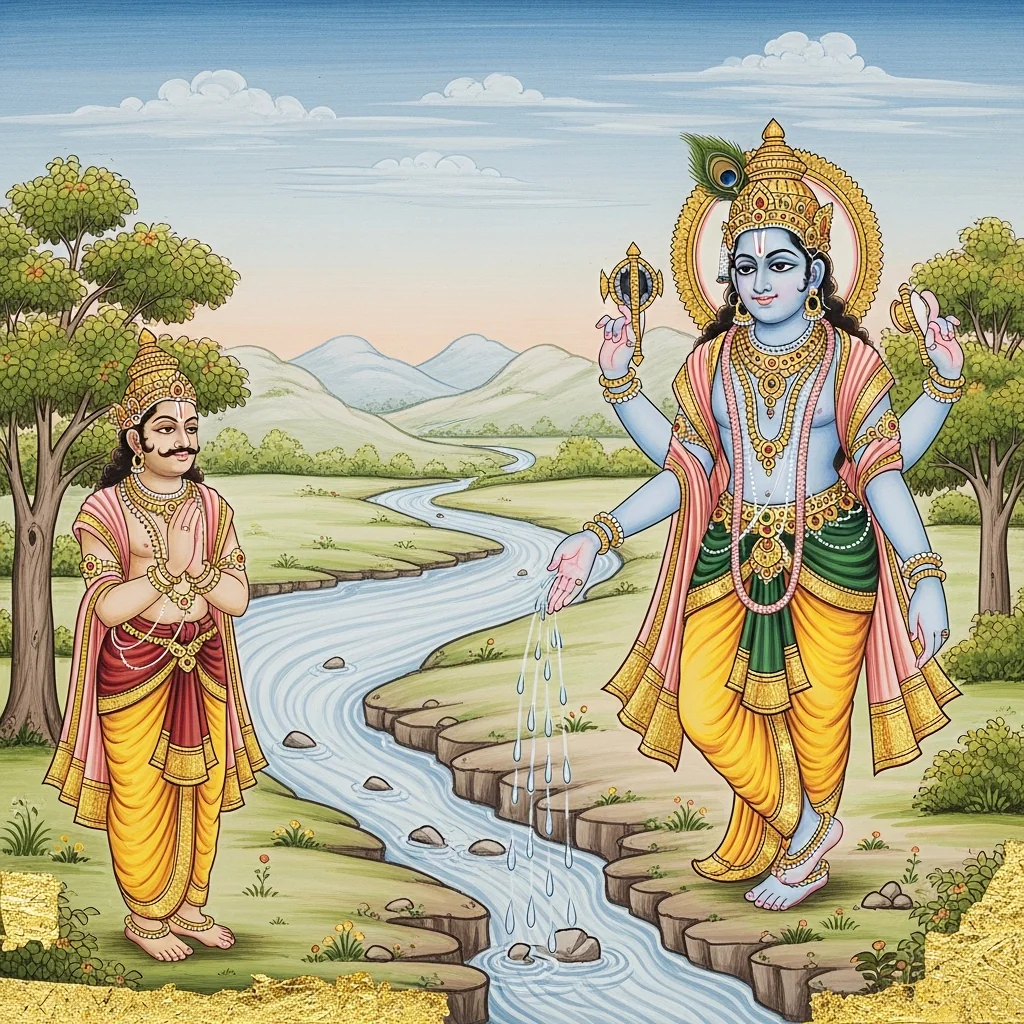
This adhyāya, spoken by Śrī Mārkaṇḍeya, points out a particular tīrtha: the saṅgama where the Kara river meets the Narmadā (Revā) at the settlement called Māndhātṛ. It lays down a brief ritual course—go to the confluence, perform snāna (ritual bathing), and cultivate devotion directed to Viṣṇu through worship and reverent remembrance as purifying disciplines. An origin-legend then explains the site’s holiness: when Viṣṇu, intent on slaying a daitya, took up his cakra, an excellent river arose from his perspiration (sveda) and joined the Revā at that very place. The chapter ends with a clear phalaśruti: bathing there, where the river merges with the Revā, releases one from sins.
Shlokas
Verse 1
श्रीमार्कण्डेय उवाच । सङ्गमः करनर्मदयोः पुरे मान्धातृसंज्ञिते । गत्वा स्नात्वा तपयित्वा पित्ःन्विष्णुपुरं नयेत्
Śrī Mārkaṇḍeya said: At the confluence of the Kara and Narmadā, in the city called Māndhātṛ, having gone there, bathed, and performed tapas, one should lead one’s ancestors to Viṣṇu’s realm.
Verse 2
मर्दयित्वा करौ पूर्वं विष्णुर्दैत्यजिघांसया । चक्रं जग्राह तत्रैव स्वेदाज्जाता सरिद्वरा
First rubbing his palms together, Viṣṇu—intent on slaying the Daityas—seized his cakra right there; and from his sweat arose that excellent river.
Verse 3
संगता रेवया तत्र स्नात्वा पापैः प्रमुच्यते
There, at the confluence with the Revā, one who bathes is released from sins.
Verse 24
। अध्याय
End of the adhyāya (chapter).