Adhyaya 230
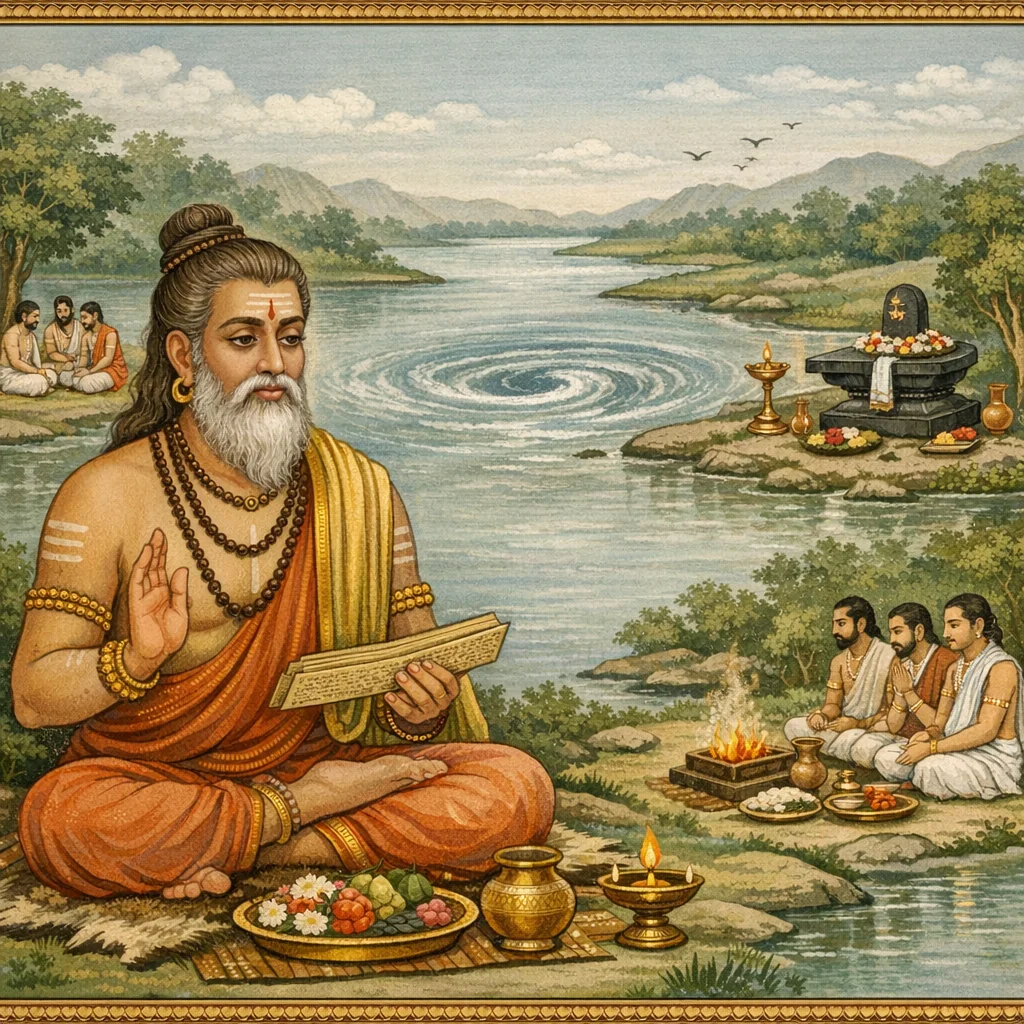
Chapter 230 functions as a programmatic preface and compressed index to a large catalogue of Revā (Narmadā) tīrthas. Sūta, conveying a discourse attributed to Mārkaṇḍeya, closes the preceding narration, notes that the Revā-māhātmya has already been communicated in essence, and announces an auspicious forthcoming “tīrthāvalī” beginning from Oṅkāra. The chapter opens with reverent invocations to Śoma, Maheśa, Brahmā, Acyuta, Sarasvatī, Gaṇeśa, and the Goddess, followed by salutations to Narmadā as a divine purifier. It then rapidly enumerates a dense sequence of tīrtha names and saṅgamas (confluences), āvarta sites, liṅga-stations, and associated sacred forests and āśramas, serving as a navigational register rather than extended storytelling. The latter portion gives a recitation protocol and phalaśruti: composed for the welfare of the virtuous, the tīrthāvalī’s recitation is said to neutralize sins accrued over daily, monthly, seasonal, and annual spans, and to be efficacious in śrāddha (ancestral rites) and pūjā (worship). It promises broad purification of one’s family line and merit comparable to established ritual benchmarks.
Shlokas
Verse 1
सूत उवाच । इत्युक्त्वोपररामथ पाण्डोः पुत्राय वै मुनिः । मृकण्डतनयो धीमान्सप्तकल्पस्मरः पुरः
Sūta said: Having spoken thus, the sage then fell silent before the son of Pāṇḍu—wise Mārkaṇḍeya, son of Mṛkaṇḍu, who remembers the events of seven kalpas.
Verse 2
मार्कण्डमुनिना प्रोक्तं यथा पार्थाय सत्तमाः । तथा वः कथितं सर्वं रेवामाहात्म्यमुत्तमम्
O best of sages, just as the sage Mārkaṇḍeya taught it to Pārtha, so have I narrated to you in full this supreme glory of Revā.
Verse 3
इयं पुण्या सरिच्छ्रेष्ठा रेवा विश्वैकपावनी । रुद्रदेहसमुद्भूता सर्वभूताभयप्रदा
This Revā is holy—the foremost of rivers, the unique purifier of the world—born from Rudra’s own body, and a giver of fearlessness to all beings.
Verse 4
ओङ्कारजलधिं यावदुवाच भृगुनन्दनः । तीर्थसङ्गमभेदान्वै धर्मपुत्राय पृच्छते
Up to the great confluence called Oṃkāra-jaladhi, Bhṛgu’s descendant spoke; and then he asked Dharma’s son about the distinct kinds of sacred tīrthas and confluences.
Verse 5
समासेनैव मुनयस्तथाहं कथयामि वः । सप्तषष्टिसहस्राणि षष्टिकोट्यस्तथैव च
O sages, I will tell you only in brief: sixty-seven thousand, and likewise sixty crores as well—so vast is the count.
Verse 6
कथं केनात्र शक्यन्ते वक्तुं वर्षशतैरपि । तथाप्यत्र मुनिश्रेष्ठाः प्रोक्तं पार्थाय वै यथा
How, and by whom, could these be spoken here—even in hundreds of years? Yet, O best of sages, I shall speak here as it was indeed taught to Pārtha.
Verse 7
तीर्थमोंकारमारभ्य वक्ष्ये तीर्थावलिं शुभाम् । प्रोच्यमानां समासेन तां शृणुध्वं महर्षयः
Beginning with the tīrtha of Oṃkāra, I shall recount an auspicious garland of tīrthas. As it is being spoken in brief, listen to it, O great sages.
Verse 8
नत्वा सोमं महेशानं नत्वा ब्रह्माच्युतावुभौ । सरस्वतीं गणेशानं देव्यासाङ्घ्रिपञ्कजम्
Having bowed to Soma and to Maheśāna, and having bowed to both Brahmā and Acyuta; (having bowed) to Sarasvatī, to Gaṇeśa, and to the lotus-feet of the Goddess—
Verse 9
पूर्वाचार्यांस्तथा सर्वान्दृष्ट्वादृष्टार्थवेदिनः । प्रणम्य नर्मदां देवीं वक्ष्ये तीर्थावलिं त्विमाम्
Having paid homage to all the ancient teachers—knowers of meanings seen and unseen—and having bowed to the Goddess Narmadā, I shall now declare this very garland of tīrthas.
Verse 10
ॐ नमो विश्वरूपाय ओङ्कारायाखिलात्मने । यमारभ्ये प्रवक्ष्यामि रेवातीर्थावलिं द्विजाः
Om—salutations to the Universal-Formed One, to Oṅkāra, the Self of all. Beginning with Him, O twice-born sages, I shall now proclaim the sacred list of the tīrthas of the Revā (Narmadā).
Verse 11
अस्मिन्मार्कण्डगदिते रेवातीर्थक्रमे शुभे । पुराणसंहिताध्याया मार्कण्डाश्रमवर्णनम्
In this auspicious sequence of Revā’s tīrthas, as spoken by Mārkaṇḍa, there is the Purāṇic compendium-chapter describing the hermitage of Mārkaṇḍa.
Verse 12
ततः प्रश्नाधिकारश्च प्रशंसा नर्मदोद्भवा । तथा पञ्चदशानां च प्रवाहानां प्रकीर्तनम्
Thereafter come the section of questions, and the praise of Narmadā’s origin; and also the narration of her fifteen streams and flowing branches.
Verse 13
नामनिर्वचनं तद्वत्तथा कल्पसमुद्भवाः । एकविंशतिकल्पानां तद्वन्नामानुकीर्तनम्
Likewise are given the etymological explanations of the names and the accounts of their arising in the kalpas; and in the same manner, the recitation of the names of the twenty-one kalpas.
Verse 14
मार्कण्डेयानुभूतानां सप्तानां लक्षणानि च । माहात्म्यं चैव रेवायाः शिवविष्ण्वोस्तथैव च
And the characteristics of the seven experiences beheld by Mārkaṇḍeya; also the greatness of the Revā, and likewise the greatness of Śiva and of Viṣṇu.
Verse 15
संहारलक्षणं तद्वदोङ्कारस्य च सम्भवः । तथैवौंकारमाहात्म्यममरकण्टकीर्तनम्
Likewise are described the marks of dissolution (saṃhāra), and also the origin of Oṅkāra; and in the same way, the glory of Oṅkāra and the proclamation of Amarakāṇṭa.
Verse 16
अमरेश्वरतीर्थं च तथा दारुवनं महत् । दारुकेश्वरतीर्थं च तीर्थं वै चरुकेश्वरम्
And (there is) the tīrtha of Amareśvara, and the great Dāruvana; also the tīrtha of Dārukeśvara, and indeed the tīrtha called Carukeśvara.
Verse 17
चरुकासङ्गमस्तद्व्यद्वतीपातेश्वरं तथा । पातालेश्वरतीर्थं च कोटियज्ञाह्वयं तथा
Also (there is) the confluence called Carukā-saṅgama, and likewise Vyadvatī-Pāteśvara; and the tīrtha of Pātāleśvara, and the place known as Koṭiyajña as well.
Verse 18
वरुणेश्वरतीर्थं च लिङ्गान्यष्टोत्तरं शतम् । सिद्धेश्वरं यमेशं च ब्रह्मेश्वरमतः परम्
And there is the Varuṇeśvara Tīrtha, and one hundred and eight liṅgas; then Siddheśvara and Yameśa, and thereafter Brahmeśvara.
Verse 19
सारस्वतं चाष्टरुद्रं सावित्रं सोमसंज्ञितम् । शिवखातं महातीर्थं रुद्रावर्तं द्विजोत्तमाः
O best of the twice-born, there are Sārasvata and Aṣṭarudra, Sāvitra and that known as Soma; also the great tīrtha called Śivakhāta, and Rudrāvarta.
Verse 20
ब्रह्मावर्तं परं तीर्थं सूर्यावर्तमतः परम् । पिप्पलावर्ततीर्थं च पिप्पल्याश्चैव सङ्गमः
There is the supreme sacred ford called Brahmāvarta; next to it, the excellent tīrtha named Sūryāvarta; also the holy place called Pippalāvarta, and the confluence of the river Pippalī as well.
Verse 21
अमरकण्टमाहात्म्यं कपिलासङ्गमस्तथा । विशल्यासम्भवश्चापि भृगुतुङ्गाद्रिकीर्तनम्
Then is proclaimed the greatness of Amarakaṇṭa; likewise the confluence of the Kapilā; also the account of the origin of Viśalyā; and the devotional praise (kīrtana) of Mount Bhṛgutuṅga.
Verse 22
विशल्यासङ्गमः पुण्यः करमर्दासमागमः । करमर्देश्वरं तीर्थं चक्रतीर्थमनुत्तमम्
The confluence of Viśalyā is meritorious; so too the meeting with Karamardā. There is the tīrtha of Karamardeśvara, and the unsurpassed sacred ford called Cakratīrtha.
Verse 23
सङ्गमो नीलगङ्गायाः विध्वंसस्त्रिपुरस्य च । कीर्तनं तीर्थदानानां मधुकतृतीयाव्रतम्
(There is) the confluence of the Nīlagāṅgā, and the account of Tripura’s destruction. (There is) the recitation of gifts pertaining to the tīrthas, and the observance of the vow called Madhu-katṛtīyā.
Verse 24
अप्सरेश्वरतीर्थं च देहक्षेपे विधिस्ततः । तीर्थं ज्वालेश्वरं नाम ज्वालायाः सङ्गमस्तथा
And (there is) the tīrtha of Apsareśvara, and thereafter the ordinance concerning the casting off of the body (death rites). (There is) the sacred place named Jvāleśvara, and likewise the confluence of the Jvālā.
Verse 25
शक्रतीर्थं कुशावर्तं हंसतीर्थं तथैव च । अम्बरीषस्य तीर्थं च महाकालेश्वरं तथा
(There are) Śakratīrtha, Kuśāvarta, and likewise Haṃsatīrtha; also the tīrtha of King Ambarīṣa, and similarly the shrine of Mahākāleśvara.
Verse 26
मातृकेश्वरतीर्थं च भृगुतुङ्गानुवर्णनम् । तत्र भैरवमाहात्म्यं चपलेश्वरकीर्तनम्
And (there is) the tīrtha of Mātṛkeśvara, and the description of Bhṛgutuṅga. There (one finds) the greatness of Bhairava, and the narration in praise of Capaleśvara.
Verse 27
चण्डपाणेश्च माहात्म्यं कावेरीसङ्गमस्तथा । कुबेरेश्वरतीर्थं च वाराहीसङ्गमस्तथा
(There is) the greatness of Caṇḍapāṇi, and likewise the confluence of the Kāverī. And (there is) the tīrtha of Kubereśvara, and likewise the confluence of the Vārāhī.
Verse 28
सङ्गमश्चण्डवेगायास्तीर्थं चण्डेश्वरं तथा । एरण्डीसङ्गमः पुण्य एरण्डेश्वरमुत्तमम्
There is the confluence of the Caṇḍavegā, and likewise the tīrtha of Caṇḍeśvara. The confluence of the Eraṇḍī is most meritorious, and Eraṇḍeśvara is excellent indeed.
Verse 29
पितृतीर्थं च तत्रैव ओङ्कारस्य च सम्भवम् । माहात्म्यं पञ्चलिङ्गानामोङ्कारस्य मुनीश्वराः
And there itself is Pitṛtīrtha, the sacred ford for the ancestors, and also the place of Oṅkāra’s arising. O sages, there is proclaimed the greatness of the five liṅgas, and of Oṅkāra as well.
Verse 30
कोटितीर्थस्य माहात्म्यं तीर्थं काकह्रदं तथा । जम्बुकेश्वरतीर्थं च सारस्वतमतः परम्
Here is taught the greatness of Koṭitīrtha; likewise the sacred ford called Kākahrada; also Jambukeśvara-tīrtha; and thereafter the excellent account known as the Sārasvata tradition.
Verse 31
कपिलासङ्गमस्तद्वत्तीर्थं च कपिलेश्वरम् । दैत्यसूदनतीर्थं च चक्रतीर्थं च वामनम्
There is the confluence of the Kapilā, and likewise the sacred place called Kapileśvara; also Daityasūdana-tīrtha, and Cakratīrtha, and the shrine of Vāmana.
Verse 32
तीर्थलक्षं विदुः पूर्वे कपिलायास्तु सङ्गमे । स्वर्गस्य नरकस्यापि लक्षणं मुनिभाषितम्
The ancients knew the defining mark of a tīrtha at the confluence of the Kapilā; and the characteristics of heaven—and of hell as well—have been spoken by the sages.
Verse 33
व्यवस्थानं शरीरस्य गोप्रदानानुवर्णनम् । अशोकवनिकातीर्थं मतङ्गाश्रमवर्णनम्
Here are described the proper ordering of the body and conduct, the account of the sacred gift of cows, the tīrtha of the Aśoka-grove, and the description of Mataṅga’s āśrama.
Verse 34
अशोकेश्वरतीर्थं च मतङ्गेश्वरमुत्तमम् । तथा मृगवनं पुण्यं तत्र तीर्थं मनोरथम्
Also spoken of are the Aśokeśvara-tīrtha and the most excellent Mataṅgeśvara; likewise the holy Mṛgavana, the Deer-forest, and there the tīrtha called Manoratha, the fulfiller of wishes.
Verse 35
सङ्गमोऽङ्गारगर्ताया अङ्गारेश्वरमुत्तमम् । तथा मेघवनं तीर्थं देव्या नामानुकीर्तनम्
There is the confluence of Aṅgāragartā and the excellent Aṅgāreśvara; likewise the tīrtha called Meghavana, and the devotional recitation of the Goddess’s names.
Verse 36
सङ्गमश्चापि कुब्जायास्तीर्थं कुब्जेश्वरं तथा । बिल्वाम्रकं तथा तीर्थं पूर्णद्वीपमतः परम्
And there is also the confluence of the Kubjā; likewise the tīrtha of Kubjeśvara; also the tīrtha called Bilvāmraka; and thereafter comes Pūrṇadvīpa.
Verse 37
तथा हिरण्यगर्भायाः सङ्गमः पुण्यकीर्तनः । द्वीपेश्वरं नाम तीर्थं पुण्यं यज्ञेश्वरं तथा
Likewise, the confluence of Hiraṇyagarbhā—renowned for its merit; the holy tīrtha named Dvīpeśvara; and also the sacred shrine of Yajñeśvara.
Verse 38
माण्डव्याश्रमतीर्थं च विशोकासङ्गमस्तथा । वागीश्वरं नाम तीर्थं पुण्यो वै वागुसङ्गमः
Also there is the tīrtha at Māṇḍavya’s hermitage, and likewise the confluence of the Viśokā; the tīrtha named Vāgīśvara; and indeed the Vāgu confluence, renowned as holy.
Verse 39
सहस्रावर्तकं तत्र तीर्थं सौगन्धिकं तथा । सङ्गमश्च सरस्वत्या ईशानं तीर्थमुत्तमम्
There, too, is Sahasrāvartaka-tīrtha, and likewise the Sauगandhika-tīrtha; also the confluence with the Sarasvatī; and the excellent tīrtha called Īśāna.
Verse 40
देवतात्रयतीर्थं च शूलखातं ततः परम् । ब्रह्मोदं शाङ्करं सौम्यं सारस्वतमतः परम्
Next come the Devatā-traya Tīrtha and thereafter Śūlakhāta. Beyond these are Brahmoda, Śāṅkara, Saumya, and then the Sārasvata Tīrtha.
Verse 41
सहस्रयज्ञतीर्थं च कपालमोचनं तथा । आग्नेयमदितीशं च वाराहं तीर्थमुत्तमम्
And there is the Sahasra-yajña Tīrtha, and likewise Kapāla-mocana. Then come Āgneya and Aditīśa, and the excellent Vārāha Tīrtha.
Verse 42
तथा देवपथं तीर्थं तीर्थं यज्ञसहस्रकम् । शुक्लतीर्थं दीप्तिकेशं विष्णुतीर्थं च योधनम्
Likewise there is the Devapatha Tīrtha, and the tīrtha called Yajña-sahasraka. Then come Śukla Tīrtha, Dīptikeśa, and also Viṣṇu Tīrtha, called Yodhana.
Verse 43
नर्मदेश्वरतीर्थं च वरुणेशं च मारुतम् । योगेशं रोहिणीतीर्थं दारुतीर्थं च सत्तमाः
And there are Narmadeśvara Tīrtha, Varuṇeśa, and Māruta; also Yogeśa, Rohiṇī Tīrtha, and Dāru Tīrtha—O best among the virtuous.
Verse 44
ब्रह्मावर्तं च पत्त्रेशं वाह्नं सौरं च कीर्त्यते । मेघनादं दारुतीर्थं देवतीर्थं गुहाश्रयम्
Also praised are Brahmāvarta, Pattreśa, Vāhna, and Saura; as well as Meghanāda, Dāru Tīrtha, and Devatīrtha—the one sheltered in a cave.
Verse 45
नर्मदेश्वरसंज्ञं तत्कपिलातीर्थमुत्तमम् । करञ्जेशं कुण्डलेशं पिप्पलादमतः परम्
That supreme Kapilā Tīrtha is known by the name Narmadeśvara. Beyond it are Karañjeśa, Kuṇḍaleśa, and then Pippalāda.
Verse 46
विमलेश्वरतीर्थं च पुष्करिण्याश्च सङ्गमः । प्रशंसा शूलभेदस्य तत्रैवान्धकविक्रमः
There is also Vimaleśvara Tīrtha and the confluence with the sacred tank (Puṣkariṇī). There begins the praise of Śūlabheda, and right there is recounted the valour of Andhaka.
Verse 47
देवाश्वासनदानं च तथैवान्धकनिग्रहः । शूलभेदस्य चोत्पत्तिस्तथा पात्रपरीक्षणम्
And (the account includes) the gift that brought solace to the gods, and likewise the subduing of Andhaka; also the origin of Śūlabheda, and the testing of a worthy recipient.
Verse 48
प्रशंसा दानधर्मस्य ऋषिशृङ्गानुभावनम् । स्वर्गतिं दीर्घतपसो भानुमत्यास्तथेङ्गितम्
Here are the praises of the dharma of charity, the account of Ṛṣiśṛṅga’s spiritual might, the heavenly attainment won through long austerity, and likewise the episode concerning Bhānumatī.
Verse 49
शबरस्वर्गगमनं माहात्म्यं शूलभेदजम् । कपिलेश्वरतीर्थं च मोक्षतीर्थमतः परम्
The ascent of the Śabara to heaven is recounted as a greatness born of Śūlabheda. There is also Kapileśvara Tīrtha; beyond it lies Mokṣa Tīrtha.
Verse 50
सङ्गमो मोक्षनद्याश्च तीर्थं च विमलेश्वरम् । तथैवोलूकतीर्थं च पुष्करिण्याश्च सङ्गमः
There is the confluence with the Mokṣa-nadī, and the sacred tīrtha of Vimaleśvara; likewise the Olūka-tīrtha, and the confluence with the Puṣkariṇī, the holy tank or stream.
Verse 51
आदित्येश्वरतीर्थं च तीर्थं वै सङ्गमेश्वरम् । सङ्गमो भीमकुल्यायास्तीर्थं भीमेश्वरं शुभम्
There is Ādityeśvara Tīrtha, and also the sacred place of Saṅgameśvara. There is the confluence with the Bhīmakulyā, and the auspicious tīrtha of Bhīmeśvara.
Verse 52
मार्कण्डेश्वरतीर्थं च तथा वै पिप्पलेश्वरम् । करोटीश्वरतीर्थं च तीर्थमिन्द्रेश्वरं शुभम्
There is the tīrtha of Mārkaṇḍeśvara, and likewise the shrine of Pippaleśvara; also the Karōṭīśvara tīrtha, and the auspicious tīrtha of Indreśvara.
Verse 53
अगस्त्येशं कुमारेशं व्यासेश्वरमनुत्तमम् । वैद्यनाथं च केदारमानन्देश्वरसंज्ञितम्
Agastyeśa, Kumāreśa, and the unsurpassed Vyāseśvara; also Vaidyanātha, Kedāra, and that which is known as Ānandeśvara.
Verse 54
मातृतीर्थं च मुण्डेशं चौरं कामेश्वरं तथा । सङ्गमश्चानुदुह्या वै तीर्थे भीमार्जुनाह्वये । तीर्थं धर्मेश्वरं नाम लुङ्केश्वरमतः परम्
There is the Mātṛ-tīrtha, and Muṇḍeśa; Caura, and likewise Kāmeśvara. There is also the confluence of the Anuduhyā at the tīrtha called Bhīmārjuna. After that comes the tīrtha named Dharmeśvara, and then Luṅkeśvara.
Verse 55
ततो धनदतीर्थं च जटेशं मङ्गलेश्वरम् । कपिलेश्वरतीर्थं च गोपारेश्वरमुत्तमम्
Then comes Dhanada-tīrtha, Jaṭeśa, and Maṅgaleśvara; also Kapileśvara-tīrtha, and the excellent Gopāreśvara.
Verse 56
मणिनागेश्वरं नाम मणिनद्याश्च सङ्गमः । तिलकेश्वरतीर्थं च गौतमेशमतः परम्
There is a shrine named Maṇināgeśvara, and the confluence with the Maṇi River; also Tilakeśvara-tīrtha, and thereafter Gautameśa.
Verse 57
तत्रैव मातृतीर्थं च मुनिनोक्तं मुनीश्वराः । शङ्खचूडं च केदारं पाराशरमतः परम्
Right there is the Mātṛ-tīrtha, spoken of by the sages, O lords among sages. Also (the site called) Śaṅkhacūḍa, and Kedāra; thereafter, (the shrine) Pārāśara.
Verse 58
भीमेश्वरं च चन्द्रेशमश्ववत्याश्च सङ्गमः । बह्वीश्वरं नारदेशं वैद्यनाथं कपीश्वरम्
(There are) Bhīmeśvara and Candreśa, and the sacred confluence with the Aśvavatī; likewise Bahvīśvara, Nāradeśa, Vaidyanātha, and Kapīśvara.
Verse 59
कुम्भेश्वरं च मार्कण्डं रामेशं लक्ष्मणेश्वरम् । मेघेश्वरं मत्स्यकेशमप्सराह्रदसंज्ञकम्
(There are) Kumbheśvara and the sacred site of Mārkaṇḍa; Rāmeśa and Lakṣmaṇeśvara; Meghēśvara and Matsyakeśa; and the place known as Apsarā-hrada, the “Lake of the Apsarases”.
Verse 60
दधिस्कन्दं मधुस्कन्दं नन्दिकेशं च वारुणम् । पावकेश्वरतीर्थं च तथैव कपिलेश्वरम्
“(There are) the holy places named Dadhiskanda and Madhuskanda, and also Nandikeśa and Vāruṇa; likewise the sacred ford of Pāvakeśvara, and also Kapileśvara.”
Verse 61
नारायणाह्वयं तीर्थं चक्रतीर्थमनुत्तमम् । चण्डादित्यं परं तीर्थं चण्डिकातीर्थमुत्तमम्
“(There is) the tīrtha called Nārāyaṇa, and the unsurpassed Cakra-tīrtha; the supreme holy place of Caṇḍāditya, and the excellent Caṇḍikā-tīrtha.”
Verse 62
यमहासाह्वयं तीर्थं तथा गङ्गेश्वरं शुभम् । नन्दिकेश्वरसंज्ञं च नरनारायणाह्वयम्
“(There is) the tīrtha known as Yamahāsa, and also the auspicious Gaṅgeśvara; the place called Nandikeśvara, and that which is named Nara-Nārāyaṇa.”
Verse 63
नलेश्वरं च मार्कण्डं शुक्लतीर्थमतः परम् । व्यासेश्वरं परं तीर्थं तत्र सिद्धेश्वरं तथा
And there are Naleśvara and Mārkaṇḍa; beyond them lies Śukla-tīrtha. There is the supreme tīrtha of Vyāseśvara, and there also Siddheśvara.
Verse 64
कोटितीर्थं प्रभातीर्थं वासुकीश्वरमुत्तमम् । सङ्गमश्च करञ्जाया मार्कण्डेश्वरमुत्तमम्
There are Koṭi-tīrtha, Prabhā-tīrtha, and the excellent Vāsukīśvara; also the confluence at Karañjā, and the excellent Mārkaṇḍeśvara.
Verse 65
तीर्थं कोटीश्वरं नाम तथा संकर्षणाह्वयम् । कनकेशं मन्मथेशं तीर्थं चैवानसूयकम्
There is the tīrtha named Koṭīśvara, and also that called Saṃkarṣaṇa; there are Kanakeśa and Manmatheśa, and likewise the Anasūyā-tīrtha.
Verse 66
एरण्डीसङ्गमः पुण्यो मातृतीर्थं च शोभनम् । तीर्थं स्वर्णशलाकाख्यं तथा चैवाम्बिकेश्वरम्
The confluence at Eraṇḍī is meritorious; and the lovely Mātṛ-tīrtha. There is the tīrtha called Svarṇaśalākā, and likewise Ambikeśvara.
Verse 67
करञ्जेशं भारतेशं नागेशं मुकुटेश्वरम् । सौभाग्यसुन्दरी तीर्थं धनदेश्वरमुत्तमम्
There are Karañjeśa, Bhārateśa, Nāgeśa, and Mukuṭeśvara; the tīrtha of Saubhāgyasundarī, and the excellent Dhanadeśvara.
Verse 68
रोहिण्यं चक्रतीर्थं च उत्तरेश्वरसंज्ञितम् । भोगेश्वरं च केदारं निष्कलङ्कमतः परम्
(There are) Rohiṇī, and Cakra-tīrtha, and the place designated Uttareśvara; also Bhogeśvara and Kedāra; beyond these is Niṣkalaṅka, the Unstained.
Verse 69
मार्कण्डं धौतपापं च तीर्थमाङ्गिरसेश्वरम् । कोटवीसङ्गमः पुण्यं कोटितीर्थं च तत्र वै
(There are) Mārkaṇḍa and Dhauta-pāpa, and the tīrtha of Āṅgiraseśvara. Holy is the Koṭavī confluence; and there indeed is also Koṭi-tīrtha.
Verse 70
अयोनिजं परं तीर्थमङ्गारेश्वरमुत्तमम् । स्कान्दं च नार्मदं ब्राह्मं वाल्मीकेश्वरसंज्ञितम्
The supreme sacred ford is Aṅgāreśvara, self-manifest and unborn, the most excellent. (There are also) the Skānda tīrtha, the Nārmada tīrtha, the Brāhma tīrtha, and that known as Vālmīkeśvara.
Verse 71
कोटितीर्थं कपालेशं पाण्डुतीर्थं त्रिलोचनम् । कपिलेशं कम्बुकेशं प्रभासं कोहनेश्वरम्
(These are) Koṭitīrtha; Kapāleśa; Pāṇḍutīrtha; Trilocana, the Three-Eyed Lord; Kapileśa; Kambukeśa; Prabhāsa; and Kohaneśvara.
Verse 72
इन्द्रेशं वालुकेशं च देवेशं शक्रमेव च । नागेश्वरं गौतमेशमहल्यातीर्थमुत्तमम्
(There are) Indreśa and Vālukeśa; Deveśa and also Śakra (Indra). (There are) Nāgeśvara and Gautameśa, and likewise the excellent Ahalyā-tīrtha.
Verse 73
रामेश्वरं मोक्षतीर्थं तथा कुशलवेश्वरौ । नर्मदेशं कपर्दीशं सागरेशमतः परम्
There are Rāmeśvara and Mokṣatīrtha, and likewise Kuśaleśvara and Laveśvara. There are Narmadeśa and Kapardīśa, and beyond these, Sāgareśa.
Verse 74
धौरादित्यं परं तीर्थं तीर्थं चापरयोनिजम् । पिङ्गलेश्वरतीर्थ च भृग्वीश्वरमनुत्तमम्
There is Dhaurāditya, a supreme tīrtha; and also another tīrtha that is self-manifest. There is the Piṅgaleśvara-tīrtha, and the unsurpassed Bhṛgvīśvara.
Verse 75
दशाश्वमेधिकं तीर्थं कोटितीर्थं च सत्तमाः । मार्कण्डं ब्रह्मतीर्थं च आदिवाराहमुत्तमम्
O best of the good, there is the Daśāśvamedhika-tīrtha and also Koṭitīrtha; there are the Mārkaṇḍa (tīrtha), Brahmatīrtha, and the excellent site of Ādivārāha.
Verse 76
आशापूराभिधं तीर्थं कौबेरं मारुतं तथा । वरुणेशं यमेशं च रामेशं कर्कटेश्वरम्
There is the tīrtha called Āśāpūrā; also Kaubera and Māruta. There are Varuṇeśa and Yameśa, and Rāmeśa and Karkaṭeśvara.
Verse 77
शक्रेशं सोमतीर्थं च नन्दाह्रदमनुत्तमम् । वैष्णवं चक्रतीर्थं च रामकेशवसंज्ञितम्
There are Śakreśa and Somatīrtha, and the unsurpassed lake Nandā-hrada. There is the Vaiṣṇava Cakratīrtha, known by the name Rāma-Keśava.
Verse 78
तथैव रुक्मिणीतीर्थं शिवतीर्थमनुत्तमम् । जयवाराहर्तीर्थं च तीर्थमस्माहकाह्वयम्
Likewise, there is the Rukmiṇī-tīrtha and the unsurpassed Śiva-tīrtha; there is also the Jaya-Vārāha-tīrtha and the tīrtha known as Asmāhaka.
Verse 79
अङ्गारेशं च सिद्धेशं तपेश्वरमतः परम् । पुनः सिद्धेश्वरं नामतीर्थं च वरुणेश्वरम्
There are Aṅgāreśa and Siddheśa, and thereafter Tapeśvara. Again, there is a tīrtha named Siddheśvara, and also Varuṇeśvara.
Verse 80
पराशरेश्वरं पुण्यं कुसुमेशमनुत्तमम् । कुण्डलेश्वरतीर्थं च तथा कलकलेश्वरम्
Also present are the holy Parāśareśvara, the unsurpassed Kusumeśa, the sacred ford of Kuṇḍaleśvara, and likewise Kalakaleśvara.
Verse 81
न्यङ्कुवाराहसंज्ञं च अङ्कोलं तीर्थमुत्तमम् । श्वेतवाराहतीर्थं च भार्गलं सौरमुत्तमम्
And there is the place known as Nyaṅkuvārāha, the excellent Aṅkola-tīrtha, the Śvetavārāha-tīrtha, and the supremely auspicious solar sanctuary called Bhārgala.
Verse 82
हुङ्कारस्वामितीर्थं च शुक्लतीर्थं च शोभनम् । सङ्गमो मधुमत्याश्च तीर्थं वै सङ्गमेश्वरम्
And there are the Huṅkārasvāmin-tīrtha and the beautiful Śukla-tīrtha; also the confluence of the river Madhumatī—indeed, the tīrtha presided over by Saṅgameśvara.
Verse 83
नर्मदेश्वरसंज्ञं च नदीत्रितयसङ्गमः । अनेकेश्वरतीर्थं च शर्भेशं मोक्षसंज्ञितम्
And there is the shrine known as Narmadeśvara; the confluence of three rivers; the tīrtha of Anekeśvara; and Śarbheśa, renowned as a bestower of liberation (mokṣa).
Verse 84
कावेरीसङ्गमः पुण्यस्तीर्थं गोपेश्वराह्वयम् । मार्कण्डेशं च नागेशमुदम्बर्याश्च सङ्गमः
The confluence with the Kāverī is meritorious—the tīrtha called Gopeśvara; also Mārkaṇḍeśa and Nāgeśa; and the confluence with the Udambarī as well.
Verse 85
साम्बादित्याह्वयं तीर्थमुदम्बर्याश्च सङ्गमः । सिद्धेश्वरं च मार्कण्डं तथा सिद्धेश्वरीकृतम्
The tīrtha called Sāmbāditya; the confluence with the Udambarī; Siddheśvara; Mārkaṇḍa; and also the place made sacred by Siddheśvarī.
Verse 86
गोपेशं कपिलेशं च वैद्यनाथमनुत्तमम् । पिङ्गलेश्वरतीर्थं च सैन्धवायतनं महत्
Gopeśa and Kapileśa; the unsurpassed Vaidyanātha; the Piṅgaleśvara tīrtha; and the great sanctuary known as Saindhavāyatana.
Verse 87
भूतीश्वराह्वयं तीर्थं गङ्गावाहमतः परम् । गौतमेश्वरतीर्थं च दशाश्वमेधिकं तथा
The tīrtha called Bhūtīśvara; then, beyond that, Gaṅgāvāha; also the Gautameśvara tīrtha; and likewise the place famed for the merit of ten Aśvamedha sacrifices.
Verse 88
भृगुतीर्थं तथा पुण्यं ख्याता सौभाग्यसुन्दरी । वृषखातं च तत्रैव केदारं धूतपातकम्
Likewise there is the holy Bhṛgu-tīrtha; the famed Saubhāgyasundarī; and right there, Vṛṣakhāta; and Kedāra, which washes away sins.
Verse 89
तीर्थं धूतेश्वरीसङ्गमेरण्डीसंज्ञकं तथा । तीर्थं च कनकेश्वर्या ज्वालेश्वरं ततः परम्
And there is the tīrtha at the confluence of Dhūteśvarī, known as Eraṇḍī; and the tīrtha of Kanakeśvarī; then, beyond that, Jvāleśvara.
Verse 90
शालग्रामाह्वयं तीर्थं सोमनाथमनुत्तमम् । तथैवोदीर्णवाराहं तीर्थं चन्द्रप्रभासकम्
There is the sacred ford called Śālagrāma, and the unsurpassed shrine of Somanātha; likewise the holy place named Udīrṇa-vārāha, and the tīrtha known as Candraprabhāsaka.
Verse 91
द्वादशादित्यतीर्थं च तथा सिद्धेश्वराभिधम् । कपिलेश्वरतीर्थं च तथा त्रैविक्रमं शुभम्
Also there is the Dwādaśāditya-tīrtha, and the place renowned as Siddheśvara; the Kapileśvara-tīrtha as well, and the auspicious site called Traivikrama.
Verse 92
विश्वरूपाह्वयं तीर्थं नारायणकृतं तथा । मूलश्रीपतितीर्थं च चौलश्रीपतिसंज्ञकम्
There is the tīrtha called Viśvarūpa, established by Nārāyaṇa; and the Mūla-Śrīpati-tīrtha, as well as the site known as Caula-Śrīpati.
Verse 93
देवतीर्थं हंसतीर्थ प्रभासं तीर्थमुत्तमम् । मूलस्थानं च कण्ठेशमट्टहासमतः परम्
There are Deva-tīrtha, Haṃsa-tīrtha, and the most excellent Prabhāsa-tīrtha; also Mūlasthāna and Kaṇṭheśa, and thereafter the supreme holy site called Aṭṭahāsa.
Verse 94
भूर्भुवेश्वरतीर्थं च ख्याता शूलेश्वरी तथा । सारस्वतं दारुकेशमश्विनोस्तीर्थमुत्तमम्
Also there are Bhūrbhuveśvara-tīrtha and the renowned Śūleśvarī; the Sārasvata-tīrtha, Dārukeśa, and the excellent Aśvinos-tīrtha.
Verse 95
सावित्रीतीर्थमतुलं वालखिल्येश्वरं तथा । नर्मदेशं मातृतीर्थं देवतीर्थमनुत्तमम्
There is the incomparable Sāvitrī-tīrtha, and likewise Vālakhilyeśvara; also Narmadeśa, the Mātṛ-tīrtha, and the unsurpassed Deva-tīrtha.
Verse 96
मच्छकेश्वरतीर्थं च शिखितीर्थं च शोभनम् । कोटितीर्थं मुनिश्रेष्ठास्तत्र कोटीश्वरी मृडा
Also there are Macchakeśvara-tīrtha and the splendid Śikhi-tīrtha; and Koṭi-tīrtha, O best of sages—there Koṭīśvarī, the gracious Goddess, is present.
Verse 97
तीर्थं पैतामहं नाम माण्डव्ये श्वरसंज्ञितम् । तत्र नारायणेशं च अक्रूरेशमतः परम्
There is a tīrtha named Paitāmaha, also known as Māṇḍavyeśvara; there too is Nārāyaṇeśa, and thereafter the shrine called Akrūreśa.
Verse 98
देवखातं सिद्धरुद्रं वैद्यनाथमनुत्तमम् । तथैव मातृतीर्थं च उत्तरेशमतः परम्
There are Deva-khāta, Siddharudra, and the unsurpassed Vaidyanātha; likewise the Mātṛ-tīrtha, and thereafter Uttareśa.
Verse 99
तथैव नर्मदेशां च मातृतीर्थं तथा पुनः । तथा च कुररीतीर्थं ढौण्ढेशं दशकन्यकम्
Likewise there is Narmadeśā, and again the Mātṛ-tīrtha; also the Kurarī-tīrtha, Ḍhauṇḍheśa, and the shrine of Daśakanyakā.
Verse 100
सुवर्णबिन्दुतीर्थं च ऋणपापप्रमोचनम् । भारभूतेश्वरं तीर्थं तथा मुण्डीश्वरं विदुः
They recognize here the sacred ford called Suvarṇabindu, the holy place that releases one from the sins of debt; the tīrtha of Bhārabhūteśvara; and likewise the tīrtha of Muṇḍīśvara.
Verse 101
एकशालं डिण्डिपाणिं तीर्थं चाप्सरसं परम् । मुन्यालयं च मार्कण्डं गणितादेवताह्वयम्
They also speak of Ekaśāla, Ḍiṇḍipāṇi, and the supreme Apsarasa-tīrtha; of Munyālaya and Mārkaṇḍa; and of the place renowned by the name Gaṇitādevatā.
Verse 102
आमलेश्वरतीर्थं च तीर्थं कन्थेश्वरं तथा । आषाढीतीर्थमित्याहुः शृङ्गीतीर्थं तथैव च
And there is Āmaleśvara-tīrtha, and likewise the tīrtha of Kantheśvara. They also call one place Āṣāḍhī-tīrtha, and in the same way Śṛṅgī-tīrtha.
Verse 103
बकेश्वरतीर्थं च कपालेशं तथैव च । मार्कण्डं कपिलेशं च एरण्डीसङ्गमस्तथा
And there is the tīrtha of Bakeśvara, and likewise Kapāleśa; also Mārkaṇḍa and Kapileśa; and in the same way the confluence called Eraṇḍī-saṅgama.
Verse 104
एरण्डीदेवतातीर्थं रामतीर्थमतःपरम् । जमदग्नेः परं तीर्थं रेवासागरसङ्गमः
Next is the Eraṇḍīdevatā-tīrtha, and thereafter Rāma-tīrtha. Beyond that is the tīrtha of Jamadagni; and then the confluence of the Revā with the ocean.
Verse 105
लोटनेश्वरतीर्थ तल्लुङ्केशनामकं तथा । वृषरखातं तत्र कुण्डं तथैव ऋषिसत्तमाः
There is the tīrtha of Loṭaneśvara, also known as Talluṅkeśa. There, too, is a pond called Vṛṣarakhāta—so it is taught, O best of sages.
Verse 106
तथा हंसेश्वरंनाम तिलादं वासवेश्वरम् । तथा कोटीश्वरं तीर्थमलिकातीर्थमुत्तमम् । विमलेश्वरतीर्थं च रेवासागरसङ्गमे
Likewise there are Haṃseśvara, Tilāda, and Vāsaveśvara; likewise the tīrtha of Koṭīśvara; the excellent Alikā-tīrtha; and also Vimaleśvara-tīrtha at the Revā–ocean confluence.
Verse 107
एवं तीर्थावलिः पुण्या मया प्रोक्ता महर्षयः । तीर्थसुक्तावलिः पुण्या ग्रथिता तटरज्जुना
Thus, O great sages, this meritorious garland of tīrthas has been told by me; this meritorious garland of tīrtha-verses has been strung together like a riverbank-cord.
Verse 108
नर्मदानीरनिर्णिक्ता मार्कण्डेयविनिर्मिता । मण्डनायेह साधूनां सर्वलोकहिताय च
Washed pure by the waters of the Narmadā and fashioned by Mārkaṇḍeya, it stands here as an adornment of the righteous and for the welfare of all worlds.
Verse 109
दरितध्वान्तशमनीधार्या धर्मार्थिभिः सदा । अहोरात्रकृतं पापं सकृज्जप्त्वाशु नाशयेत्
It should be ever upheld by seekers of dharma, for it dispels shattered darkness; by chanting it just once, one swiftly destroys the sin committed through a day and a night.
Verse 110
त्रिकालं जप्त्वा मासोत्थं शिवाग्रे च त्रिमासिकम् । मासं जप्त्वाथ वर्षोत्थं वर्षं जप्त्वा शताब्दिकम्
Having recited it at the three daily junctures, one gains the merit arising from a month; and if it is recited before Śiva for three months, one gains the merit of a three-month observance. If recited for a month, one obtains the merit of a year; and if recited for a year, one attains the merit of a hundred-year rite.
Verse 111
श्राद्धकाले च विप्राणां भुञ्जतां पुरतः स्थितः । पठंस्तीर्थावलिं पुण्यां गयाश्राद्धप्रदो भवेत्
At the time of śrāddha, standing before the brāhmaṇas as they partake of the meal, one who recites this holy “tīrtha-list” becomes a bestower of the fruit of the Gayā-śrāddha.
Verse 112
पूजाकाले च देवानां श्रद्धया पुरतः पठन् । प्रीणयेत्सर्वदेवांश्च पुनाति सकलं कुलम्
And at the time of worship of the gods, reciting it with faith in their presence, one gladdens all the deities and purifies one’s entire lineage.
Verse 113
एवं तीर्थावलिः पुण्या रेवातीरद्वयाश्रिता । मया प्रोक्ता मुनिश्रेष्ठास्तथैवशृणुतानघाः
Thus have I declared this meritorious ‘tīrtha-list’, resting upon both banks of the Revā. O best of sages—O sinless ones—hear further in the same manner.