Adhyaya 229
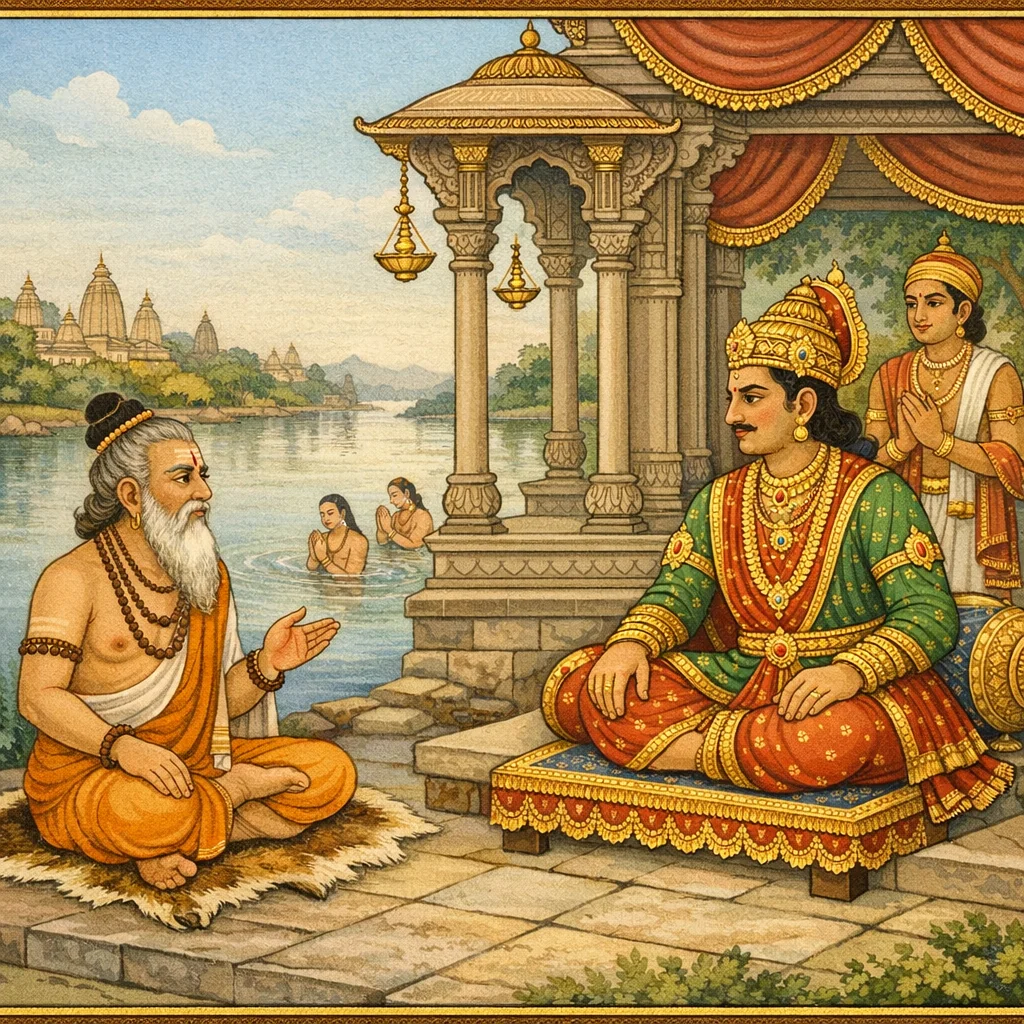
This adhyāya gives Mārkaṇḍeya’s concluding theological address to a king (rājan/bhūpāla), stating that the Purāṇic account—uttered in a divine assembly and pleasing to Śiva—has now been handed down in concise form. It then proclaims the tīrthas of the Narmadā (Revā) to be innumerable, pervading the river’s entire course from beginning through middle to end. In the phalaśruti it declares that hearing the Narmadā-carita yields merit surpassing extensive Vedic recitation and great sacrificial rites, and is equal to bathing in many sacred fords. Salvific fruits are described: attaining Śiva’s abode and dwelling among Rudra’s attendants; and it is stressed that even seeing, touching, praising, or hearing of these tīrthas removes sins. A social-ethical layer follows, mapping benefits across the varṇas and for women, and asserting that even grave transgressions are purified by hearing the Narmadā-māhātmya. The chapter closes by recommending worship with offerings, praising the merit of writing and gifting the text to a twice-born (dvija), and ending with a benedictory prayer for universal well-being, extolling Revā/Narmadā as world-purifying and dharma-bestowing.
Shlokas
Verse 1
श्रीमार्कण्डेय उवाच । एवं ते कथितं राजन्पुराणं धर्मसंहितम् । शिवप्रीत्या यथा प्रोक्तं वायुना देवसंसदि
Śrī Mārkaṇḍeya said: O King, thus have I narrated to you this Purāṇa, a compendium of dharma—just as Vāyu proclaimed it in the assembly of the gods, for the pleasure of Śiva.
Verse 2
षष्टितीर्थसहस्राणि षष्टिकोटिस्तथैव च । आदिमध्यावसानेषु नर्मदायां पदे पदे
Along the Narmadā—at her beginning, middle, and end—there are, at every step, sixty thousand tīrthas, and likewise sixty crores of sacred presences.
Verse 3
मया द्वादशसाहस्री संहिता या श्रुता पुरा । देवदेवस्य गदतः साम्प्रतं कथिता तव
The twelve-thousand-verse compendium that I once heard—spoken by the Lord of gods—has now been narrated by me to you.
Verse 4
पृष्टस्त्वयाहं भूपाल पर्वतेऽमरकण्टके । स्थितः संक्षेपतः सर्वं मया तत्कथितं तव
O King, when you questioned me on the mountain Amarakantaka, I, remaining there, have told you everything in concise form.
Verse 5
नर्मदाचरितं पुण्यं शृणु तस्यास्ति यत्फलम् । यत्फलं सर्ववेदैः स्यात्सषडङ्गपदक्रमैः
Hear the holy account of the Narmadā and the fruit that belongs to it—the very fruit that would arise from all the Vedas, together with the six auxiliaries and their ordered recitation.
Verse 6
पठितैश्च श्रुतैर्वापि तस्माद्बहुतरं भवेत् । सत्रयाजी फलं यत्र लभते द्वादशाब्दिकम्
Whether read or heard, its fruit becomes greater still. Here one attains the merit that a performer of a satra-sacrifice gains over twelve years.
Verse 7
चरिते तु श्रुते देव्या लभते तादृशं फलम् । सर्वतीर्थेषु यत्पुण्यं स्नात्वा सागरमादितः
But when the Goddess’s sacred account is heard, one gains such a fruit—equal to the merit obtained by bathing in all tīrthas, beginning with the ocean.
Verse 8
सकृत्स्नात्वा तथा श्रुत्वा नर्मदायां फलं हि तत् । आदिमध्यावसानेन नर्मदाचरितं शुभम्
The fruit gained by bathing just once in the Narmadā is likewise gained by listening to her glory. This auspicious account of the Narmadā—heard from beginning through middle to the end—bestows that very merit.
Verse 9
यः शृणोति नरो भक्त्या तस्य पुण्यफलं शृणु । स प्राप्य शिवसंस्थानं रुद्रकन्यासमावृतः
Hear the holy reward of the man who listens with devotion: attaining Śiva’s abode, he is received and surrounded by the maidens of Rudra.
Verse 10
रुद्रस्यानुचरो भूत्वा तेनैव सह मोदते । एतद्धर्ममुपाख्यानं सर्वशास्त्रेषु सत्तमम्
Becoming an attendant of Rudra, he rejoices in Rudra’s company. This sacred dharma-narrative is declared the finest among all teachings (śāstras).
Verse 11
देशे वा मण्डले वापि वा ग्रामे नगरेऽपि वा । गृहे वा तिष्ठते यस्य चातुर्वर्ण्यस्य भारत
O Bhārata, whether in a land, a province, a village, a city, or even within a home—wherever the fourfold order of the varṇas is rightly established and abides…
Verse 12
स ब्रह्मा स शिवः साक्षात्स च देवो जनार्दनः । त्रिविधं कारणं लोके धर्मपन्थानमुत्तमम्
He is Brahmā; he is truly Śiva; he is also the Lord Janārdana. In this world, this is the threefold foundation—the highest path of dharma.
Verse 13
देवतानां गुरुं शास्त्रं परमं सिद्धिकारणम् । श्रुत्वेश्वरमुखात्पार्थ मयापि तव कीर्तितम्
This śāstra is the teacher of the gods and the supreme cause of spiritual accomplishment (siddhi). Having heard it from the mouth of Īśvara, O Pārtha, I too have proclaimed it to you.
Verse 14
दक्षिणे चोत्तरे कूले यानि तीर्थानि कानिचित् । प्रधानतः सुपुण्यानि कथितानि विशेषतः
Whatever tīrthas there may be upon the southern and the northern banks, the foremost among them—exceedingly meritorious—have been described in particular.
Verse 15
स्पर्शनाद्दर्शनात्तेषां कीर्तनाच्छ्रवणात्तथा । मुच्यते सर्वपापेभ्यो रुद्रलोकं स गच्छति
By touching them, by beholding them, and likewise by praising them and hearing (their glory), one is freed from all sins and goes to the realm of Rudra.
Verse 16
इदं यः शृणुयान्नित्यं पुराणं शिवभाषितम् । ब्राह्मणो वेदविद्यावान् क्षत्रियो विजयी भवेत्
Whoever daily hears this Purāṇa spoken by Śiva: a brāhmaṇa becomes learned in Vedic knowledge, and a kṣatriya becomes victorious.
Verse 17
धनभागी भवेद्वैश्यः शूद्रो वै धर्मभाग्भवेत् । सौभाग्यं सन्ततिं स्वर्गं नारी श्रुत्वाप्नुयाद्धनम्
A vaiśya becomes prosperous; a śūdra becomes a sharer in dharma. A woman, by hearing, gains good fortune, offspring, heaven, and wealth.
Verse 18
ब्रह्मघ्नश्च सुरापश्च स्तेयी च गुरुतल्पगः । माहात्म्यं नर्मदायास्तु श्रुत्वा पापबहिष्कृताः
Even a slayer of a brāhmaṇa, a drinker of intoxicants, a thief, and one who violates the teacher’s bed—by merely hearing the greatness of the Narmadā, their sins are cast out.
Verse 19
पापभेदी कृतघ्नश्च स्वामिविश्वासघातकः । गोघ्नश्च गरदश्चैव कन्याविक्रयकारकः
So too: the breaker of dharma, the ungrateful, the betrayer of a master’s trust, the killer of a cow, the poisoner, and even one who sells a maiden for a price in marriage.
Verse 20
एते श्रुत्वैव पापेभ्यो मुच्यन्ते नात्र संशयः । ये पुनर्भावितात्मानः शृण्वन्ति सततं नृप
These people, merely by hearing it, are freed from sins—of this there is no doubt. And those whose minds are purified, O king, who listen continually…
Verse 21
पूजयन्त इदं देवाः पूजिता गुरवश्च तैः । नर्मदा पूजिता तेन भगवांश्च महेश्वरः
By venerating this (sacred teaching), the gods are honored; by it the gurus too are honored. Through that, Narmadā is worshiped—and likewise the Blessed Lord Maheśvara (Śiva).
Verse 22
तस्मात्सर्वप्रयत्नेन गन्धपुष्पविभूषणैः । पूजितं परया भक्त्या शास्त्रमेतत्फलप्रदम्
Therefore, with every effort—using fragrances, flowers, and adornments—this scripture should be worshiped with supreme devotion, for it bestows its fruits.
Verse 23
लेखापयित्वा सकलं नर्मदाचरितं शुभम् । उत्तमं सर्वशास्त्रेभ्यो यो ददाति द्विजन्मने
Whoever has the entire auspicious account of Narmadā written out, and gives that—supreme among all scriptures—to a twice-born (brāhmaṇa)…
Verse 24
नर्मदासर्वतीर्थेषु स्नाने दाने च यत्फलम् । तत्फलं समवाप्नोति स नरो नात्र संशयः
Whatever fruit arises from bathing and giving charity at all the tīrthas of the Narmadā—he attains that very fruit; of this there is no doubt.
Verse 25
एतत्पुराणं रुद्रोक्तं महापुण्यफलप्रदम् । स्वर्गदं पुत्रदं धन्यं यशस्यं कीर्तिवर्धनम्
This Purāṇa, proclaimed by Rudra, bestows the fruits of great merit—granting heaven, granting offspring, bringing auspiciousness, fame, and the increase of good renown.
Verse 26
सर्वपापहरं पार्थ दुःखदुःस्वप्ननाशनम् । पठतां शृण्वतां राजन् सर्वकामार्थसिद्धिदम्
O Pārtha, it removes all sins and destroys sorrow and evil dreams. For those who read it and those who hear it, O king, it grants the fulfillment of all desired aims.
Verse 27
शान्तिरस्तु शिवं चास्तु लोकाः सन्तु निरामयाः । गोब्राह्मणेभ्यः स्वस्त्यस्तु धर्मं धर्मात्मजाश्रयः
May there be peace; may there be auspiciousness. May the worlds be free from illness. May there be well-being for cows and brāhmaṇas. May Dharma—refuge of the righteous—be upheld.
Verse 28
नरकान्तकरी रेवा सतीर्था विश्वपावनी । नर्मदा धर्मदा चास्तु शर्मदा पार्थ ते सदा
May Revā—destroyer of hell, endowed with holy fords, purifier of the whole world—ever be for you, O Pārtha, as Narmadā: the giver of dharma and the bestower of peace and well-being.