Adhyaya 228
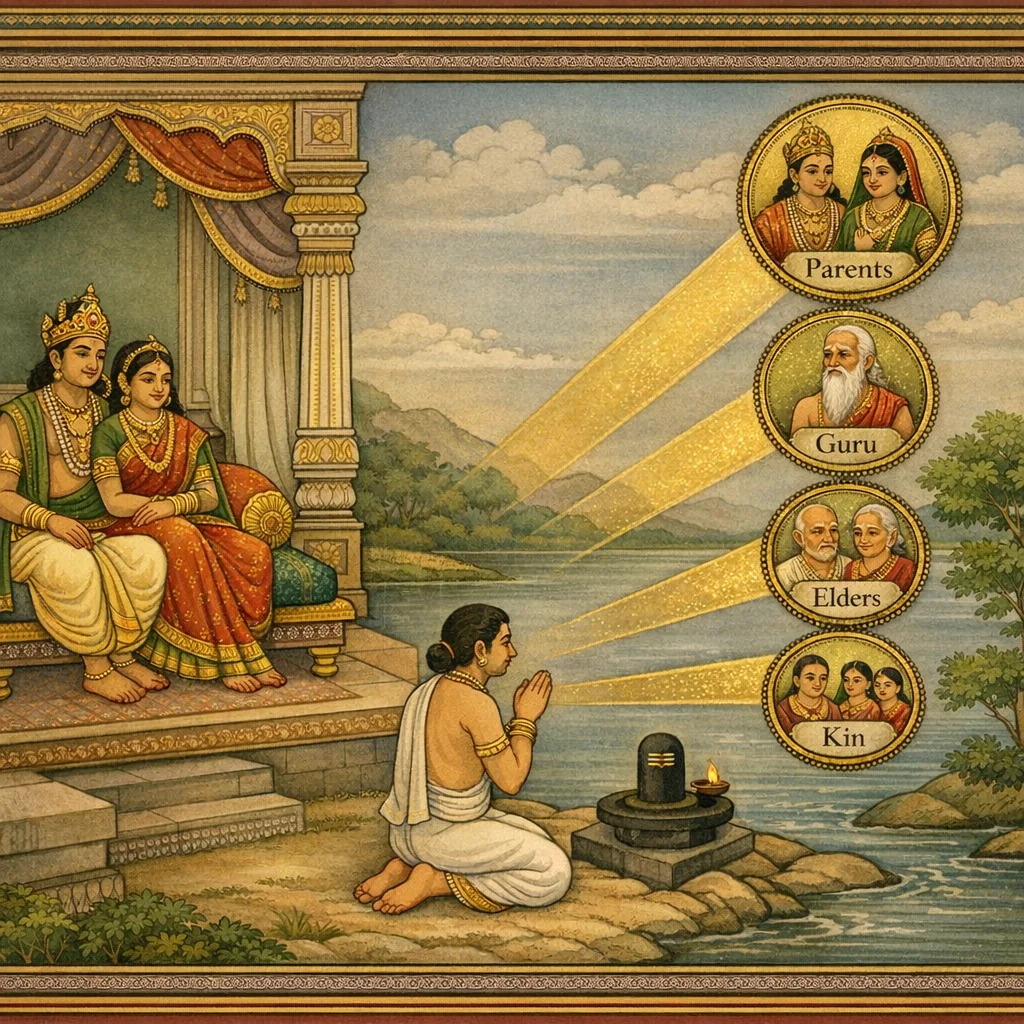
Chapter 228 frames a dharma-centered dialogue in which Yudhiṣṭhira asks the sage Mārkaṇḍeya to assess the merit of tīrtha-yātrā undertaken for another’s benefit (parārtha). The sage teaches a graded view of ritual agency: the highest course is to perform dharma oneself; when one is constrained, one may arrange performance through a suitable social equivalent (savarṇa) or close kin, while warning that improper delegation diminishes the fruit. The chapter then states proportional results for proxy pilgrimage and for incidental pilgrimage, distinguishing a full yātrā from the lesser merit of mere bathing. It lists eligible beneficiaries—parents, elders, teachers, and extended relatives—and assigns fractional shares of merit according to relational proximity (greater for one’s parents, reduced for wider kin). It closes with a seasonal note that at certain times rivers are regarded as rajāsvalā (ritually constrained), with named exceptions, highlighting calendrical sensitivity in water-related rites.
Shlokas
Verse 1
युधिष्ठिर उवाच । परार्थं तीर्थयात्रायां गच्छतः कस्य किं फलम् । कियन्मात्रं मुनिश्रेष्ठ तन्मे ब्रूहि कृपानिधे
Yudhiṣṭhira said: When one goes on pilgrimage to a tīrtha for another’s sake, whose merit is it, and what is the result? O best of sages, ocean of compassion, tell me precisely.
Verse 2
मार्कण्डेय उवाच । परार्थं गच्छतस्तन्मे वदतः शृणु पार्थिव । यथा यावत्फलं तस्य यात्रादिविहितं भवेत्
Mārkaṇḍeya said: O king, listen as I explain: for one who undertakes the journey for another’s sake, how and to what extent the fruit of that pilgrimage and related rites is ordained.
Verse 3
उत्तमेनेह वर्णेन द्रव्यलोभादिना नृप । नाधमस्य क्वचित्कार्यं तीर्थयात्रादिसेवनम्
O king, pilgrimage and similar observances should be undertaken here by a person of noble disposition—not by one of base nature driven by greed for wealth and the like; for such a person, service to a tīrtha is not proper anywhere.
Verse 4
धर्मकर्म महाराज स्वयं विद्वान्समाचरेत् । शरीरस्याथवा शक्त्या अन्यद्वा कार्ययोगतः
O great king, one who understands should personally perform dharmic acts—according to one’s bodily strength; or else have them accomplished through fitting means.
Verse 5
धर्मकर्म सदा प्रायः सवर्णेनैव कारयेत् । पुत्रपौत्रादिकैर्वापि ज्ञातिभिर्गोत्रसम्भवैः
In general, dharmic acts should be performed by one of the same varṇa; or they may be carried out by one’s sons, grandsons, and the like, or by kinsmen born in the same gotra.
Verse 6
श्रेष्ठं हि विहितं प्राहुर्धर्मकर्म युधिष्ठिर । तैरेव कारयेत्तस्मान्नोत्तमैर्नाधमैरपि
O Yudhiṣṭhira, the wise declare that a dharmic rite is best when performed as enjoined. Therefore, let such prescribed acts be carried out by those fit for them—neither by the over-exalted nor by the unfit.
Verse 7
अधमेन कृतं सम्यङ्न भवेदिति मे मतिः । उत्तमश्चाधमार्थे वै कुर्वन्दुर्गतिमाप्नुयात्
In my view, what is done by an unfit person is not properly accomplished; and even a ‘superior’ person, acting for an ignoble purpose, may indeed fall into misfortune.
Verse 8
न शूद्राय मतिं दद्यान्नोच्छिष्टं न हविष्कृतम् । न चास्योपदिशेद्धर्मं न चास्य व्रतमादिशेत्
One should not impart counsel to a Śūdra; nor give him remnants of food, nor offerings prepared as havis. Nor should one instruct him in dharma, nor prescribe vows for him.
Verse 9
जपस्तपस्तीर्थयात्रा प्रव्रज्या मन्त्रसाधनम् । देवताराधनं दीक्षा स्त्रीशूद्रपतनानि षट्
Japa, austerity, pilgrimage to the tīrthas, renunciation, mantra-sādhana, worship of the deity, and dīkṣā (initiation)—these are declared to be six causes of downfall for women and Śūdras.
Verse 10
पतिवत्नी पतत्येव विधवा सर्वमाचरेत् । सभर्तृकाशके पत्यौ सर्वं कुर्यादनुज्ञया
A devoted wife incurs fault if she acts independently; but a widow may undertake all observances. While the husband is present, she should do everything only with his permission.
Verse 11
गत्वा परार्थं तीर्थादौ षोडशांशफलं लभेत् । गच्छतश्च प्रसङ्गेन तीर्थमर्द्धफलं स्मृतम्
If one goes to a tīrtha chiefly for another’s sake, one gains only a sixteenth share of the fruit. And one who goes merely through incidental association is said to receive only half the fruit from the tīrtha.
Verse 12
अनुसङ्गेन तीर्थस्य स्नाने स्नानफलं विदुः । नैव यात्राफलं तज्ज्ञाः शास्त्रोक्तं कल्मषापहम्
Those who know declare that, when one bathes in a tīrtha only through incidental association, one gains merely the fruit of bathing—not the full fruit of pilgrimage, which the śāstras describe as removing sin.
Verse 13
पित्रर्थं च पितृव्यस्य मातुर्मातामहस्य च । मातुलस्य तथा भ्रातुः श्वशुरस्य सुतस्य च
For the sake of one’s father; also of one’s paternal uncle; of one’s mother and maternal grandfather; likewise of one’s maternal uncle, brother, father-in-law, and son—(one may undertake the tīrtha-bath or rite).
Verse 14
पोषकार्थादयोश्चापि मातामह्या गुरोस्तथा । स्वसुर्मातृष्वसुः पैत्र्या आचार्याध्यापकस्य च
Likewise, for one’s benefactor and others; for one’s maternal grandmother; likewise for one’s guru; for one’s sister, mother’s sister, paternal aunt, and for one’s ācārya and teacher—one may dedicate the tīrtha act.
Verse 15
इत्याद्यर्थे नरः स्नात्वा स्वयमष्टांशमाप्नुयात् । साक्षात्पित्रोः प्रकुर्वाणश्चतुर्थांशमवाप्नुयात्
When a man bathes at a tīrtha for such purposes and the like, he himself obtains an eighth share of the merit. But when he performs it directly for his parents, he obtains a fourth share.
Verse 16
पतिपत्न्योर्मिथश्चार्द्धं फलं प्राहुर्मनीषिणः । भागिनेयस्य शिष्यस्य भ्रातृव्यस्य सुतस्य च । षट्त्रिपञ्चचतुर्भागान्फलमाप्नोति वै नरः
The wise declare that husband and wife share half of each other’s religious fruit. A sister’s son, a disciple, a kinsman of the same line, and a son also obtain a portion of that merit—one gains the fruit in shares such as a sixth, a third, a fifth, or a fourth, according to the relationship.
Verse 17
इति ते कथितं पार्थ पारम्पर्यक्रमागतम् । कर्तव्यं ज्ञातिवर्गस्य परार्थे धर्मसाधनम्
Thus, O Pārtha, I have told you what has come down through the succession of tradition. The duty of one’s circle of kin is to pursue dharma for the sake of others as well.
Verse 18
वर्षाऋतुसमायोगे सर्वा नद्यो रजस्वलाः । मुक्त्वा सरस्वतीं गङ्गां नर्मदां यमुनानदीम्
When the rainy season arrives, all rivers are regarded as being in a ‘state of impurity’—except Sarasvatī, Gaṅgā, Narmadā, and the river Yamunā.