Adhyaya 225
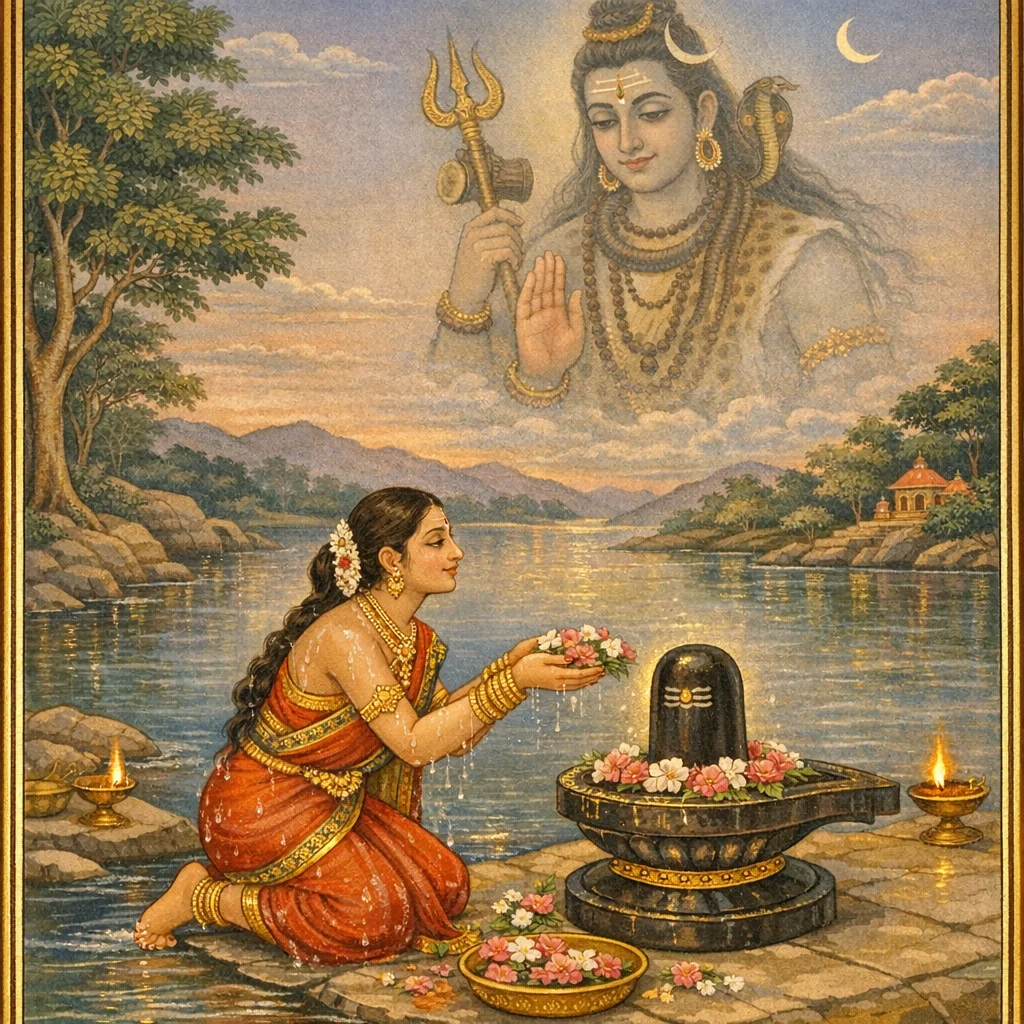
Mārkaṇḍeya tells Yudhiṣṭhira of a moral crisis centered on a tīrtha and its redemptive resolution. Alikā, a Gandharvī of Citraseṇa’s line, lives for ten years with the ṛṣi Vidyānanda, yet later—under unstated circumstances—kills her husband as he sleeps. When she reports to her father Ratnavallabha, both parents denounce and expel her, branding her a grievous transgressor (patighnī, garbhaghnī, brahmaghnī). Stricken with remorse, she consults brāhmaṇas about expiatory tīrthas and learns of a sin-destroying site at the confluence of the Revā and the sea. At that saṅgama she undertakes sustained tapas: fasting (nirāhāra), strict vrata discipline, and penances such as kṛcchra/atikṛcchra and cāndrāyaṇa, joined with Śiva-dhyāna and worship. Pleased—at Pārvatī’s prompting—Śiva appears, declares her purified, and grants a boon: she is to establish him there under her own name and thereafter attain heaven. Alikā bathes, installs Śaṅkara as Alikeśvara, gives gifts to brāhmaṇas, is reconciled with her family, and finally ascends in a divine vimāna to Gaurī’s realm. The phalaśruti proclaims that those who bathe at this tīrtha and worship Mahādeva with Umā are freed from sins of mind, speech, and body; feeding dvijas and offering lamps relieve disease. Specific gifts—an incense vessel, a model vimāna, a bell, and a kalaśa—bestow exalted heavenly attainments.
Shlokas
Verse 1
श्रीमार्कण्डेय उवाच । ततः क्रोशान्तरे गच्छेदलिकातीर्थमुत्तमम् । अलिका नाम गान्धर्वी कुशीला कुटिलाशया
Śrī Mārkaṇḍeya said: Then, at a distance of one krośa, one should go to the excellent Alikā Tīrtha. There was a Gandharva maiden named Alikā—ill-conducted and of crooked intent.
Verse 2
चित्रसेनस्य दौहित्री विद्यानन्दमृषिं गता । वव्रे ते स्वीकृता तेन दशवर्षाणि तं श्रिता
She was the granddaughter of Citrasena. She went to the sage Vidyānanda, chose him as her husband, and he accepted her; for ten years she lived with him.
Verse 3
पतिं जघान तं सुप्तं कस्मिंश्चित्कारणान्तरे । गत्वा निवेदयामास पितरं रत्नवल्लभम्
On some pretext, she killed her husband while he slept; then she went and reported it to her father, Ratnavallabha.
Verse 4
पित्रा मात्रा च संत्यक्ता बहुभिर्भर्त्सिता नृप । गर्भघ्नी त्वं पतिघ्नी त्वमिति दर्शय मा मुखम्
O king, rejected by her father and mother and reviled by many—“You are a slayer of the unborn, you are a slayer of your husband!”—she was told, “Do not show your face.”
Verse 5
ब्रह्मघ्नी याहि पापिष्ठे परित्यक्ता गृहाद्व्रज
“O slayer of a Brāhmaṇa! Begone, most sinful one—cast out, leave this house!”
Verse 6
मार्कण्डेय उवाच । इति दुःखान्विता मूढा ताभ्यां निर्भर्त्सिता सती । तनुं त्यक्तुं मनश्चक्रे प्राप्य तीर्थान्तरं क्वचित्
Mārkaṇḍeya said: Thus, afflicted with sorrow, bewildered, and harshly rebuked by them, she resolved to abandon her body; and reaching somewhere another tīrtha,
Verse 7
संपृच्छ्यमाना तीर्थानि ब्राह्मणेभ्यो युधिष्ठिर । श्रुत्वा पापहरं तीर्थं रेवासागरसङ्गमे
O Yudhiṣṭhira, asking Brāhmaṇas about sacred places, she heard of a sin-destroying tīrtha at the confluence of the Revā (Narmadā) and the ocean.
Verse 8
तत्र पार्थ तपश्चक्रे निराहारा जितव्रता । कृच्छ्रातिकृच्छ्रपाराकमहासांतपनादिभिः
There, O son of Pṛthā, she undertook austerities—fasting, firm in her vows—practising severe disciplines such as the Kṛcchra, Atikṛcchra, Pārāka, and Mahāsāntapana observances.
Verse 9
चान्द्रायणैर्ब्रह्मकूर्चैः कर्शयामास वै तनुम् । एवं वर्षशतं सार्द्धं व्यतीतं तपसा नृप
By the Cāndrāyaṇa and Brahmakūrca observances she indeed emaciated her body. Thus, O king, a full hundred years passed by in austerity.
Verse 10
तस्या विशुद्धिमिच्छन्त्याः शिवध्यानार्चनादिभिः । ततः कतिपयाहोभिस्तस्या ज्ञात्वा हठं परम् । परितुष्टः शिवः प्राह पार्वत्या परिचोदितः
Seeking purification through meditation on Śiva, worship, and related practices, after some days Śiva—knowing the extremity of her determined austerity—became pleased and spoke, urged on by Pārvatī.
Verse 11
ईश्वर उवाच । पुत्रि मा साहसं कार्षीः शुद्धदेहासि साम्प्रतम् । तुष्टोऽहं तपसा तेऽद्य वरं वरय वाञ्छितम्
Īśvara said: “Daughter, do not attempt such extremes. Your body is now purified. I am pleased today by your austerity—choose the boon you desire.”
Verse 12
अलिकोवाच । यदि तुष्टोऽसि देवेश वरार्हा यद्यहं मता । नानापापाग्नितप्ताया देहि शुद्धिं परां मम
Alikā said: “If you are pleased, O Lord of gods, and if you deem me worthy of a boon, then grant me supreme purification—I who have been scorched by the fire of many sins.”
Verse 13
त्वं मे नाथो ह्यनाथायास्त्वमेव जगतां गुरुः । दीनानाथसमुद्धर्ता शरण्यः सर्वदेहिनाम्
“You are my protector, for I am without refuge; you alone are the teacher of the worlds—uplifter of the helpless and the poor, the sure shelter of all embodied beings.”
Verse 14
ईश्वर उवाच । त्वं भद्रे शुद्धदेहासि मा किंचिदनुशोचिथाः । स्वनाम्ना स्थापयित्वेह मां ततः स्वर्गमेष्यसि
Īśvara said: “O blessed one, your body is purified; do not grieve at all. Establish me here under your own name, and then you shall attain heaven.”
Verse 15
इत्युक्त्वा देवदेवेशस्तत्रैवान्तरधीयत । अलिकापि ततो भक्त्या स्नात्वा संस्थाप्य शङ्करम्
Having spoken thus, the Lord of the lords of gods vanished there itself. Then Alikā too, with devotion, bathed and installed Śaṅkara.
Verse 16
दत्त्वा दानं च विप्रेभ्यो लोकमाप महोत्कटम् । पितरं च समासाद्य मातरं च युधिष्ठिर
Having bestowed gifts upon the brāhmaṇas, she attained a splendid and exalted world; and there she met her father and her mother as well, O Yudhiṣṭhira.
Verse 17
तैश्च संमानिता प्रीत्या बन्धुभिः सालिका ततः । विमानवरमारूढा दिव्यमालान्विता नृप
Honoured with affection by those relatives, Sālikā then mounted an excellent celestial chariot, adorned with divine garlands, O king.
Verse 18
गौरीलोकमनुप्राप्तसखित्वेऽद्यापि मोदते । ततः प्रभृति तत्पार्थ विख्यातमलिकेश्वरम्
Even today, having attained companionship in Gaurī’s realm, he rejoices. Therefore, O son of Pṛthā, from that time onward this shrine became renowned as Alikeśvara.
Verse 19
तत्र तीर्थे तु या नारी पुरुषो वा युधिष्ठिर । स्नात्वा सम्पूजयेद्भक्त्या महादेवमुमायुतम्
At that sacred ford, O Yudhiṣṭhira, whether woman or man—having bathed—should worship with devotion Mahādeva, accompanied by Umā.
Verse 20
स पापैर्विविधैर्मुक्तो लोकमाप्नोति शांकरम् । मानसं वाचिकं पापं कायिकं यत्पुरा कृतम्
Freed from many kinds of sins, he attains Śaṅkara’s world. Whatever sins were formerly committed—mental, verbal, or bodily—
Verse 21
सर्वं तद्विलयं याति भोजयित्वा द्विजान्सदा । दीपं दत्त्वा च देवाग्रे न रोगैः परिभूयते
All that (sin) is dissolved by continually feeding the twice-born. And by offering a lamp before the Deity, one is not overpowered by diseases.
Verse 22
धूपपात्रं विमानं च घण्टां कलशमेव च । दत्त्वा देवाय राजेन्द्र शाक्रं लोकमवाप्नुयात्
By gifting to the Deity an incense-vessel, a (model) aerial car (vimāna), a bell, and also a water-pot (kalaśa), O best of kings, one may attain the world of Śakra (Indra).