Adhyaya 224
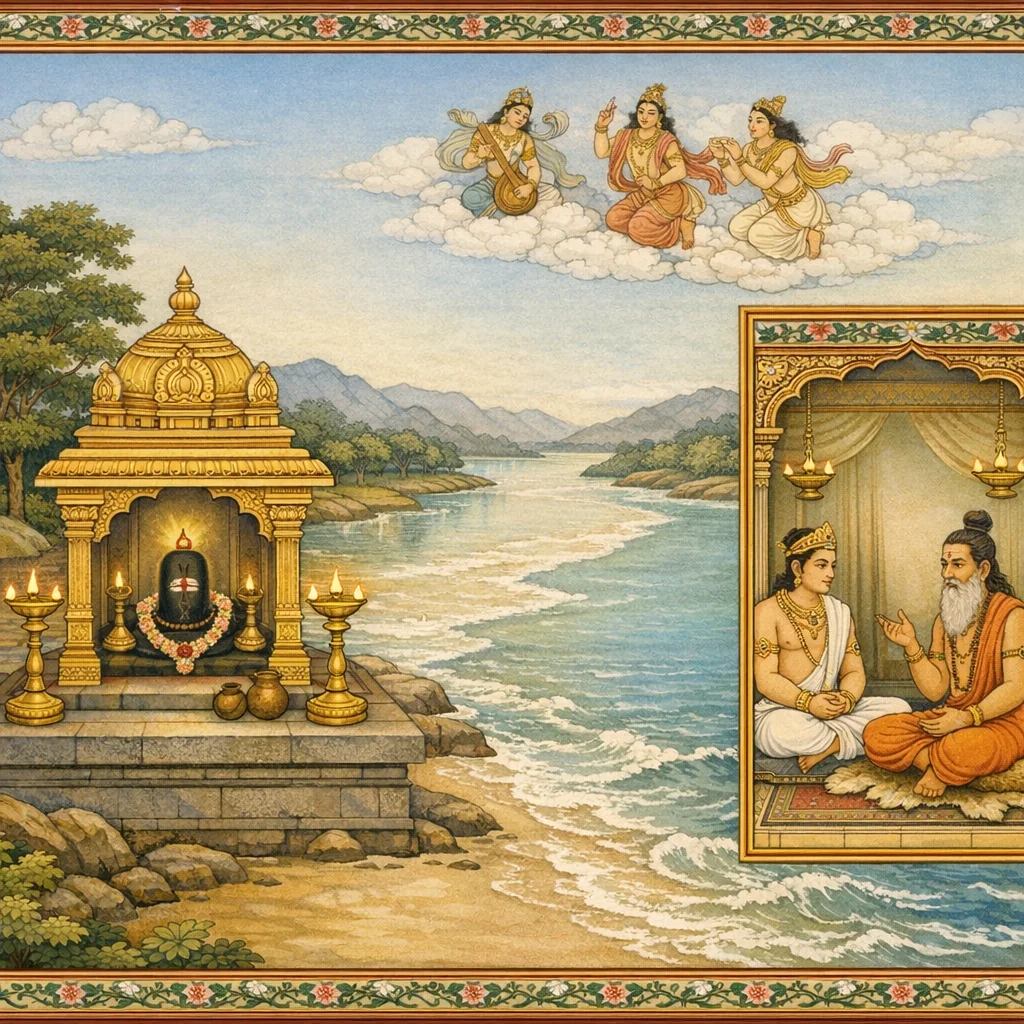
Mārkaṇḍeya tells Yudhiṣṭhira of a supreme tīrtha called Koṭīśvara, lying within a one-krośa range at the Revā (Narmadā) where it meets the ocean. The chapter’s doctrinal core is a principle of merit-amplification: snāna (sacred bathing), dāna (giving), japa (mantra-recitation), homa (fire-offering), and arcana (worship) performed there with devotion are said to become “koṭi-guṇa,” multiplied manifold. The tīrtha is set within a cosmological pilgrimage ecology: devas, gandharvas, ṛṣis, siddhas, and cāraṇas gather at the Revā–ocean confluence to behold the extraordinary sight of river and sea meeting. A ritual sequence is given—after bathing, one should establish and worship Śiva as Koṭīśvara according to one’s bhakti, offering bilva leaves, arka flowers, seasonal gifts, dhattūra, kuśa, and other prescribed materials, with mantra-led upacāras, incense, lamps, and naivedya. An ethical-ritual itinerary is also promised: travelers and ascetics connected with this tīrtha attain elevated destinies, including pitṛ-loka and deva-loka. A calendrical note highlights Pauṣa kṛṣṇa aṣṭamī as especially potent for worship, alongside regular observances on caturdaśī and aṣṭamī, with feeding of worthy brāhmaṇas.
Shlokas
Verse 1
मार्कण्डेय उवाच । ततः क्रोशान्तरे पार्थ तीर्थं कोटीश्वरं परम् । यत्र स्नानं च दानं च जपहोमार्चनादिकम् । भक्त्या कृतं नरैस्तत्र सर्वं कोटिगुणं भवेत्
Mārkaṇḍeya said: Then, O Pārtha, at a distance of one krośa is the supreme sacred ford called Koṭīśvara. There, bathing, charity, and practices such as japa, homa, and worship—when performed with devotion—each becomes a millionfold in fruit.
Verse 2
तत्र देवाः सगन्धर्वा ऋषयः सिद्धचारणाः । जलधिं प्रतिगच्छन्ति नर्मदां वीक्षितुं किल
There, the gods along with the Gandharvas, the ṛṣis, and the Siddhas and Cāraṇas go even to the ocean—so it is said—simply to behold the Narmadā.
Verse 3
मिलिताः कोटिशो राजन्रेवासागरसङ्गमे । विनोदमतुलं दृष्ट्वा रेवार्णवसमागमे
O King, they gather there in their millions at the confluence of the Revā and the ocean, beholding the incomparable wonder at the meeting of the Revā with the sea.
Verse 4
स्नात्वा शिवं च संस्थाप्य पूजयित्वा महेश्वरम् । कोटीश्वराभिधानं तु स्वस्वभक्त्या विधानतः
Having bathed, they install Śiva and worship Maheśvara; then, in due rite and according to each one’s devotion, that Lord is revered by the name Koṭīśvara.
Verse 5
कोटीतीर्थे परां सिद्धिं सम्प्राप्ताः सर्वतोषणात् । तेन तत्पुण्यमतुलं सर्वतीर्थेषु चोत्तमम्
At the Koṭī Tīrtha they attained the highest siddhi through complete satisfaction of the Lord by worship; therefore the merit of that place is incomparable, indeed supreme among all tīrthas.
Verse 6
तत्र तीर्थे तु यत्किंचिच्छुभं वा यदि वाशुभम् । क्रियते नृपशार्दूल सर्वं कोटिगुणं भवेत्
At that tīrtha, O tiger among kings, whatever is done—whether auspicious or even inauspicious—becomes multiplied a millionfold.
Verse 7
तत्र तीर्थे तु मार्गस्था ये केचिदृषिसत्तमाः । सिद्धामृतपदं यान्ति पितृलोकं तथोत्तमम्
At that tīrtha, even the best of ṛṣis who are merely passing along the way attain the deathless station of the Siddhas, and likewise the excellent world of the Pitṛs.
Verse 8
उत्तरे नर्मदातीरे दक्षिणे चाश्रिताश्च ये । देवलोकं गतास्तत्र इति मे निश्चिता मतिः
Those who dwell on the northern bank of the Narmadā, and those who likewise take refuge on the southern bank—such people go to the world of the devas; this is my settled conviction.
Verse 9
बिल्वार्कपुष्पैर्धत्तूरकुशकाशप्रसूनकैः । ऋतूद्भवैस्तथान्यैश्च पूजयित्वा महेश्वरम्
Having worshipped Maheśvara with blossoms of bilva and arka, with dhattūra, with kuśa and kāśa flowers, and with other offerings born of the seasons as well—(one gains the tīrtha’s praised fruit).
Verse 10
नानोपचारैर्विधिवन्मन्त्रपूर्वं युधिष्ठिर । धूपदीपार्धनैवेद्यैस्तोषयित्वा च धूर्जटिम्
O Yudhiṣṭhira, having duly worshipped Dhūrjaṭi (Śiva) with manifold offerings, according to rule and preceded by mantra—pleasing Him with incense, lamps, arghya and food-offerings—
Verse 11
शिवलोकमवाप्नोति यावदिन्द्राश्चतुर्दश । पौषकृष्णाष्टमीयोगे विशेषः पूजने स्मृतः
He attains Śiva’s world for as long as fourteen Indras endure; and it is taught that worship performed on the conjunction of Pauṣa month’s dark-fortnight Aṣṭamī is especially efficacious.
Verse 12
नित्यं च नृपतिश्रेष्ठ चतुर्दश्यष्टमीषु च । शिवमभ्यर्च्य विप्रांश्च भोजयेद्भक्तितो वरान्
And daily, O best of kings—especially on the fourteenth and the eighth lunar days—having worshipped Śiva, one should with devotion feed excellent Brāhmaṇas.