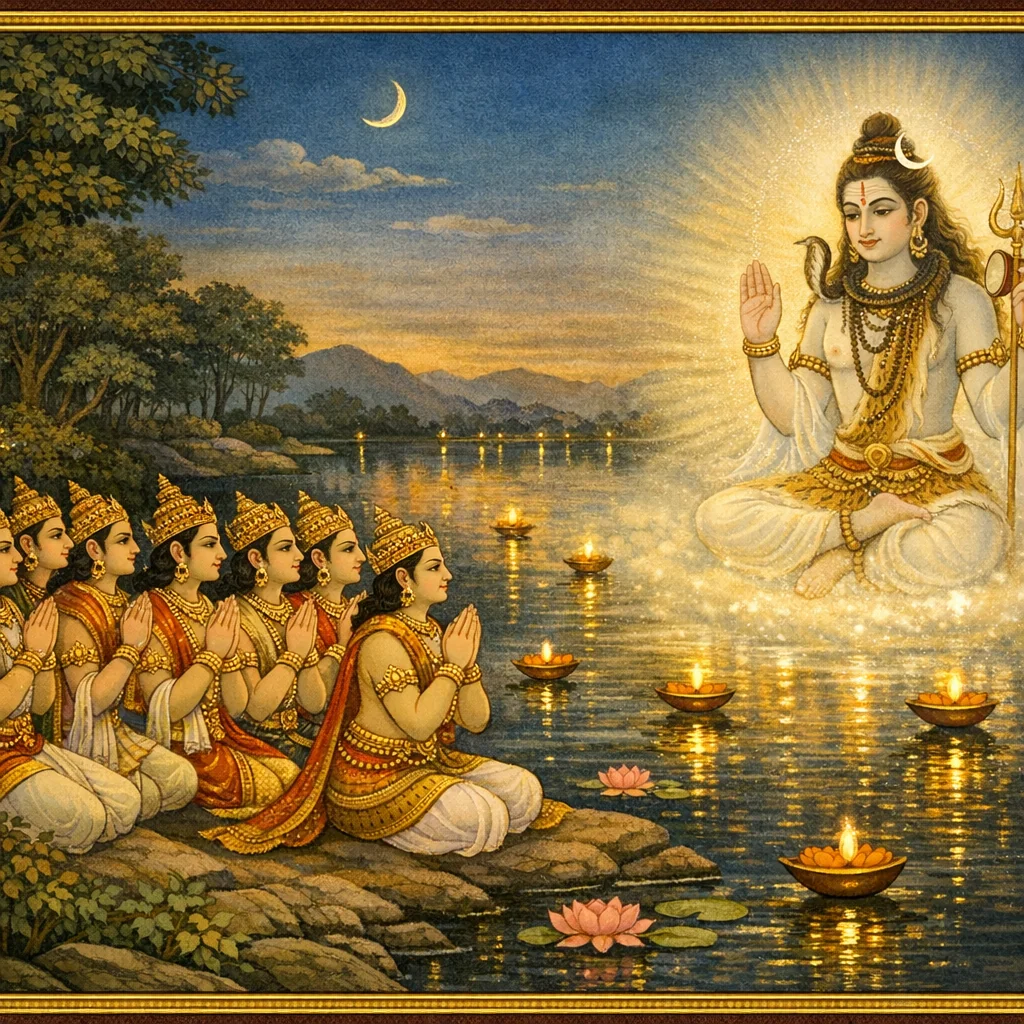
Adhyaya 223
Mārkaṇḍeya describes a supreme tīrtha called Vāsava, within a one-krośa range, renowned as having been founded by the Eight Vasus. The Vasus—Dhara, Dhruva, Soma, Āpa, Anila, Anala, Pratyūṣa, and Prabhāsa—are afflicted by a paternal curse and driven toward “garbha-vāsa” (womb-residence/embodiment). Seeking release, they come to the Narmadā tīrtha and perform disciplined tapas while worshipping Bhavānīpati (Śiva). After twelve years Mahādeva manifests directly and grants their boon. The Vasus establish Śiva there in their own name and depart through the sky, and the place becomes famed as Vāsava-tīrtha. The chapter then sets out practical devotional conduct: worship Śiva here with whatever offerings are available, especially dīpa-dāna (offering of lamps), with special emphasis on the bright fortnight’s eighth lunar day (śukla-aṣṭamī) or regular practice as one is able. The phalaśruti promises long nearness to Śiva, avoidance of garbha-vāsa, freedom from poverty and sorrow, heavenly honor, and destruction of sins even by a single day’s residence, concluding with duties such as feeding brāhmaṇas and giving garments and dakṣiṇā.
Shlokas
Verse 1
मार्कण्डेय उवाच । ततः क्रोशान्तरे पार्थ वासवं तीर्थमुत्तमम् । वसुभिः स्थापितं तत्र स्थित्वा वै द्वादशाब्दकम्
Mārkaṇḍeya said: “Then, O Pārtha, at a distance of one krośa lies the supreme sacred ford called Vāsava. It was established there by the Vasus, who remained at that place for twelve years.”
Verse 2
धरो ध्रुवश्च सोमश्च आपश्चैवानिलोऽनलः । प्रत्यूषश्च प्रभासश्च वसवोऽष्टाविमे पुरा
“Dharā, Dhruva, Soma, Āpa, Anila, Anala, Pratyūṣa, and Prabhāsa—these eight were formerly known as the Vasus.”
Verse 3
पितृशापपरिक्लिष्टा गर्भवासाय भारत । नार्मदं तीर्थमासाद्य तपश्चक्रुर्यतेन्द्रियाः
“Afflicted by a curse from their forefathers, O Bhārata, and destined for womb-dwelling (rebirth), they approached a sacred tīrtha on the Narmadā and performed austerities with restrained senses.”
Verse 4
आराधयन्तः परमं भवानीपतिमव्यम् । द्वादशाब्दानि राजेन्द्र ततस्तुष्टो महेश्वरः
Worshipping the Supreme—Bhavānī’s Lord, the imperishable—for twelve years, O best of kings, Maheśvara then became pleased.
Verse 5
प्रत्यक्षः प्रददौ तेभ्यस्त्वभीष्टं वरमुत्तमम् । ततः स्वनाम्ना संस्थाप्य वसवस्तं महेश्वरम् । जग्मुराकाशमाविश्य प्रसन्ने सति शङ्करे
Manifest before them, he granted them the excellent boon they desired. Then the Vasus installed that Maheśvara under their own name; and when Śaṅkara was pleased, they departed, entering the sky.
Verse 6
ततः प्रभृति विख्यातं तीर्थं तद्वासवाह्वयम् । तस्मिंस्तीर्थे महाराज यो भक्त्या पूजयेच्छिवम् । यथालब्धोपहारैश्च दीपं दद्यात्प्रयत्नतः
From that time onward, that tīrtha became famous by the name “Vāsava.” O great king, whoever in that tīrtha worships Śiva with devotion, and with whatever offerings are available, should diligently offer a lamp.
Verse 7
शुक्लपक्षे तदाष्टम्यां प्रत्यहं वापि शक्तितः । अष्टौ वर्षसहस्राणि स वसेच्छिवसंनिधौ
On that Aṣṭamī in the bright fortnight—or even daily, according to one’s capacity—he would dwell in Śiva’s proximity for eight thousand years, in merit and blessedness.
Verse 8
ततः शिवालयं याति गर्भवासं न पश्यति । पुष्पैर्वा पल्लवैर्वापि फलैर्धान्यैस्तथापि वा
Thereafter he goes to Śiva’s abode and does not behold womb-dwelling (rebirth). Whether with flowers, or leaves, or fruits, or even grains—(with such offerings he should worship).
Verse 9
पूजयेद्देवमीशानं स दैन्यं नाप्नुयात्क्वचित् । सर्वशोकविनिर्मुक्तः स्वर्गलोके महीयते
Let him worship the Lord Īśāna; he will never fall into wretchedness. Freed from all sorrow, he is honored in heaven.
Verse 10
एकाहमपि कौन्तेय यो वसेद्वासवेश्वरे । पापराशिं विनिर्धूय भानुवद्दिवि मोदते
Even for a single day, O Kaunteya, whoever stays at Vāsaveśvara shakes off heaps of sin and rejoices in heaven like the Sun.
Verse 11
विप्रांश्च भोजयेद्भक्त्या दद्याद्वासांसि दक्षिणाम्
With devotion, one should feed the brāhmaṇas, and one should also give garments as dakṣiṇā, the priestly honorarium.