Adhyaya 222
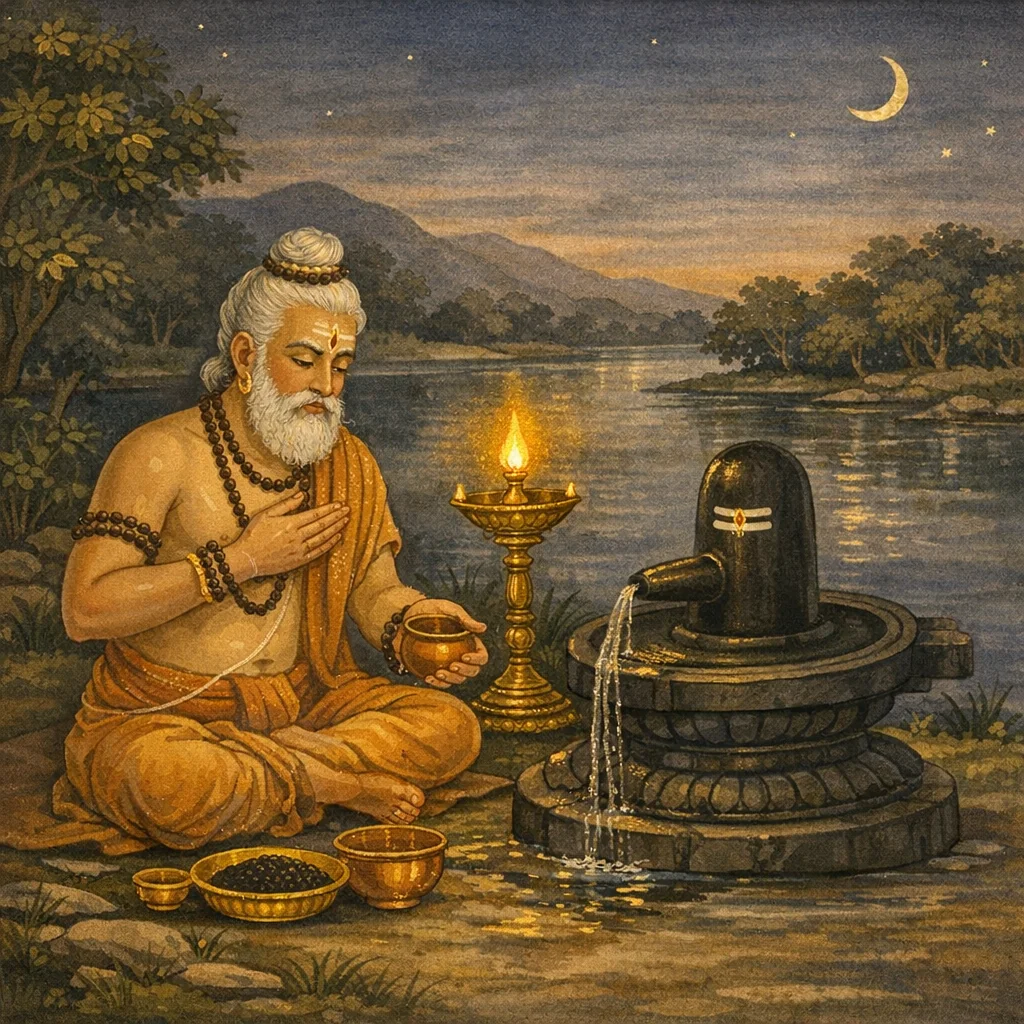
Mārkaṇḍeya extols an excellent tīrtha named Tilādā, within a one-krośa journey, where Jābāli attains purification through tilaprāśana (partaking of sesame) and sustained ascetic discipline. Yet Jābāli is first portrayed as ethically fallen—abandoning parents, pursuing illicit desire, practicing deception, and committing socially condemned acts—so that he is publicly censured and cast out. Seeking expiation, he undertakes arduous pilgrimage and repeated immersions in the Narmadā, finally settling on the southern bank near Aṇivāpa-anta. There he performs graded sesame-based austerities: one-meal and alternate-day regimens, three/six/twelve-day patterns, fortnightly and monthly cycles, and major vratas such as kṛcchra and cāndrāyaṇa, continued for many years. Pleased, Īśvara grants him purification and sālokya (abiding in the same divine realm). Jābāli establishes a deity known as Tilādeśvara, and Tilādā is proclaimed famed as a destroyer of sin. The chapter prescribes observances on caturdaśī, aṣṭamī, and Hari’s day, with sesame rites—homa, unction, sesame-bathing, sesame-water—along with filling the liṅga with sesame and lighting a lamp with sesame oil, promising Rudra-loka and the purification of seven generations. It further extends merit to ancestors through tila-piṇḍa in śrāddha, granting lasting satisfaction to forebears and uplifting the three lineages (kula-traya): paternal, maternal, and the wife’s family line.
Shlokas
Verse 1
श्रीमार्कण्डेय उवाच । ततः क्रोशान्तरे गच्छेत्तिलादं तीर्थमुत्तमम् । तिलप्राशनकृद्यत्र जाबालिः शुद्धिमाप्तवान्
Śrī Mārkaṇḍeya said: Then, at a distance of one krośa, one should go to the excellent holy ford called Tilāda, where Jābāli attained purification by the rite of eating sesame.
Verse 2
पितृमातृपरित्यागी भ्रातुर्भार्याभिलाषकृत् । पुत्रविक्रयकृत्पापश्छलकृद्गुरुणा सह
He was one who abandoned his father and mother, who lusted after his brother’s wife, who committed the sin of selling his son, and who practiced deceit—even against his own teacher.
Verse 3
एवं दोषसमाविष्टो यत्र यत्रापि गच्छति । तत्र तत्रापि धिक्कारं लभते सत्सु भारत । न कोऽपि संगतिं धत्ते तेन सार्द्धं सभास्वपि
Thus tainted by faults, wherever he went, there too he received only contempt among the virtuous, O Bhārata; no one would keep company with him, not even in assemblies.
Verse 4
इति लज्जान्वितो विप्रः काले न महता नृप । चिन्तामवाप महतीमगतिज्ञो हि पावने
Thus, O king, that brāhmaṇa—filled with shame—after a long time fell into great anxiety, for he did not know any refuge in matters of purification.
Verse 5
चकार सर्वतीर्थानि रेवां चाप्यवगाहयत्
He visited all the sacred fords and also immersed himself in the Revā (Narmadā) for purification.
Verse 6
अणिवापान्तमासाद्य दक्षिणे नर्मदातटे । तस्थौ यत्र व्रती पार्थ जाबालिः प्राशयंस्तिलान्
Having reached the end of Aṇivāpa on the southern bank of the Narmadā, he stayed there—O Pārtha—where the vow-observing Jābāli was eating sesame (tila).
Verse 7
तिलैरेकाशनं कुर्वंस्तथैवैकान्तराशनम् । त्र्यहषड्द्वादशाहाशी पक्षमासाशनस्तथा
Living on sesame (tila) as sacred fare, he observed the disciplines of eating once a day and eating on alternate days; likewise he undertook fasts of three, six, and twelve days, and even observances lasting a fortnight and a month.
Verse 8
कृच्छ्रचान्द्रायणादीनि व्रतानि च तिलैरपि । तिलादत्वमनुप्राप्तो ह्यब्दद्वासप्ततिं क्रमात्
He performed even the Kṛcchra, Cāndrāyaṇa, and similar vows, supported by sesame (tila); and in due course, over a succession of seventy-two years, he attained the state of being ‘of sesame’, wholly dedicated to tila.
Verse 9
कालेन गच्छता तस्य प्रसन्नोऽभवदीश्वरः । प्रादादिहामुत्रिकीं तु शुद्धिं सालोक्यमात्मकम्
As time passed, the Lord became pleased with him and granted him purity in this world and the next—purity culminating in sālokya, dwelling in the same divine realm.
Verse 10
तेन स स्थापितो देवः स्वनाम्ना भरतर्षभ । तिलादेश्वरसंज्ञां च प्राप लोकादपि प्रभुः
O bull among the Bharatas, by him that Deity was installed and named after himself; and the Lord became renowned in the world as “Tilādeśvara” as well.
Verse 11
तदा प्रभृति विख्यातं तीर्थं पापप्रणाशनम् । तत्र तीर्थे नरः स्नात्वा चतुर्दश्यष्टमीषु च
From that time onward, the tīrtha became famed as a destroyer of sins. A man who bathes at that holy ford—especially on the fourteenth lunar day and on the eighth—
Verse 12
उपवासपरः पार्थ तथैव हरिवासरे । तिलहोमी तिलोद्वर्ती तिलस्नायी तिलोदकी
O Pārtha, devoted to fasting—especially on Hari’s day—one should offer oblations with sesame, anoint the body with sesame paste, bathe with sesame, and use sesame-water in the rites.
Verse 13
तिलदाता च भोक्ता च नानापापैः प्रमुच्यते । तिलैरापूरयेल्लिङ्गं तिलतैलेन दीपदः । रुद्रलोकमवाप्नोति पुनात्या सप्तमं कुलम्
Both the giver of sesame and the one who partakes of it is freed from many sins. One should heap sesame upon the liṅga and offer lamps with sesame-oil; he attains Rudra’s world and purifies even the seventh generation of his lineage.
Verse 14
तिलपिण्डप्रदानेन श्राद्धे नृपतिसत्तम । विकर्मस्थाश्च गच्छन्ति गतिमिष्टां हि पूर्वजाः
O best of kings, by offering sesame piṇḍas in a śrāddha, even ancestors who have fallen into improper conditions through vikarma go indeed to their desired, auspicious course.
Verse 15
स्वर्गलोकस्थिताः श्राद्धैर्ब्राह्मणानां च भोजनैः । अक्षयां तृप्तिमासाद्य मोदन्ते शाश्वतीः समाः
Those who dwell in heaven, through śrāddha rites and through feeding the brāhmaṇas, attain inexhaustible satisfaction and rejoice for everlasting years.
Verse 16
पितुः कुलं मातृकुलं तथा भार्याकुलं नृप । कुलत्रयं समुद्धृत्य स्वर्गं नयति वै नरः
O king, a man uplifts three lineages—his father’s line, his mother’s line, and likewise his wife’s line—and indeed leads them toward heaven.