Adhyaya 221
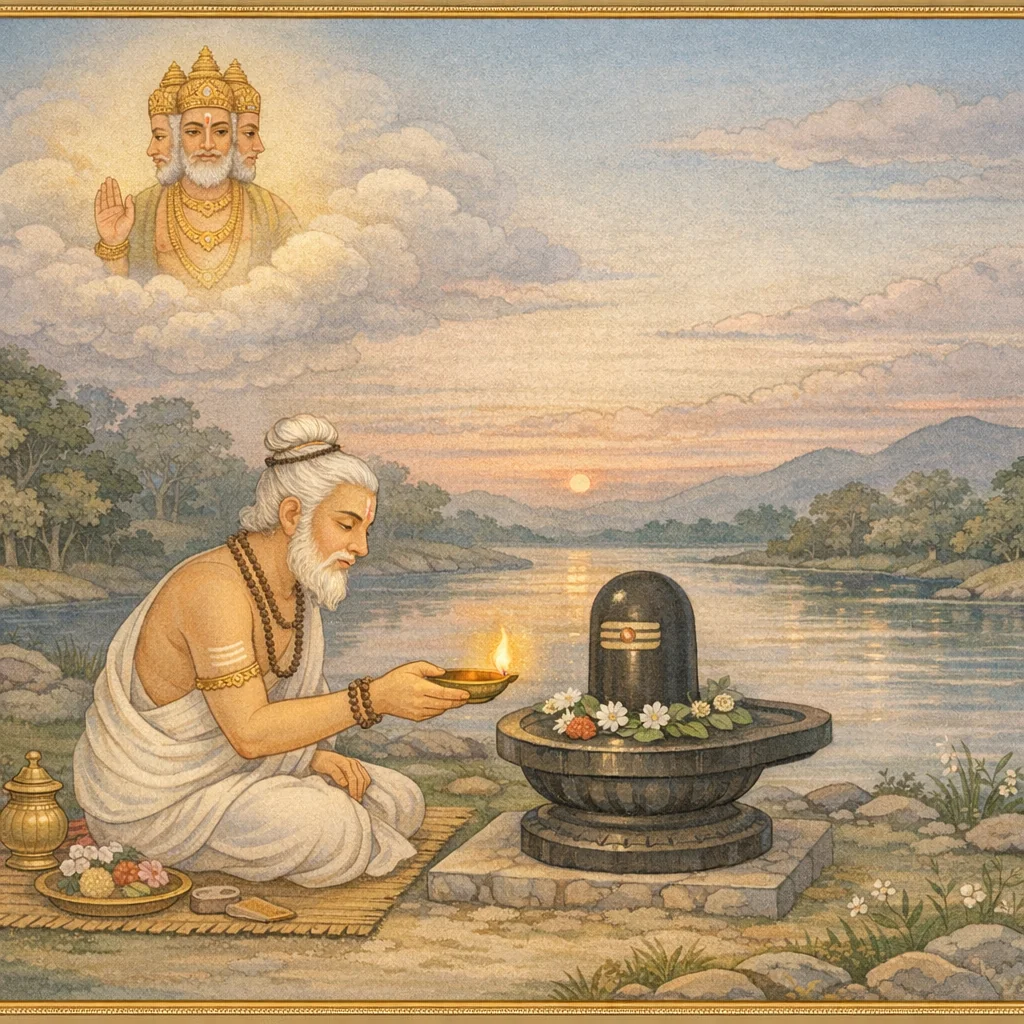
Mārkaṇḍeya directs Yudhiṣṭhira to an excellent tīrtha on the southern bank of the Revā, two krośas from Matṛtīrtha, called Haṃseśvara, famed as a destroyer of mental discord and dejection (vaimanasyavināśana). An origin-legend is told: a Haṃsa of Kaśyapa’s line, known as Brahmā’s vehicle, acts without proper direction and, amid the upheaval when Dakṣa’s sacrifice is disrupted, flees in fear and later grieves. Brahmā, displeased that the bird does not return when summoned, utters a curse that causes its fall. The Haṃsa approaches Brahmā, pleads the limits of animal nature, confesses the fault of abandoning the master, and offers an extended praise of Brahmā as the sole Creator, source of knowledge, of dharma and adharma, and wielder of both curse and grace. Brahmā instructs the Haṃsa to purify himself by tapas, to serve the Revā through sacred bathing, and to establish Mahādeva/Trayambaka (Śiva) on the riverbank. Establishing Śiva there is declared to yield the fruit of many completed sacrifices and vast gifts, and even grave transgressions are said to be released by such स्थापना on Revā’s shore. The Haṃsa performs austerity, installs Śaṅkara under his own name as Haṃseśvara, worships, and attains a higher state. The closing phalaśruti enjoins pilgrimage to Haṃseśvara: bathing, worship, hymns of praise, śrāddha, lamp-offering, feeding brāhmaṇas, and optional time-regulated Śiva pūjā. It promises freedom from sins, avoidance of despair, heavenly honor, and long residence in Śiva’s realm when accompanied by fitting gifts.
Shlokas
Verse 1
श्रीमार्कण्डेय उवाच । ततो गच्छेत्तु राजेन्द्र रेवाया दक्षिणे तटे । क्रोशद्वयान्तरे तीर्थं मतृतीर्थादनुत्तमम्
Śrī Mārkaṇḍeya said: Then, O lord of kings, one should go to the southern bank of the Revā. At a distance of two krośas there is a tīrtha, unsurpassed, even beyond Matṛtīrtha.
Verse 2
नाम्ना हंसेश्वरं पुण्यं वैमनस्यविनाशनम् । कश्यपस्य कुले जातो हंसो दाक्षायणीसुतः
It is named Haṃseśvara—holy, and a destroyer of inner discord. A Haṃsa-swan, born in the lineage of Kaśyapa, the son of Dākṣāyaṇī, is connected with this place.
Verse 3
ब्रह्मणो वाहनं जातः पुरा तप्त्वा तपो महत् । सैकदा विधिनिर्देशं विना वैयग्र्यमास्थितः
Having performed great austerity long ago, he became Brahmā’s mount. But once, disregarding prescribed injunctions, he fell into restlessness and agitation.
Verse 4
अभिभूतः शिवगणैः प्रणनाश युधिष्ठिर । दक्षयज्ञप्रमथने कांदिशीको विधिं विना
Overpowered by Śiva’s gaṇas, O Yudhiṣṭhira, Kāṃdiśīka fled in panic when Dakṣa’s sacrifice was being shattered—having abandoned all proper rule and procedure.
Verse 5
ब्रह्मणा संसृतोऽप्याशु नायाति स यदा खगः । तदा तं शप्तवान्ब्रह्मा पातयामास वै पदात्
Though quickly summoned by Brahmā, when that bird still did not come, Brahmā then cursed him and caused him to fall from his rank.
Verse 6
ततः स शप्तमात्मानं मत्वा हंसस्त्वरान्वितः । पितामहमुपागम्य प्रणिपत्येदमब्रवीत्
Then the Haṃsa, realizing himself to be under a curse, hurried to the Grandfather (Brahmā); bowing down, he spoke these words.
Verse 7
हंस उवाच । तिर्यग्योनिसमुत्पन्नं भवाञ्छप्तुं न चार्हति । स्वभाव एव तिर्यक्षु विवेकविकलं मनः
The Haṃsa said: “You should not curse one born from an animal womb; for among creatures it is natural that the mind is bereft of discernment.”
Verse 8
तथापि देव पापोऽस्मि यदहं स्वामिनं त्यजे । किं तु धावद्भिरत्युग्रैर्गणैः शार्वैः पितामह । सहसाहं भयाक्रान्तस्त्रस्तस्त्यक्त्वा पलायितः
“Even so, O Lord, I am sinful, for I abandoned my master. Yet, O Grandfather, the exceedingly fierce gaṇas of Śarva came rushing; suddenly seized by fear, I panicked, let go, and fled.”
Verse 9
अद्यापि भयमेवाहं पश्यन्नस्मि विभो पुरः । तेन स्मृतोऽपि भवता नाव्रजं भवदन्तिके
“Even now, O Mighty One, I see only fear before me. Therefore, though you remembered (summoned) me, I did not come near you.”
Verse 10
श्रीमार्कण्डेय उवाच । इति ब्रुवन्नेव हि धातुरग्रे हंसः श्वसत्यक्षिपूज्यः सुदीनः । तिर्यञ्चं मां पापिनं मूढबुद्धिं प्रभो पुरः पतितं पाहि पाहि
Śrī Mārkaṇḍeya said: As he spoke thus before the Creator, the Haṃsa—wretched and trembling, his eyes brimming with tears—cried, “I am a creature, sinful and dull-witted; fallen before you, O Lord—protect me, protect me!”
Verse 11
एको देवस्त्वं हि सर्गस्य कर्ता नानाविधं सृष्टमेतत्त्वयैव । अहं सृष्टस्त्वीदृशो यत्त्वया वै सोऽयं दोषो धातरद्धा तवैव
“You alone are the divine maker of creation; this manifold world has been fashioned by you. Since I have been created by you just as I am, O Dhātā, this fault is truly yours.”
Verse 12
शापस्य वानुग्रहस्यापि शक्तस्त्वत्तो नान्यः शरणं कं व्रजामि । सेवाधर्माद्विच्युतं दासभूतं चपेटैर्हन्तव्यं वै तात मां त्राहि भक्तम्
You alone have the power to curse and to bestow favor; apart from you, to whom can I go for refuge? Fallen from the dharma of service, a mere servant fit to be struck—O Father, save me, your devotee.
Verse 13
विद्याविद्ये त्वत्त एवाविरास्तां धर्माधर्मौ सदसद्द्युर्निशे च । नानाभावाञ्जगतस्त्वं विधत्सेस्तं त्वामेकं शरणं वै प्रपद्ये
From you alone arise knowledge and ignorance; dharma and adharma, truth and untruth, day and night as well. You ordain the world’s many conditions—therefore I take refuge in you alone.
Verse 14
एकोऽसि बहुरूपोऽसि नानाचित्रैककर्मतः । निष्कर्माखिलकर्मासि त्वामतः शरणं व्रजे
You are One, yet you appear in many forms, performing the manifold and wondrous activities of the universe. Though actionless, you are the very source and support of all actions. Therefore, I take refuge in you.
Verse 15
नमोनमो वरेण्याय वरदाय नमोनमः । नमो धात्रे विधात्रे च शरण्याय नमोनमः
Salutations, salutations to the Most Adorable; salutations to the Bestower of boons. Salutations to the Sustainer and the Ordainer; salutations to the Refuge of all.
Verse 16
शिक्षाक्षरवियुक्तेयं वाणी मे स्तौति किं विभो । का शक्तिः किं परिज्ञानमिदमुक्तं क्षमस्व मे
O Lord, how can my speech praise you, when it is devoid of proper training and fitting words? What power have I, what true understanding? Whatever I have uttered—please forgive me.
Verse 17
श्रीमार्कण्डेय उवाच । एवं वदति हंसे वै ब्रह्मा प्राह प्रसन्नधीः । शिक्षा दत्ता तवैवेयं मा विषादं कृथाः खग
Śrī Mārkaṇḍeya said: As the Haṃsa spoke thus, Brahmā—his mind serene and pleased—said: “This instruction has indeed been given to you; do not grieve, O bird.”
Verse 18
तपसा शोधयात्मानं यथा शापान्तमाप्नुयाः । रेवासेवां कुरु स्नात्वा स्थापयित्वा महेश्वरम् । अचिरेणैव कालेन ततः संस्थानमाप्स्यसि
Purify yourself through austerity so that you may reach the end of the curse. Serve the Revā—bathe in her, and establish Maheśvara (Śiva). In a short time thereafter, you will attain your proper state again.
Verse 19
यच्चेष्ट्वा बहुभिर्यज्ञैः समाप्तवरदक्षिणैः । गोस्वर्णकोटिदानैश्च तत्फलं स्थापिते शिवे
Whatever merit is gained by performing many sacrifices—completed with fitting and excellent priestly fees—and by gifting crores of cows and gold, that very fruit is obtained by establishing Śiva.
Verse 20
ब्रह्मघ्नो वा सुरापो वा स्वर्णहृद्गुरुतल्पगः । रेवातीरे शिवं स्थाप्य मुच्यते सर्वपातकैः
Whether one is a slayer of a brāhmaṇa, a drinker of intoxicants, a thief of gold, or one who violates the guru’s bed—by establishing Śiva on the bank of the Revā, one is released from all sins.
Verse 21
तस्माद्भर्गसरित्तीरे स्थापयित्वा त्रियम्बकम् । वियुक्तः सर्वदोषैस्त्वं यास्यसे पदमुत्तमम्
Therefore, on the bank of the Bhargā River, establish Triyambaka, the Three-eyed Lord. Freed from all faults, you will attain the highest abode.
Verse 22
एवमुक्तः स विधिना हृष्टतुष्टः खगोत्तमः । तथेत्युक्त्वा जगामाशु नर्मदातीरमुत्तमम्
Thus instructed by Vidhī (Brahmā), the excellent bird became joyful and fully content. Saying, “So be it,” he swiftly went to the most sacred bank of the Narmadā.
Verse 23
तपस्तप्त्वा कियत्कालं स्थापयामास शङ्करम्
After practicing austerity (tapas) for some time, he established Śaṅkara (Śiva).
Verse 24
स्वनाम्ना भरतश्रेष्ठ हंसेश्वरमनुत्तमम् । पूजयित्वा परं स्थानं प्राप्तवान्खगसत्तमः
O best of Bharata’s line, the foremost of birds worshipped the unsurpassed Lord Haṃseśvara and established the shrine in his own name; thereafter he attained the supreme abode.
Verse 25
तत्र हंसेश्वरे तीर्थे गत्वा स्नात्वा युधिष्ठिर । पूजयेत्परमेशानं स पापैः परिमुच्यते
O Yudhiṣṭhira, having gone to the holy ford of Haṃseśvara and bathed there, one should worship Parameśāna (Śiva); thereby a person is completely freed from sins.
Verse 26
स्तुवन्नेकमना देवं न दैन्यं प्राप्नुयात्क्वचित् । श्राद्धं दीपप्रदानं च ब्राह्मणानां च भोजनम् । दत्त्वा शक्त्या नृपश्रेष्ठ स्वर्गलोके महीयते
Praising the Lord with a single-pointed mind, one never falls into misery anywhere. And, O best of kings, by performing śrāddha, offering lamps, and feeding brāhmaṇas according to one’s capacity, one is honored in the world of heaven.
Verse 27
त्रिकालमेककालं वा यो भक्त्या पूजयेच्छिवम् । नवप्रसूतां धेनुं च दत्त्वा पार्थ द्विजोत्तमे । षष्टिवर्षसहस्राणि शिवलोके महीयते
Whether three times a day or once, whoever worships Śiva with devotion—and, O Pārtha, gives a newly-calved cow to an excellent brāhmaṇa—will be honored in Śiva’s world for sixty thousand years.