Adhyaya 22
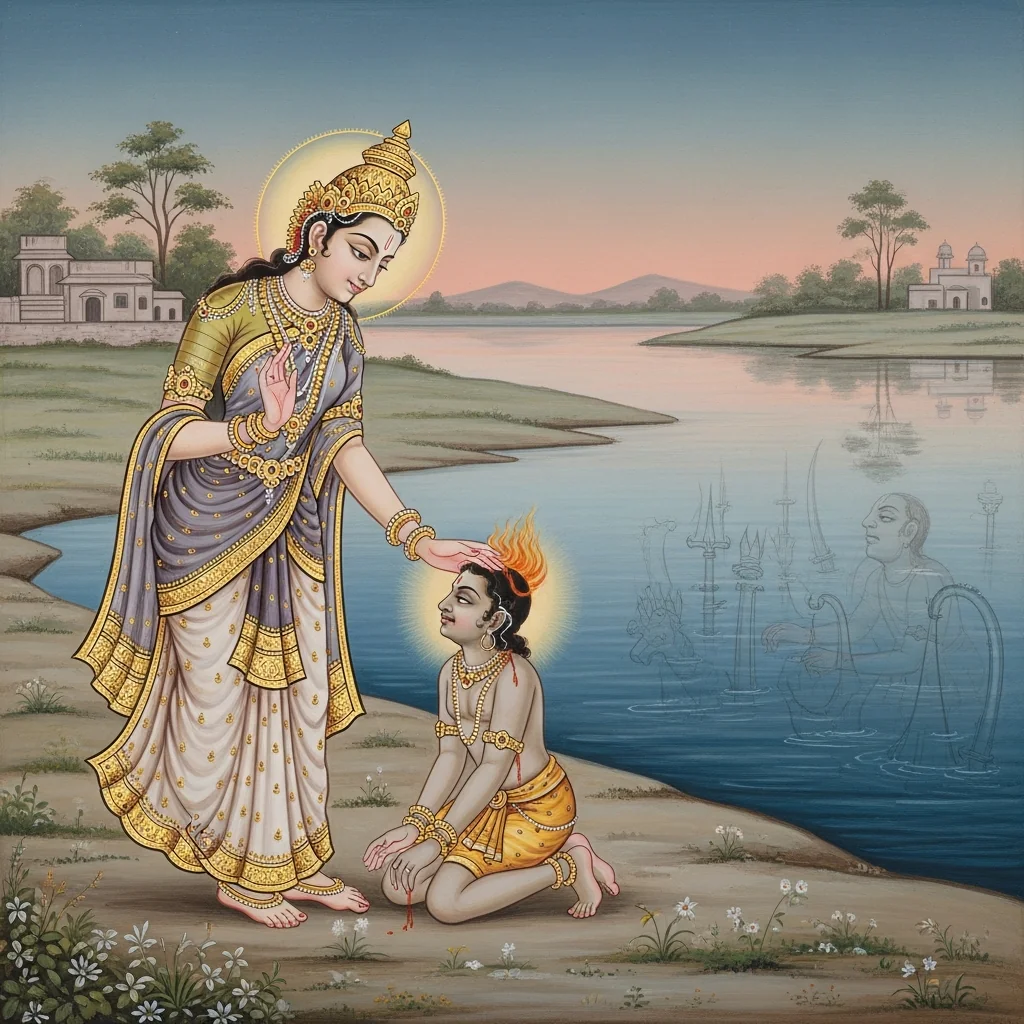
Mārkaṇḍeya recounts the origin of Viśalyā and the holiness of Kapilā Hrada through a layered tale of sacred causation. Agni—praised as a mind-born son of Brahmā and a foremost Vedic fire—performs austerities on a riverbank and receives Mahādeva’s boon: the Narmadā and fifteen other rivers become his consorts, collectively called Dhīṣṇī (river-wives), whose progeny are identified with the sacrificial fires (adhvara-agni) that endure until cosmic dissolution. From Narmadā is born the mighty Dhīṣṇīndra. A great devas–asuras war then arises, linked with Mayatāraka. Seeking refuge, the gods approach Viṣṇu, who summons Pavaka (fire) and Māruta (wind) and commands Dhīṣṇī/Pavakendra to burn the fierce Narmadeya demons. The foes attempt to bind and smother Agni with divine weapons, but Agni and Vāyu consume them, routing the enemies and driving many into subterranean waters. After victory the gods honor the youthful Agni, Narmadā’s son. Returning pierced and wounded (saśalya), he comes to his mother; Narmadā embraces him and enters Kapilā Hrada, whose waters instantly remove the “śalya,” the piercing affliction, making him “viśalya,” free of darts and wounds. The chapter closes with the tīrtha’s promise: those who bathe there are released from “pāpa-śalya” (the barbs of sin), and the departed attain a heavenly goal—thus establishing the site’s name and salvific renown.
Shlokas
Verse 1
। श्री मार्कण्डेय उवाच । अतः परं प्रवक्ष्यामि सा विशल्या ह्यभूद्यथा । आश्चर्यभूता लोकस्य सर्वपापक्षयंकरी
Śrī Mārkaṇḍeya said: Next I shall explain how that came to be known as Viśalyā—marvelous to the world, and the destroyer of all sins.
Verse 2
ब्रह्मणो मानसः पुत्रो मुख्यो ह्यग्निरजायत । मुख्यो वह्निरितिप्रोक्त ऋषिः परमधार्मिकः
From Brahmā was born a mind-born son—Agni, known as Mukhya. This ṛṣi, called “Mukhya Vahni,” was supremely righteous.
Verse 3
तस्य स्वाहाभवत्पत्नी स्मृता दाक्षायणी तु सा । तस्यां मुख्या महाराज त्रयः पुत्रास्तदाऽभवन्
His wife was Svāhā, remembered as a daughter of Dakṣa. O great king, from that Mukhya there were then born three sons.
Verse 4
अग्निराहवनीयस्तु दक्षिणाग्निस्तथैव च । गार्हपत्यस्तृतीयस्तु त्रैलोक्यं यैश्च धार्यते
Agni is manifest as the Āhavanīya fire, and likewise as the Dakṣiṇa fire; and as the third, the Gārhapatya. By these sacred fires the order of the three worlds is upheld.
Verse 5
तथा वै गार्हपत्योऽग्निर्जज्ञे पुत्रद्वयं शुभम् । पद्मकः शङ्कुनामा च तावुभावग्निसत्तमौ
So too, from the Gārhapatya Agni were born two auspicious sons—Padmaka and one named Śaṅku—both excellent among the fires.
Verse 6
वसन्नग्निर्नदीतीरे समाश्रित्य महत्तपः । रुद्रमाराधयामास जितात्मा सुसमाहितः
Dwelling on the riverbank, Agni undertook great tapas (austerity), worshipping Rudra with a conquered mind, perfectly collected in meditation.
Verse 7
दशवर्षसहस्राणि चचार विपुलं तपः । तमुवाच महादेवः प्रसन्नो वृषभध्वजः
For ten thousand years he performed vast austerities. Then Mahādeva—whose banner bears the bull—spoke to him, well pleased.
Verse 8
भोभो ब्रूहि महाभाग यत्ते मनसि वर्तते । दाता ह्यहमसंदेहो यद्यपि स्यात्सुदुर्लभम्
“Speak, O greatly fortunate one, what is in your mind. I shall surely grant it—without doubt—even if it be exceedingly hard to obtain.”
Verse 9
अग्निरुवाच । नर्मदेयं महाभागा सरितो याश्च षोडश । भवन्तु मम पत्न्यस्तास्त्वत्प्रसादान्महेश्वर
Agni said: “O Maheśvara, by your grace let Narmadā and the sixteen blessed rivers become my wives.”
Verse 10
तासु वै चिन्तितान् पुत्रानग्र्यानुत्पादयाम्यहम् । एष एव वरो देव दीयतां मे महेश्वर
“And through them I shall beget excellent sons, as desired. This alone is the boon, O God—grant it to me, O Maheśvara.”
Verse 11
ईश्वर उवाच । एतास्तु धिष्णिनाम्न्यो वै भविष्यन्ति सरिद्वराः । पत्न्यस्तव विशालाक्ष्यो वेदे ख्याता न संशयः
Īśvara said: “These excellent rivers shall indeed be known by the name Dhiṣṇī. They shall be your wives—wide-eyed goddesses—celebrated in the Veda, without doubt.”
Verse 12
तासां पुत्रा भविष्यन्ति ह्यग्नयो येऽध्वरे स्मृताः । धिष्ण्यानाम सुविख्याता यावदाभूतसम्प्लवम्
Their sons shall be the Agnis remembered in sacrifice; famed as the Dhiṣṇya fires, they shall remain renowned until the dissolution of beings.
Verse 13
एवमुक्त्वा महादेवस्तत्रैवान्तरधीयत । नर्मदा च सरिच्छ्रेष्ठा तस्य भार्या बभूव ह
Having spoken thus, Mahādeva vanished then and there. And Narmadā—the best of rivers—indeed became his wife.
Verse 14
कावेरी कृष्णवेणी च रेवा च यमुना तथा । गोदावरी वितस्ता च चन्द्रभागा इरावती
Kāverī and Kṛṣṇaveṇī, Revā and Yamunā; Godāvarī and Vitastā, Candrabhāgā and Irāvatī—these celebrated rivers are proclaimed in this sacred narrative.
Verse 15
विपाशा कौशिकी चैव सरयूः शतरुद्रिका । शिप्रा सरस्वती चैव ह्रादिनी पावनी तथा
Vipāśā and Kauśikī, Sarayū and Śatarudrikā; Śiprā and Sarasvatī, and also Hrādinī and Pāvanī—these too are named among the sanctifying rivers.
Verse 16
एताः षोडशा नद्यो वै भार्यार्थं संव्यवस्थिताः । तदात्मानं विभज्याशु धिष्णीषु स महाद्युतिः
These sixteen rivers were duly appointed to become consorts; and that great-lustrous one swiftly apportioned his own essence into their abodes, the dhiṣṇis.
Verse 17
व्यभिचारात्तु भर्तुर्वै नर्मदाद्यासु धिष्णिषु । उत्पन्नाः शुचयः पुत्राः सर्वे ते धिष्ण्यपाः स्मृताः
But due to the husband’s transgression, within the sacred abodes beginning with Narmadā there arose pure sons; all of them are remembered as “Dhiṣṇyapāḥ,” the lords and guardians of those holy seats.
Verse 18
तस्याश्च नर्मदायास्तु धिष्णीन्द्रो नाम विश्रुतः । बभूव पुत्रो बलवान्रूपेणाप्रतिमो नृप
And of that Narmadā there was a renowned son named Dhiṣṇīndra—mighty in strength and unmatched in form, O king.
Verse 19
ततो देवासुरं युद्धमभवल्लोमहर्षणम् । मयतारकमित्येवं त्रिषु लोकेषु विश्रुतम्
Then there arose a deva–asura war, hair-raising in its terror—famed in the three worlds by the name “Mayatāraka”.
Verse 20
तत्र दैत्यैर्महाघोरैर्मयतारपुरोगमैः । ताडितास्ते सुरास्त्रस्ता विष्णुं वै शरणं ययुः
There, struck by the exceedingly dreadful daityas led by Mayatāra, the frightened gods went to Viṣṇu for refuge.
Verse 21
त्रायस्व नो हृषीकेशा घोरादस्मान्महाभयात् । दैत्यान्सर्वान्संहरस्व मयतारपुरोगमान्
“Protect us, O Hṛṣīkeśa, from this dreadful, great terror. Destroy all the daityas, with Mayatāra at their head.”
Verse 22
एवमुक्तः स भगवान्दिशो दश व्यलोकयत् । ततो भगवता दृष्टौ रणे पावकमारुतौ
Thus addressed, the Blessed Lord surveyed the ten directions. Then, upon the battlefield, the Lord beheld Pāvaka (Fire) and Māruta (Wind).
Verse 23
आहूतौ विष्णुना तौ तु सकाशं जग्मतुः क्षणात् । स्थितौ तौ प्रणतौ चाग्रे देवदेवस्य धीमतः
Summoned by Viṣṇu, the two came to His presence in an instant. They stood before the wise Lord of gods, bowing in reverence.
Verse 24
ततो धिष्णिः पावकेन्द्रो देवेनोक्तो महात्मना । निर्दहेमान्महाघोरान्नार्मदेय महासुरान्
Then Dhiṣṇi—Agni, the lord of fire—being instructed by that great-souled Deva, began to burn up the exceedingly terrible Narmadā-region demons.
Verse 25
अथैवमुक्तौ तौ देवौ रणे पावकमारुतौ । दैत्यान् ददहतुः सर्वान्मयतारपुरोगमान्
Thus instructed, those two gods—Fire and Wind—on the battlefield burned up all the Daityas, with Mayatāra at their head.
Verse 26
दह्यमानास्तु ते सर्वे शस्त्रैरग्निं त्ववेष्टयन् । दिव्यैरग्न्यर्कसङ्काशैः शतशोऽथ सहस्रशः
While they were being burned, all of them tried to surround Fire with weapons—divine missiles blazing like fire and the sun—by the hundreds and then by the thousands.
Verse 27
तांश्चाग्निः शस्त्रनिकरैर्निर्ददाह महासुरान् । ज्वालामालाकुलं सर्वं वायुना निर्मितं तदा
And Agni, with volleys of weapons, burned those mighty Asuras. Then, by the force of Wind, all became a mass of garlands of flame.
Verse 28
दह्यमानास्ततो दैत्या अग्निज्वालासमावृताः । प्रविश्य पातालतलं जले लीनाः सहस्रशः
Then the Daityas, burning and wrapped in tongues of fire, entered the depths of Pātāla; and by the thousands they vanished into the waters.
Verse 29
ततः कुमारमग्निं तु नर्मदापुत्रमव्ययम् । पूजयित्वा सुराः सर्वे जग्मुस्ते त्रिदशालयम्
Thereafter all the gods worshipped youthful Agni, the imperishable son of Narmadā, and then departed to the abode of the Thirty-three.
Verse 30
सशल्यस्तु महातेजा रेवापुत्रो वृतोऽग्निभिः । नर्मदामागतः क्षिप्रं मातरं द्रष्टुमुत्सुकः
But the radiant son of Revā, still pierced by missiles and surrounded by fires, swiftly came to Narmadā, eager to behold his mother.
Verse 31
तं दृष्ट्वा पुत्रमायान्तं शस्त्रौघेण परिक्षतम् । नर्मदा पुण्यसलिला अभ्युत्थाय सुविस्मिता
Seeing her son approaching, wounded by a torrent of weapons, Narmadā—whose waters are holy—rose up, filled with great astonishment.
Verse 32
पर्यष्वजत बाहुभ्यां प्रस्नवापीडितस्तनी । सशल्यं पुत्रमादाय कापिलं ह्रदमाविशत्
She clasped him in both arms—her breasts pressed, milk streaming—and, taking up her still-wounded son, she entered the Kāpilā lake.
Verse 33
प्रविष्टमात्रे तु ह्रदे कापिले पापनाशिनि । सशल्यं तं विशल्यं च क्षणात्कृतवती तदा
The moment he entered the Kāpilā lake, the destroyer of sins, she at once made him—pierced by missiles—free of them in an instant.
Verse 34
स विशल्योऽभवद्यस्मात्प्राप्य तस्याः शिवं जलम् । कपिला नामतस्तेन विशल्या चोच्यते बुधैः
Because he became free of śalya—the ‘dart of pain’—after obtaining her auspicious, Śiva-blessed water, she is known by the name Kapilā; therefore the wise also call this sacred ford Viśalyā, the remover of śalya.
Verse 35
अन्येऽपि तत्र ये स्नाताः शुचयस्तु समाहिताः । पापशल्यैः प्रमुच्यन्ते मृता यान्ति सुरालयम्
Others too, who bathe there in purity and recollection, are released from the śalya-darts of sin; and when they die, they go to the abode of the gods.
Verse 36
एतत्ते सर्वमाख्यातं यत्पृष्टोऽहं पुरा त्वया । उत्पत्तिकारणं तात विशल्याया नरेश्वर
Thus have I told you all that you once asked of me—O dear one, O lord of men—namely, the cause of the origin of Viśalyā.