Adhyaya 217
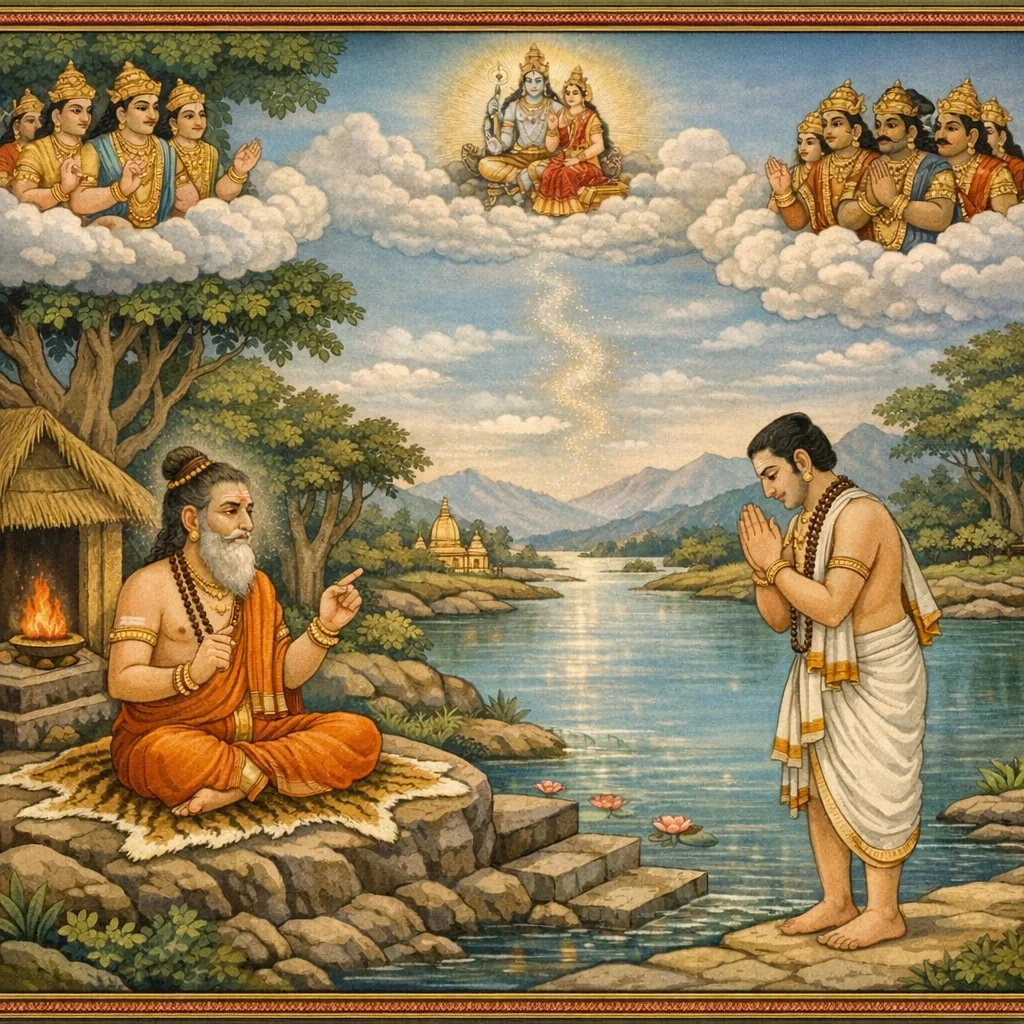
This adhyāya gives a concise tīrtha-instruction spoken by the sage Mārkaṇḍeya. It proclaims Eraṇḍī-saṅgama as a supremely revered confluence, worshipped by devas and asuras alike, thereby establishing its exceptional sanctity. It then lays down an ethical and ritual discipline: the pilgrim should observe upavāsa (fasting) with senses and mind restrained, and perform snāna according to proper vidhāna. The teaching emphasizes purification, declaring that such observance at this site frees one from the grave burden of brahmahatyā. Finally, the phalaśruti affirms that one who relinquishes life at this tīrtha attains anivartikā gati (the non-returning course) and reaches Rudra-loka without doubt.
Shlokas
Verse 1
श्रीमार्कण्डेय उवाच । एरण्डीसङ्गमं गच्छेत्सुरासुरनमस्कृतम् । तत्तु तीर्थं महापुण्यं महापातकनाशनम्
Śrī Mārkaṇḍeya said: One should go to the confluence called Eraṇḍīsaṅgama, revered by devas and asuras alike. That tīrtha is of immense merit and destroys even the great sins.
Verse 2
उपवासपरो भूत्वा नियतेन्द्रियमानसः । तत्र स्नात्वा विधानेन मुच्यते ब्रह्महत्यया
Becoming intent on fasting, with senses and mind restrained, and bathing there according to the proper rule—one is freed even from the sin of brahmahatyā (slaying a brāhmaṇa).
Verse 3
तत्र तीर्थे तु यो भक्त्या प्राणत्यागपरो भवेत् । अनिवर्तिका गतिस्तस्य रुद्रलोकादसंशयम्
At that tīrtha, whoever, in devotion, relinquishes his life—his destiny is irreversible; from Rudra’s world there is no return, beyond doubt.