Adhyaya 216
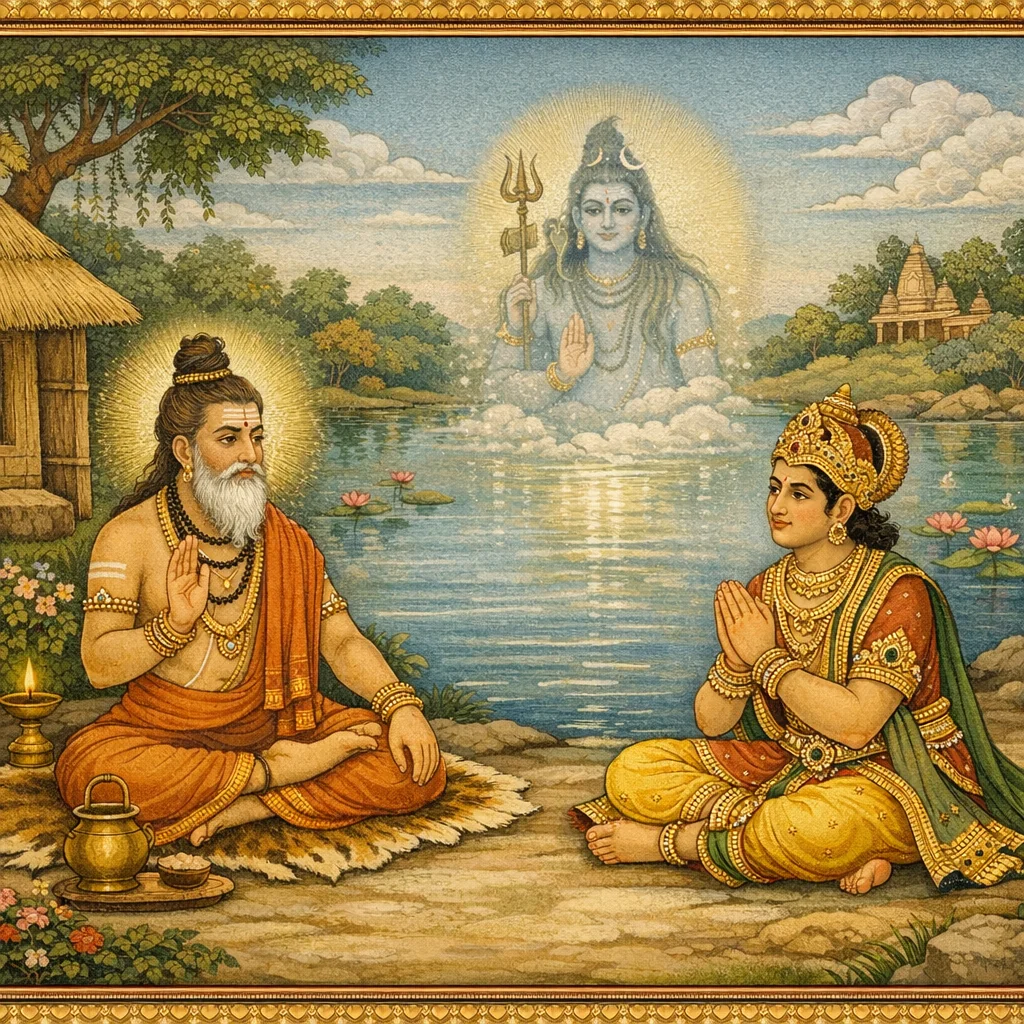
Mārkaṇḍeya instructs a kingly listener to approach the Aṣāḍhī tīrtha, declaring it a place where Maheśvara (Śiva) is present in a “kāmika” form that fulfills worthy desires. He then extols the tīrtha as “cāturyuga,” effective through all four yugas, and as unsurpassed among sacred places. A brief phalaśruti follows: bathing (snāna) there makes one an attendant of Rudra, signifying nearness to Śiva’s sphere and service to Him. Finally, the chapter affirms that one who relinquishes life at this tīrtha attains an irreversible destiny—reaching Rudraloka without doubt.
Shlokas
Verse 1
श्रीमार्कण्डेय उवाच । अषाढीतीर्थमागच्छेत्ततो भूपालनन्दन । कामिकं रूपमास्थाय स्थितो यत्र महेश्वरः
Śrī Mārkaṇḍeya said: Thereafter, O prince, one should come to Aṣāḍhītīrtha, where Maheśvara abides, having assumed his ‘Kāmika’ form.
Verse 2
चातुर्युगमिदं तीर्थं सर्वतीर्थेष्वनुत्तमम् । तत्र स्नात्वा नरो राजन् रुद्रस्यानुचरो भवेत्
This tīrtha is ‘of the four yugas’ and unsurpassed among all sacred fords. O king, a man who bathes there becomes an attendant of Rudra.
Verse 3
तत्र तीर्थे तु यः कश्चित्कुरुते प्राणमोक्षणम् । अनिवर्तिका गतिस्तस्य रुद्रलोकादसंशयम्
And whoever, at that tīrtha, gives up the life-breath—his onward course is irreversible; from Rudra’s world there is no falling back, without doubt.