Adhyaya 215
This adhyāya sets forth a brief instruction attributed to Śrī Mārkaṇḍeya, urging pilgrimage to Śṛṅgitīrtha and praising its saving power. The tīrtha is proclaimed “mokṣada,” a bestower of liberation for embodied beings, with the explicit assurance that whoever dies there attains mokṣa without doubt. The chapter then joins this same place to ancestral duty: by performing piṇḍadāna one becomes anṛṇa, freed from debt to the pitṛs, and through the merit thus gained the purified person is said to reach “gāṇeśvarī gati,” an exalted post-mortem destination associated with the Gāṇas within a Śaiva cosmological frame. In this way it unifies mokṣa, filial responsibility, and pilgrimage discipline into a single, place-centered sacred guideline.
Shlokas
Verse 1
श्रीमार्कण्डेय उवाच । शृङ्गितीर्थं ततो गच्छेन्मोक्षदं सर्वदेहिनाम् । मृतानां तत्र राजेन्द्र मोक्षप्राप्तिर्न संशयः
Śrī Mārkaṇḍeya said: Then one should go to Śṛṅgitīrtha, which grants liberation to all embodied beings. O lord of kings, for those who die there, attainment of liberation is beyond doubt.
Verse 2
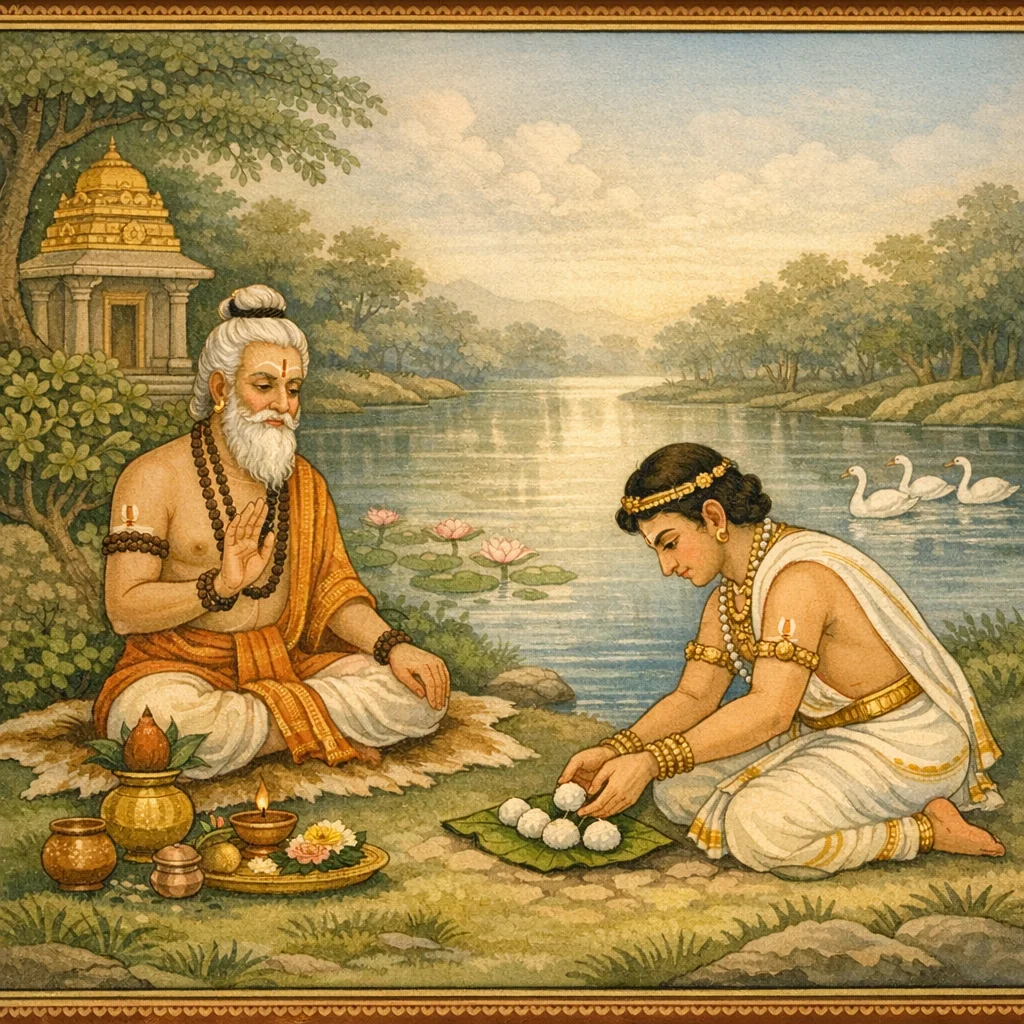
तत्रैव पिण्डदानेन पितॄणामनृणो भवेत् । तेन पुण्येन पूतात्मा लभेद्गाणेश्वरीं गतिम्
There itself, by offering piṇḍa (funerary oblations), one becomes free from debt to the ancestors. Purified by that merit, one attains the divine course known as the ‘Gāṇeśvarī’ state.